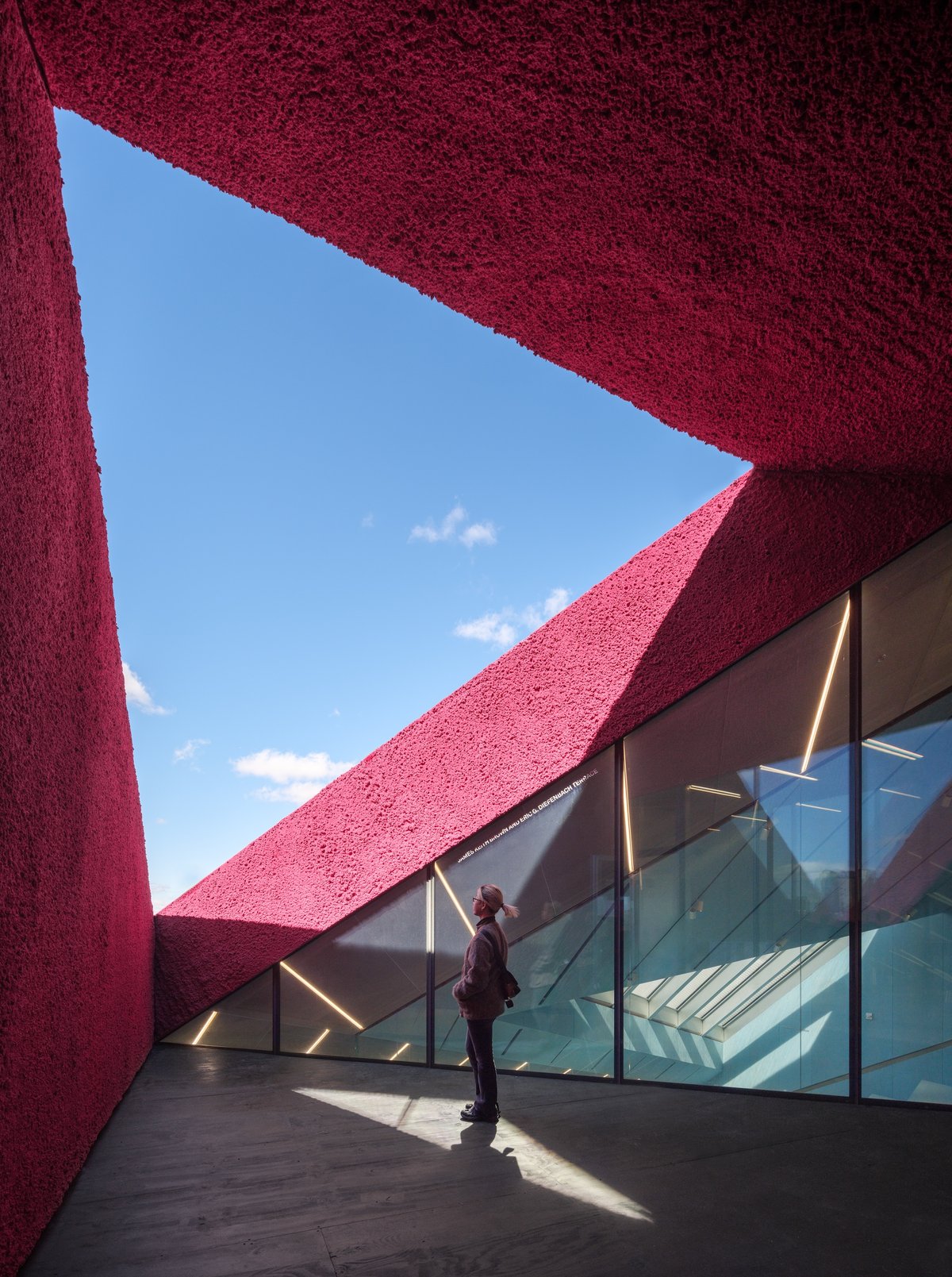
During last summer’s heat dome incident in the Paris region, the Palais de Tokyo provided welcome relief: its cavernous concrete environs offered sanctuary to visitors who took advantage of midnight closing times to avoid temperatures that eclipsed 40°C for the third time in as many years (a streak that recently extended to a fourth consecutive summer, with deadly consequences).
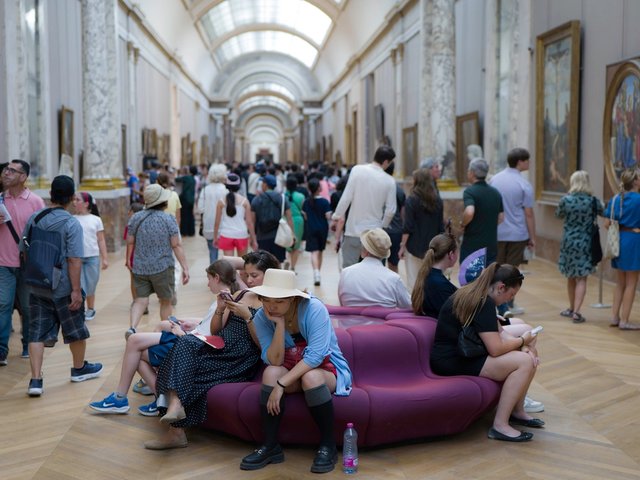
This writer was one of the lucky ones who, for want of air-conditioned lodgings, sought refuge at the Palais de Tokyo last summer. In that temperate contemporary art shelter, exhibitions by Thao Nguyen Phan, Vivian Suter and Chalisée Naamani provided a break from the vexing mental grind that comes with enduring such extreme weather events in a dense urban setting. That week, the full range of programmes—DJs who played until midnight, film screenings, performances and an open coffee bar—was revelatory to me as an American who is more accustomed to institutions that adhere to retail hours. How truly amazing to transition so quickly from one’s physical breaking point to a state of euphoria in the presence of art, and from there to realise the civic functions of these spaces as cooling centres and cultural venues can be mutually reinforcing.
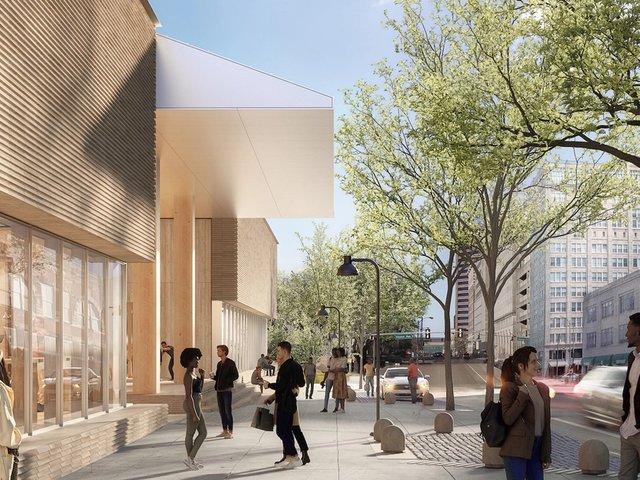
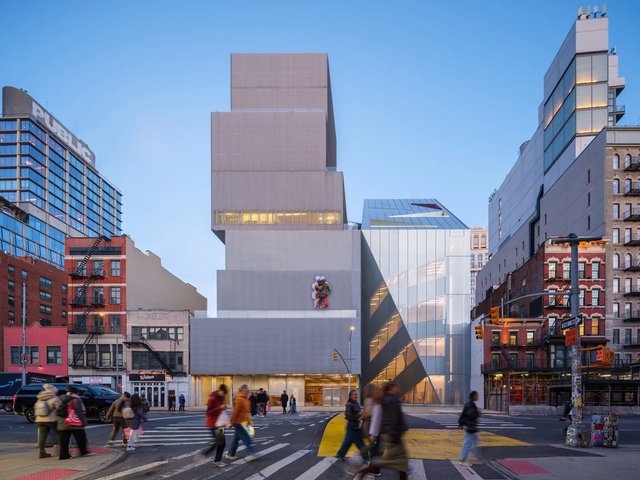
Such was the city-run institution’s express purpose at the time of its reopening in 2002, a gift to Parisians designed by the architects Anne Lacaton and Jean-Philippe Vassal. The Palais de Tokyo was modeled partly in the image of the New Museum of Contemporary Art in New York City, with great reverence for the latter’s status as the first so-called “anti-museum” upon its founding in 1977. It was then a leader of a headlong transformation of the museum industry through which public engagement became increasingly at parity with the curation of exhibitions. It has the opportunity to be a leader again following its recent $82m expansion, and could inspire other institutions seeking to broaden opportunities for their own audiences—newly expanded places like the Los Angeles County Museum of Art (Lacma) and the Crystal Bridges Museum of American Art in Arkansas—to follow suit.
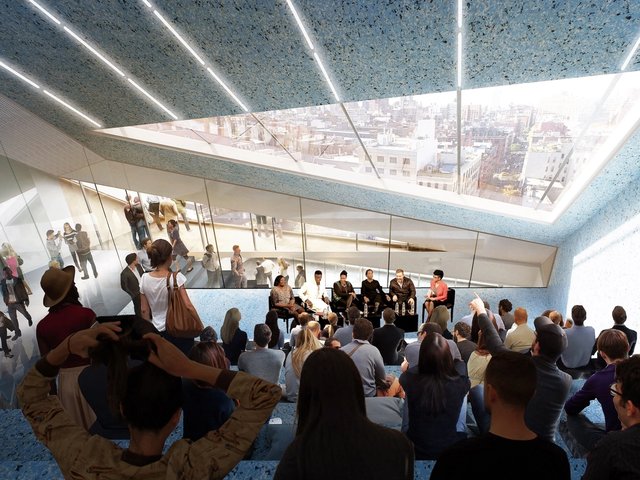
Each of these institutions already has experience with the kinds of programming that opens a museum beyond the walls of its galleries, from the New Museum’s New Inc incubator to Crystal Bridges’ expansive sister venue the Momentary and Lacma’s Local Access partnerships. As the calendar turns once again to the sweltering summer months, these institutions and the dozens of others currently building or plotting their own expansions could broaden their outreach by offering later hours and serving as cultural cooling centres.
The writer Elizabeth P. Oliver suggested as much in an op-ed last March for The Washington Post, arguing that federal museums should extend their opening hours until 9pm as a gesture to audiences during the closure and renovation of the Kennedy Center for the Performing Arts. Oliver wrote that the current schedules are “unforgiving” to working professionals and their needs for decompressing from their daily lives.
Now that we have seen dangerous temperatures once again spark debate about the public responsibilities of cultural spaces, museum leaders ought to be seeking out viable solutions. In the US, institutions are facing unprecedented challenges from censorious political pressures, disarray in the federal funding pipeline and more. Simultaneously, many are experiencing a mini-downturn in attendance, with nearly a third of all American institutions reported reduced visitorship due to economic uncertainty. Bucking these trends requires getting creative and finding new ways of opening doors to the public—and another type of storied institution offers a model.
Over the past decade, while some US museums expanded their definitions of public programming and others scaled back free or discounted admission offerings and late-night events, we have largely embraced public libraries’ roles as necessarily having to evolve in order to address a set of modern crises: homelessness, isolation and the loss of trust in information in our ‘post-truth’ age. Simultaneously, the disappearance of adequate social condensers separate from the home and workplace (the mythical hangouts known as ‘third spaces’) is being constantly lamented. And, of course, people—young people especially—need spaces devoid of consumable experiences and prepackaged entertainment.
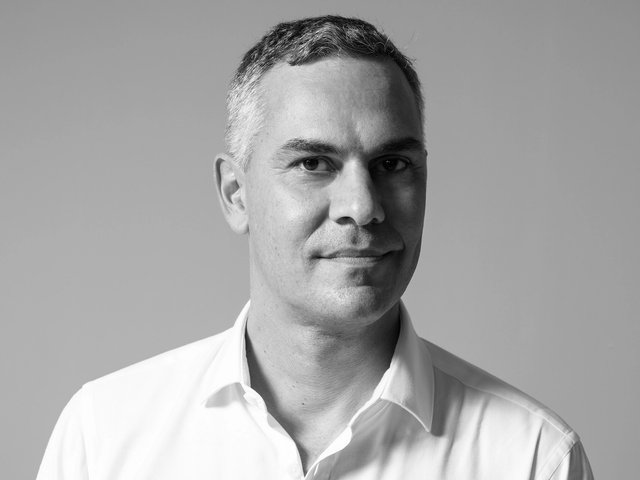
While many museums continue to pursue physical expansion, those that can also expand their roles as intellectual shelters for their communities, and could become catalysts for a more fundamental and wide-reaching transformation. The architect Shohei Shigematsu, the co-designer of the New Museum’s recent building expansion, posed such a transformational question to the assembled journalists during a preview last March: “What should a museum be today?” Considering the weather, the path has never been clearer to remove barriers to access before the opportunity passes on.
- Joshua Niland is a writer and editor based in New York City