“It’s important to know where you come from,” the artist Raven Halfmoon said during the opening of her exhibition Flags of Our Mothers at Texas’s Ballroom Marfa (until 11 October).
Halfmoon grew up as a member of the Caddo Nation in Oklahoma. She still lives there, although she is often away for events and residencies where she can use kilns much bigger than the one she has at home. But wherever she works, her ceramic sculptures exude a robust personal style and language that reflect her cultural roots.
Halfmoon made Flagbearer (2022), the 12.5-ft-tall glazed stoneware figure in Ballroom’s outdoor courtyard, during a residency at California State University, Long Beach. The sculpture is an imposing, full-length portrait of a woman with long hair and wide hips who looks rather like the artist herself. (As do many of the other works inside.) Halfmoon is tall—taller with her platform sneakers and cowboy hat—and wears aviator sunglasses in the Texas sun.
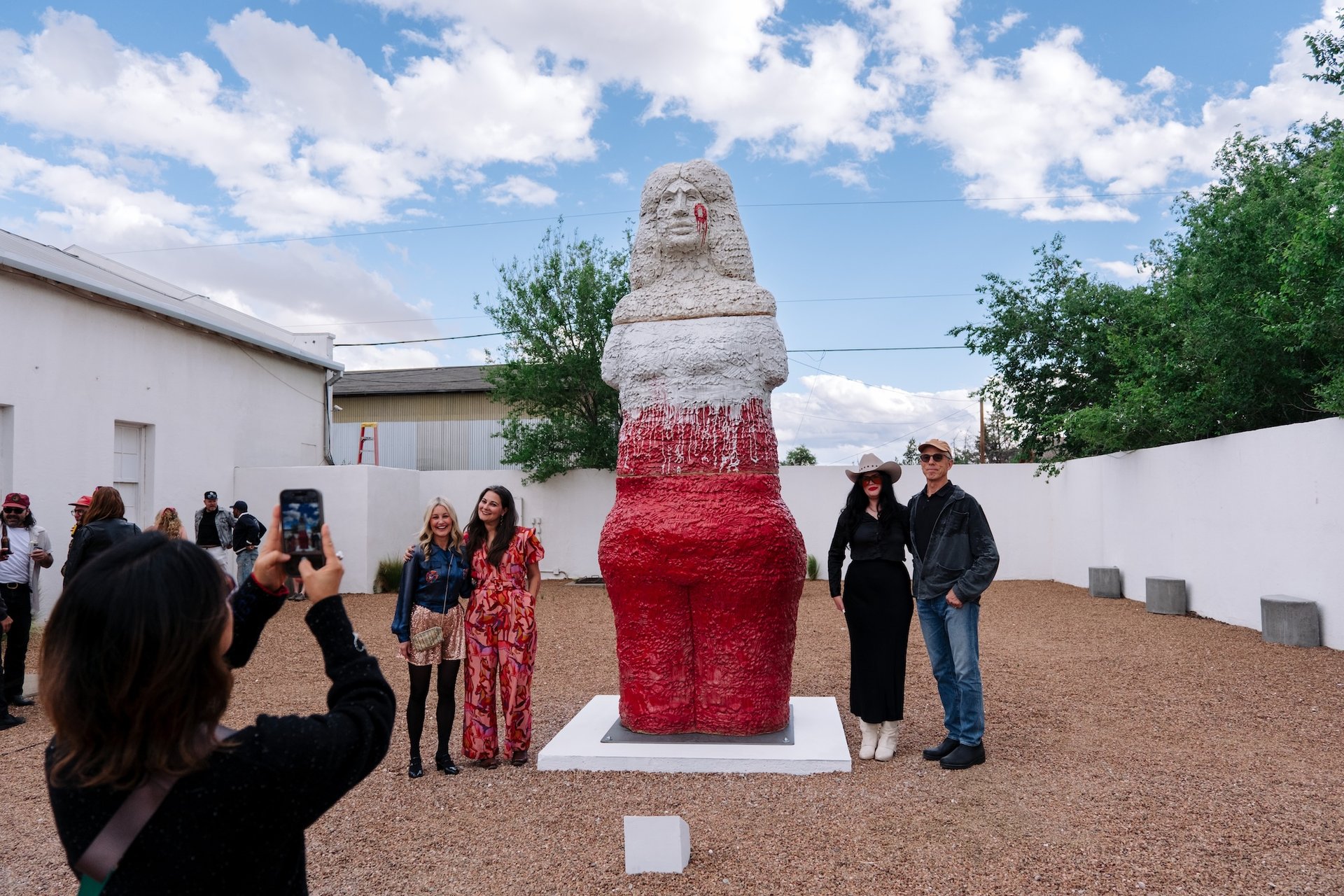
Raven Halfmoon (second from right) poses for a photo with Flagbearer (2022) at the opening of her show at Ballroom Marfa Photo: Sarah M. Vasquez, courtesy Ballroom Marfa
Flagbearer took a year to create. It is so massive that it had to be made in three sections, built using traditional Caddo coil methods and shaped by the artist’s fingers pinching and raking across the surface “and other things nearby”, Halfmoon says with a laugh.
Halfmoon enjoys leaving handmade references on her works, and she likes how the glazes of white and red dripped on this one. This rough-hewn look is part of her signature style. Halfmoon also limits herself mainly to dark grey/black, white/cream and red glazes. The red is a reference to Oklahoma soil and murdered Indigenous women.
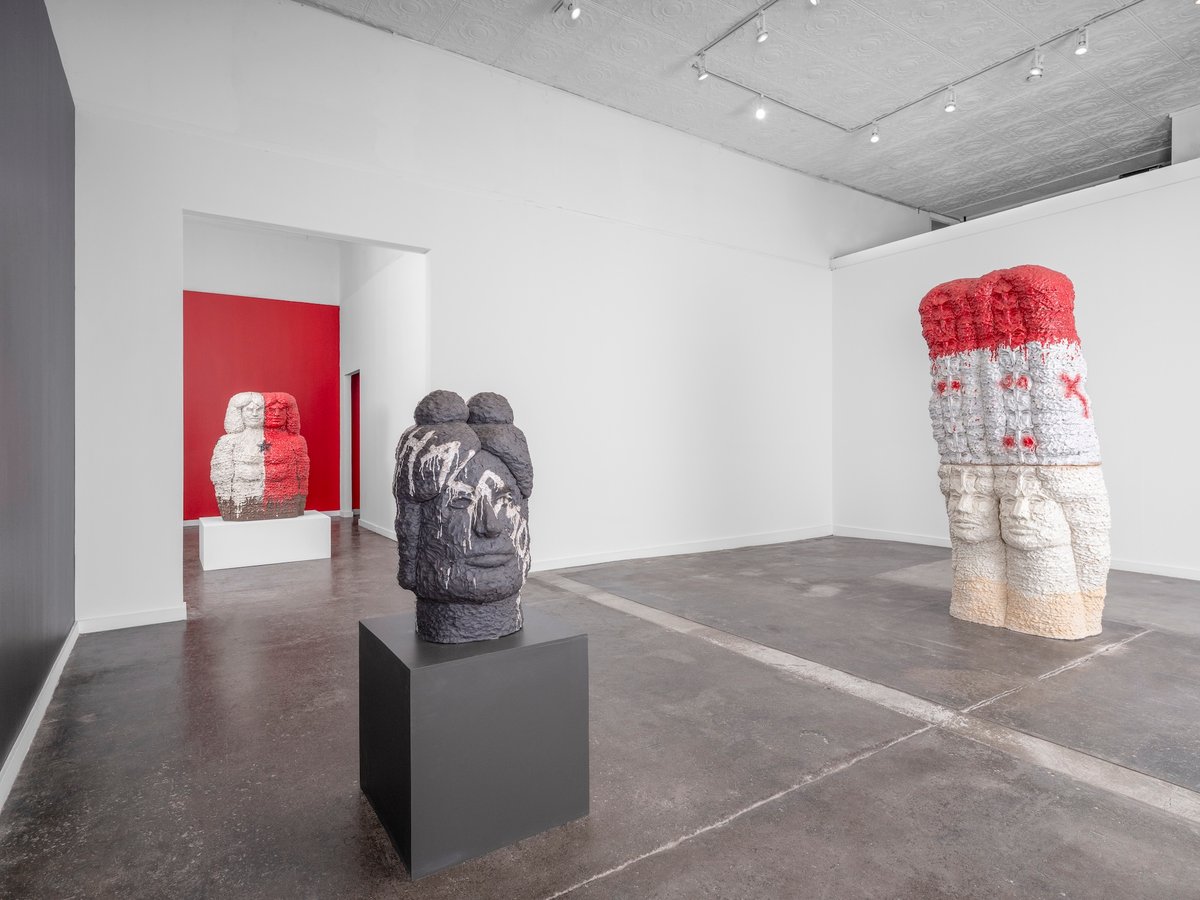
Ballroom’s central lobby features another of Halfmoon’s large female figures, America’s Sweetheart (2022). This one has three colours and references the US flag. The upper section is glazed in dark grey decorated with white stars, there is white in the middle, and red on the hips and legs. The galleries on either side feature additional figurative work, including a couple horses.
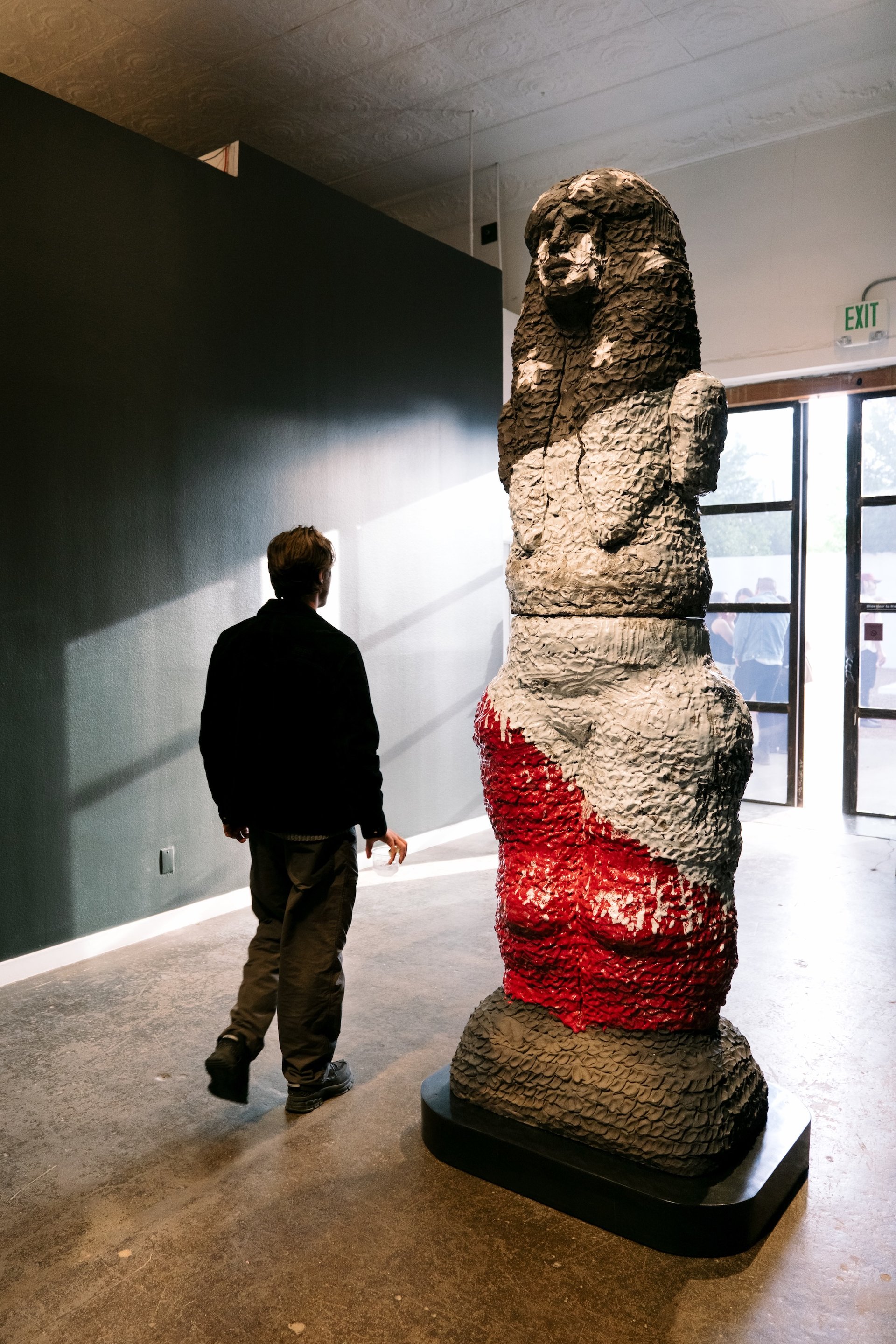
Raven Halfmoon’s America’s Sweetheart (2022) at Ballroom Marfa Photo: Sarah M. Vasquez, courtesy Ballroom Marfa
Several of the female busts and torsos are presented as pairs in a single sculpture—either side by side, as in Tsu’-Cus lya’y? I (Star Sister I) (2022), or with their backs against one another like Day and Night in Oklahoma (2026). To distinguish them, the two parts are sometimes painted different colours—such as black and white, or red and white.
Flags of Our Mothers originated at the Aldrich Contemporary Art Museum in Connecticut and Bemis Center for Contemporary Arts in Omaha, Nebraska, organised by the two museums’ chief curators, Amy Smith-Stewart (Aldrich) and Rachel Adams (Bemis). “When we found out that we were both interested in a show with Raven, we decided to collaborate,” Smith-Stewart tells The Art Newspaper. The exhibition focuses on Halfmoon's past five years of work and is her first major travelling exhibition.
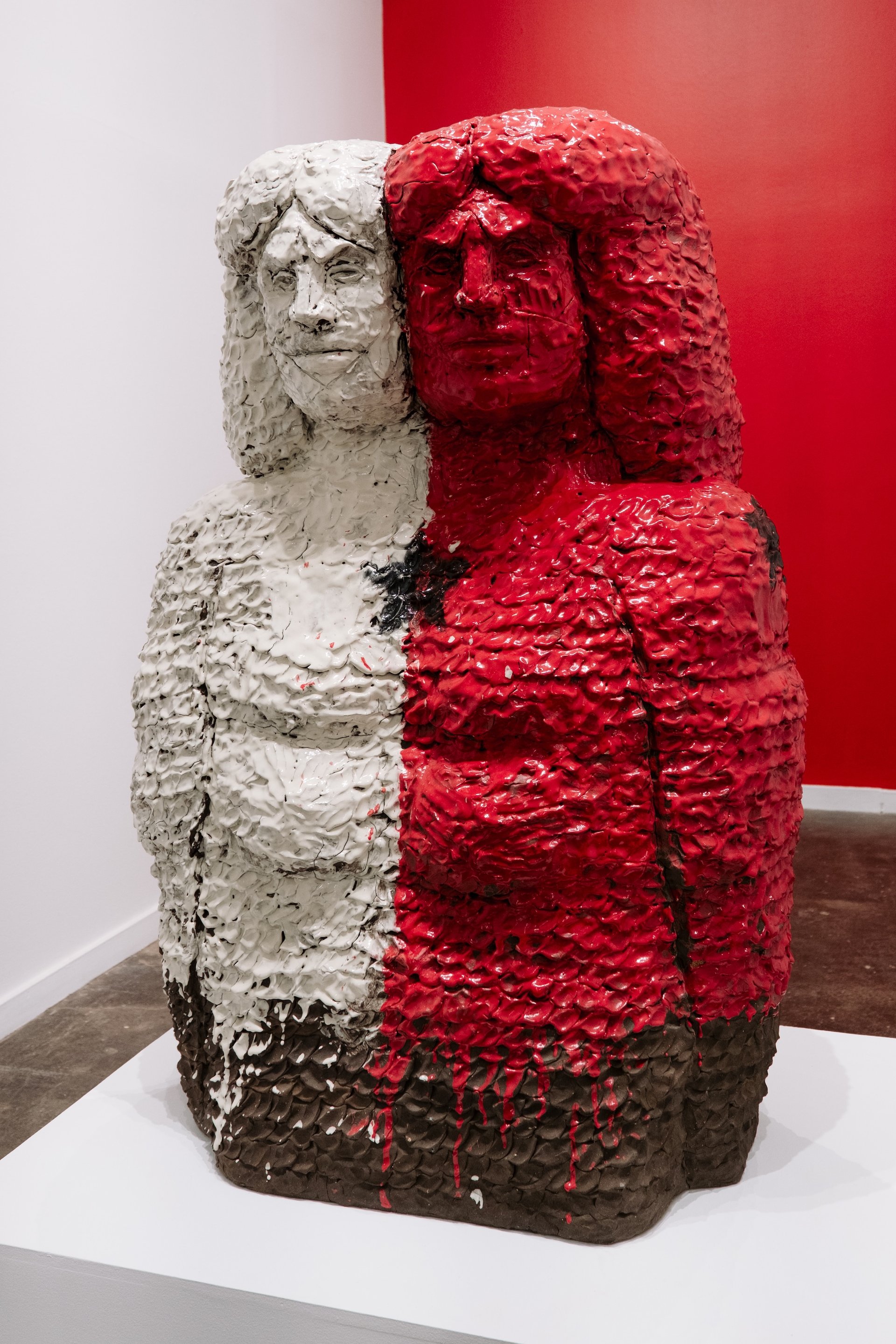
Raven Halfmoon’s Tsu’-Cus lya’y? I (Star Sister I) (2022) at Ballroom Marfa Photo: Sarah M. Vasquez, courtesy Ballroom Marfa
Ballroom is a contemporary art space in a small town with an unusually outsized art legacy in West Texas. Donald Judd moved to Marfa in the 1970s and built a series of studios and galleries that still draw visitors from around the world. The Ballroom building was a dance hall in the 1920s. It was remade in 2003 into a kunsthalle featuring art, performance and music by Virginia Lebermann and Fairfax Dorn.
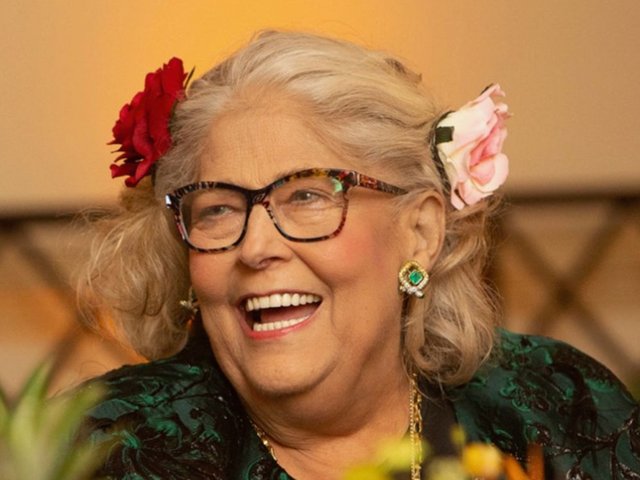
Lebermann is thrilled the museum was able to host the Halfmoon show. “She's an incredible artist, and she's such a rockstar,” Lebermann says. “There was also a bit of serendipity—our director at the time was from Oklahoma, and she was the one who initiated the show.”
Halfmoon has been prominently featured coast to coast recently. In New York alone, her large figurative sculptures are currently on view at the Whitney Museum of American Art both outside the entrance and inside as part of this year’s Whitney Biennial (until 23 August) as well as nearby on the High Line (until October).
In Los Angeles, meanwhile, one of her "twin" pieces is part of the Hammer Museum’s group show Several Eternities in a Day: Form in the Age of Living Materials (until 23 August) and her 7-ft-tall figure On the Lookout for Choctaw Ponies (2023) is a centrepiece of one of the new David Geffen Galleries at the Los Angeles County Museum of Art.
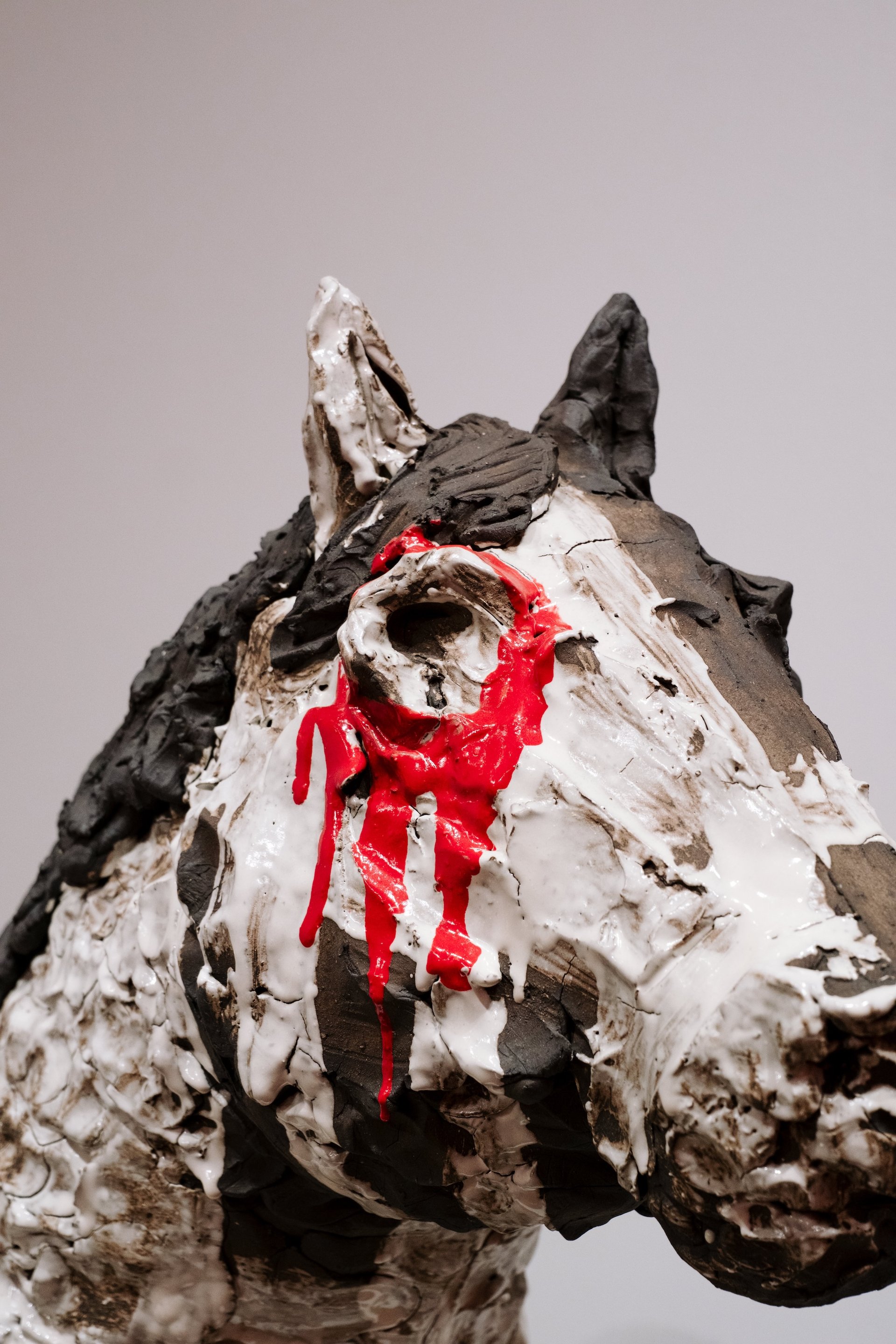
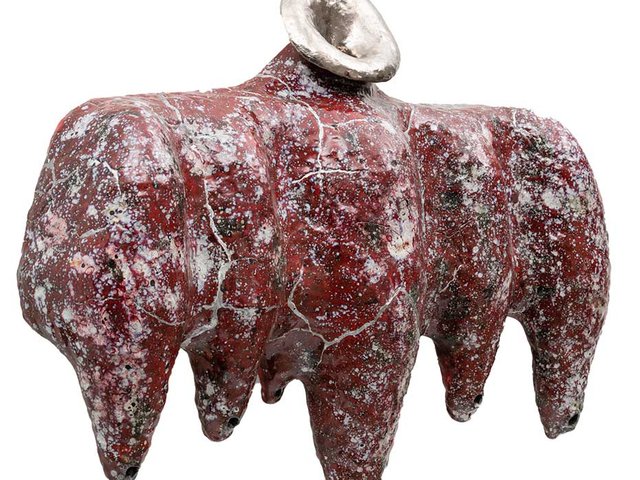
A close-up of one of Raven Halfmoon’s horses shows the artist's signature handmade references, glazes of white and red drips Photo: Sarah M. Vasquez, courtesy Ballroom Marfa
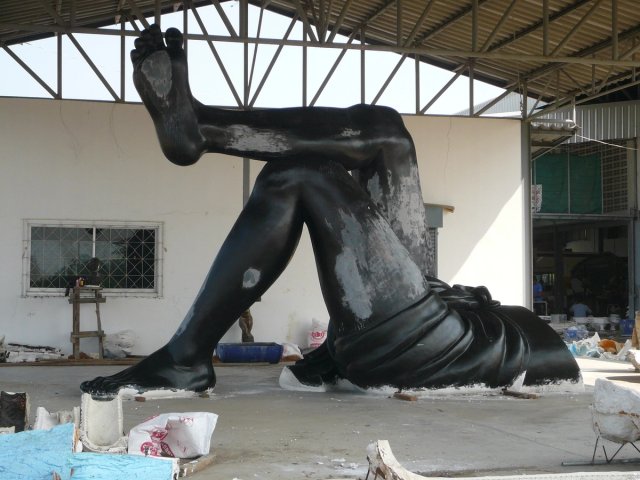
Halfmoon was born in Norman, Oklahoma. She showed a remarkable aptitude for art ever since she was a child, says her mother, Stacey Halfmoon—who drove to Marfa with her daughter for the opening. “When she was young, I took her to visit an elder who was making ceramics,” says the artist’s mother. The experience stuck with the younger Halfmoon, and when she attended the University of Arkansas, she double majored in ceramics/painting and cultural anthropology.
The artist is keenly aware of stereotypical historical images of Native Americans, and she is intent on countering these with her own depictions of strong, powerful women who control their own destinies. Through her art, she wants to tell the enduring and profound stories she grew up with. “I feel a responsibility to share histories," she says. "I have a responsibility to my family, to my tribe.”
Asked whether she is depicting herself in these portraits, Halfmoon smiles. “I have horses. I wear a cowboy hat,” she admits. At the same time, she is portraying the women who have come before her, and perhaps after her. “The work I’m making is more than myself,” she says.
- Raven Halfmoon: Flags of Our Mothers, until 11 October, Ballroom Marfa, Texas