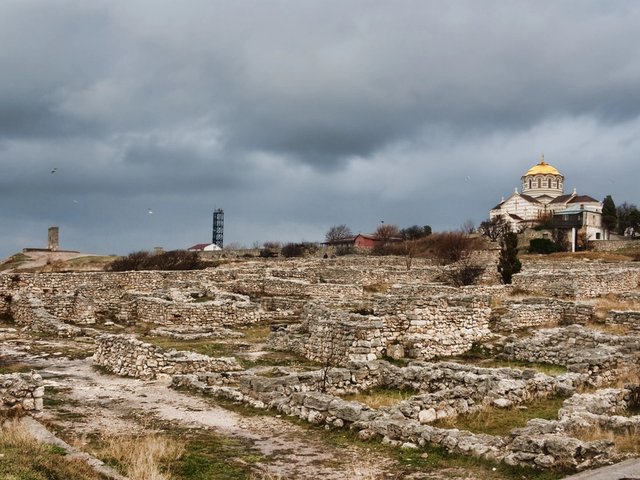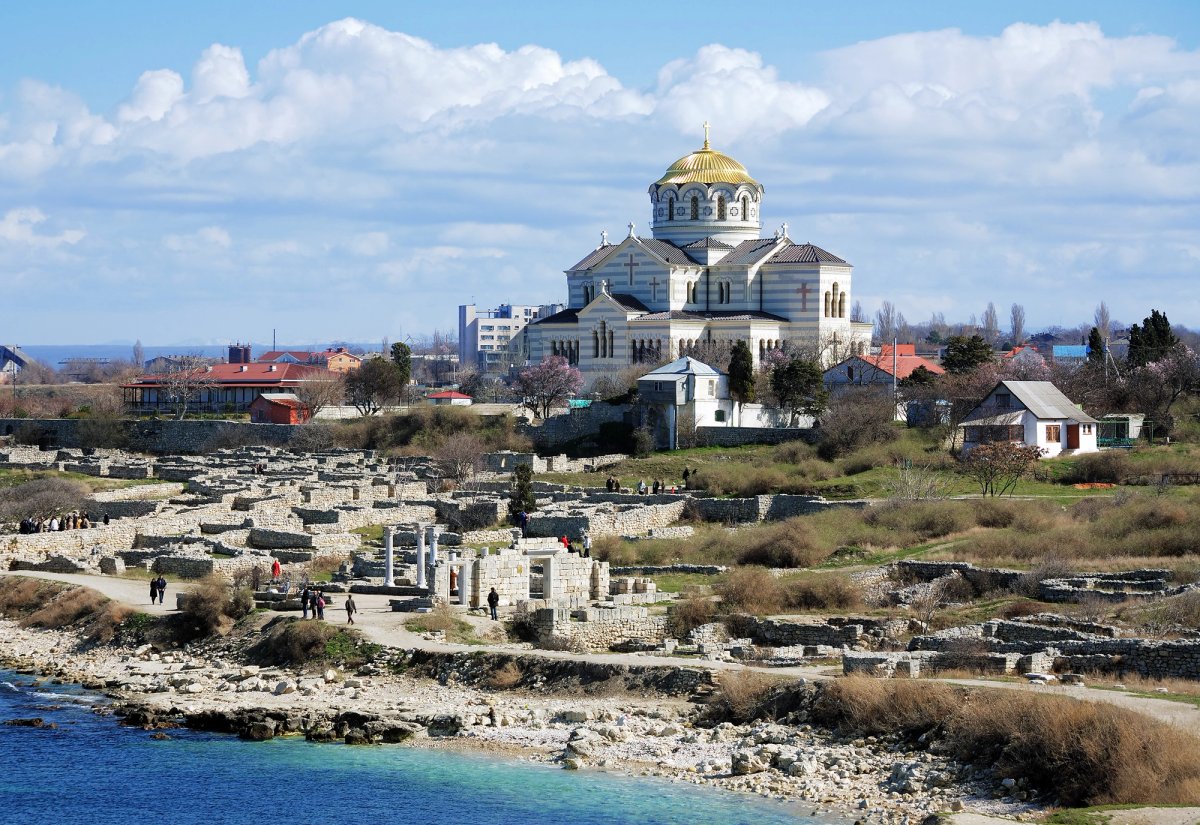
Tauric Chersonese, a 5th century BC Greek city in Russian-occupied Crimea, has been added to Unesco’s list of World Heritage in Danger. The decision was made on 22 July at the 48th Session of the World Heritage Committee, which opened in Busan, South Korea on 19 July and runs until 29 July.
The Ancient City of Tauric Chersonese and its Chora was inscribed on Unesco’s World Heritage List as a Ukrainian site in 2013, shortly before Crimea was illegally annexed by Russia in March 2014.
Tetyana Berezhna, the Ukrainian culture minister, wrote on Thursday in a Facebook post: “This is an extremely important international decision that officially confirms the threats to the monument due to the temporary Russian occupation of Crimea, illegal excavations, construction, destruction of the archaeological context and removal of cultural values.”
She noted a call to protect other sites in Crimea, including the Khan’s Palace in Bakhchisarai, a important site for the indigenous Crimean Tatars, who were deported by order of Soviet dictator Joseph Stalin in 1944.
On Friday, the committee also voted to inscribe Sebastia in the Israeli-occupied West Bank and five castles in the Mount Amel region of southern Lebanon as both World Heritage and endangered sites.
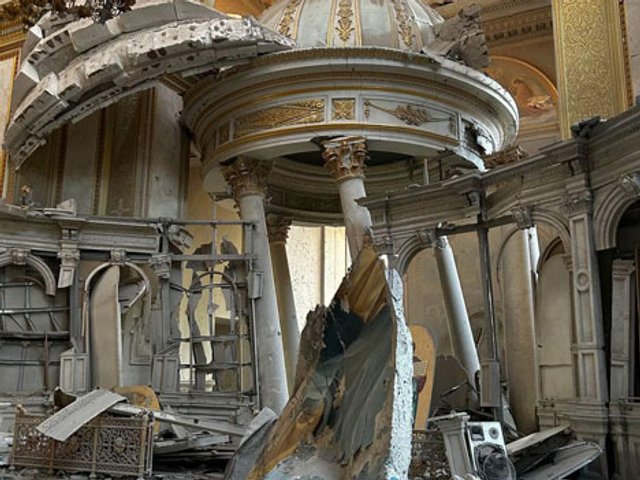
Three Ukrainian sites have already been registered as endangered since Russia’s full-scale invasion of Ukraine: Saint Sophia Cathedral and Kyiv Pechersk Lavra, and the historic centres of Lviv and Odesa. The committee resolved this week to keep them there due to the “imminent threat” posed by the “ongoing armed aggression of the Russian Federation”. The Kyiv-Pechersk was hit by a Russian strike in June, and Saint Sophia Cathedral was damaged the summer before.
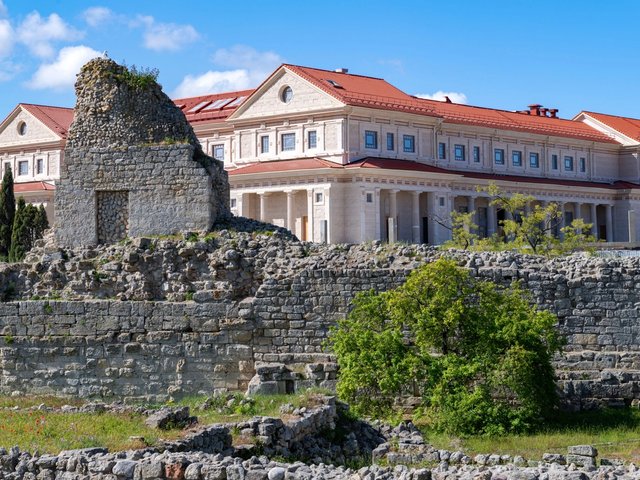
Antiquities have been a focal point since the annexation of Crimea. A battle with Russia in Dutch courts over Scythian gold artefacts from Crimea, which had been on loan to the Allard Pierson Museum in Amsterdam when the annexation took place, resulted in the works being returned to Kyiv. Ukraine has also been taking measures to fight illegal Russian archeological digs in Crimea. In 2025, it petitioned for the arrest in Poland of State Hermitage Museum archaeologist Alexander Butyagin, who was later released in a prisoner exchange. Ukraine has also warned about the damage to Tauric Chersonese, which is being run by Tikhon Shevkunov, a senior Russian Orthodox cleric who has called Chersonese the heir of Byzantium. Shevkunov was appointed to the role by Vladimir Putin, who has also visited the site.
In July 2024, Dmytro Lubinets, the Ukrainian parliament commissioner for human rights, called on the United Nations to intervene, saying that “the Russians have completely destroyed the authentic monument”, and that they are “actually building a new city—the so-called historical and archaeological park”.
In its 2026 report, the National Commission of Ukraine to Unesco wrote that Shevkunov's foundation and the Russian Orthodox Church ”are directing activities at the site, rather than archaeologists or conservators.”
“This shift in governance has led to decisions that prioritise tourism infrastructure, nationalist narratives, and even military or religious events over conservation.”
Yevheniya Kravchuk, a Ukrainian MP and a member of Ukraine’s permanent delegation to the Parliamentary Assembly of the Council of Europe who was involved in the process, told The Art Newspaper about the buildup to the decision. She said that Unesco told Ukraine in 2016 that satellite images are required as proof and that, now, “thanks to satellites, the International Council of Museums, and all the conclusions, we have the decision.”
“But also, it shows the sort of irrelevance of the 1972 [World Heritage Convention]. Basically the whole idea of the list is to name and shame the country on the territory of which a Unesco World Heritage Site is in danger, but in times of war and in times of occupation it shows that the danger can come not from the state on which territory the heritage is located but from the aggressor and Unesco cannot deal with it, cannot do anything. So obviously there should be a rethinking of the outcomes and consequences.”
Rinat Alyautdinov, Russia's permanent delegate to Unesco, said at the committee session in Busan that "the decision taken is yet another example of the politicization of the committee's work. Russia does not recognise the decisions taken.” According to the state-owned news agency TASS, Russia has sent preservation information to Unesco which it has declined to accept since 2014, and that any threats come instead from fragments of Ukrainian weaponry. Alyautdinov added that “Russia strictly fulfills its obligations under the convention and confirms its readiness to cooperate with Unesco on this issue.”
The Unesco World Heritage Committee decision is the second by an international body this week to address Russia’s aggression against Ukraine. The Venice Biennale has formally cut its €2m grant to the Venice Biennale for allowing Russia to participate.