
Creating content and building a following on social media is an arduous but necessary evil for many artists. It is an important way to develop an artistic practice and career, find an audience for one’s work and, ultimately, help finance an art business. But what happens when, for some reason, a platform decides to delete your account? Suddenly years of work, contacts and potential revenue disappear overnight and are almost impossible to recover.
The artist, journalist and activist Emma Shapiro experienced exactly that when her account was permanently terminated on 8 December 2025, one day after submitting an appeal over its suspension. Now she is taking legal action with the help of Avant-Garde Lawyers (AGL), who specialise in supporting artists who have been subjected to censorship or persecution.
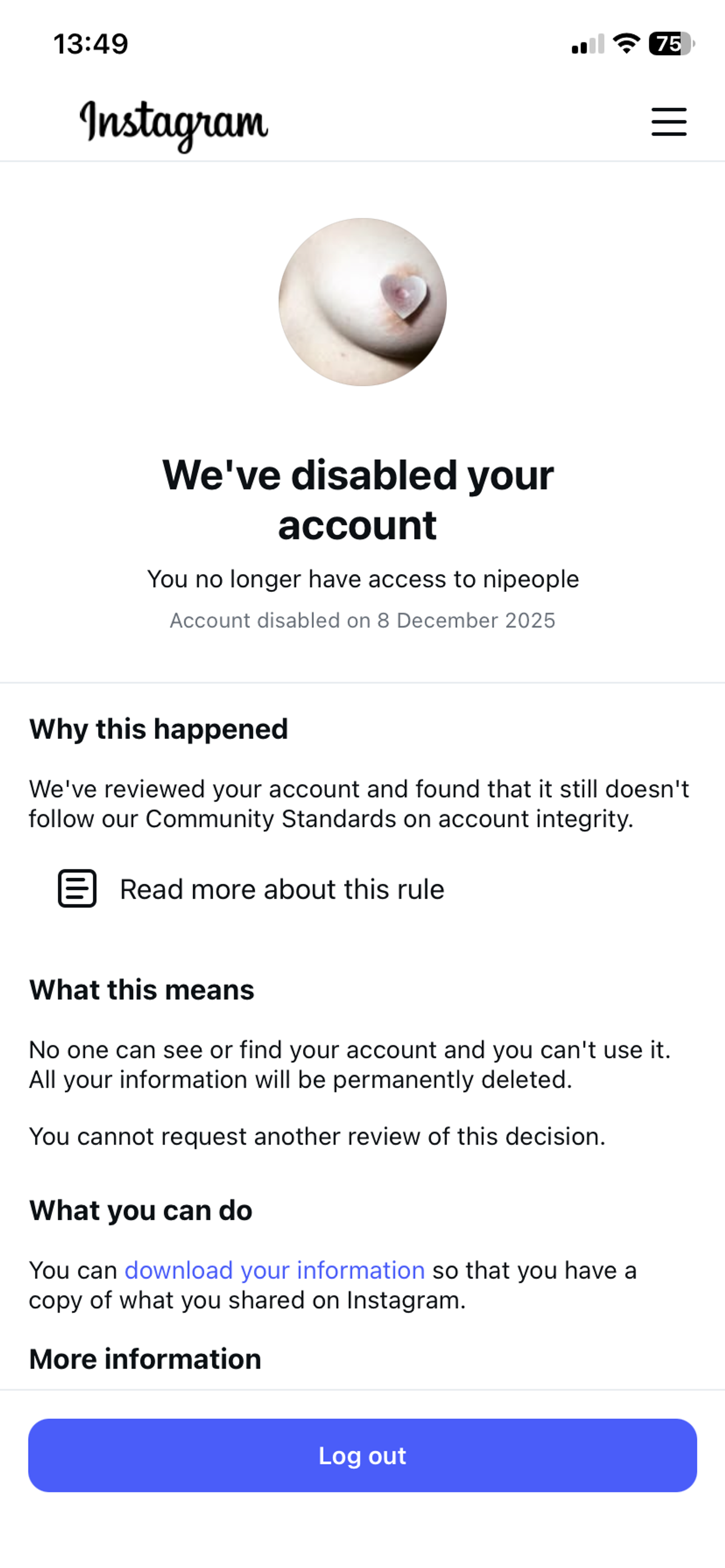
A screenshot from the @nipeople account after it was disabled by Meta Courtesy of Emma Shapiro
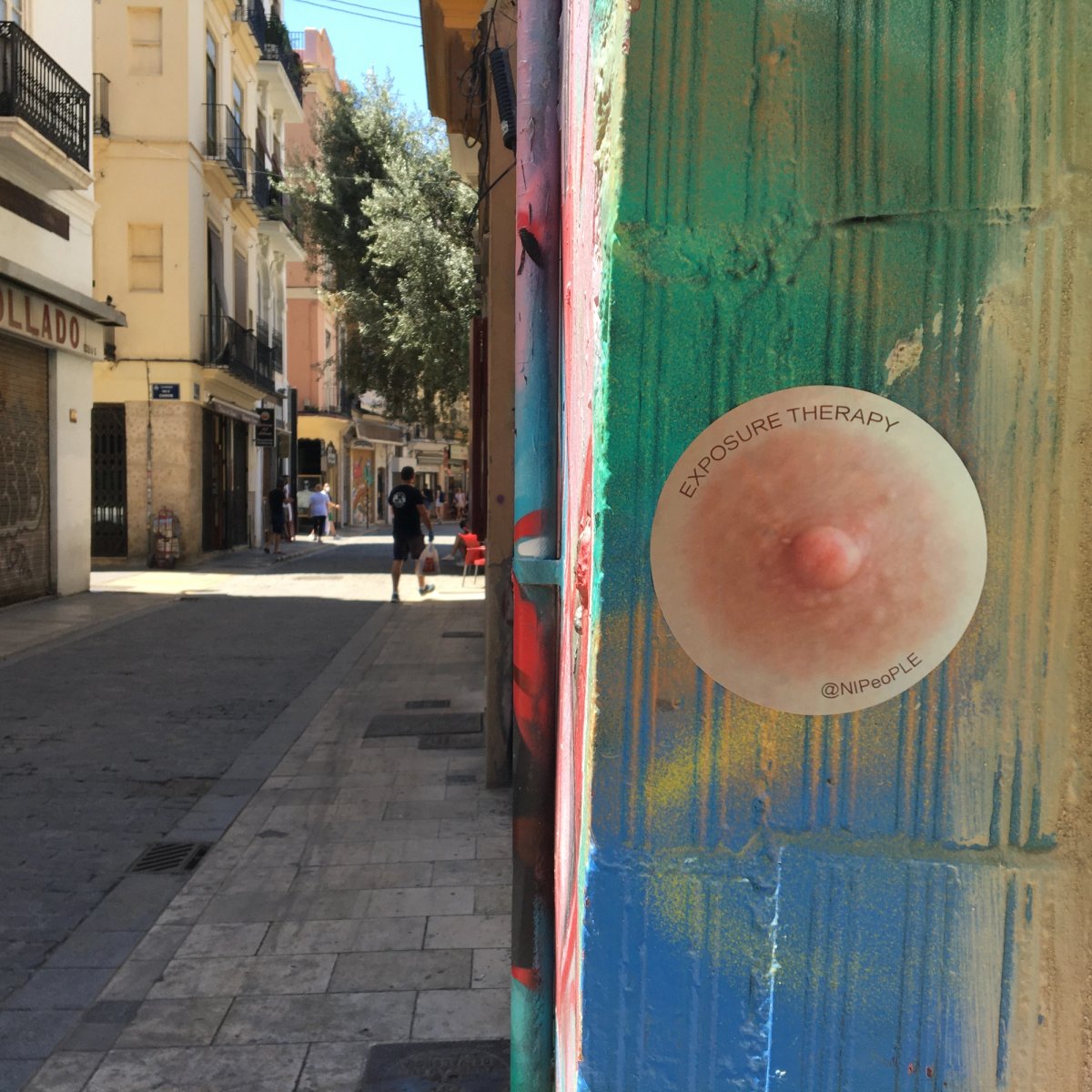
Shapiro, who is from the US but lives in Spain, launched her artistic project Exposure Therapy in 2017 to challenge the censorship of female-presenting bodies online and offline. In particular, the project takes umbrage at the fact that female nipples are sexualised and censored as “pornographic” while male nipples are not. The “sexist censorship of the female-presenting nipple on social media and society is just the ‘nip’ of the iceberg of body-equality and gender-based-discrimination,” Shapiro writes on her website. As part of the project, Shapiro invites women and those who present as female/femme to contribute photographs of their nipples to be turned into stickers. These are then distributed for free around the world so that they can be placed in public locations in the hopes of normalising nipples of all genders.
Shapiro created the Instagram account @nipeople in 2018 as part of the Exposure Therapy project. The account “has served as a platform for artistic expression, advocacy and public discussion about gendered censorship,” a statement from AGL says. Meta suspended the account last year following Shapiro’s post of a short video that showed a metal pole covered in Exposure Therapy’s nipple stickers, citing alleged violations of its Community Standards on “account integrity”. The account was permanently deleted the following day after Shapiro submitted an appeal through Instagram’s one-click in-app process. “The suspension notification did not identify any conduct typically associated with account integrity violations, such as spam, impersonation, automated activity or attempts to evade enforcement measures,” AGL says in its statement, adding that Shapiro was not given “any opportunity to provide reasons, context, evidence or explanation”.
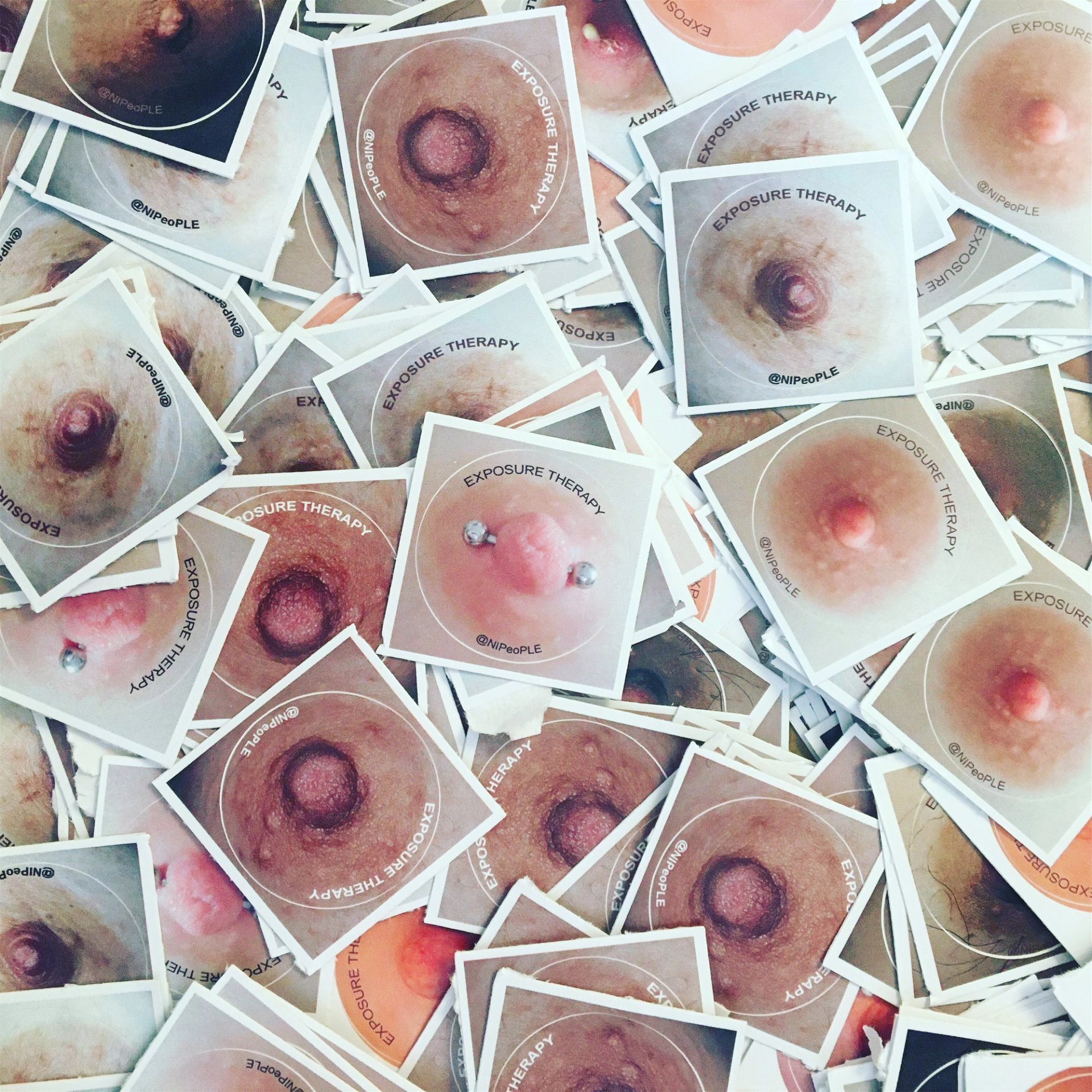
A collection of Exposure Therapy stickers Courtesy of the artist
AGL has filed a complaint with the Spanish Comisión Nacional de los Mercados y la Competencia (CNMC) on behalf of Shapiro, asserting that Meta failed to comply with several obligations under the European Union’s Digital Services Act (DSA) when it suspended and subsequently terminated the Instagram account. The complaint argues that “Meta failed to provide a sufficiently clear statement of reasons for its decision, denied Shapiro access to an effective internal complaint-handling process, and failed to act in a diligent, objective and proportionate manner when imposing the severe sanction of permanent account termination”, AGL says.
There are two separate procedures for the complaint: one is an out-of-court dispute resolution procedure through User Rights, a European body specialising in content moderation issues. It confirmed by email on 25 June that it had contacted Meta and requested the information necessary to examine the case; AGL is awaiting an update. The second is a complaint before Spain’s Digital Services Coordinator, the CNMC, which is still awaiting its initial assessment and a formal timetable for the process.
Meta did not respond to a request for comment on the case.
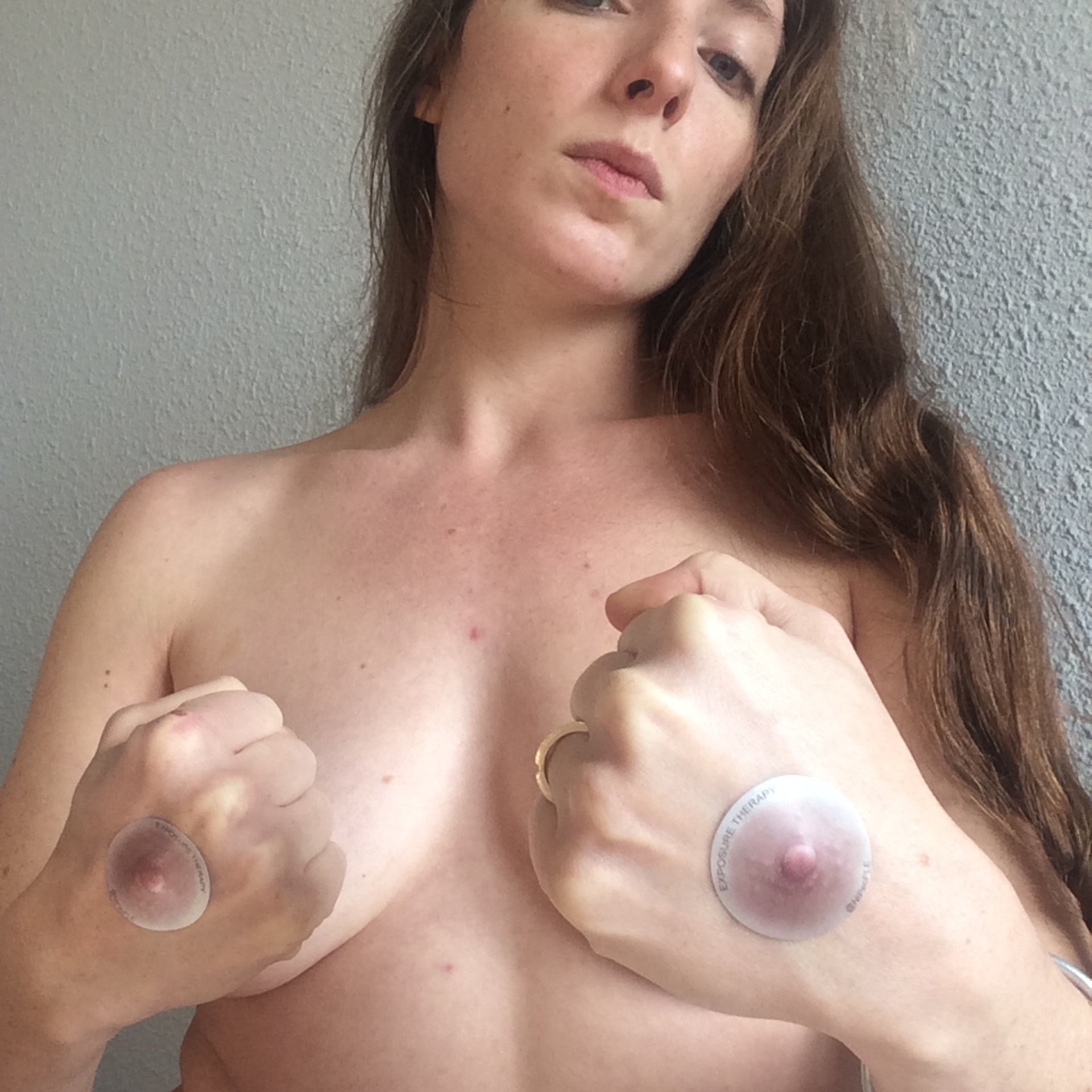
Emma Shapiro's Self portrait with Exposure Therapy stickers Courtesy of the artist
Andra Matei, AGL’s executive director, says that their legal approach in the case is also novel. “It seeks to apply the DSA not only to the removal of individual content, but to the termination of an artist’s account as a whole, including the resulting loss of her artistic archive, audience, professional visibility and space for public debate,” she says. “It therefore raises broader questions about how the DSA’s requirements concerning transparency, effective redress, diligence and proportionality apply to account-level sanctions.”
For years, users of Instagram and Facebook have bemoaned the secretive, opaque systems that surround content moderation and account suspension or termination. Deletion of accounts has increased since Meta, the parent company of Instagram and Facebook, has started using automated AI moderation rather than humans to review potential community guideline violations such as fraud, misleading content or nudity. Last summer, Meta admitted to a “technical error” that had led to some Facebook Groups being erroneously deleted but denied wider problems with its content moderation.