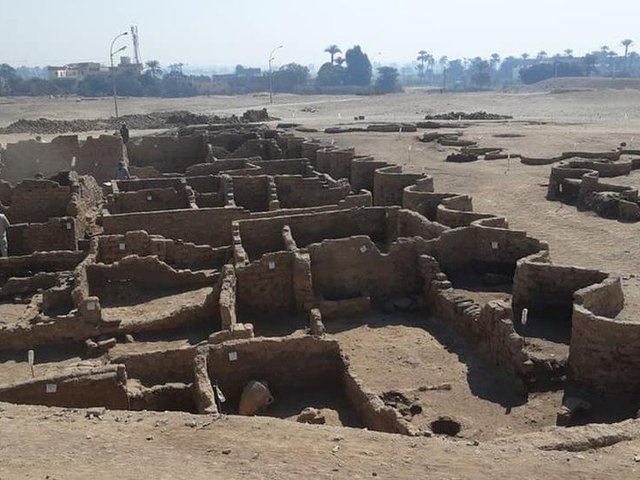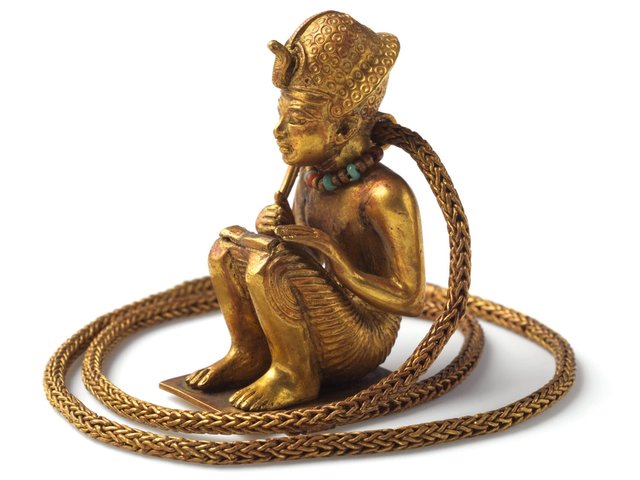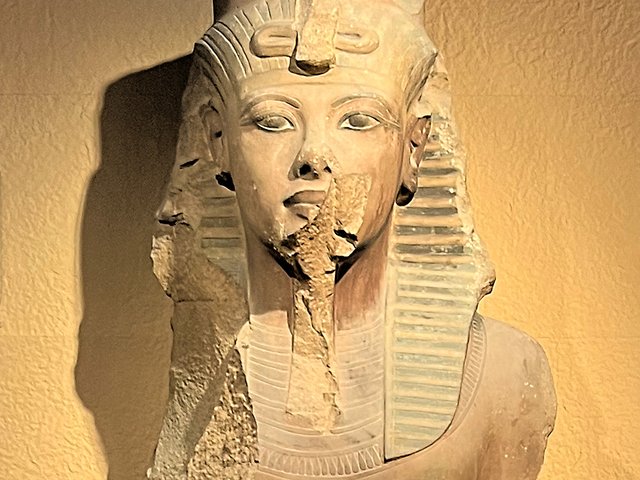
A touring exhibition of more than 100 objects from the Egyptian Museum in Cairo (EMC) and Luxor Museum is making its first US stop in San Francisco this summer. Treasures of the Pharaohs, curated by the former EMC director Tarek El Awady, will feature statues, jewellery, ceramics, furniture and even clay moulds spanning 3,000 years of the region’s history. Perhaps the most enticing draw will be the 20 artefacts on display for the first time in North America from the so-called Golden City, a remarkably well-preserved community dating from the 14th century BC on Luxor’s west bank, uncovered in 2021.
“The discovery of the Golden City is amazing in that it shows exactly the time when Amenhotep III was ruling,” says Renée Dreyfus, the curator of the show’s San Francisco edition. “A city of workmen, it was found while looking for Tutankhamun’s mortuary temple. The city seems to be composed of workshops, homes, and an administrative centre of people who worked for the pharaoh.”
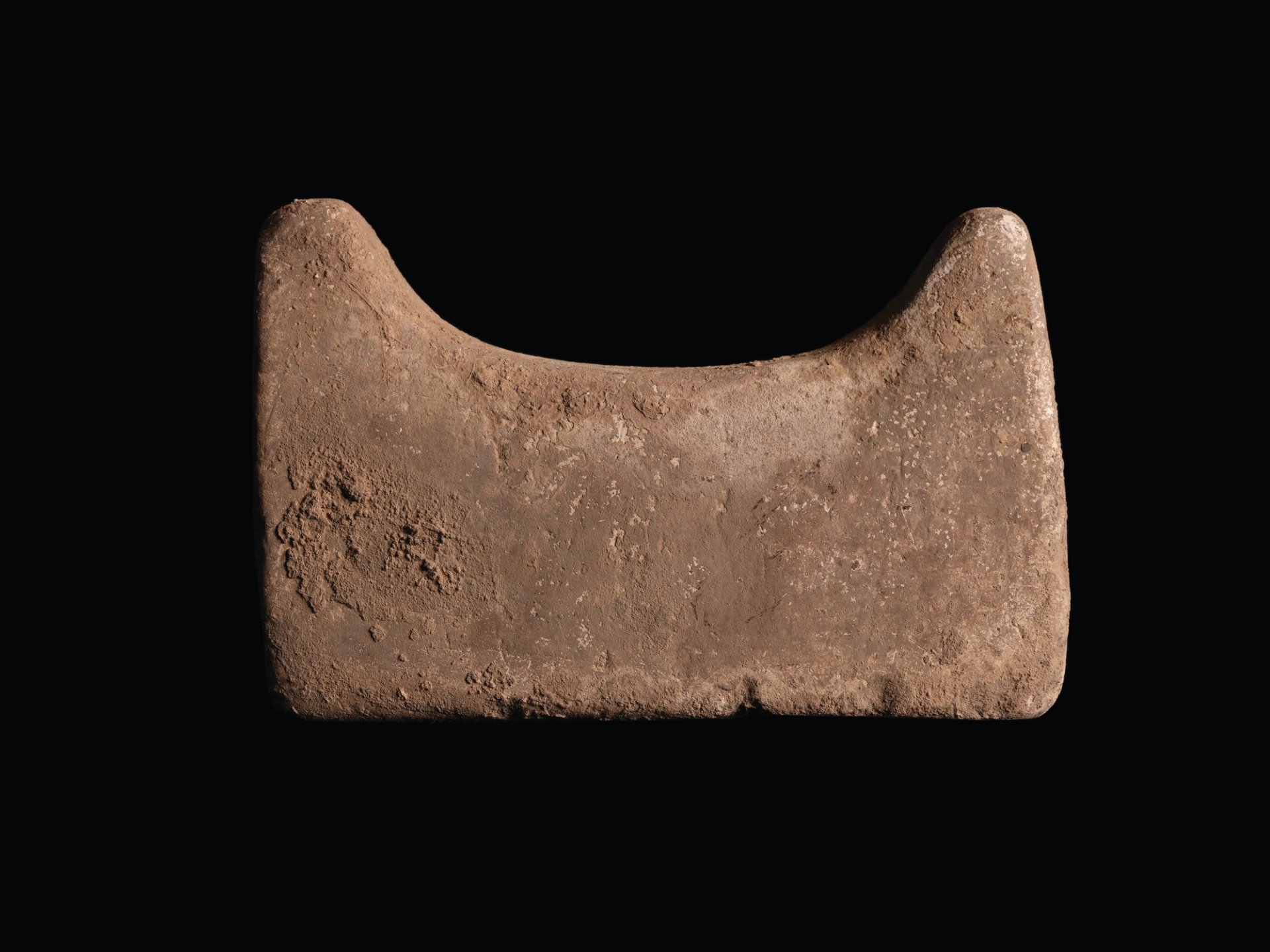
A limestone headrest, found in the Golden City, was used to protect the sleeper from insects at night Massimo Listri
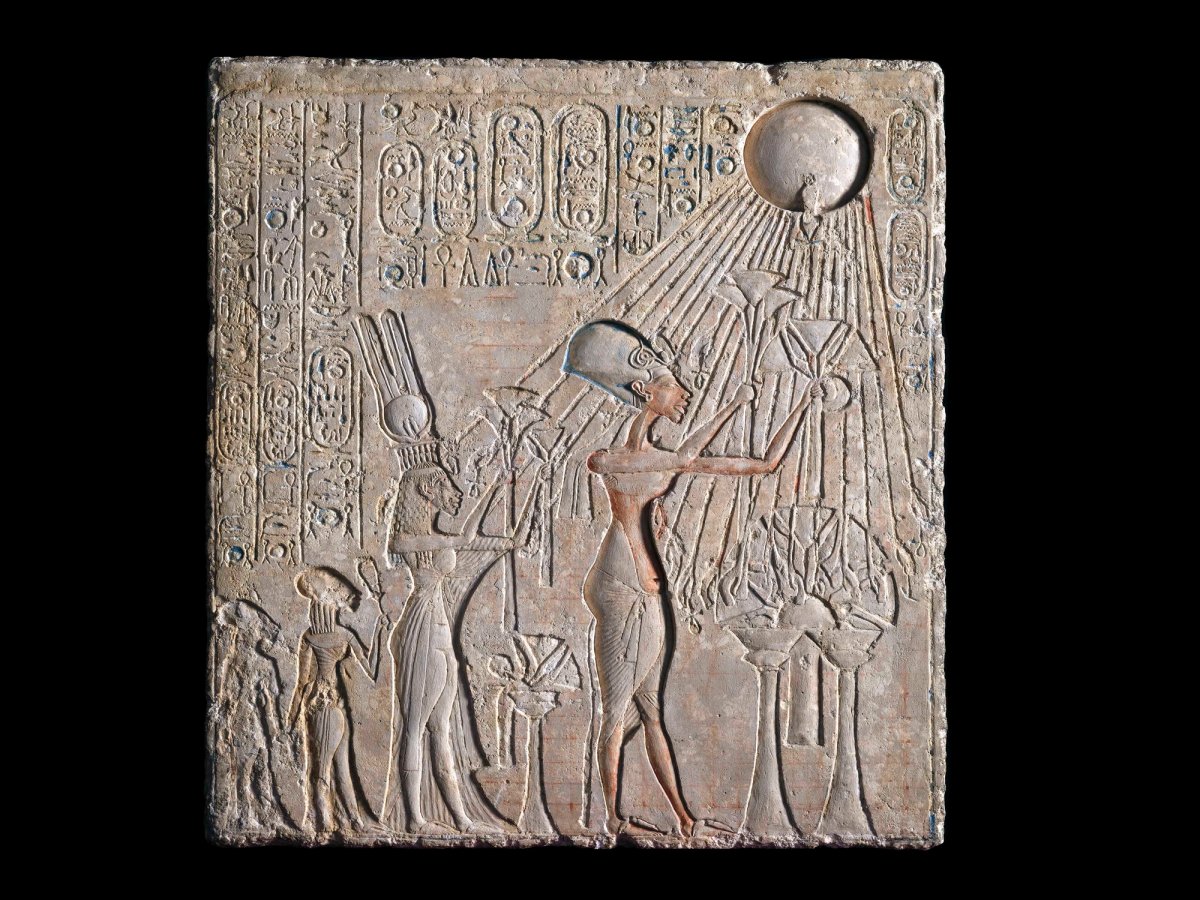
Amenhotep III, who ruled between around 1390BC and 1352BC, was likely King Tut’s grandfather. He presided over a prosperous age of wealth and stability that resulted in the flourishing of artistic and architectural endeavours, including the construction of the famous Luxor Temple. Amenhotep’s Golden City appears to have been largely abandoned after his son Akhenaten rejected the prevailing polytheistic tradition in favour of the singular worship of the sun god Aten, moving the capital to Amarna. The Golden City has drawn comparisons with Pompeii for both the insight it provides into daily life and its appearance of having been frozen in time.
Dreyfus points to two artefacts in the show that exemplify the sudden change in religion. The first, which she chose as the show’s opener, is an Old Kingdom statue of the Triad of Mycerinus—depicting what Dreyfus calls “the essence of the understanding of the Egyptian Kingship” in the form of the 26th-century BC pharaoh Menkaure, the goddess Hathor and the god of the province of Theban Nome. “I love starting with that object,” Dreyfus says. “In one glance, you can see that the pharaoh not only rules over all of Egypt but that he’s a deity at home with the gods.” The second object, made more than 1,000 years later, is a limestone carving of Akhenaten and his family worshipping Aten.
While these kinds of official artefacts have long served as clues into the culture of Ancient Egypt, newly discovered objects from the Golden City fill the void of how ordinary people lived. “The everyday objects found there are extraordinary,” Dreyfus says. Among the homes, bakeries and workshops along the city’s intricate networks of serpentine walls and streets, evidence has been discovered of everything from how people manufactured bricks to how they worshipped and cared for their families. “They even found a baby’s rattle,” Dreyfus says. One of Dreyfus’s favourite objects is a simple limestone headrest that once protected the sleeper from insects at night.
It turns out that the real treasures of the pharaohs may not have been the jewels and gilded wares after all, but rather the people who made these beautiful objects. “The treasures of the pharaoh are the people who worked for and under him,” Dreyfus says, “all the people who administered to the king and brought him up.”
• Treasures of the Pharaohs, de Young Museum, San Francisco, 1 August-31 January 2027; Kimbell Art Museum, Fort Worth, 14 March-19 September 2027