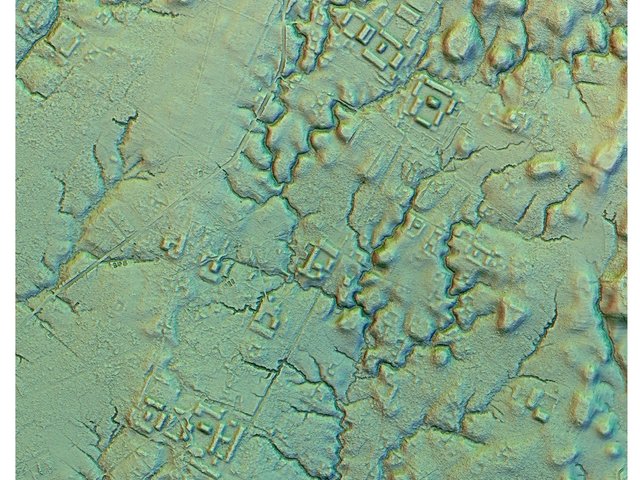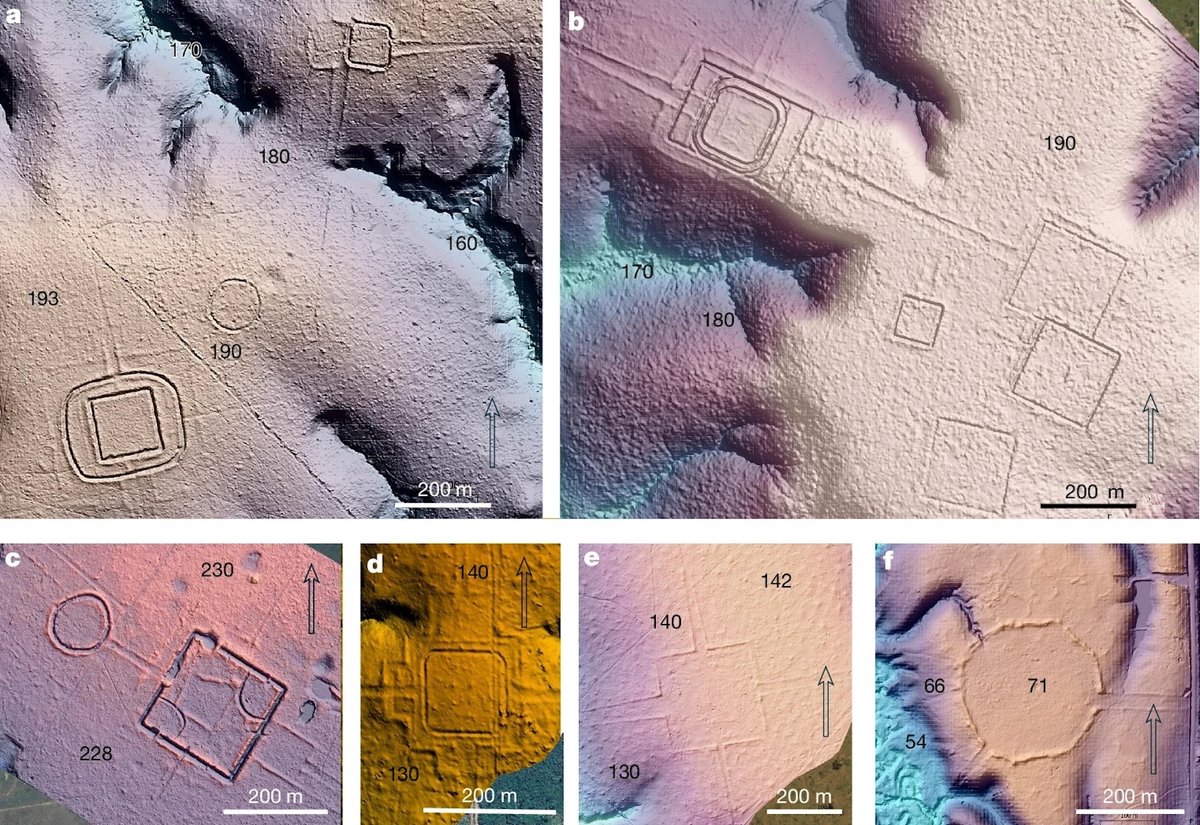
New research published in the journal Nature has uncovered evidence of a vast pre-colonial civilisation that flourished across southwestern Amazonia. Surveys using Light Detection and Ranging (Lidar) conducted on flights covering more than 4,400km over the Brazilian states of Acre and Amazonas revealed more than 20,000 earthworks hidden beneath the rainforest canopy.
Lidar, an active remote sensing technology that uses pulsed laser light to measure precise distances and create detailed three-dimensional models and maps of objects and environments, combined with satellite images, now show that the Aquiry civilisation occupied a much larger area than previously known. The Aquiry civilisation was a large, pre-colonial society that flourished from around 600BC until AD850, and spanned around 183,000 sq. km according to the latest research across modern-day Brazil, Bolivia and Peru.
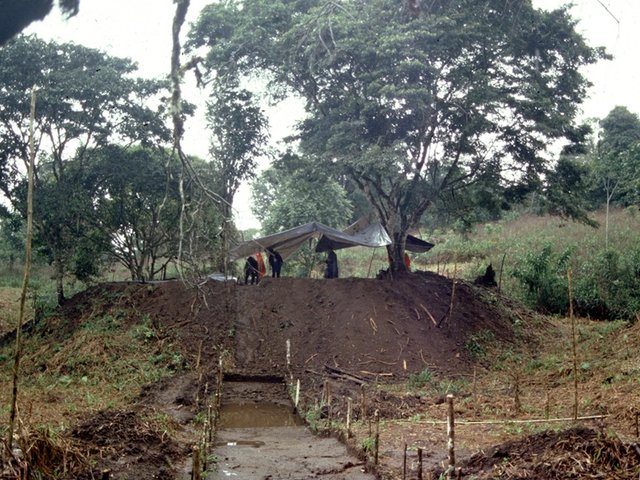
The Aquiry were known for constructing massive geometric earthworks featuring deep ditches and high embankments, some connected by roads. They lived in multifamily longhouses and farmed maize and squash, using the earthworks for ceremonies, political gatherings and community bonding. Sites associated with their civilisation were abandoned between AD850 and AD950.
Of the 432 Aquiry earthworks identified as part of the present study, only 36 had been previously recorded. The researchers predict there are between 24,000 and 30,000 earthworks and other monumental landscape features in the area, two thirds of which they believe belong to the Aquiry civilisation. Their research undermines long-held assumptions that the pre-Columbian Amazon was only thinly populated, with new estimates that the area could have supported between 1.25 million and 3 million people at its peak between AD100 and AD300. The findings also challenge the idea that the area was a wilderness rather than one home to complex communities that actively engineered their environment.
“When I was working at an Inca fortress in the Bolivian Amazon at the turn of the millennium, professor Alceu Ranzi of the Federal University of Acre [in Rio Branco, Brazil] invited me to Acre to see geometric earthworks he had spotted from an airplane,” says Martti Pärssinen, of the Instituto Iberoamericano de Finlandia in Madrid, one of the authors of the study. “At the time, it was widely believed that this part of Amazonia consisted of pristine tropical rainforest with poor soils unsuitable for large or complex human societies.”
Because the capital of Acre lies only around 250km from the Inca fortress he was studying at the time, Pärssinen visited the region and met Alceu in 2002. He recalls: “When I saw some of these monumental geometric structures, now known as Amazonian geoglyphs, in the deforested outskirts of the capital, together with ancient broad roads, I said to Alceu: ‘This will change everything we thought we knew about the Amazon wilderness.’ For me, it was a truly transformative moment.”
From that point onward, Pärssinen began studying these geometric structures together with Alcau. However, their research was largely limited to deforested areas, where the earthworks could be observed from the ground or identified through satellite imagery. Now, thanks to Lidar technology, Pärssinen says, “We have finally been able to see beneath the forest canopy and that has brought another equally profound moment of discovery.”
Namely, that the area occupied by this geoglyph-building civilisation is roughly three times larger than previously expected. The Aquiry also managed and domesticated useful Amazonian tree species, Pärssinen says, including the Brazil nut tree and several palm species such as peach palm and uricuri palm. He adds: “We can no longer speak of the Amazon rainforest as a pristine wilderness untouched by human activity.”
José Miguel Pérez-Gómez, a Venezuelan archaeologist and Amazonian expert unaffiliated with the recent study, says it “does not reveal a ‘lost civilisation’ in the romantic sense of the term. It reveals something more profound: a form of civilisation that Western perspectives had failed to recognise.”
Pérez-Gómez continues: “Geometric enclosures, roads, embankments and plazas appear to have functioned not primarily as fortresses or densely built cities, but as ceremonial and political centres connected to dispersed communities. This was a form of forest urbanism: discontinuous, polycentric and deeply integrated with dark earth soils, waterways, cultivated plants and useful species. Its monumentality lay not only in the movement of enormous quantities of earth, but also in the transformation of the landscape into memory, calendar, ritual setting and system of cooperation.”
Pärssinen adds: “Considering that our study area represents less than 3% of Greater Amazonia, one cannot help but wonder: what else remains hidden beneath the forest canopy?”