The ascent of the Italian Mannerist artist Lavinia Fontana into the art history canon continues, with a titillating twist. One of Europe’s first professional women artists, the 16th-century Bolognese painter was known for her empathetic portraits of women and children. But an Italian scholar, Enrico Maria dal Pozzolo, highlights another important aspect of her art in a new book, presenting “an unprecedented study of Fontana’s engagement with sensuality, power and patronage”, according to the publisher.
Enrico Maria dal Pozzolo
The Art Newspaper: Your research and findings show that Lavinia Fontana was an innovator in the field of erotic art?
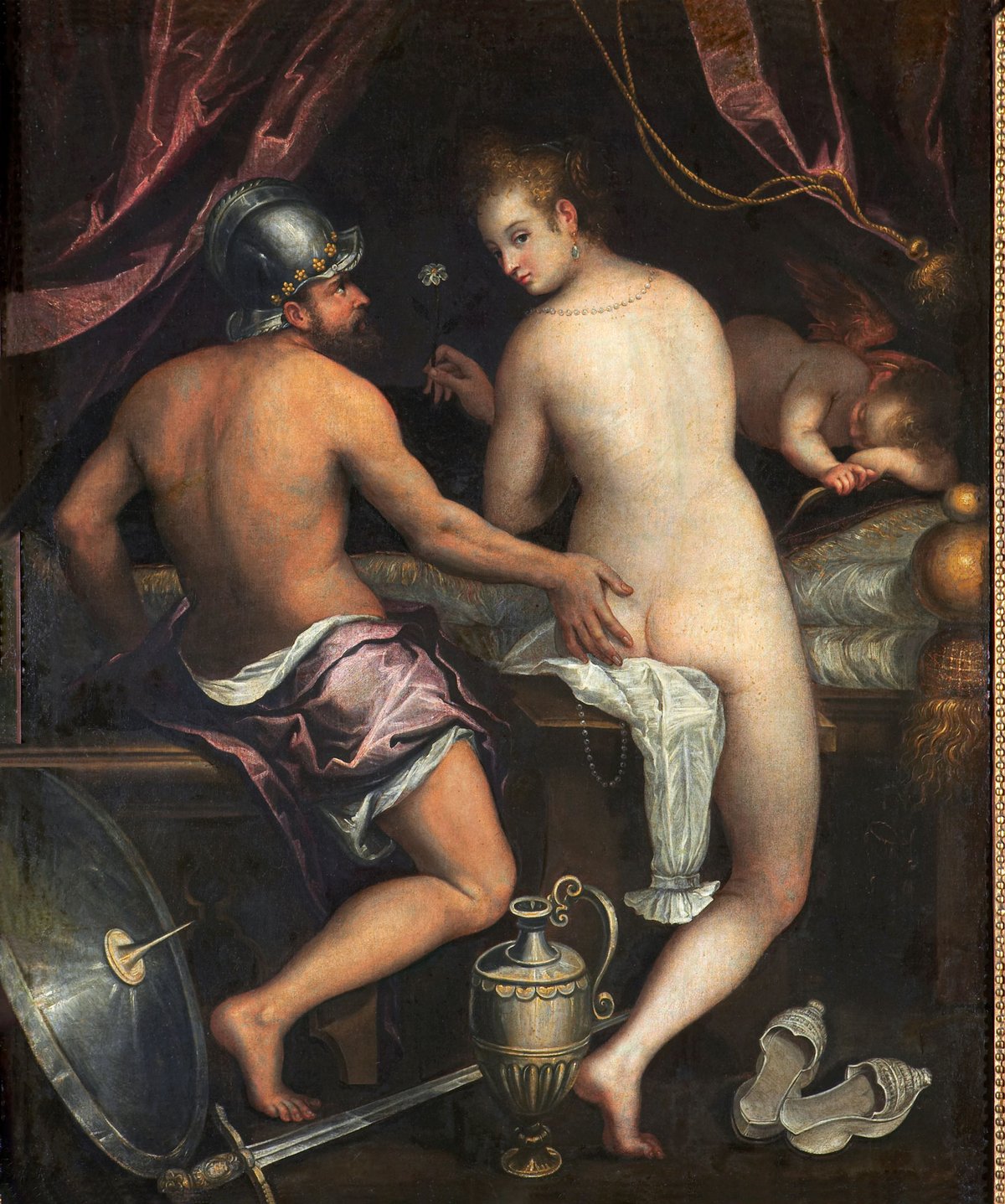
Enrico Maria dal Pozzolo: Lavinia Fontana has long been recognised as an innovator in erotic painting between the late 16th and early 17th centuries. It was only with the discovery of her large canvas depicting Mars caressing Venus’s bottom—a work I found in the Palacio de Liria in Madrid in 2007—that it was possible to prove that she was not only the boldest of all the women painters of her age, but that she had also crossed a threshold none of her male colleagues had dared to cross: that of the celebration of the female bottom! The painting was in all likelihood commissioned from her by Jacopo Boncompagni, the son of Pope Gregory XIII, at whose court Lavinia was very much at home.
How did patrons encourage this aspect of her work?
After her earliest years, Lavinia was an artist who worked exclusively on commission. She had a network of very important patrons. The network extended beyond her native Bologna to Rome, where she spent the last years of her life. There is no doubt that by the 1590s she was in demand in Bologna as an inventor of erotic subjects. It is now abundantly clear that Lavinia herself, a daring and innovative female artist, aroused interest in vanguard centres of collection and patronage like the Rome of Caravaggio and Annibale Carracci.
What is the newly found work you refer to? How did you discover this?
I recently had the opportunity to see a new, unpublished erotic work by Lavinia, held in a private collection. When I saw the painting, executed on a slate panel, I realised that it was “special” for at least two reasons. Firstly, in terms of quality, it is, without a doubt, a masterpiece. Secondly, the subject is remarkable: it presents three nude women, similar to the Three Graces [by Antonio Canova] or to the goddesses in the Judgement of Paris [by Peter Paul Rubens], who are clearly portraits. This is without precedent.
It struck me that a second edition of my book on Lavinia was necessary [An Erotic Apex of Lavinia Fontana, 2019]. The second edition includes this painting and other unpublished works of Lavinia exploring the cultural premises—archaeological and literary in particular—that encouraged such inventions (these reflections are enriched through a collaboration with Cristina Farnetti). Lavinia was unquestionably the most innovative of the Italian women painters of her time. Her unconventional outlook became part of her legacy to the next generation of female painters such as Artemisia Gentileschi, whom she undoubtedly knew personally.
• Enrico Maria dal Pozzolo with research by Cristina Farnetti, Lavinia Fontana: Erotic Paintings, Ad Ilissvm (an imprint of Paul Holberton Publishing), 200pp, £45 (hb)