In his new publication, Massimiliano Gioni, the director of the New Museum in New York, gives a behind-the-scenes account of the Venice Biennale through conversations with 16 of the curators that have worked on the prestigious mega show. Gioni was the biennale’s artistic director in 2013, so is familiar with the ups and downs of such a role, and his book aims to provide insights into the quirks and perks of organising the world’s most prestigious biennial.
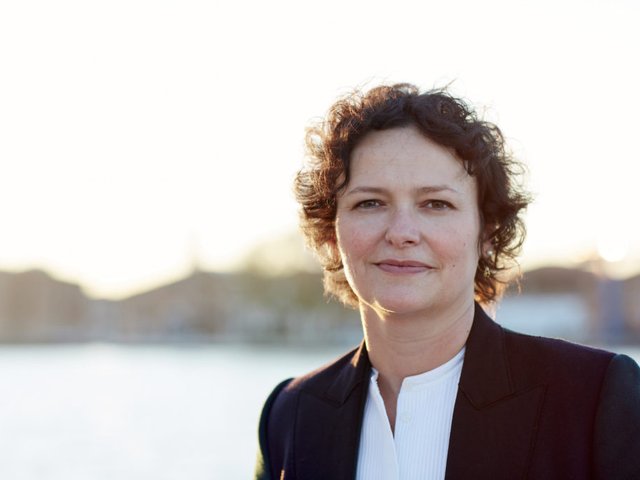
“This anthology of interviews conducted by Gioni proposes a 33-year journey, from 1993 to 2026, recounting the various approaches, visions and challenges faced by the curators through anecdotes and memories of their experiences,” says a publisher’s statement. Art world names such as Francesco Bonami (2003), Bice Curiger (2011) and Daniel Birnbaum (2009) feature alongside Robert Storr, the former dean of the Yale University School of Art, who organised the 52nd Venice Biennale in 2007. Below is an edited extract of the discussion with Storr.
Massimiliano Gioni Photo: © New Museum
Extract from High Waters: An Oral History of the Venice Biennale
Massimiliano Gioni: I would like to start with the question I usually ask last: how do you think your biennale will be remembered?
Robert Storr: Well, I hope it won’t be forgotten, but I can’t tell you, much less have a say in how it will be remembered. My biennale was unusual in terms of what it attempted to do. Whether it succeeded or not is another question. But it tried to be international in ways that it had not been for a long time. For example, I was the first curator to go to Africa to do research, and I included many African artists. It was also less of a thematic biennale and more focused on art and its endless diversity. I was not trying to make general statements, except—and that was an important exception for me—to say that this really is now not so much a “global” world as a cosmopolitan, truly international art world, and that we should look for art wherever it can be found.
MG:I particularly remember certain extraordinary artists and works in your biennale: the room by Sigmar Polke in the Central Pavilion and the films by Yang Fudong in the Arsenale, and El Anatsui, who had his first major international consecration at that biennale.
RS: In some ways, Fudong was the presentation I was most proud of, because his magnum opus, Seven Intellectuals in Bamboo Forest (2003), was a work composed of multi-parts— a fabulous film in episodes, so to speak—that almost nobody had ever seen in its entirety. I told him I would only do it if we could get the whole thing, and we did. The five separate projection rooms for the movie ran nearly the length of the Arsenale, like its spine.
MG: How did you choose the artists? Did you approach them based on a theme? Or did you choose the works first?
RS: I approached artists that I thought would in fact contribute to the theme. To simplify somewhat brutally, the basic theme was: it’s time to get past the mind/body split; it’s time to stop pitting Expressionism against Conceptualism. Rather, I wanted to deal with art in all of its forms and in the ways in which good art touches all aspects of our capacities, our faculties, all dimensions of our psyches, of our senses. That was the main point of my biennale. I was looking for people whose art most compellingly embodied this tension in different media and registers. Bruce Nauman was the most emblematic artist in this sense, but there were many others of course.
Robert Storr Photo: Lyle Ashton Harris
MG:What were the works by Nauman?
RS: Nauman showed two sculptures that were sinks—or, better, fountains—with running water.
MG: Yes, of course. Beautiful, in the Central Pavilion, in one of the smaller galleries on the right.
RS: Then there were a number of artists like Jenny Holzer, for example, who had a great deal of emotion in their work, but were also conceptually based in their methodologies.
MG: Were you able to establish a dialogue with the national pavilions? It’s always a little tricky to have a real impact on the pavilions, because the choice of the artists and curators takes place before the director is appointed.
RS: I don’t think I had much of an influence, but I did try to have a conversation with everyone. I convened the directors and curators of the national pavilions and explained my plans and my theme. But I did work hard to bring in new pavilions. For instance, I made a long, concerted effort to bring in India, which did not work because the Indian bureaucracy balked in the end. However, I succeeded at bringing in Turkey, which had not been in Venice for a while, and I allocated it a pavilion at no cost.
MG: And there was also an African pavilion that was met with some criticism.
RS: Yes, it was a very special pavilion and, obviously, it was not a national pavilion. From the very beginning, I said that as a white, American curator, I could certainly not be the one to superintend the presence of an exhibition of contemporary African art, but I used my role and influence to create this new initiative and bring money to it. In short, I opened a door wide and let others decide on the project and organise it. I selected a completely independent jury of African and African American specialists to evaluate the proposals that various curators were invited to send in. The only criticism came from Okwui Enwezor, who wanted to do the African Pavilion himself, but did not want to compete with other candidates or submit his project to the jury.
MG: Going back to your role, how did you find out you had been chosen to direct the Venice Biennale?
RS: I think it was a straight call from the then president of the biennale, Davide Croff. I was completely surprised, and I said to myself: “Is this for me? Should I do this or not?” I spoke to some friends … Actually, I think that by some strange coincidence, it was Emilie Kilgore, Willem de Kooning’s lover, who suggested my name to somebody within the biennale, although the biennale must have known about or at least checked my qualifications.
MG: At the time you were still at the Museum of Modern Art [in New York], weren’t you?
RS: No, I had already left MoMA, a couple of years before. So I had a clean slate. I had just done the biennial in Santa Fe, as well as having been part of the organising committee of the Sydney Biennale and the creation of the Moscow Biennale. Based on that, I had some confidence that I could handle the format. When the offer from Venice came, I just said “Okay, fine, sure”.
MG: I don’t know if this is a fact or not, but I heard you were approached about curating the 2005 edition.
RS: I was chosen to do two editions. But I said right away that I could not get ready in time for the 2005 edition, because it was really a tough schedule. So I said: “Look, I do know two people who I think you could go to.” I thought it was important that they finally get some women in the mix, so I recommended they nominate María de Corral and Rosa Martínez. I recommended them because I thought they could work together and I thought they could share the load. I also recommended a French curator, Suzanne Pagé, who wouldn’t do it because she didn’t want to share anything. So be it.
MG: And they named you as director of the 2007 edition.
RS: Yes, the agreement was that I would do two editions, 2007 and 2009. By the end of the 2007 biennale, it was clear we wouldn’t be able to continue working together because I had been so resistant to their pressures. And there were so many issues with the budget.
• High Waters: An Oral History of the Venice Biennale, Massimiliano Gioni (editor), jrp editions, 200pp, £22 (pb). The book is available in the US from September