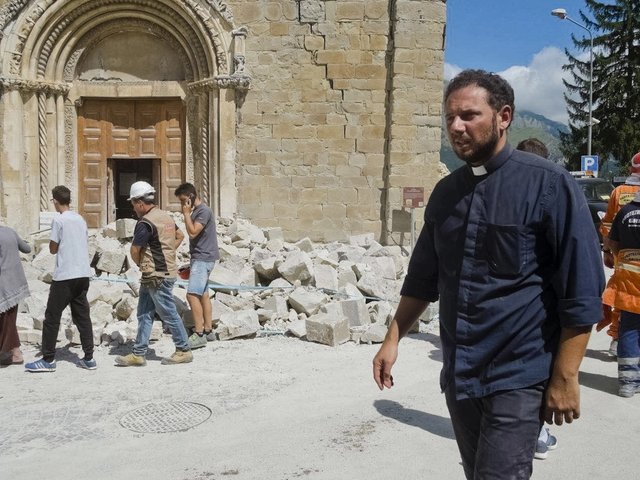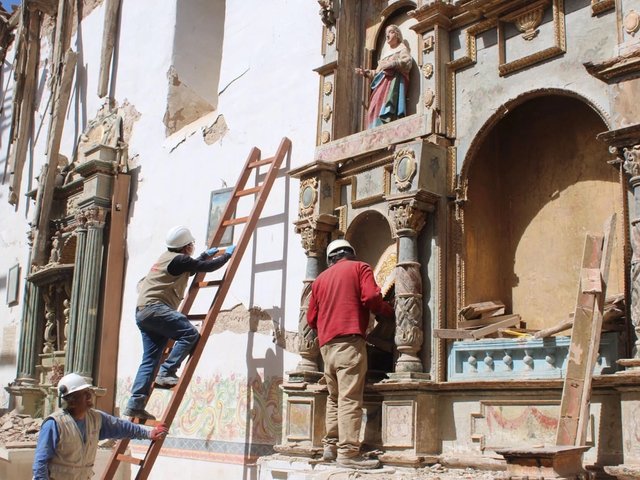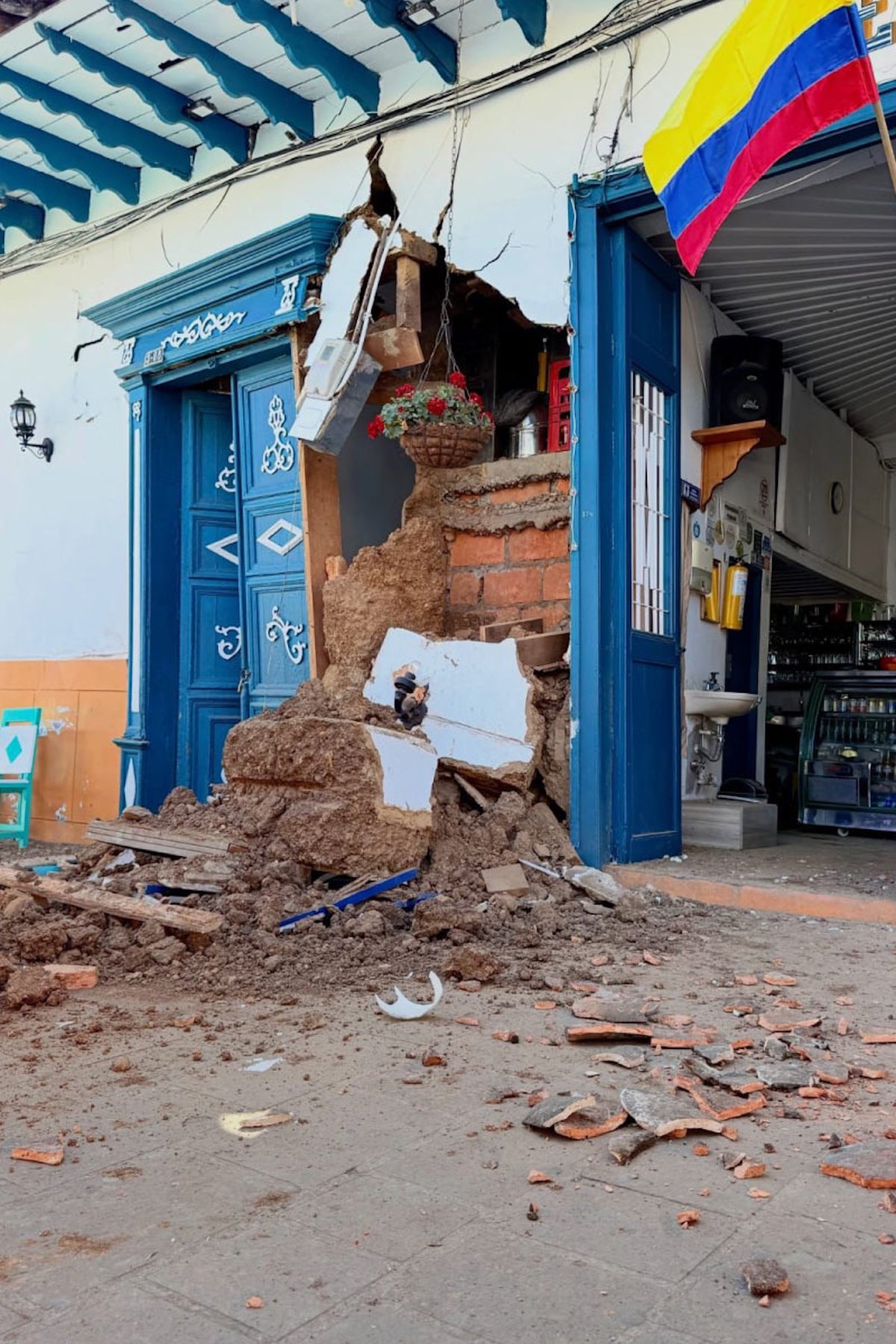
Colombia’s ministry of culture released its first official report on damage to dozens of cultural heritage sites from the 7.4-magnitude earthquake that struck the west of the country on 10 August.
The report, published on 14 August, identifies 40 nationally protected cultural properties in the seven departments hardest hit by the disaster that suffered some degree of damage, 22 of which were severely impacted.Of the remaining properties, 13 suffered moderate damage and five were only lightly affected. The broader assessment also identifies 84 movable and immovable cultural assets without national designation, including 39 religious sites.
The epicentre of the earthquake was in San José del Palmar, in the department of Chocó. The earthquake has killed 304 people and injured 4,548, according to the latest official figuresas of this writing. The disaster is the first major test for the government of the country’s new right-wing president, Abelardo de la Espriella, who took office just three days before it struck.
The department of Valle del Cauca is home to 23 of the 40 nationally protected cultural properties identified in the report. In the departmental capital of Cali alone, 11 sites are listed: eight with severe damage and three with minor damage. They include the Palacio Nacional administrative building, the La Merced church and convent, the Catedral de San Pedro, the city’s modernist train station, the municipal theatre and the Hospital Universitario Evaristo García.
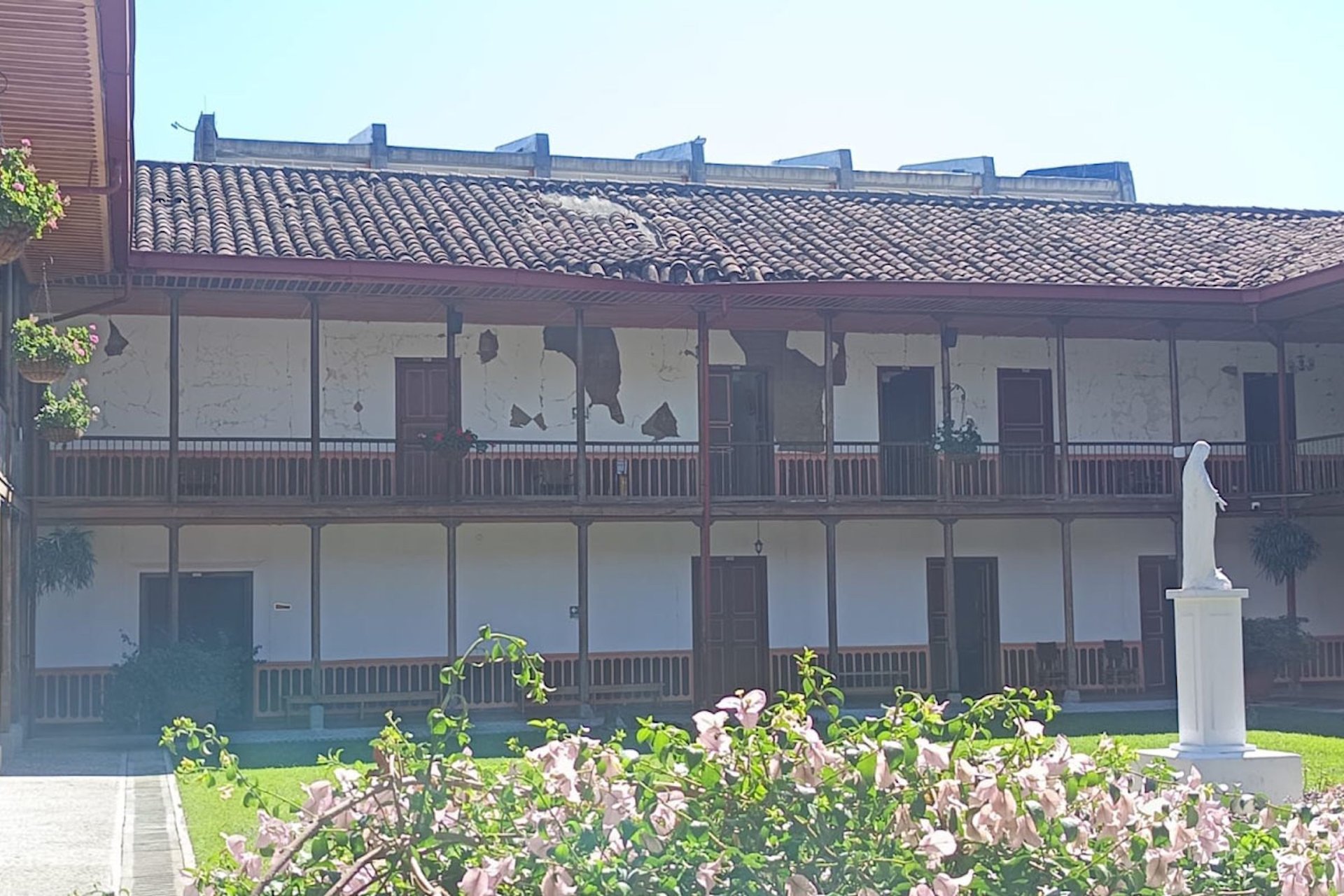
Damage to the apostolic school in Santa Rosa del Cabal Courtesy the Ministry of Culture of Colombia
In Popayán, the capital of Cauca and one of Colombia’s best-known cities for colonial-era architecture, the historic centre was badly hit. Known for its white façades and narrow streets that preserve its original layout, the city includes several properties listed in the report, among them the Museo Nacional Guillermo Valencia, and the churches Templo del Carmen and Templo de Santo Domingo. The latter suffered severe damage. The historic Casa de Hacienda Japio, in Santander de Quilichao, is also listed among the properties with serious damage.
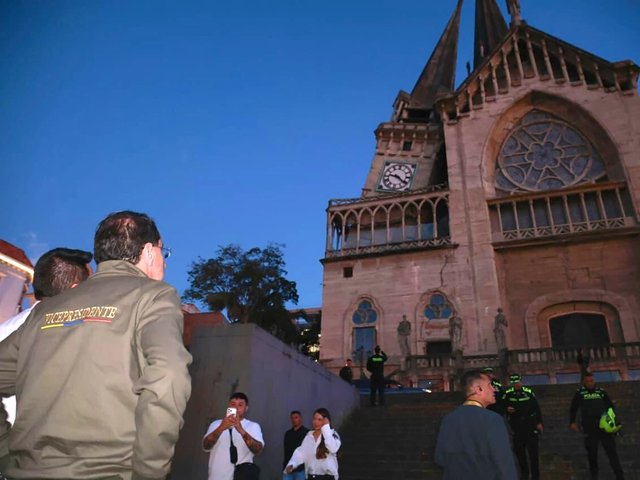
The scale of the earthquake’s destruction became clear almost immediately in the city of Manizales, in the heart of Colombia’s coffee-growing region, where one of the side towers of the Cathedral Basilica of Our Lady of the Rosary collapsed as passersby watched. Now listed among the sites with severe damage, the cathedral is one of the city’s best-known landmarks and the tallest church in Colombia.
Six properties in the department of Antioquia are included in the report, among them the main square complex in Jardín, which suffered significant damage; the train station in the city of Cisneros; a church in Sabaletas; and three buildings in Medellín, including the former palace of the departmental government.
According to the ministry of culture’s report, the earthquake damaged 12 of the 15 designated historic districts located within the affected area. The report also focuses on Colombia’s “Coffee Cultural Landscape”, a Unesco World Heritage Site spanning 51 municipalities, where architecture, coffee farming and agricultural traditions have shaped the region for generations. According to the official assessment, the 10 August earthquake caused severe damage to more than 60% of urban areas across the Coffee Cultural Landscape region, with communities reporting collapsed homes, blocked roads and disruptions to basic services. In the communities nearest the epicentre, including Sevilla, El Cairo and El Águila, the destruction reached as high as 80% of all urban areas.
“We send our solidarity to the families of all the victims, to those who lost their lives, those who are injured or missing, and to everyone affected, including artists, artisans and creators. To all of them, we say: you are not alone,” Paola Holguín, the newly appointed culture minister, said in a statement. “We recognise the solidarity of all Colombians and the international community, and we call on everyone to continue working together as a nation, because another very difficult phase lies ahead: reconstruction.”
The culture ministry said it is now working to build a network of specialists and develop a plan for the repair and reconstruction of damaged sites. It also issued an emergency resolution allowing preventive work on cultural properties and historic districts for six months. The measure permits the removal of elements at risk of collapse, the reinforcement of cracked walls and structures, temporary protection for roofs, openings and decorative features, and the safeguarding of movable cultural objects at risk of being lost or further harmed.
Though not included in the culture ministry’s report, the Museo de Arte de Pereira, located in the city of Pereira which is immediately adjacent to the Coffee Cultural Landscape, has closed after sustaining severe damage including many of its walls cracking or outright collapsing, Artnews reported.
The cultural sector also began organising a response of its own. The Museo de Arte Moderno de Medellín announced that it will donate part of the proceeds from the recent Mamm Fest 2026 to Museo La Tertulia in Cali, which remains closed to the public while its staff responds to the emergency and supports local communities. And more than 25 galleries and 130 artists have joined forces for Arte por Colombia, an ongoing online sale that has raised more than 575m Colombian pesos (around $187,000) to date, with all proceeds going to organisations assisting people affected by the disaster.