When the Indigenous artist Sakuliu Pavavaljung was stripped of Taiwan’s National Award for Arts following his conviction for sexual assault this April, the case was heralded as a landmark #MeToo moment in Asia’s contemporary art world. Following the downfall of one of the island’s most influential Indigenous artists, a new generation of artists is emerging and redefining Taiwan’s Indigenous contemporary art scene.
Two breakout projects this year highlight that transformation. In May the Taipei Performing Arts Center presented the Taiwan debut of Hagay Dreaming, a collaboration between the digital art pioneer Shu Lea Cheang and the Truku artist Dondon Hounwn following its 2025 premiere at Tate Modern in London. The following month, Tai Body Theatre became the first Indigenous collective to receive the grand prize at Taiwan's Taishin Arts Award.
“Since the 2010s, a new generation of Indigenous artists has begun challenging the paradigm established in the 1990s and 2000s,” Wei-Lun Lu, a curator who also served as a script consultant for Hagay Dreaming, tells The Art Newspaper. “Many of the artists emerging in the 2010s were academy-trained… Video and performance became increasingly prominent, alongside more sustained engagement with white-cube contexts.”
Today comprising around 2.5% of Taiwan’s population across 17 officially recognised nations, Indigenous peoples had endured successive periods of Han Chinese settlement, Japanese colonial rule and, after 1949, assimilation under the Nationalist government. An Indigenous rights movement that emerged alongside Taiwan’s democratisation in the 1980s and 90s brought demands for the recovery of language and culture, as well as political recognition, into the broader progressive movement.
A more systematic infrastructure for Indigenous art began to emerge in the mid-2000s. “The Kaohsiung Museum of Fine Arts has probably collected the most, and most systematically,” says the curator Manray Hsu, who has worked extensively with Indigenous art in Taiwan and internationally. The museum launched in 2005 its ongoing programme of contemporary Austronesian art—a term that frames Taiwan’s Indigenous cultures within a wider precolonial network stretching across Southeast Asia and the Pacific. The biennial Pulima Art Award, established in 2012 as Taiwan’s first dedicated Indigenous contemporary art prize, became a key incubator for emerging artists. It returns next year, alongside the second edition of the Taiwan International Austronesian Art Triennial in Pingtung.
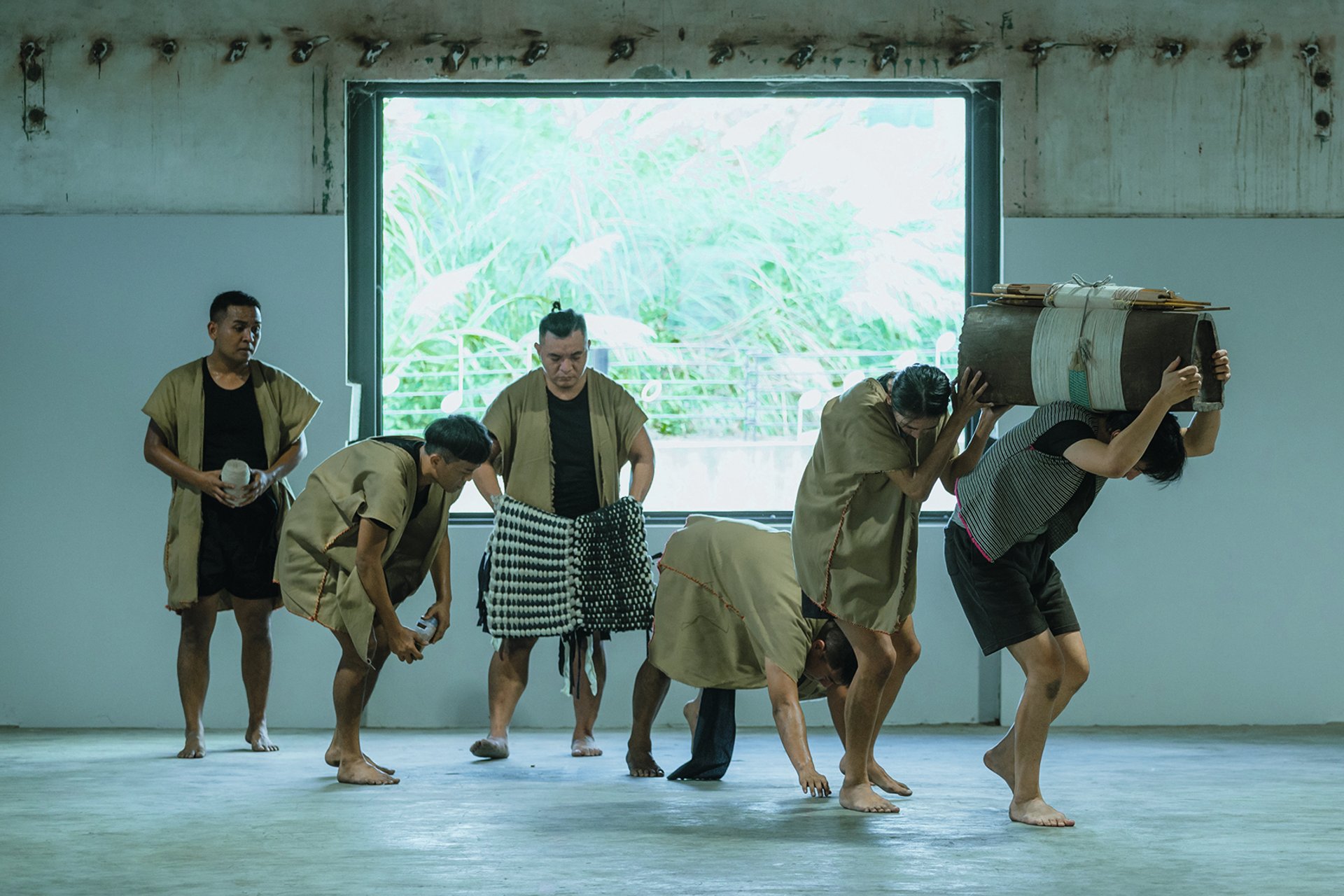
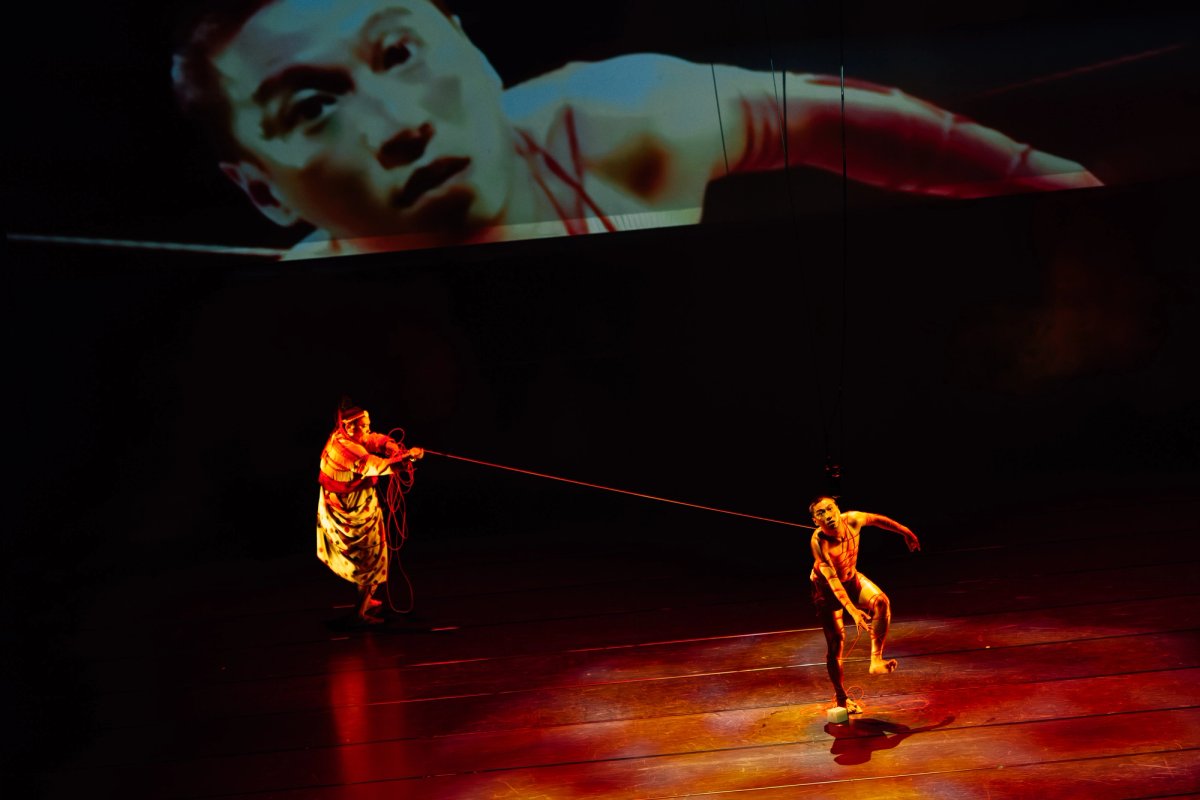
Tai Body Theatre (main image), an Indigenous performance collective led by Truku artist Watan Tusi, won a Taishin Arts Award earlier this year
Photo: Yen-Shao Lin, Courtesy of Tai body Theatre
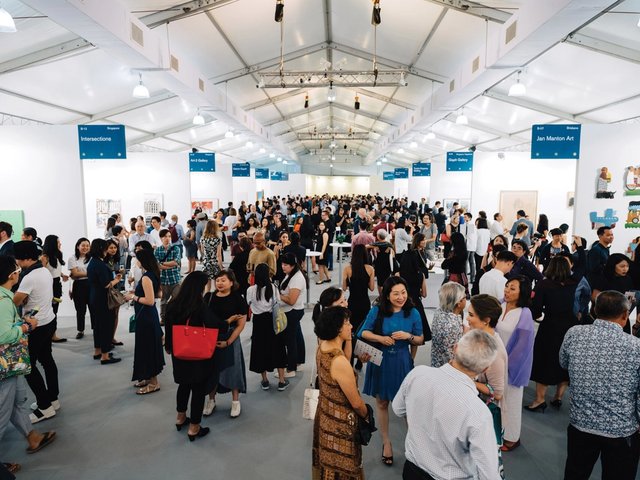
Commercially, Taiwan’s Indigenous contemporary art community remains largely underdeveloped. “Today’s gallery system favours much smaller-scale works than those seen since the first wave of Indigenous contemporary art in the 1990s, when collecting focused on large-scale installations acquired by museums and tourism hotels,” says Hsu, who also curated Art Taipei’s Indigenous art section in 2023 and 2025. Launched in 2020, that section offers a recurring commercial platform.
International exposure needed
Only a handful of galleries have begun working with Indigenous artists, and often only those with international exhibition records. Taipei’s Liang Gallery, for instance, presented a solo exhibition by Aluaiy Kaumakan in 2024, following her participation in the 2021 Asia Pacific Triennial and 2022 Biennale of Sydney. The New York-based gallery Nunu Fine Art has shown Chang En-Man, whose work was featured in this year’s Biennale of Sydney and who will have a solo exhibition with the gallery next year. Ciwas Tahos, after participating in the 2025 Sharjah Biennial and Hawai’i Triennial, received a solo stand with Taipei’s PTT Space at Art Basel Hong Kong earlier this year.
“Unlike Indigenous literature, which grew more directly from the Indigenous rights movement of the 1980s”, contemporary Indigenous art’s relationship with the state is one of negotiation rather than confrontation, according to Lu. “From the 1990s, Indigenous contemporary art was often rooted in community-based mentorship and the transmission of traditional crafts.” It emerged after decades in which assimilation and economic hardship had drawn many Indigenous people into cities for work, making the recovery of languages, rituals and cultural knowledge more urgent.
That cultural revival had gaps. “Sexuality disappears from the traditions that have been revitalised. But in [Indigenous] oral histories and everyday life, it is everywhere,” Lu says. She traces the shift to the 2010s: “By then, I was encountering Indigenous artists foregrounding gender and non-binary experiences, but they were completely absent from magazine coverage or earlier exhibition histories.”
Lu’s 2023 exhibition Amorous Mountains, Erotic Seas: Queer, Indigene, and the Hidden History at the Pulima Art Festival in Hualien addressed that omission. “Transgender performance was extremely common in Indigenous communities along the east coast, but none of the writing talked about it,” she says. The exhibition sought to make that overlooked history visible, bringing younger Indigenous artists together with performers from urban east-coast Indigenous drag communities.
“I call it the queer confusion of the 2010s,” Lu says. “Quite a few of the artists don’t present erotic bodies per se. They present bodies negotiating the conflict between personal desire and the community and their tradition.”
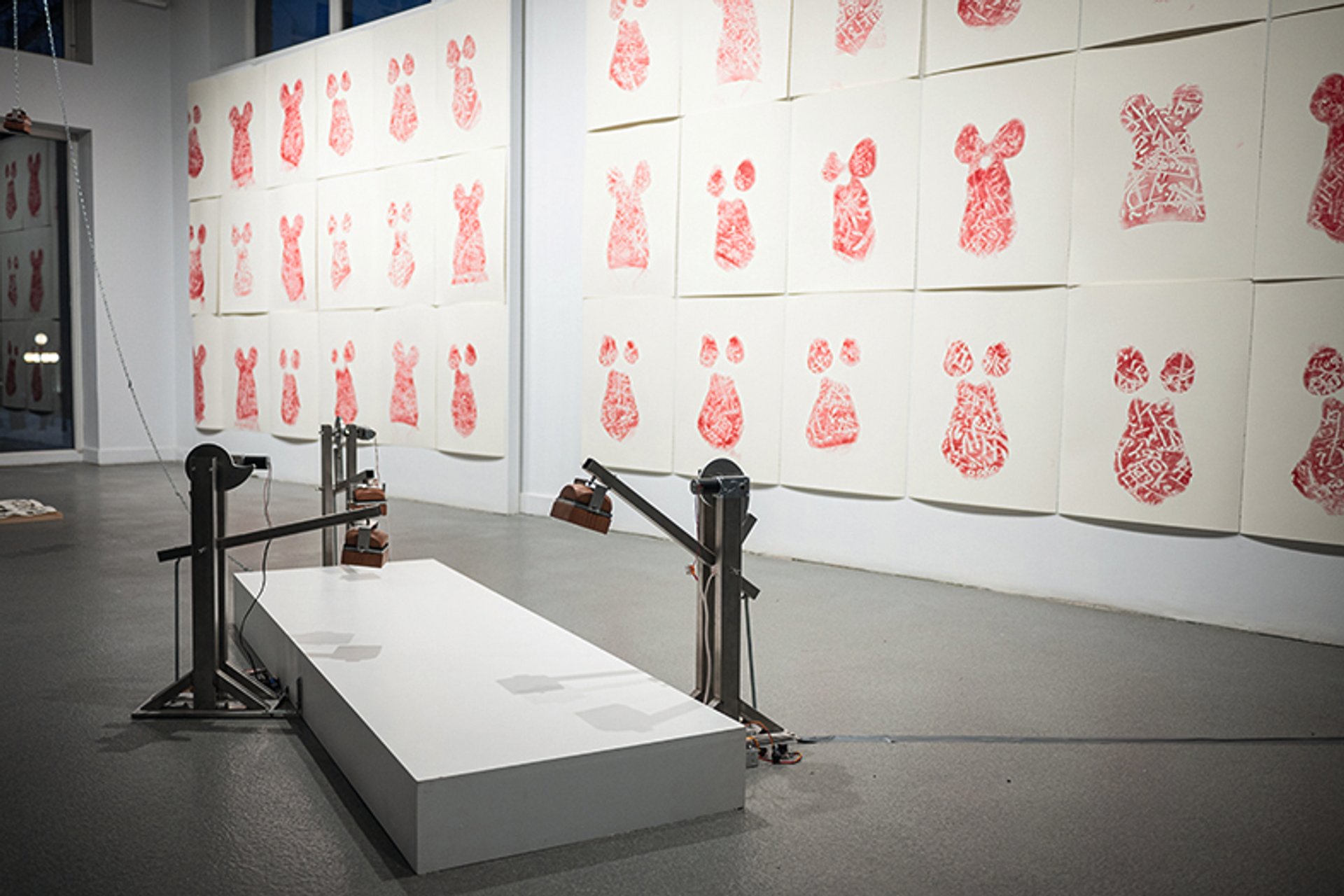
Taiwanese Indigenous artist Ciwas Tahos’s Raw Ripened Happiness (2019), presented at the Manif d’art 12 – La Biennale de Québec earlier this year Photo: Christian Baron, courtesy of the artist and Manif d’art
The Amorous Mountains exhibition included works by the artist Ciwas Tahos, who grew up disconnected from her Atayal community’s culture. “Every Indigenous group show was like a small tribe for me,” she says. “I cherished the openings as gathering points where we could exchange ideas about the issues people were concerned with and what was happening elsewhere. Everyone was looking for points of resonance.”
Ciwas’s work draws upon the marginalised Atayal oral myth Temahahoi. “Learning about an all-women mountain community protected by bees made me feel that there was space for both my gender and Indigenous identities,” she says. “In a society dominated by heterosexual norms, the oral stories left by our ancestors become a safe space.”
For the Truku artist and ritual practitioner Dondon Hounwn, Hagay Dreaming begins with a more personal vocabulary. “Hagay is a pathway for understanding people like us without starting from fixed ideas of male and female,” he said at a 24-hour gathering at his studio in Hualien’s Dowmung tribe late last year. The term dates to his childhood, when village elders called him hagay. “Hagay is not the same as queer,” he says. “Hagay has ancestral belief. It has ritual.”
Human and spiritual realms
Bringing Dondon’s Truku cosmology into dialogue with Shu Lea Cheang’s cyberfeminist practice, Hagay Dreaming transformed the Taipei Performing Arts Center’s Globe Playhouse into an environment of laser light, digital imagery and live performance. Its 90-minute creation allegory follows a Truku hunter’s encounter with hagay, tracing a journey between the realms of humans and spirits.
For Cheang, a Taiwan-born ethnic Han whose artistic language was shaped in New York’s queer art scene before she settled in Paris, the project upended her understanding of queer life. “Current-day queer life lacks a sense of faith—we float,” she says, but “working on Hagay Dreaming does solidify some belief. To promote hagay is to push the Gaya spirit”—a reference to the Truku system of ancestral principles—“to lay down some grounding.”
In last year’s award-winning performance qaqay, Watan Tusi (who founded the Truku-led collective Tai Body Theatre in 2012) worked at a traditional Truku ground loom. Around him, five performers developed a percussive language of barefoot steps, combining floorwork and task-based movement drawn from physical labour rather than traditional dance. The piece, which won the grand prize from the Taishin Arts Award last November, explores how, during the Japanese colonial period, his Swsal tribe was forcibly relocated around 100km from its ancestral territory.
The loom evokes this history. “When we move, we’d had to decide how much of the old belongings to carry into a new place, yet we would still carry the heavy loom with us,” Watan says, becoming a metaphor for what to carry forward from tradition and what to transform. “Beyond traditional rituals or performances staged for tourism, what other possibilities might Indigenous performance hold?”