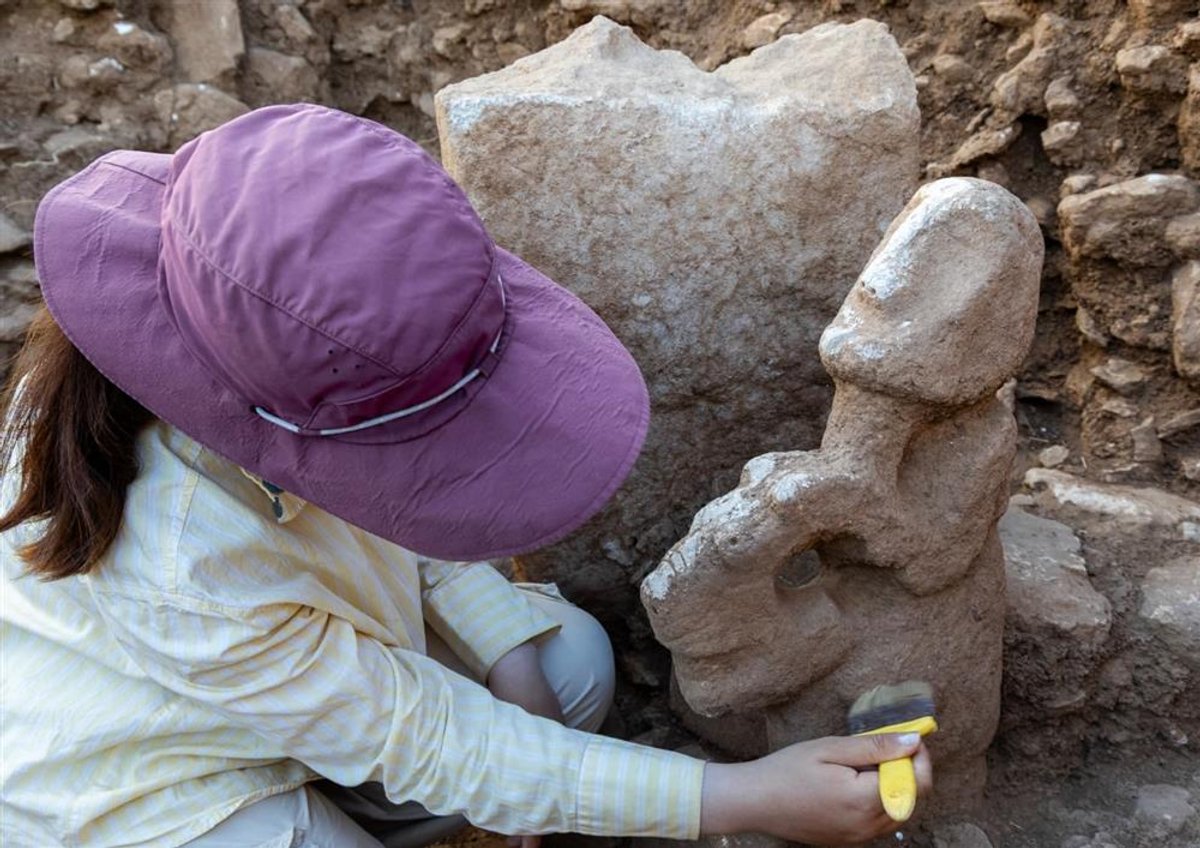
Archaeologists have unearthed a unique statue aged approximately 11,000-years-old at Karahan Tepe in southeastern Turkey, according to the Turkish culture ministry.
Culture and tourism minister Mehmet Nuri Ersoy announced in an X post that a “composite statue featuring a style unlike any previously encountered” was discovered during the 2026 excavations conducted under the ongoing Heritage for the Future project.
The 70-centimetre-tall statue depicts a human figure sitting on the back of a leopard. It was found on a bench extending along the wall of a three-metre structure with a floor covered in flat stones.
“I believe this discovery, which opens the door to new questions about the earliest periods of human history, will resonate widely in the scientific world,” Ersoy says in a statement.
According to Elizabeth Carter, a professor emerita of Near Eastern archaeology at UCLA, this is the latest find from Taş Tepeler, a group of early sites from the Pre-Pottery Neolithic period with monumental stone architecture and many sculptures near the modern city of Urfa, or Şanlıurfa, in southeastern Turkey.
“Göbeklitepe is more famous than the Karahan site where this sculpture was discovered,” she tells The Art Newspaper. “To my knowledge, the human figure mounted on an animal is unique. Although animal sculptures have been identified before on benches within the buildings at Göbeklitepe, I don’t know of a human astride an animal.”
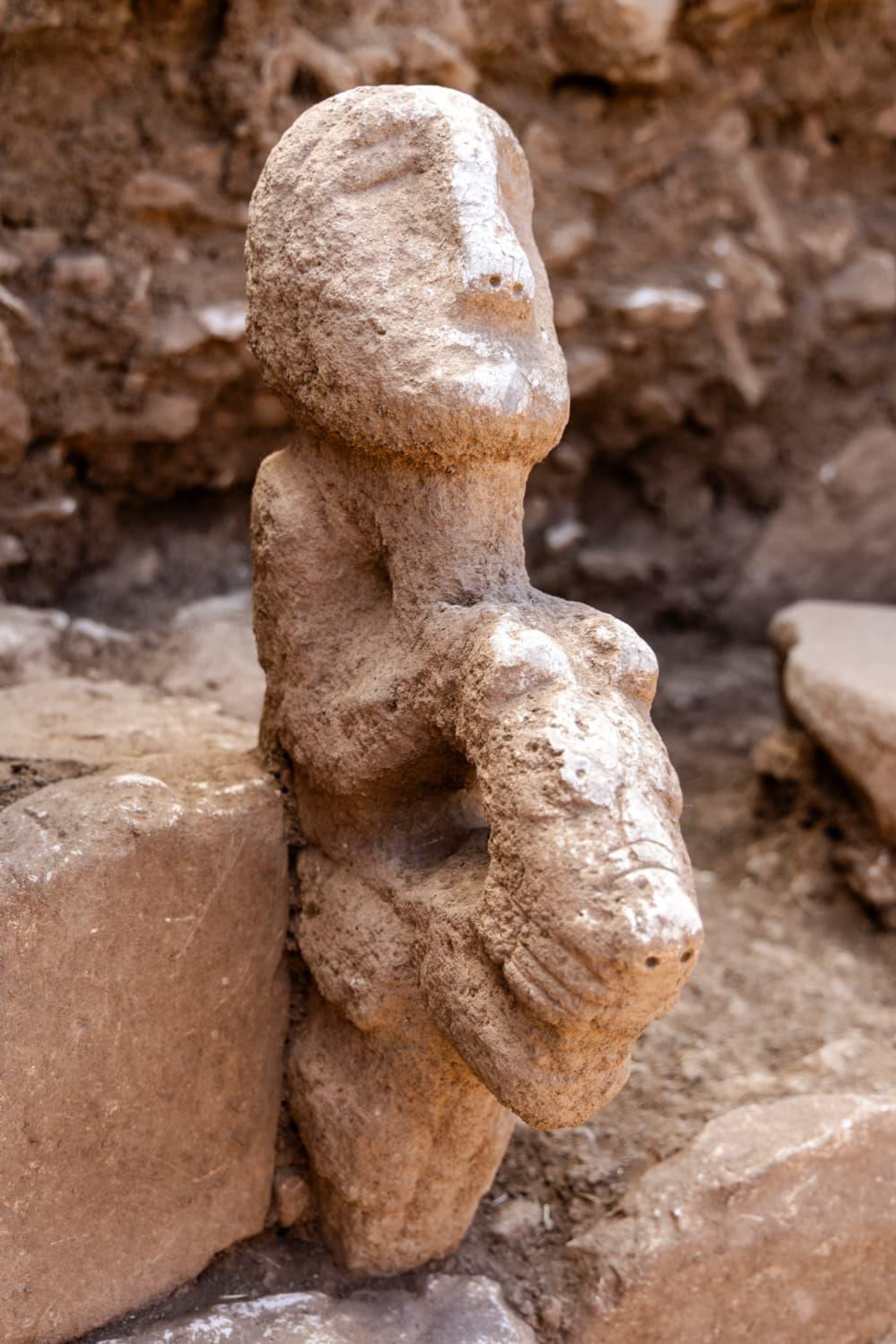
The statue could date back eleven millennia, according to the ministry
Republic of Türkiye Ministry of Culture and Tourism
Ergun Lafli, a professor of archaeology at Dokuz Eylul University in Izmir, tells TAN that more research on dating is “crucial”, as “calibrated and uncalibrated dating attempts are not entirely presented in scholarly publications yet and not sufficiently discussed.”
He also says that this is “a second composite statue depicting a combination of abstracted iconography of a human and a leopard” carved in a local limestone native to Şanlıurfa. According to Lafli, the first one was found on the site in 2021, and depicted a large cat on a man’s shoulders.
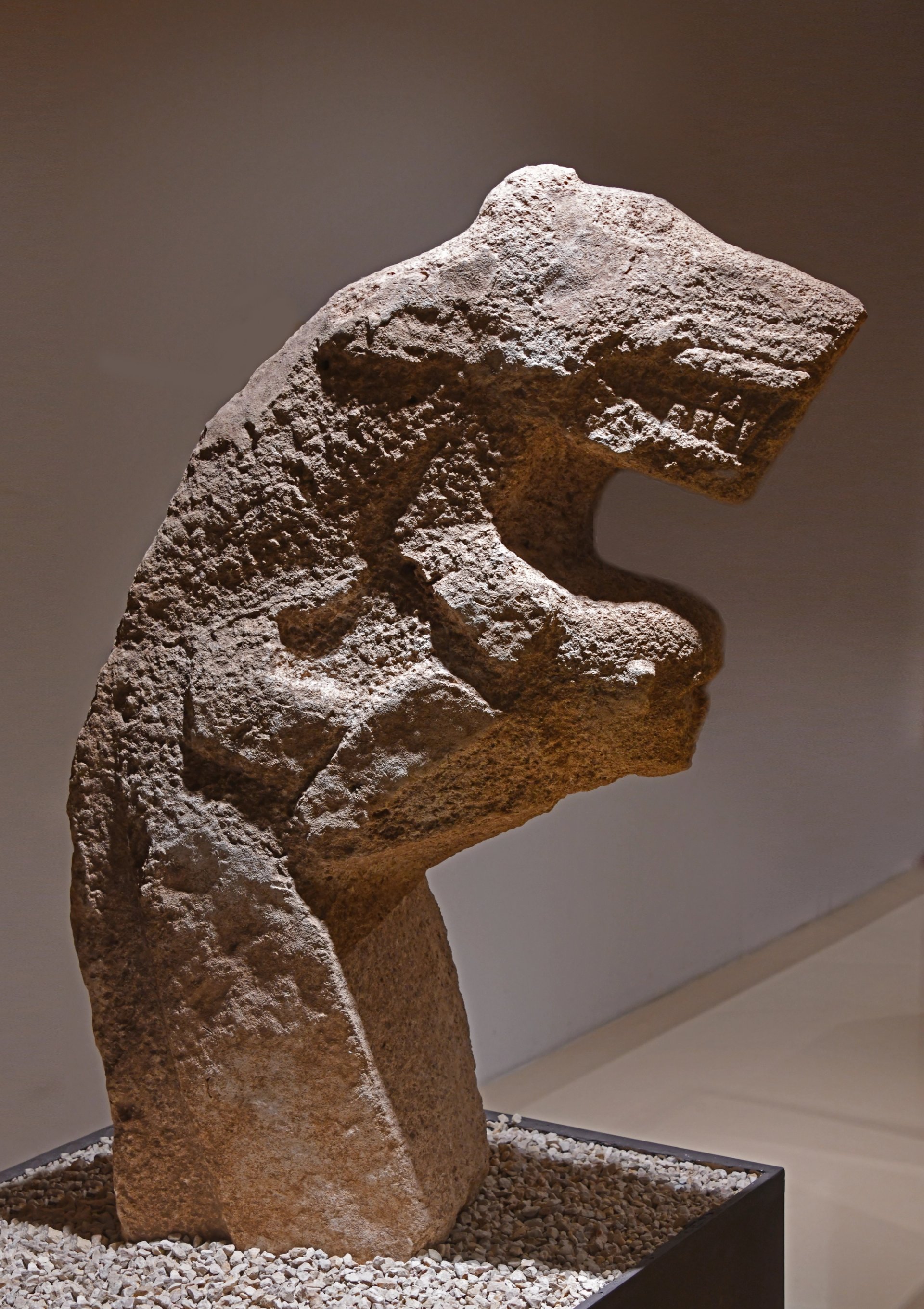
This composite statue found in 2021 has the reverse arrangement as the newly discovered statue
Photo Pataliputra; Wikimedia Commons
“It is not only unique in northern Mesopotamia, but also significant in terms of the context of its discovery as it was excavated right in the middle of an area which seems to be a votive deposit [for offerings],” he tells TAN.
Lafli says the statue “is one of the very earliest evidences of religion and cult in the entire ancient Near East and therefore meaningful for the whole Neolithic world stretching from Spain in the west to Afghanistan in the east, including Stonehenge in the UK.”
What is remarkable, he tells TAN, is that the earliest cult related depictions both in Karahan Tepe and its neighbouring Göbeklitepe seem to be abstract rather than naturalistic “in parallel to the known prehistoric mural paintings in continental Europe” such as Lascaux.
This is further evidence, he says, “for the cultural unity and a common iconographic language of prehistory” – something that is “not easy to understand with our current knowledge of an ancient world where there was no writing yet.”