Digital Editions
Newsletters
Subscribe
Digital Editions
Newsletters
Art market
Museums & heritage
Exhibitions
Books
Podcasts
Columns
Art of Luxury
Adventures with Van Gogh
Venice Biennale
Art market
Museums & heritage
Exhibitions
Books
Podcasts
Columns
Art of Luxury
Adventures with Van Gogh
Venice Biennale
Biennials & festivals
news

Gwangju’s city government apologises to China over Taiwan Pavilion naming

Jeonnam Gwangju City has officially reiterated its support for the “One China Policy” after an exhibition at the Gwangju Biennale was named after the the autonomous island of Taiwan

Lisa Movius
1 September 2026
Share
A spokesperson said that organisers would not be adding to existing statements about the issue

Courtesy of Gwangju Biennale Foundation

A spokesperson said that organisers would not be adding to existing statements about the issue

Courtesy of Gwangju Biennale Foundation

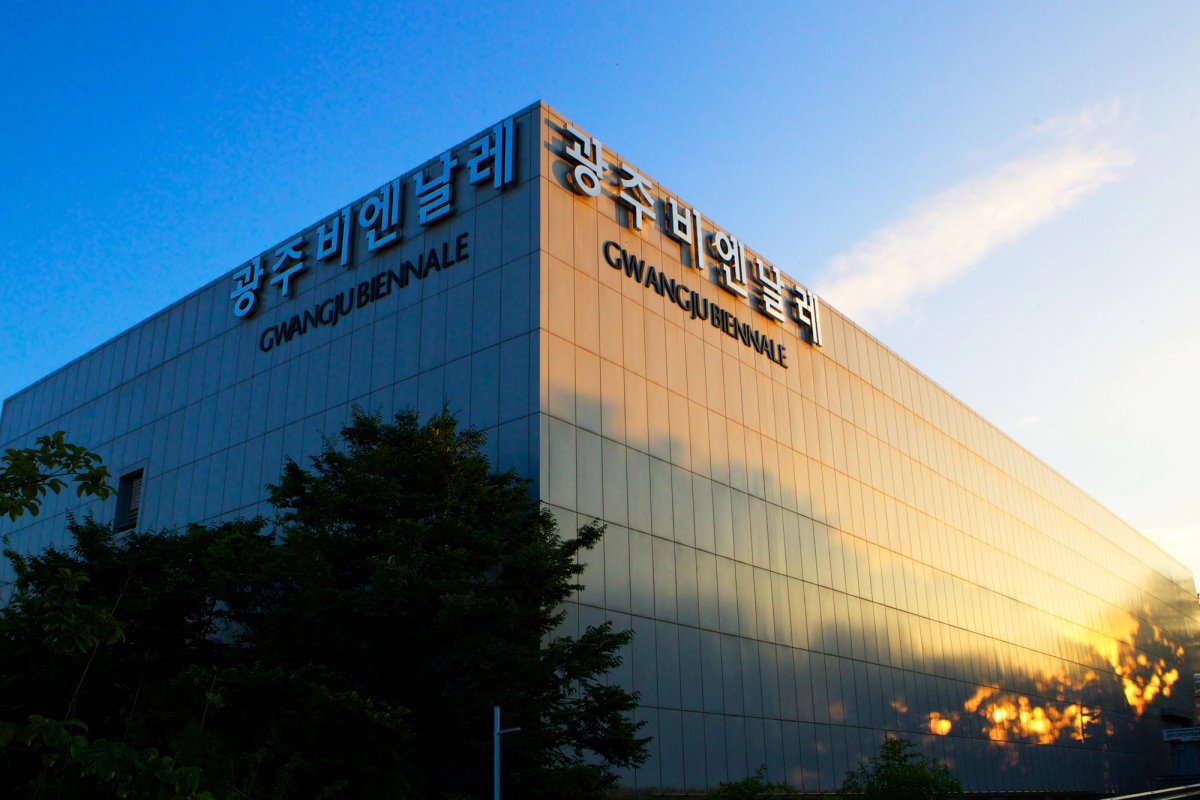
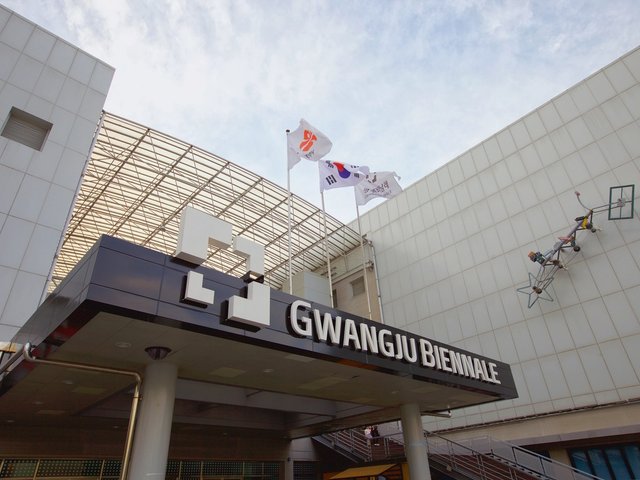
Gwangju’s city government has issued a formal apology to mainland China over the Gwangju Biennale’s decision to name one of its exhibitions the Taiwan Pavilion, after it had initially given it a title based on the sponsoring museum. Jeonnam Gwangju City officially reiterated its support for the “One China Policy” and pledged to “thoroughly investigate the setbacks that occurred during event preparations,” Korean-language media reports.

Controversies around the independent pavilions at 16th Gwangju Biennale, opening in a few days (5 September-15 November), have swirled since mid-August. The Gwangju Biennale Foundation (GBF)’s decision to initially name Taiwan’s pavilion after the sponsoring institution, the National Taiwan Museum of Fine Art (NTMoFA), sparked protests from Taiwan’s ministry of culture and the pavilion participants. Those protesting claimed that the pavilion had been named after NTMoFA without their permission; the Biennale said the name had been decided as part of a 12 January 2026 agreement.

On 25 August, GBF renamed the exhibition the Taiwan Pavilion.

Mainland China, which territorially claims the autonomous island of Taiwan, had been previously silent on the matter. However, on 27 August its ambassador to South Korea, Dai Bing, told Gwangju’s mayor Min Hyung-bae that China’s Gwangju pavilion would be suspended as a result. South Korea diplomatically recognises China and not Taiwan, but also has unofficial ties to Taiwan.

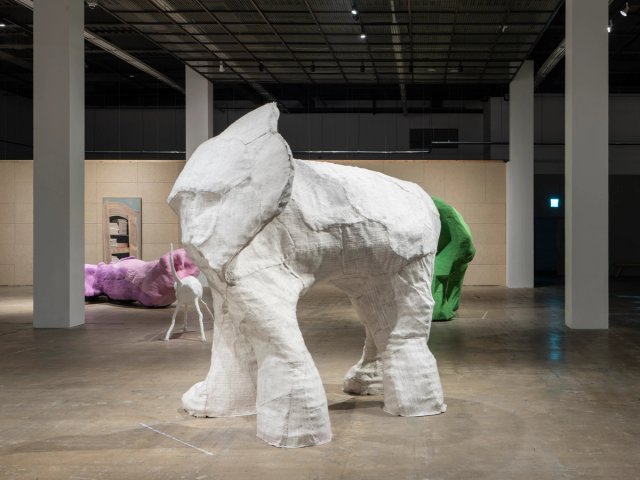
Installation of the China Pavilion, located at the Seo-gu Ha Jung-ung Museum of Art, has indeed now been suspended. The exhibition, organised by Liu Tian, Wang Ran and Ruan Yuanlai, is backed by a consortium headed by the China Academy of Art and including China’s embassy in Korea and consulate in Gwangju and the Chosun University Museum of Art. Featuring 18 artists and collectives including Qiu Zhijie, Shi Hui and Wang Xin, it looks at how the China-Europe Railway Express, opened in 2011, and its predecessors back to the 1980s, have transformed interactions between China and Central Asia.

Jeonnam Gwangju City’s statement yesterday clarified: “In accordance with the government foreign policy line, there is no change in the position of respecting One China… The title of the Taiwan pavilion at the Gwangju Biennale is merely an expression entrusted to participating artists within the realm of art, and it does not mean that the city or the Biennale recognizes Taiwan as a country.”

The Art Newspaper has approached GBF and participants of the China Pavilion and they declined comment.
Subscribe to our daily newsletter

Biennials & festivalsChinaGwangju BiennaleControversies
Share
Subscribe to The Art Newspaper’s digital newsletter for your daily digest of essential news, views and analysis from the international art world delivered directly to your inbox.
Newsletter subscribe
Information
About
Contact
Cookie policy
Data protection
Privacy policy
Frequently Asked Questions
Subscription T&Cs
Terms and conditions
Advertise
Sister Papers
Sponsorship policy
Follow us
Instagram
Bluesky
LinkedIn
Facebook
TikTok
YouTube
© The Art Newspaper

Related content

Biennials & festivalsanalysis
27 April 2023

Soft power triumphs at this year's Gwangju Biennale

Many of the works are deeply but not overtly political in a festival created to commemorate the 1980 Gwangju Uprising and Massacre

Lisa Movius
Biennials & festivalsnews
26 August 2026

Gwangju Biennale permits Taiwan Pavilion name after row

The artists and curator behind the pavilion had said its name was changed to NTMoFA without their consent, while the biennial says it had been agreed in January

Lisa Movius
Frieze Seoul 2026news
1 September 2026

Busan and Gwangju biennials take a deep dive into resistance and change

This year’s editions between them showcase 89 artists and collectives, and explore Korea’s history of protest alongside the transformational power of reinvention

Lisa Movius
Appointmentsnews
24 July 2025

National Museum of Korea names new director as part of post-election reshuffle

President Lee Jae Myung’s victory in June has been followed by homecomings for two high-profile arts figures in the country, while the Busan Biennale has also announced its curators for 2026

Lisa Movius