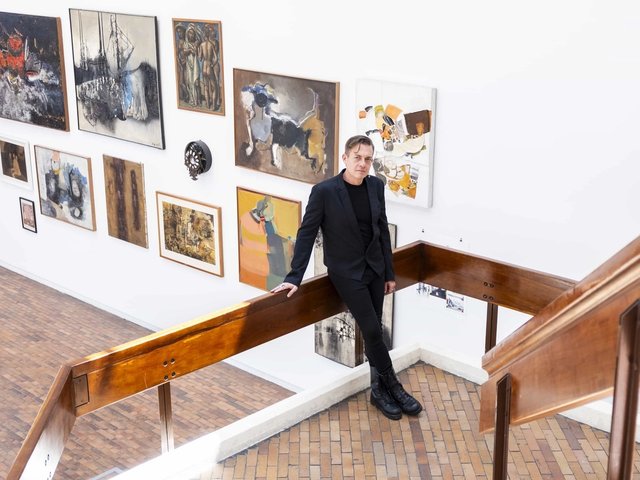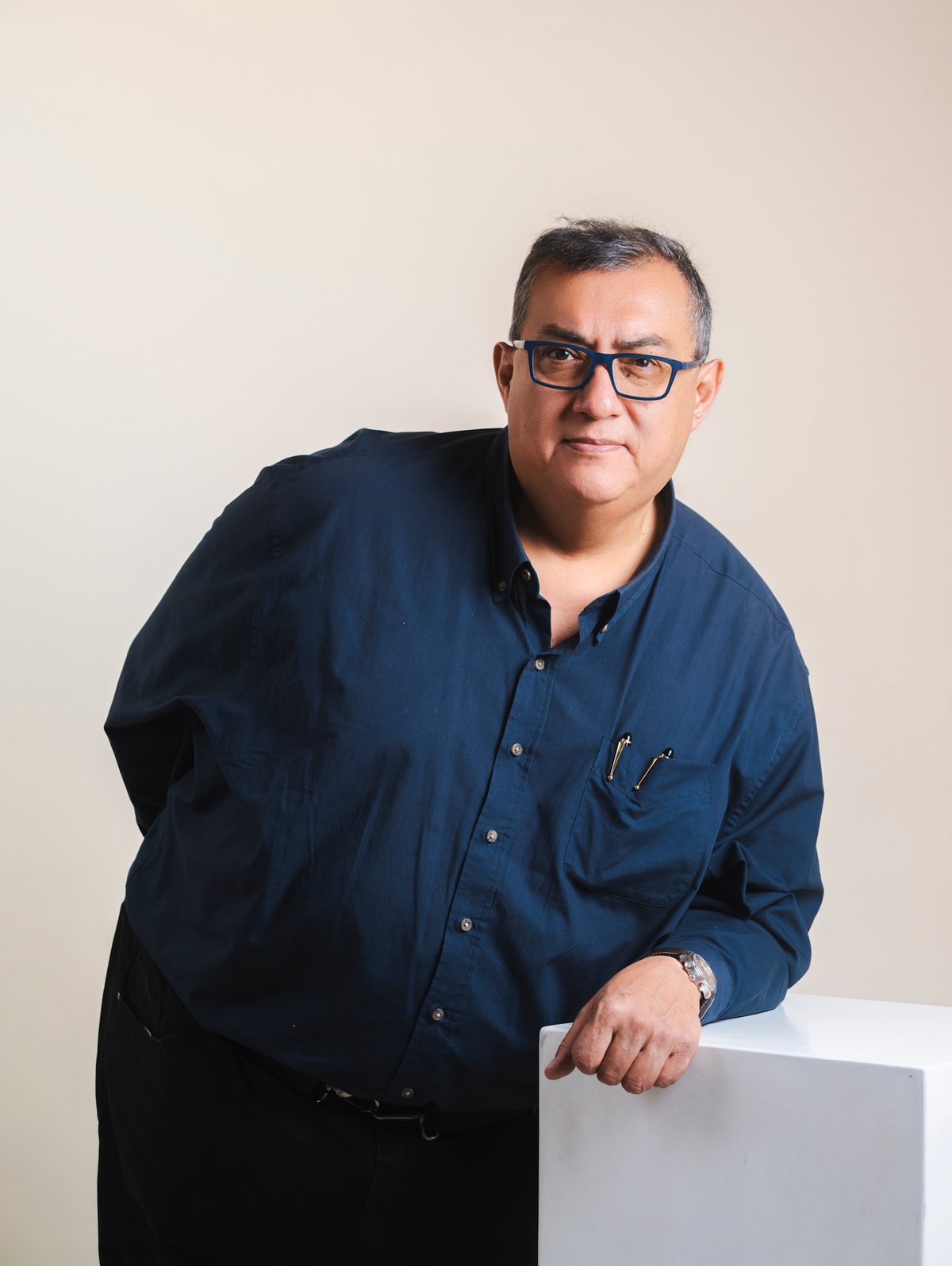
The Bienal de Arte Paiz in Guatemala has appointed the Mexican critic, curator and historian Cuauhtémoc Medina as the curator of its 25th edition, to be held from November 2027 to February 2028 in Antigua and Guatemala City. The upcoming edition will mark the 50th anniversary of Fundación Paiz, the non-profit behind the event, which has helped shape and promote the local art scene.
Medina brings ample experience in the scholarly and museum worlds, and on the international circuit of biennials and triennials. Since 1993, he has been a full-time researcher at the Instituto de Investigaciones Estéticas at the Universidad Nacional Autónoma de México (Unam). Between 2002 and 2008, he was Tate Modern’s first associate curator of Latin American art collections. From 2013 to 2024, he served as the chief curator at the Museo Universitario Arte Contemporáneo (Muac) in Mexico City, where he curated exhibitions by artists including Carlos Amorales, Jan Hendrix, Ai Weiwei, Beatriz González and Magali Lara.
Known for his academic rigour, Medina has written and edited around 20 books on contemporary art and theorised about the condition of art from the Global South and Latin America. He has also curated recurring exhibitions worldwide: in 2012, he was the head curator of Manifesta 9 in Genk, Belgium, in association with Katerina Gregos and Dawn Ades; in 2018, he was chief curator of the 12th Shanghai Biennale.
“The Paiz Biennial is an event that those of us in Latin American art circuits follow closely, not only because of its longevity but also because of the important colleagues who have led it and the artists who have contributed memorable works,” Medina tells The Art Newspaper. “Its medium scale and the commitment of the Fundación and its staff have made it conducive to testing advanced ideas. I am aware that the most recent editions have stood out for their growing ambition, and it is a great honour to have been considered to shape the 25th edition.”
Since its inception in 1978, the biennial—the sixth-oldest in the world and the second-oldest in Latin America, after São Paulo—has evolved. After its first 15 contest-based editions, it shifted to a curated format in 2008. More recently, Fundación Paiz expanded its local presence by opening the Centro Cultural Fundación Paiz within its Guatemala City headquarters during the biennial’s 24th edition. The venue presents works from the Fundación’s collection of more than 300 pieces alongside temporary projects, offering a vital exhibition space in a country that still lacks a public contemporary art museum.
The upcoming 25th edition will also bring the biennial’s role into focus. “At 50, we are not interested in simply celebrating the biennial’s longevity,” says Sonia Hurtarte, the executive director of Fundación Paiz. “We want to question what a biennial can and should do today, particularly when it speaks from Guatemala and Central America to an international art world.” She adds that Medina brings “the intellectual rigour and curatorial independence to challenge us in that process”.
For Medina, the challenge is to highlight the importance of Guatemala and the biennial on a global scale, while expanding the event’s audience and its intellectual impact. “It is a complex challenge, as it must be an event that aspires to cosmopolitan relevance and localised effects,” he says.
Reflecting on the role of biennials more broadly, Medina adds: “I am aware of the role these mega-exhibitions have played in decentring the geography of global art and in encouraging the production of works that escape the determining forces of localised cultures and the limitations of specific institutions, markets and consensuses,” he says. “For the person who curates them, it is both the challenge and the opportunity to transform a question or critique into a mark in time.”