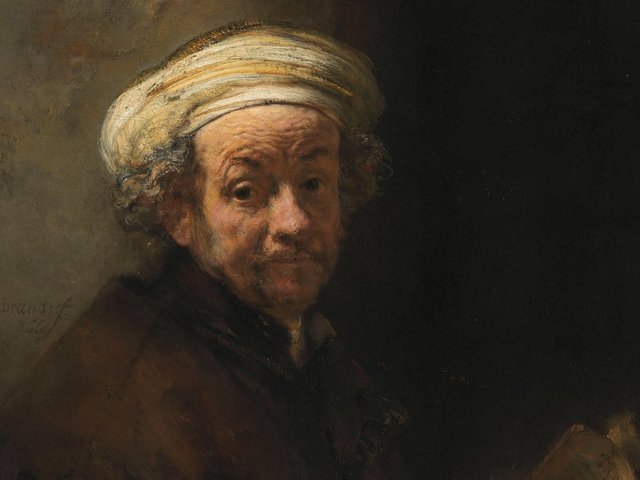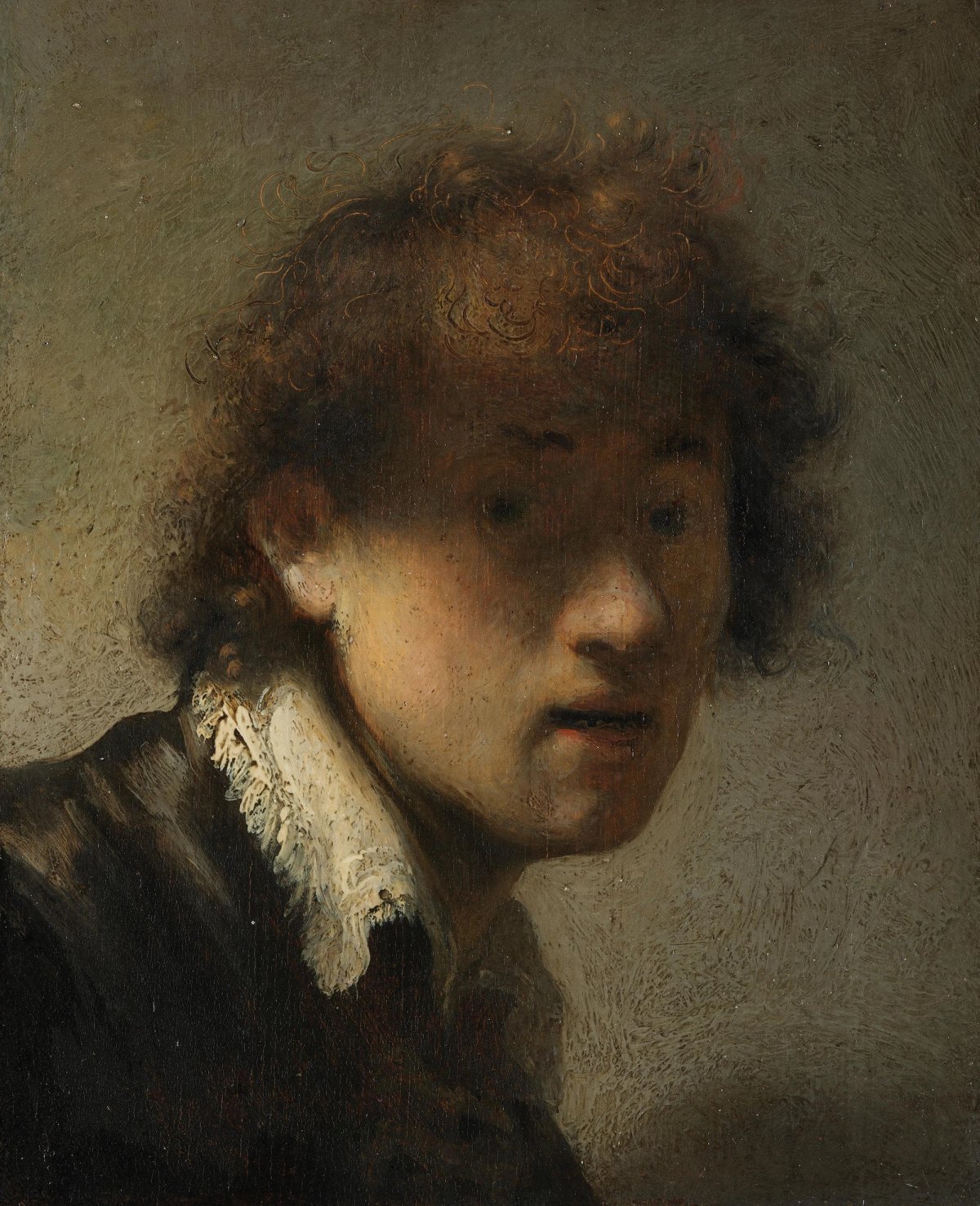
A Rembrandt painting that was illegally removed from the historic German city of Gotha in 1946 is to be temporarily returned on loan from Munich. The youthful self-portrait was a victim of both the Second World War and the division of Germany during the Cold War. This has led to a tug-of-war between two German museums: the Herzogliches Museum (Ducal Museum) in Schloss Friedenstein, Gotha and Munich’s Alte Pinakothek.
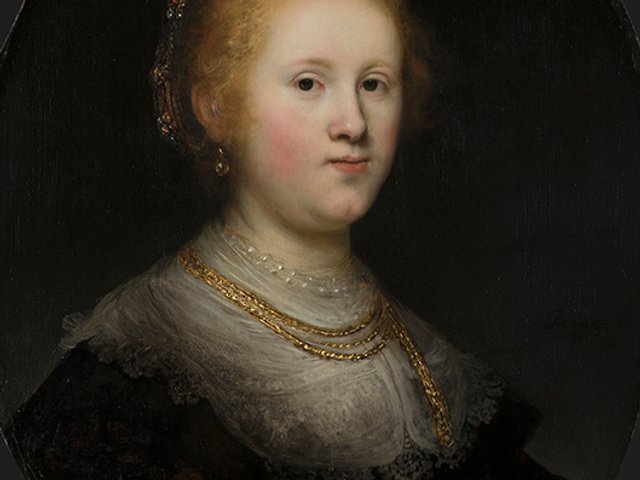
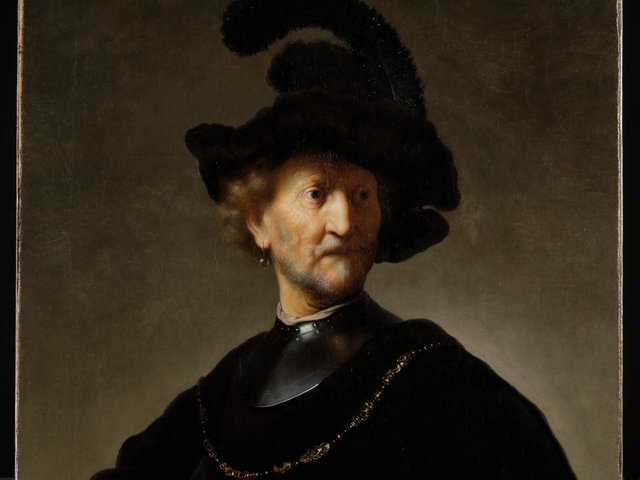
The self-portrait will be included in the exhibition Rembrandt 1632: The Creation of a Brand at the Ducal Museum (5 September-6 December). The show explores the period when the artist abandoned signing with his initials and began to use just his first name: Rembrandt. It includes 11 Rembrandt paintings though for the citizens of Gotha, the centrepiece will be the self-portrait from Munich.
Youthful Self-portrait (1629) depicts the artist aged 24 with tousled hair, peering out at us in a darkened room. There is another version of this striking composition at the Rijksmuseum in Amsterdam.
The Gotha Rembrandt was acquired by Duke Ernst II of Saxe-Gotha-Altenburg by 1803 and from 1842 it hung in the city’s Schloss Friedenstein. In 1928 ownership of the ducal art collection was transferred to the Duke of Saxe-Coburg and Gotha's Foundation for Art and Science. The self-portrait remained on view at the Schloss Friedenstein until the Second World War, when it was moved for safety to Schloss Reinhardsbrunn, 20km outside the city.
In April 1945 American troops liberated Gotha, with Soviet forces replacing them in July. The Rembrandt work was returned to the Ducal Museum that year. Then in January-February 1946 the ducal family secretly arranged for the Rembrandt to be smuggled out of Gotha and moved to Coburg, 100km south of the city. This was organised by a former Ducal Museum director, but without the approval of the director at the time, or the art and science foundation.
Ostensibly, the transfer was made because of the occupation by the Soviets, who were sending trophy brigades around Germany to seize art and transfer it to the Soviet Union. Coburg lay just inside the American zone and the transfer was apparently initially intended to be a temporary measure.
However, in 1954 the self-portrait was sold by the ducal family to the Bayerische Staatsgemäldesammlungen (Bavarian State Painting Collections), for display in Munich’s Alte Pinakothek. The price paid was DM75,000 (around $18,000), a low sum for a Rembrandt painting at the time. By then, the Iron Curtain had divided Germany, with Munich falling under American control. The Bavarian State Painting Collections therefore had few scruples about buying a painting which had once hung in a museum in the Soviet zone.
A Gotha museum (Friedenstein Gotha Foundation) spokesperson now tells The Art Newspaper that the self-portrait was among works which the ducal family “illegally removed from Gotha”.
Mirko Krueger, a cultural historian who has studied the Rembrandt case, points out that under German law, an owner's claim for the return of an item expires 30 years after it was lost. For the self-portrait, this period ended in 1976, 14 years before reunification. Gotha was then in the German Democratic Republic and Munich in the German Federal Republic. During this period, due to the Cold War, it would have been difficult for an East German museum to have taken legal action against a West German one.
The present Munich loan for was initiated by Gotha’s mayor, Knut Kreuch, approaching Bavaria’s minister-president, Markus Söder, and has since involved high-level discussions after. For the first time in 80 years, the Rembrandt will be on display in the palace where it had hung since the mid-19th century.
A spokesperson for the Ducal Museum/Friedenstein Gotha Foundation tells The Art Newspaper: “Our museum is very grateful that the Munich Pinakothek is lending the Rembrandt, but it continues to question the circumstances under which the self-portrait was removed. In the dialogue between our two institutions, the focus is increasingly less on legal questions surrounding the painting’s history and more on how the self-portrait can be made accessible to the public. Both museums see this as part of their responsibility as public institutions.”
Munich’s Bavarian State Painting Collections commented: “For the Friedenstein Gotha Foundation, the sale of the painting in the post-war period represented a significant loss. It was therefore a matter of great importance for the Bavarian State Painting Collections to facilitate the painting's inclusion in the current Rembrandt exhibition. We value the opportunity this provides for cultural exchange and dialogue between two significant historical collections.”