A painting long deemed to be a copy of a work by Rembrandt van Rijn, albeit created in his workshop, was painted by the Dutch master and not a student according to the art historian Gary Schwartz, who is championing the work as an autograph replica.
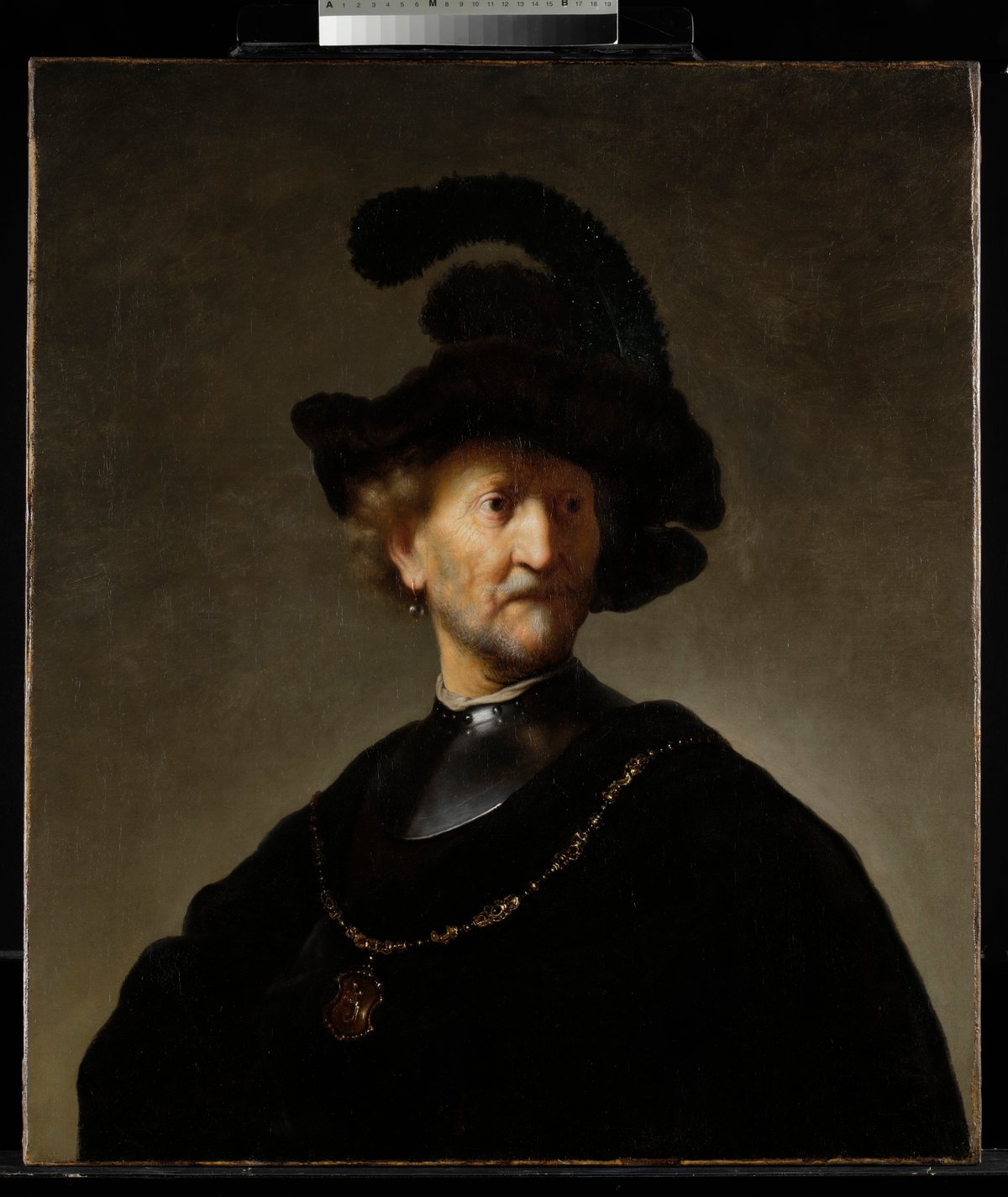
The original, Old Man with a Gold Chain (1631), has been in the Art Institute of Chicago’s (AIC) collection since 1922 and is considered one of the anchors of its encyclopaedic collection. Since last autumn, it has hung side-by-side at the AIC with its copy, a reunion facilitated by Schwartz and welcomed by curators in Chicago as an opportunity for study. The accompanying wall text, “Double Dutch: A Rembrandt and a Workshop Copy”, makes clear that there is no consensus about the creator of the copy. The workshop copy, slightly smaller and executed on canvas rather than on panel, is on loan from the Sir Francis Newman Collection in the UK, and on view in Chicago until 16 June. It will then be shown at the Herzogliches Museum or Ducal Museum in Gotha, Germany, as part of the traveling exhibition Rembrandt 1632: Creation of a Brand (6 September-6 December).
Questions about attribution have been constant in the world of Rembrandt, with numerous catalogues produced on his prints and paintings. Rembrandt had many talented students who learned by imitating their teacher and finishing pieces that he started, thus creating a large body of work for art historians to argue about for generations.
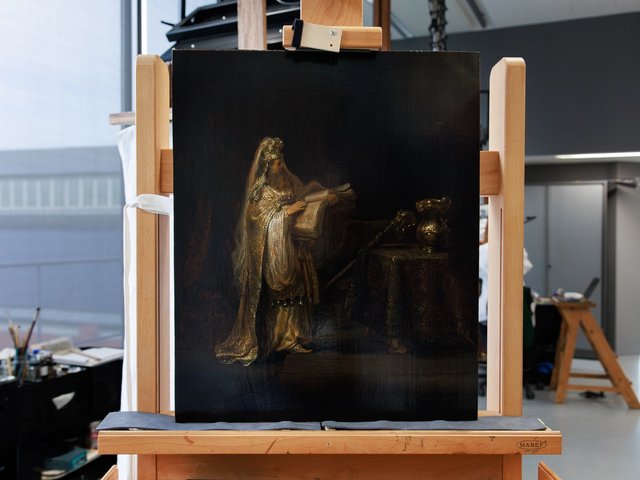
Earlier this month, researchers at the Rijksmuseum in Amsterdam authenticated a painting, Vision of Zacharias in the Temple (1633), that is owned by a private collector and was dismissed as a copy in the early 1960s. The work joins around 350 other known Rembrandt paintings, a number that has fluctuated over the years as emerging technologies provided clearer evidence.
The late Dutch art historian Ernst van de Wetering, long considered the authority, worked on the Rembrandt Research Project (RRP) for 47 years. That project began by combing through the 1935 catalogue raisonné by Abraham Bredius that attributed 624 paintings to Rembrandt, and removing more than half. In 2014, Wetering reinstated 70 works that he published in Rembrandt Painting Revisited, the final volume in the RRP’s six-volume survey.
Discoveries continue to be made on Rembrandt also because, according to Schwartz, he was an unstable medium. “Rembrandt put us off on the wrong foot in so many instances; nothing ever lines up perfectly with Rembrandt so it is a good thing that we are now talking openly and disagreeing with each other about issues,” Schwartz says. “For years the Rembrandt Research Project was the last word in Rembrandt attribution and what they said was gospel and it shouldn’t have been.”
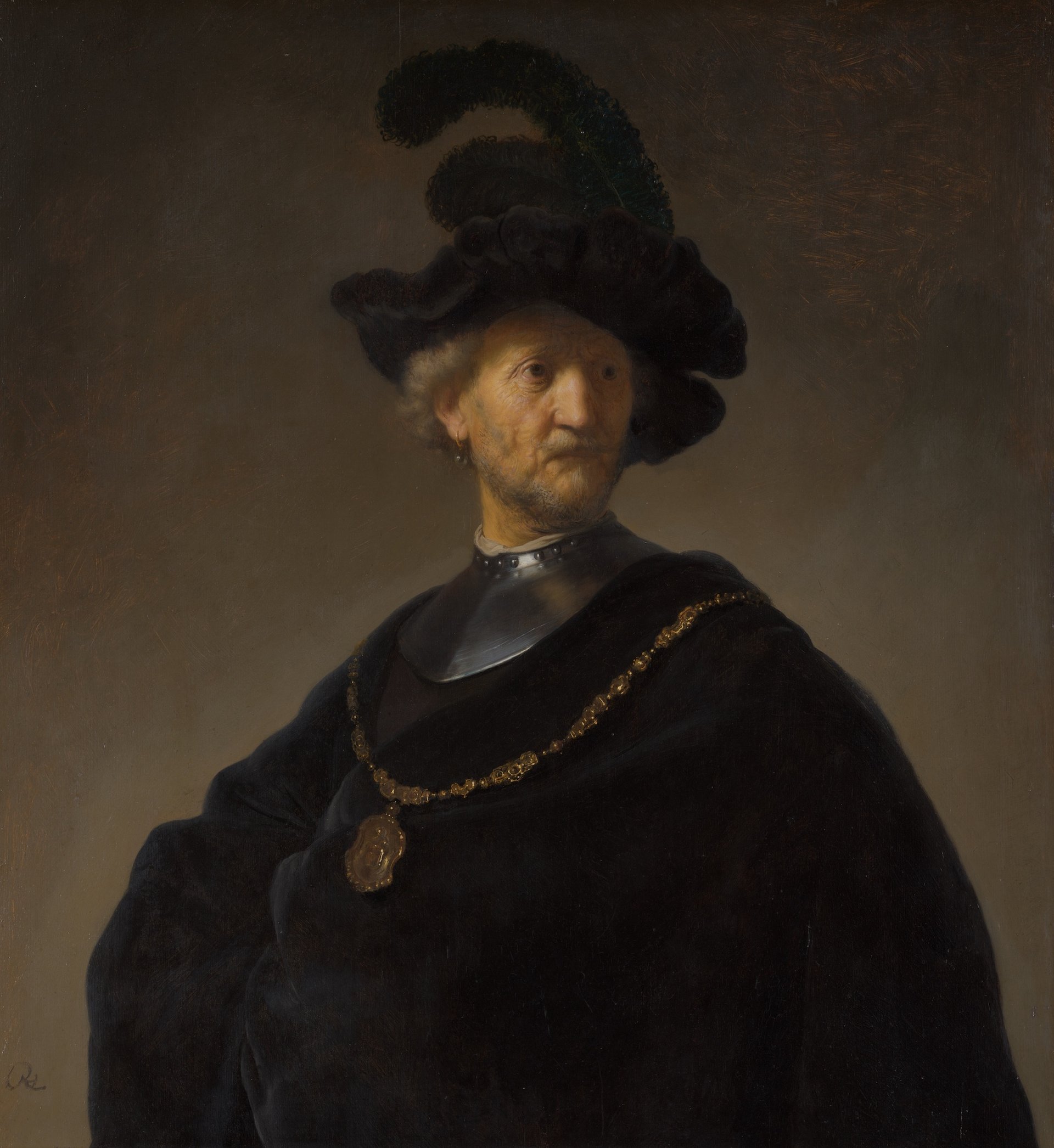
Rembrandt van Rijn, Old Man with a Gold Chain, 1631. Oil on panel. Mr. and Mrs. W. W. Kimball Collection, Art Institute of Chicago
For instance, Schwartz says, the idea that Rembrandt was not known for producing autograph replicas meant that he could not have painted another Old Man and a Gold Chain. Schwartz points out that in the volumes one to five of “A Corpus of Rembrandt Paintings”, one of the researchers on the RRP team identified a replica but Van de Wetering did not agree. For Schwartz, this begs the big question: was Rembrandt capable of creating one?
Schwartz visited Chicago in late December and gave an informal presentation to a group of art historians and curators. They walked the corridors of the AIC and looked at other examples of autograph replicas. Did he win anyone over? “I got some feedback. Nobody said that they thought it was off the wall,” he says. “There is not so much fun in Rembrandt connoisseurship—it is like a colour war.”
Meanwhile, Justus Lange, the acting director of the Gemäldegalerie Alte Meister and the curator of the upcoming Rembrandt 1632 exhibition, will include the possible autograph replica in the exhibition's second stop in Gotha, though not necessarily because he agrees with Schwartz. “It addresses a phenomenon in Rembrandt’s oeuvre that has yet to be researched more carefully: the question of copies and replicas in his work,” Lange says. “We will show, for example, the early Self-Portrait with Shaded Eyes (Amsterdam) next to two more versions (Kassel and National Trust). Were they made by pupils under the guidance of Rembrandt? Or with the help of Rembrandt as a kind of teamwork? Or is it thinkable that Rembrandt made copies himself?”
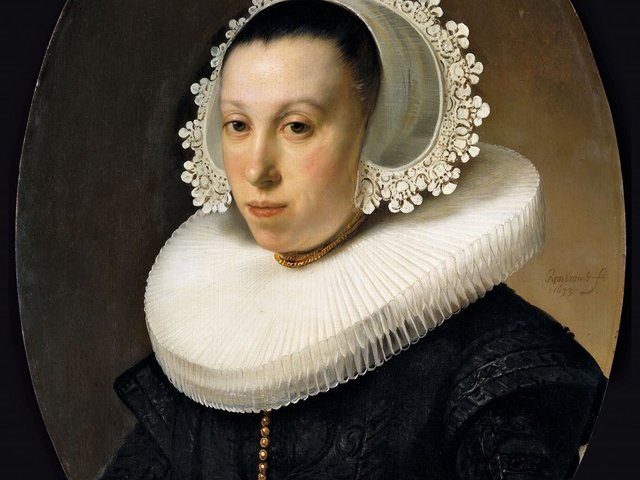
The copy of Old Man with a Gold Chain is another example of a second version that raises more questions than it answers. “Whether it is an autograph or a studio work or a combination of both is impossible to decide,” Lange says, adding that perhaps it is worth thinking of Rembrandt as less of a lonesome genius and more of an entrepreneur.
As for the title of his exhibition, it is “paying tribute to the fact that Rembrandt is establishing himself definitely in Amsterdam in 1632 and produces a huge number of paintings (far more than the year before and the year after) that brought us to the idea that he was working strategically on his career showing all his skills as a gifted portrait painter, something he did not [do] before in Leiden. Finally, he starts this year to sign his works with his first name Rembrandt, et voilà, the brand Rembrandt was born.”