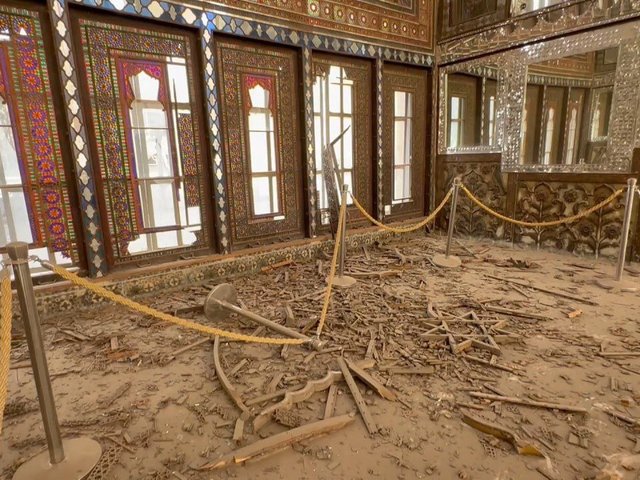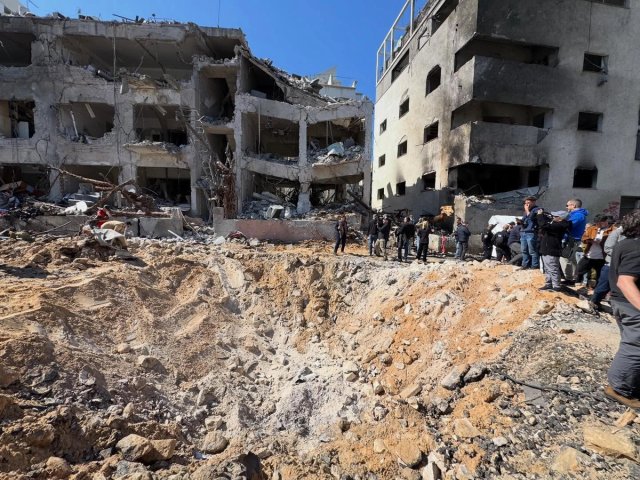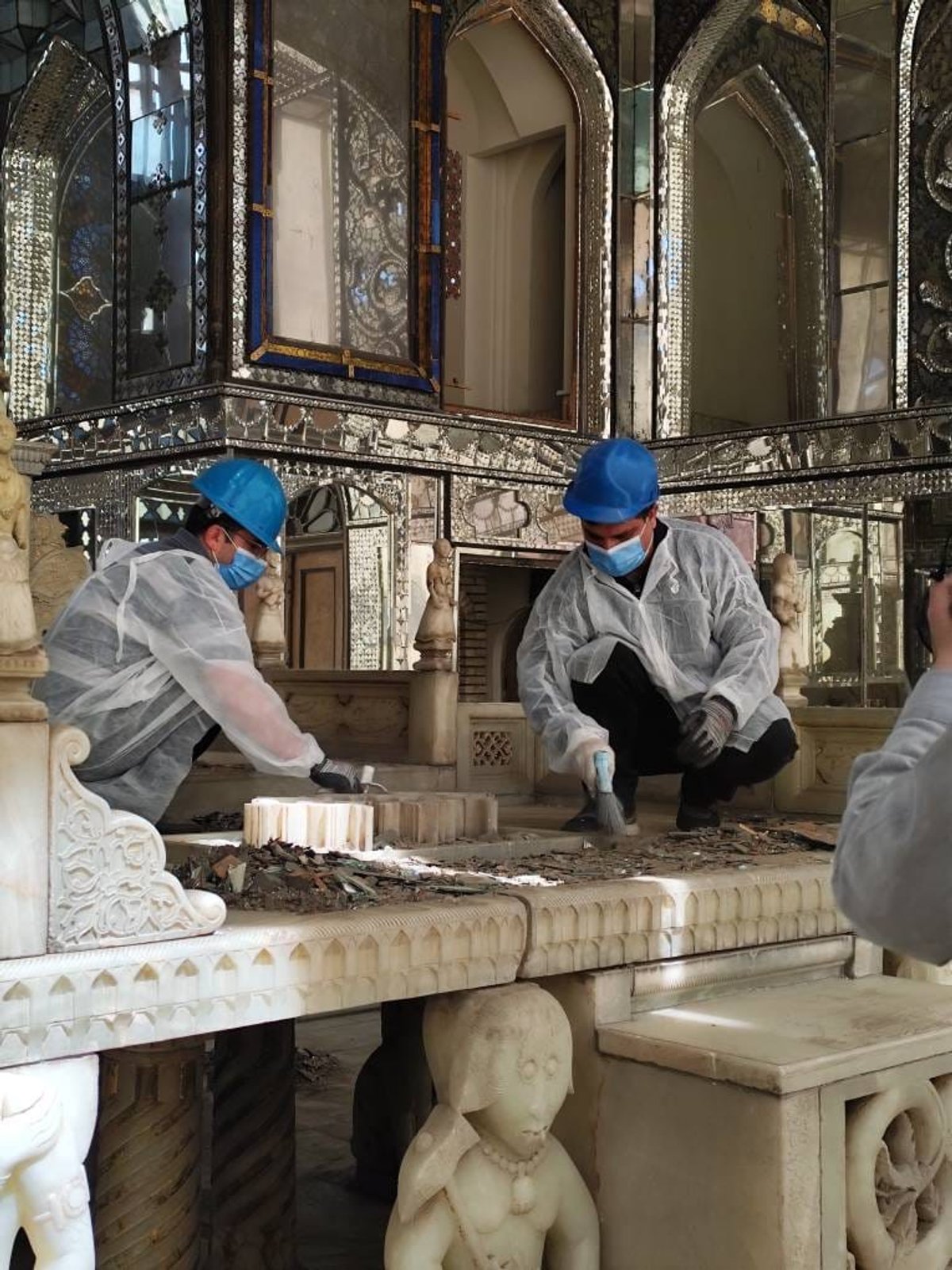
The shockwaves from the US-Israeli strikes on Iran had barely settled before cultural professionals began racing to save the country’s historic monuments. Weeks before an initial ceasefire paused the nearly 40-day war on 8 April, specialists were already documenting blast damage, salvaging shattered architectural fragments and carrying out emergency repairs at some of Iran’s best-known heritage sites.
Iran is home to more than 34,000 sites inscribed on its National Heritage List, a figure some experts say still undercounts the country’s full heritage. The war, which began on 28 February, has damaged not only military and nuclear facilities but also caused extensive civilian and cultural losses. According to figures provided to The Art Newspaper by Iran’s ministry of cultural heritage, tourism and handicrafts (MCHTH), experts have recorded damage to 149 historical monuments across 18 provinces and 29 cities.
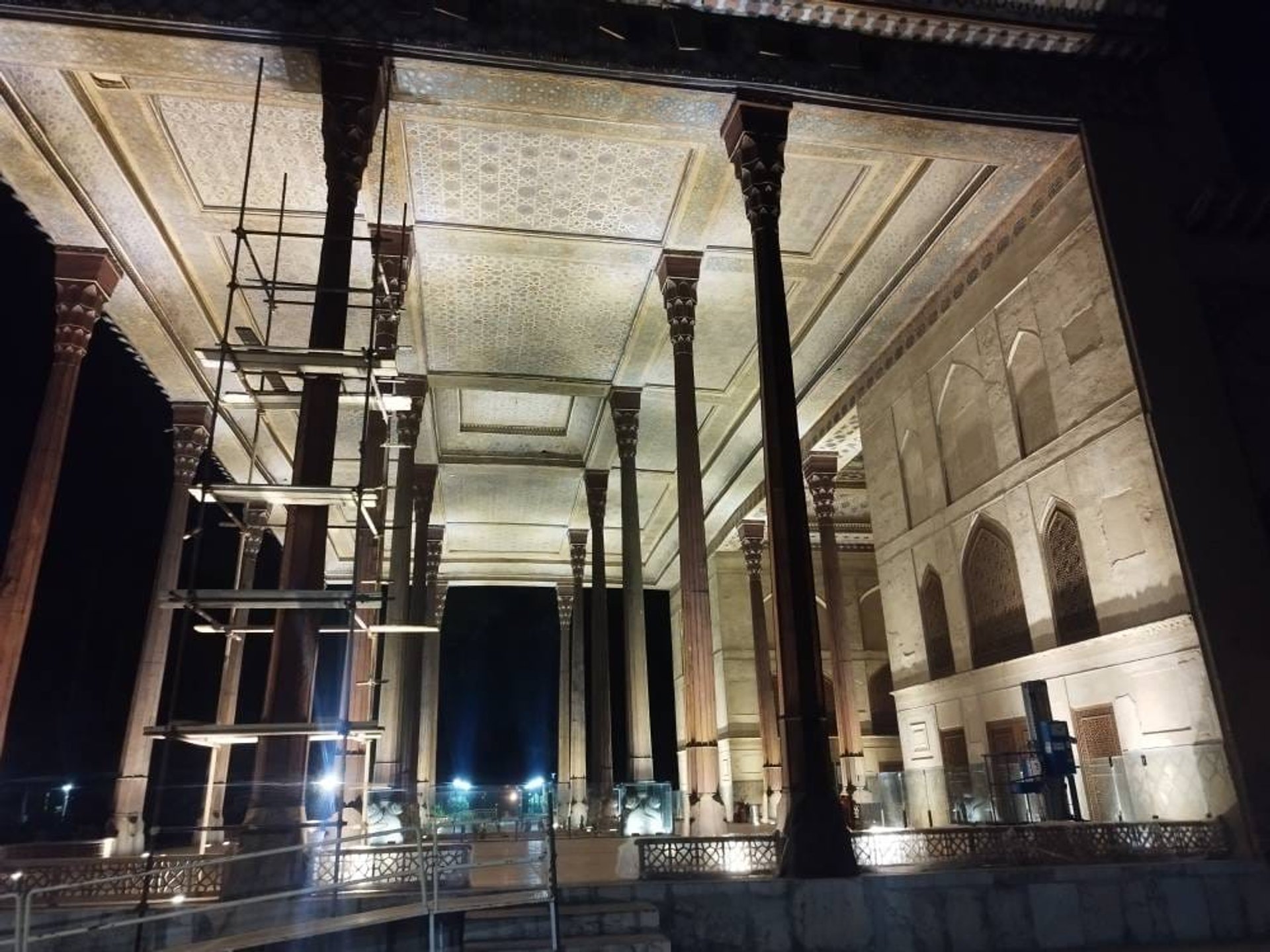
Emergency scaffolding in place at Chehel Sotoun Palace Ministry of Cultural Heritage, Tourism and Handicrafts (MCHTH)
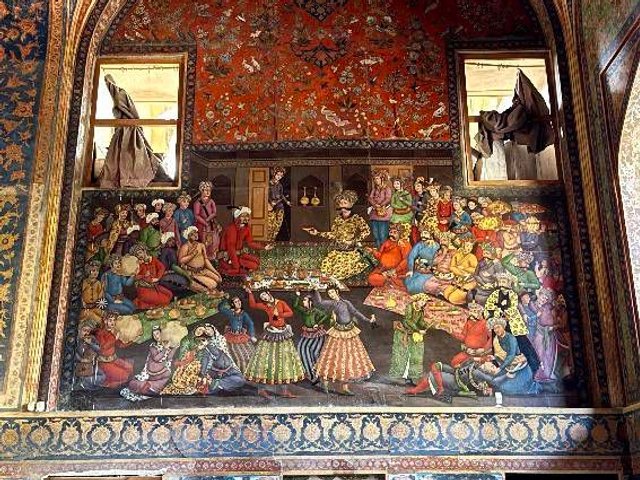
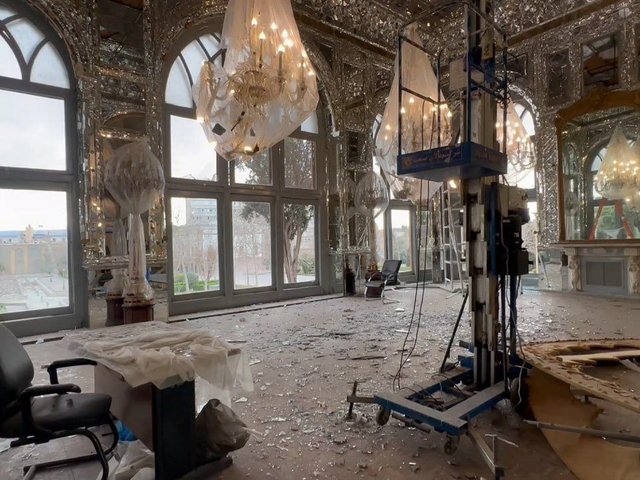
Among the damaged properties are Unesco World Heritage Sites: Tehran’s Golestan Palace, a 400-year-old complex comprised of eight main palace structures; Isfahan’s 17th-century Chehel Sotoun Palace (Forty Columns), part of the Persian Gardens inscription; and a section of the Trans-Iranian Railway, linking the Caspian Sea in the north with the Persian Gulf in the south.
Damage without precedent
The scale of damage to cultural sites in just 40 days of war is without precedent in recent US military history. A Reuters investigation in June found no examples of damage to Unesco-listed sites across two decades of US and allied ground and air campaigns in Iraq, Syria, Libya and Afghanistan.
Farhad Azizi Zelani, the director general of national and world heritage sites at the MCHTH, says he learned of damage to each site within hours of the attacks. “For all of us who have worked for years in the field of cultural heritage protection, hearing such news was extremely painful, especially regarding Golestan Palace,” he says. The palace, whose origins trace to the Safavid dynasty (1501-1736) and which was expanded under the Qajars (1794-1925), blending Persian and European art and architectural styles, was damaged on the second day of the war by the force of a nearby blast that also affected parts of the neighbouring historic Grand Bazaar.
Tayeebeh Golnaz Golsabahi, a vice president of the International Council of Museums, was in Tehran working on museum and heritage projects when the war began. News of the damage to Golestan Palace was “deeply distressing”, she says. Her immediate concern was verifying information and staying in contact with colleagues—made harder by restrictions on communication and internet access in the war’s early days.
The damage at Golestan Palace heightened fears that other sites faced the same threat, Azizi Zelani says—fears that proved well founded. “Each new report of damage to a historical monument reminded us of the years of effort, expertise and dedication of the colleagues who had worked hard to protect this valuable heritage,” he says.
Where possible, staff continued visiting affected sites, securing buildings, covering damaged openings, repairing roofs, installing protective scaffolding and cataloguing collapsed decorative elements for eventual reinstallation. Documentation remained the critical first step even after the ceasefire, Golsabahi says, creating a record to guide future conservation work.
Iran has been in “extensive correspondence” with Unesco’s World Heritage Centre, the secretariat of the 1954 Hague Convention and other international bodies since the start of the war, Azizi Zelani says, requesting technical and financial assistance and the deployment of international assessment teams. No financial support has materialised so far, though he says there is a stated readiness to co-operate.
Unesco declined to comment on its work in Iran when approached by The Art Newspaper.
Uncertain future
The April ceasefire brought little reprieve. The US, Israel and Iran have continued to exchange fire since it came into effect, while President Donald Trump’s threats of further military action, including warnings that Iranian infrastructure could again be targeted, have raised concerns that full-scale hostilities could resume.
Yet the uncertainty has not halted emergency conservation efforts. Damage assessments carried out by technical experts from provincial cultural heritage offices, national agencies and international organisations have been reviewed and confirmed by provincial technical councils and the ministry’s cultural heritage deputy, Azizi Zelani says.
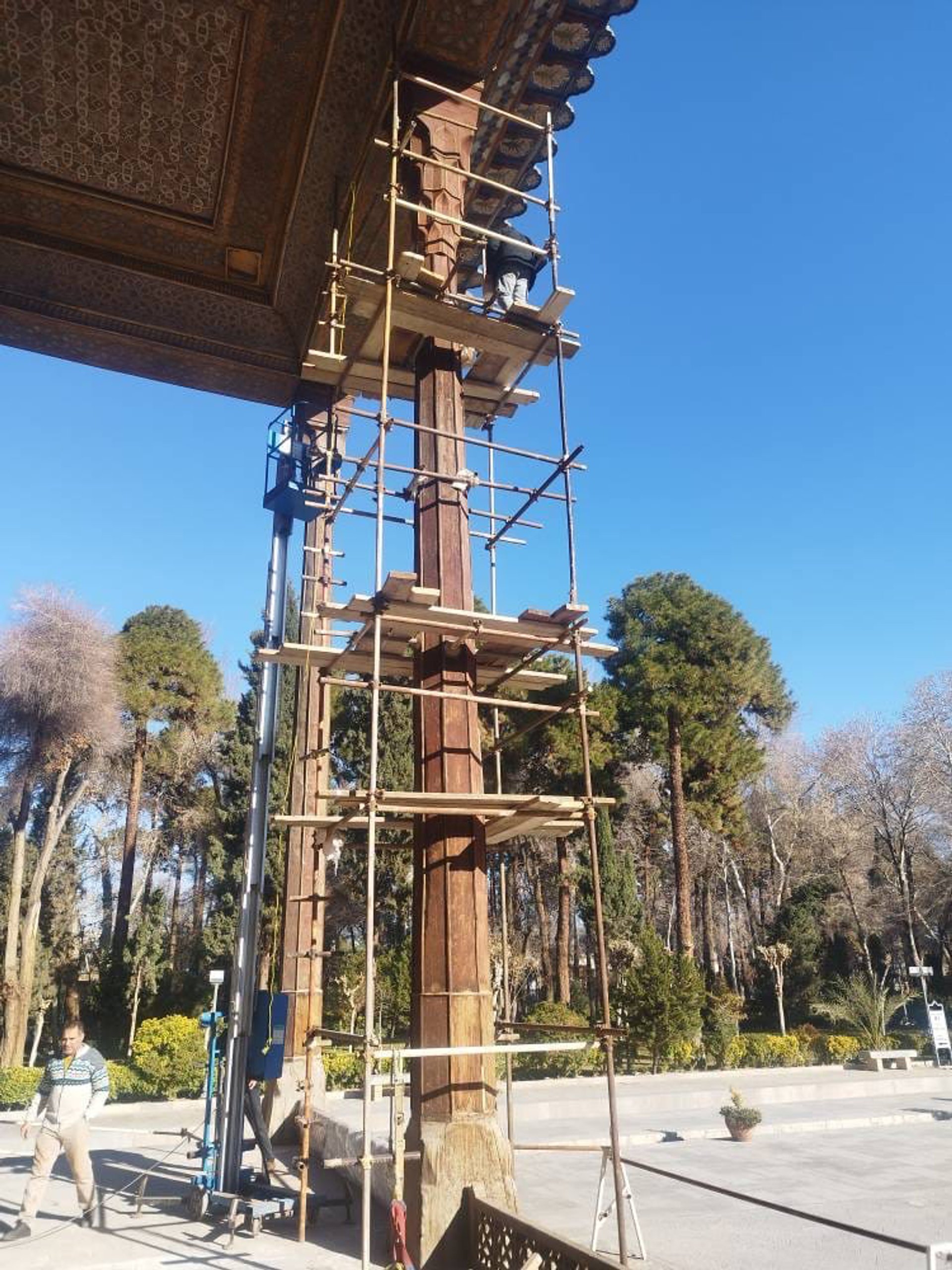
Emergency work has been carried out to stabilise the Chehel Sotoun Palace Ministry of Cultural Heritage, Tourism and Handicrafts (MCHTH)
Assessments at Chehel Sotoun and some of Isfahan’s other important damaged historic sites have also been confirmed by official judiciary experts, Azizi Zelani says, part of a broader effort to compile technical and legal documentation for “legal processes and international follow-up efforts”. In April, Iran’s justice minister, Amin Hossein Rahimi, said the country would pursue all available legal and international mechanisms to claim compensation for the damage inflicted on its historic sites.
A rush to restore
Work to shore up certain sites is also already under way. At Golestan Palace, teams are collecting, sorting and coding shattered wooden and decorative fragments. With autumn approaching, emergency roof repairs are now the priority to prevent water damage compounding the destruction. Japan, Azizi Zelani says, has offered support for the palace’s conservation.
At Chehel Sotoun, teams have secured the site, stabilised damaged sections and removed hazards, with major restoration to follow once funding is secured. On the Trans-Iranian Railway, specialised teams carried out emergency repairs almost immediately after it was struck, restoring operations to avoid disruption to the transport network.
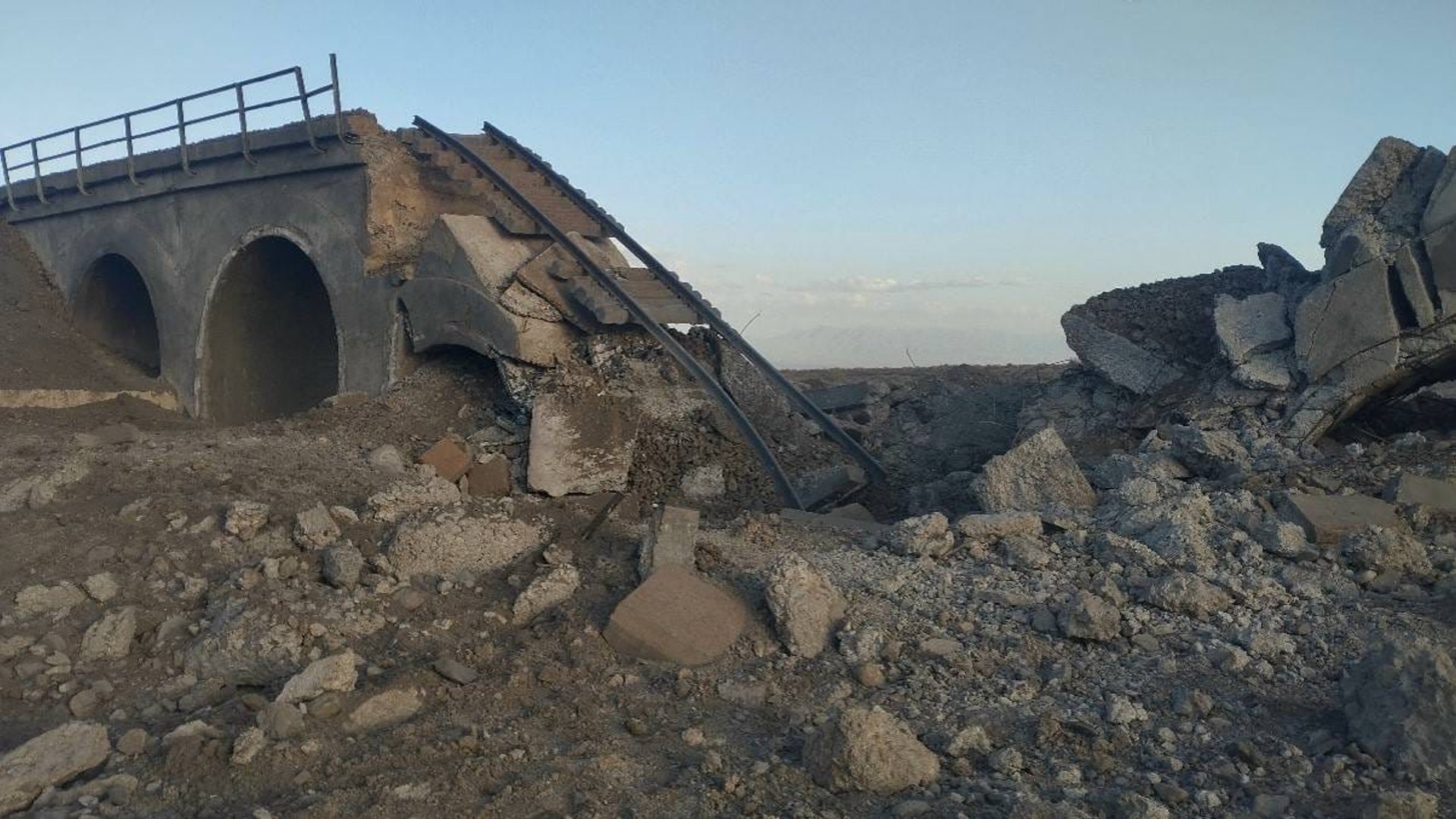
Damage to a track on the Trans Iranian Railway
Ministry of Cultural Heritage, Tourism and Handicrafts (MCHTH)
“The next phase will involve preparing comprehensive restoration plans, securing the necessary funding and carrying out major restoration work,” Azizi Zelani says.
Funding is one of the biggest obstacles. Preliminary estimates put the cost of damage to Iran’s heritage sector at around 7.5 trillion tomans—around $40m at current exchange rates. Iran’s own conservation expertise means much of the work can proceed regardless, Azizi Zelani says, though his deeper concern is the possibility of further destruction if attacks resume, a risk that has prompted new guidelines to improve preparedness at historic sites.
Museums in limbo
Golsabahi says colleagues are equally concerned about having sufficient resources, conservation materials and specialist expertise to respond when damage occurs, as well as about supporting museum professionals, since maintaining capacity over prolonged crises requires institutional support, training and co-operation. “Ultimately, the resilience of museums depends not only on protecting collections but also on supporting the professionals responsible for their care,” she says.
That resilience is already being tested. With a few exceptions, the majority of Iran’s major museums remain closed, with collections packed and moved into storage. Extended closures will affect public access to culture and the opportunity for people to engage with heritage, Golsabahi says. “Museums are not only places where collections are preserved; they are also spaces for learning, dialogue and community engagement,” she says.
One exception is the Tehran Museum of Contemporary Art, home to what is widely considered the largest collection of Western Modern art outside Europe and the US—including works by Pablo Picasso, Andy Warhol, Vincent van Gogh and many others. Its director, Reza Dabirinezhad, tells The Art Newspaper that the uncertainty has deeply affected operations.
In May, the museum launched a weekly programme, Art and War, exploring artistic responses to conflict. Offered at no cost, the series aims to provide a community shaken by war a space for recovery. But the museum stopped short of fully reopening, keeping its collection packed in safes in case strikes resumed. After being postponed several times amid the ongoing instability, an exhibition drawing on the museum's international photography collection finally opened in August, with the timing decided at the last minute once conditions allowed.
“We’ve done our best to keep the museum’s lights on,” Dabirinezhad says. However, the inability to host outside exhibitions, combined with wider economic pressures, has made financing difficult while the museum remains responsible for maintaining a world-class collection.
Lack of international protection
For Azizi Zelani, the crisis carries a broader lesson. “The protection of cultural heritage should not be given attention only after a crisis has occurred,” he says, calling for stronger international mechanisms for prevention, monitoring and rapid response.
“One of the lessons of this crisis was that the mere existence of international instruments, including the 1954 Hague Convention, is not by itself sufficient to protect cultural heritage,” he adds. “What matters is the effective implementation of these commitments and a swift, decisive response from the international community when threats arise.”
The convention obliges signatory states to avoid targeting cultural property during armed conflict and to safeguard it under occupation. In March, Unesco said that it had communicated “to all parties concerned” the geographical co-ordinates of World Heritage and nationally significant sites.
“The international community can play an important role in protecting cultural sites,” Azizi Zelani says, “not just by condemning attacks but by using all of their legal and diplomatic capacities to prevent such damage from occurring again.”