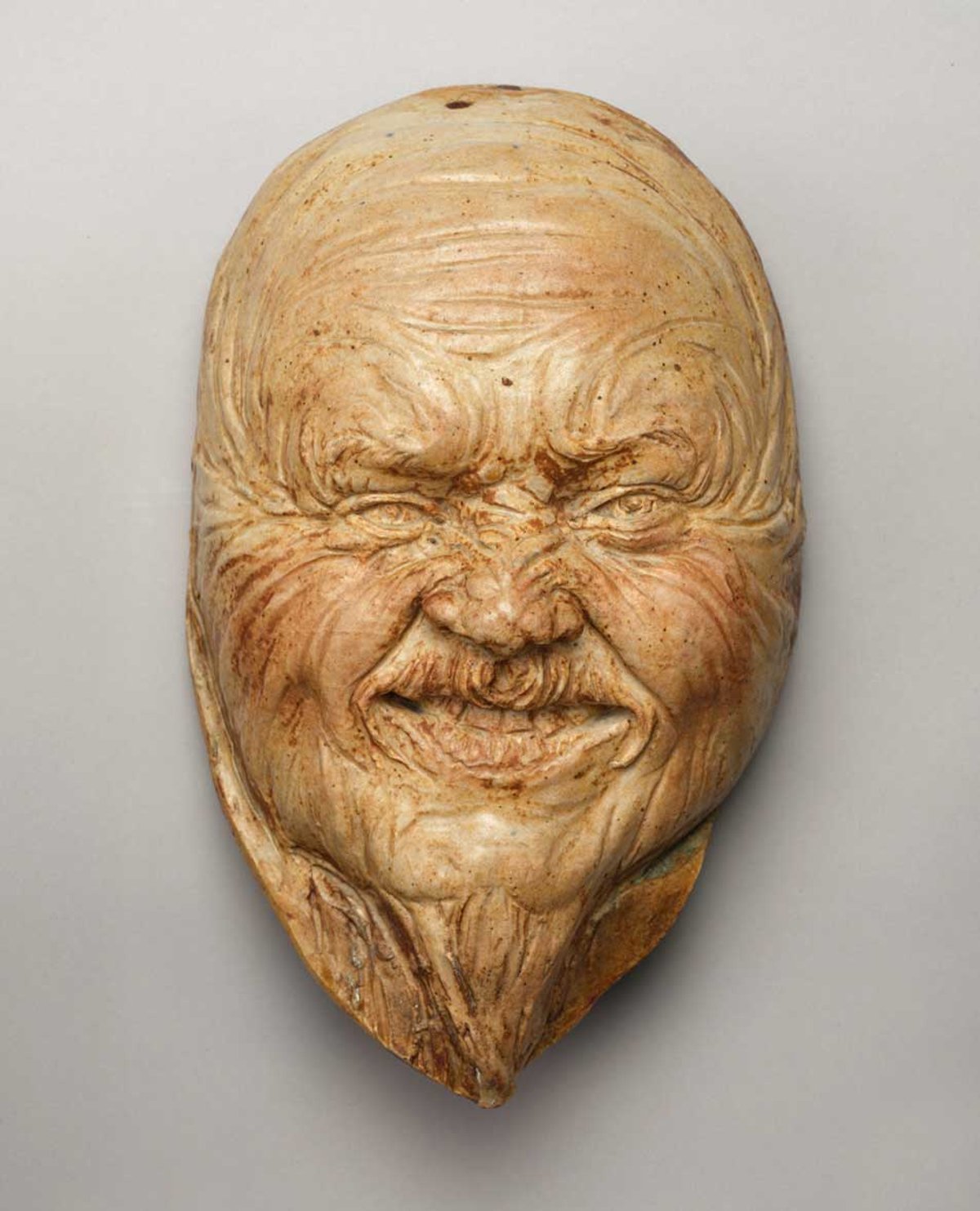
Mask (around 1890) by Jean Carriès
Musée d’Orsay, Paris
This unsettling, enamelled stoneware mask fuses French Gothic revival with the Japanese ceramics which the French sculptor Jean Carriès (1855-94) encountered at the 1878 Paris Exposition. Carriès became fascinated with the technical challenge of firing glazed stoneware and, in 1888, moved to the village of Saint-Amand-en-Puisaye, known for its pottery tradition, where he made this mask. A heady mix of Symbolism and the grotesque, the mask has been given to the Musée d’Orsay on its 40th anniversary by the London sculpture dealer Stuart Lochhead, who exhibited it at Studiolo in London in 2025.
© Art Gallery of South Australia
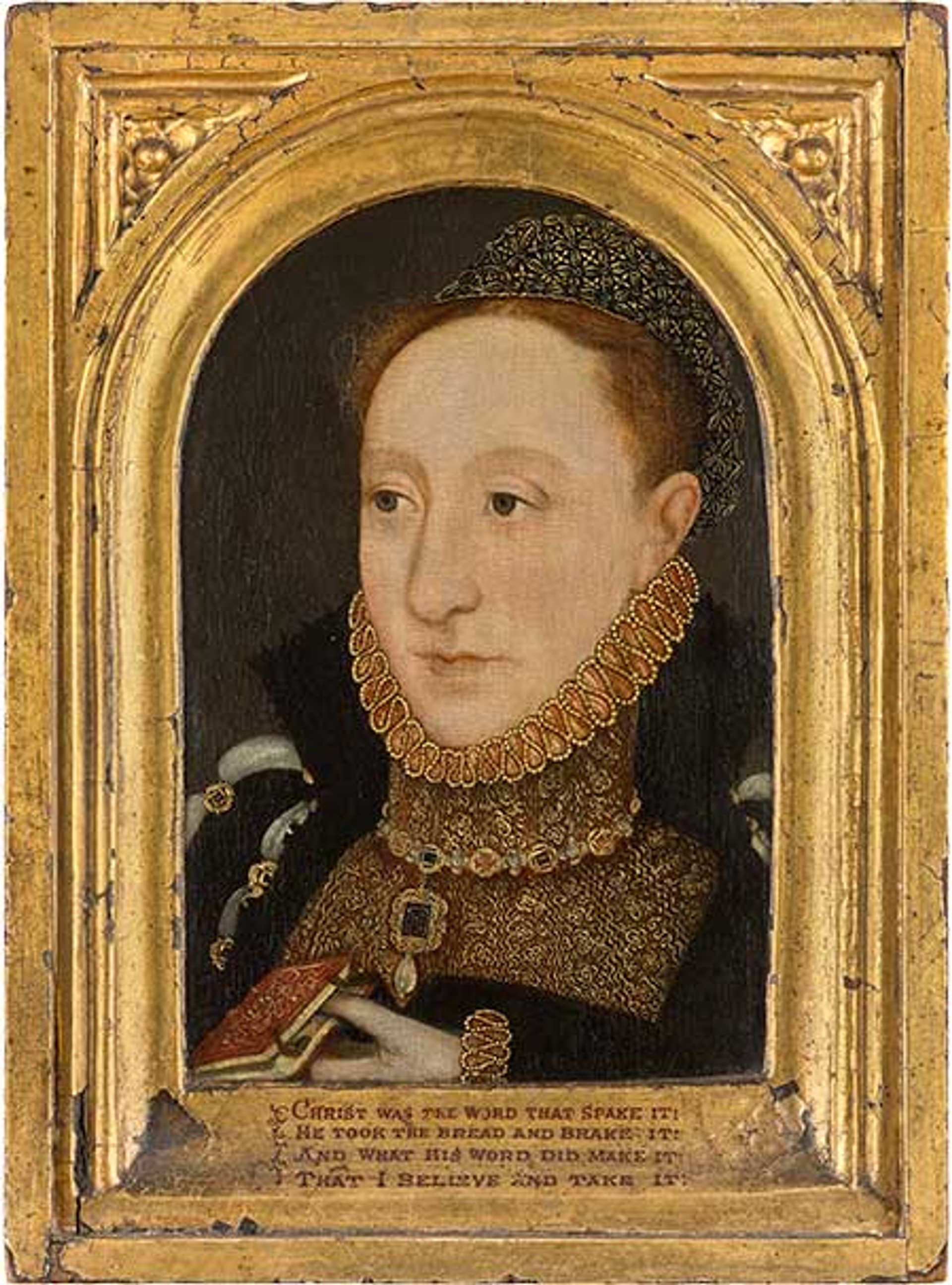
Elizabeth I with prayer book, (around 1565), by unknown, British School
The Art Gallery of South Australia, Adelaide
This 16th-century portrait of Queen Elizabeth I of England is, according to the Art Gallery of South Australia, the first portrait of the Tudor queen to enter an Australian public collection. The British School oil on panel, which measures 37cm by 27cm, is set within an engaged frame (ie the frame is carved out of the same piece of wood as the painted surface). The verse under the painting, famously attributed to Elizabeth herself, reads: “Christ was the word that spake it: He took the bread and brake it: And what his word did make it: That I believe and take it.” The painting, which had been in a private collection in Melbourne for 40 years, was bought privately through a fund set up by the Australian philanthropists James and Diana Ramsay to commemorate what would have been Diana’s 100th birthday. It will now be hung alongside a portrait of Elizabeth’s father, King Henry VIII, at the gallery.
Courtesy MIT Museum
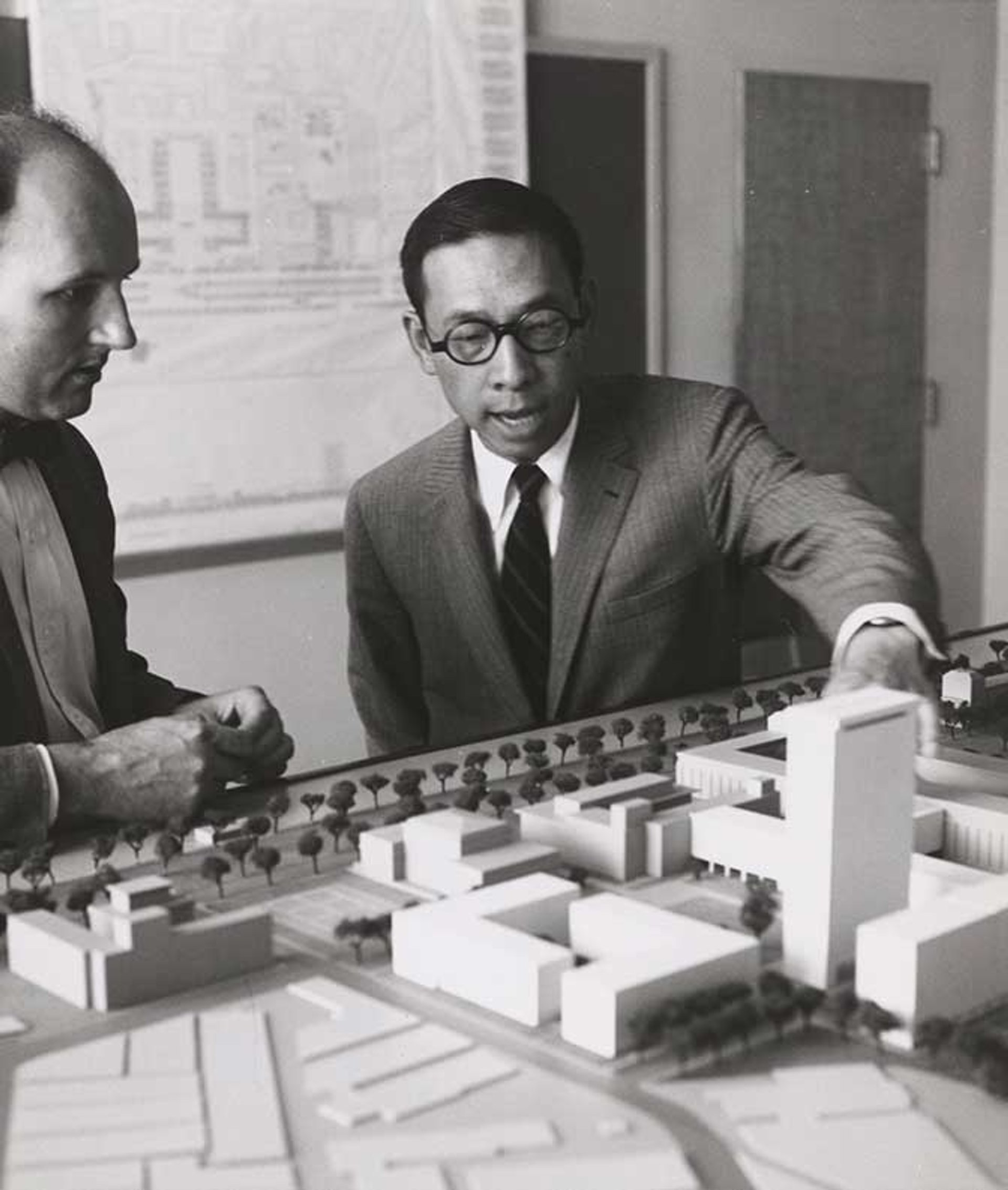
I.M. Pei’s archive donated by Pei Cobb Freed
MIT Museum, Cambridge, Massachusetts
The New York architecture firm Pei Cobb Freed has donated the archive of I.M. Pei, containing material from 60 of his major projects, to the MIT Museum. Pei graduated from the Massachusetts Institute of Technology in 1940. The enormous archive spanning 60 years includes 1,500 rolls of architectural drawings, 50 architectural models (including one of the MIT Museum, shown here, with Pei at centre), and 1,000 feet of manuscripts and other material. The drawings relating to the 1980s modernisation of the Musée du Louvre include a pencil and wax rendering made by Pei’s collaborator Paul Stevenson Oles.