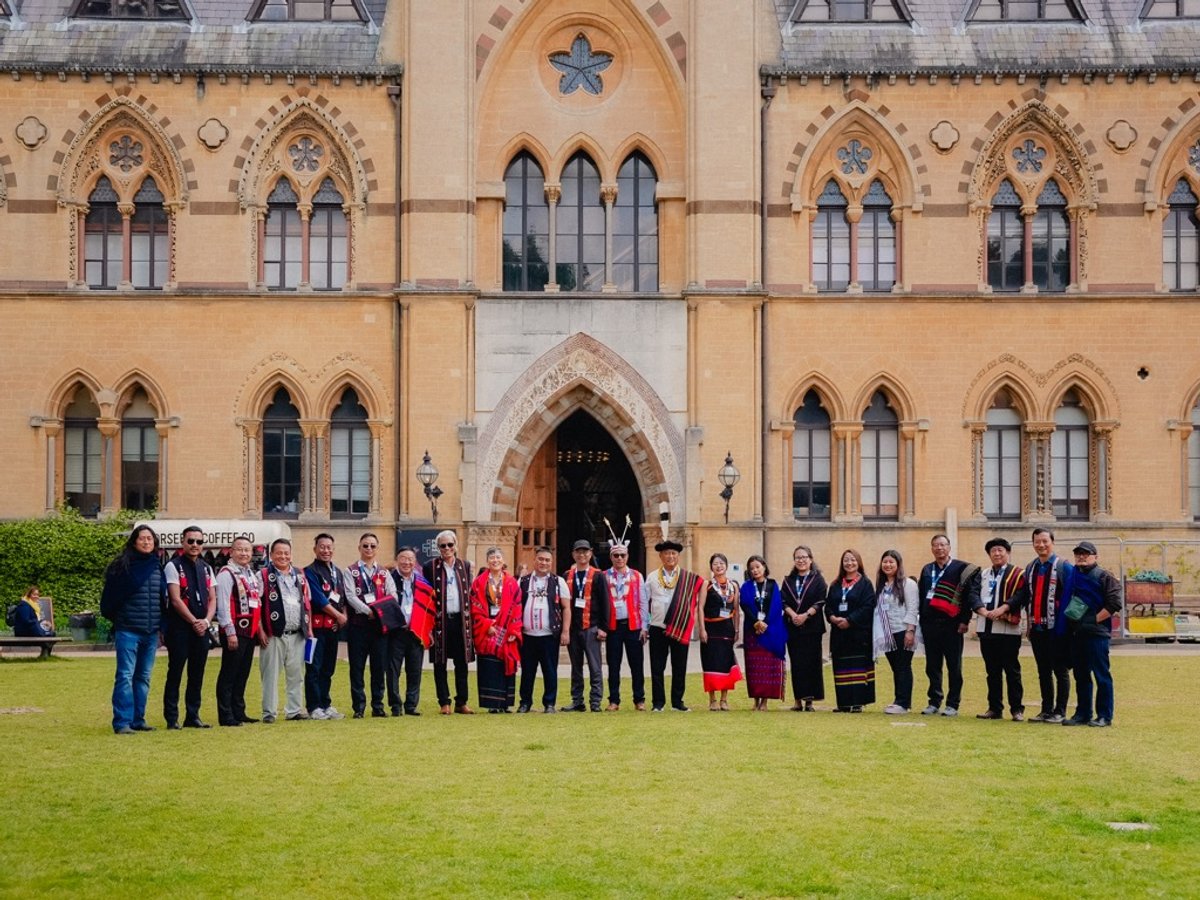
The Pitt Rivers Museum at the University of Oxford, has agreed to return a collection of human remains to the Indigenous Naga people of the Indian subcontinent. The 39 pieces of Naga remains, primarily skulls, will return to Nagaland, a small north-eastern state in India, by the end of the year.
According to The New York Times, Laura Van Broekhoven, the director of Pitt Rivers, said the handover, scheduled for November, will be the largest repatriation of human remains from the museum. She called the process a “Naga-wide movement of healing and unification”.
The Pitt Rivers Museum holds the largest collection of Naga material in the world, much of it gathered by colonial administrators in the early 20th century, a museum statement says.
In February the University of Oxford received a claim from the Forum for Naga Reconciliation, an association of 39 Naga organisations, for 40 ancestral remains kept in the Pitt Rivers Museum. The claim followed the university’s procedures for the return of cultural objects and was agreed by Oxford University Council in July. “Council agreed to the return of 39 ancestral remains, declining the return of one further remain which does not have a clear provenance as Naga,” a museum statement says.
In 2020 the museum removed all human remains from display. “Since 2020 museum officials have worked in collaboration with Naga partners, in particular the Forum for Naga Reconciliation and its Recover, Restore and Decolonise team, together with tribal Hohos, elders, churches and communities across the Naga homeland to decide how their ancestors should be cared for and returned,” the statement adds.
A delegation of 20 Naga leaders and scholars visited the Pitt Rivers Museum in June last year to see the stored remains. At the end of the visit, the Naga-Oxford Declaration on Repatriation was produced when the Naga people stated: “We are sorry that it has taken us several decades but we are here now to reclaim and return you to the homelands from where you were taken.”
According to the Pitt Rivers website, the first Naga ancestral remains were given to the institution more than a century ago by John Henry Hutton, a colonial administrator in the Indian Civil Service and an anthropologist. Most of the Naga ancestral remains now in the collection were brought to Oxford by Hutton and a second anthropologist, James Philip Mills, between 1910 and 1940.
Earlier this year, an investigation by The Guardian revealed the vast scale of human remains held in British museums and universities, prompting criticism from politicians and scholars.