Like most people alive 25 years ago, Joel Meyerowitz remembers exactly where he was on 11 September 2001. The New York City native was staying on Cape Cod, Massachusetts, a regular subject of his photography, when his wife called and told him to turn on the television. Once he understood the situation—that two hijacked passenger airplanes had been intentionally crashed into the World Trade Center’s Twin Towers—he immediately tried to return to the city. As soon as travel restrictions into Manhattan were lifted, he went to Ground Zero.
“I thought, ‘Oh, my city was just attacked.’ I mean, what could I do to help?” the photographer, now 88 years old, recalls. “I can’t give blood. I didn’t want to make sandwiches. I had something else to give and I couldn’t figure out what it was. I knew I had to be inside, and so when I heard that [then-New York mayor Rudolph] Giuliani had banned photography, I knew exactly what I had to do.”
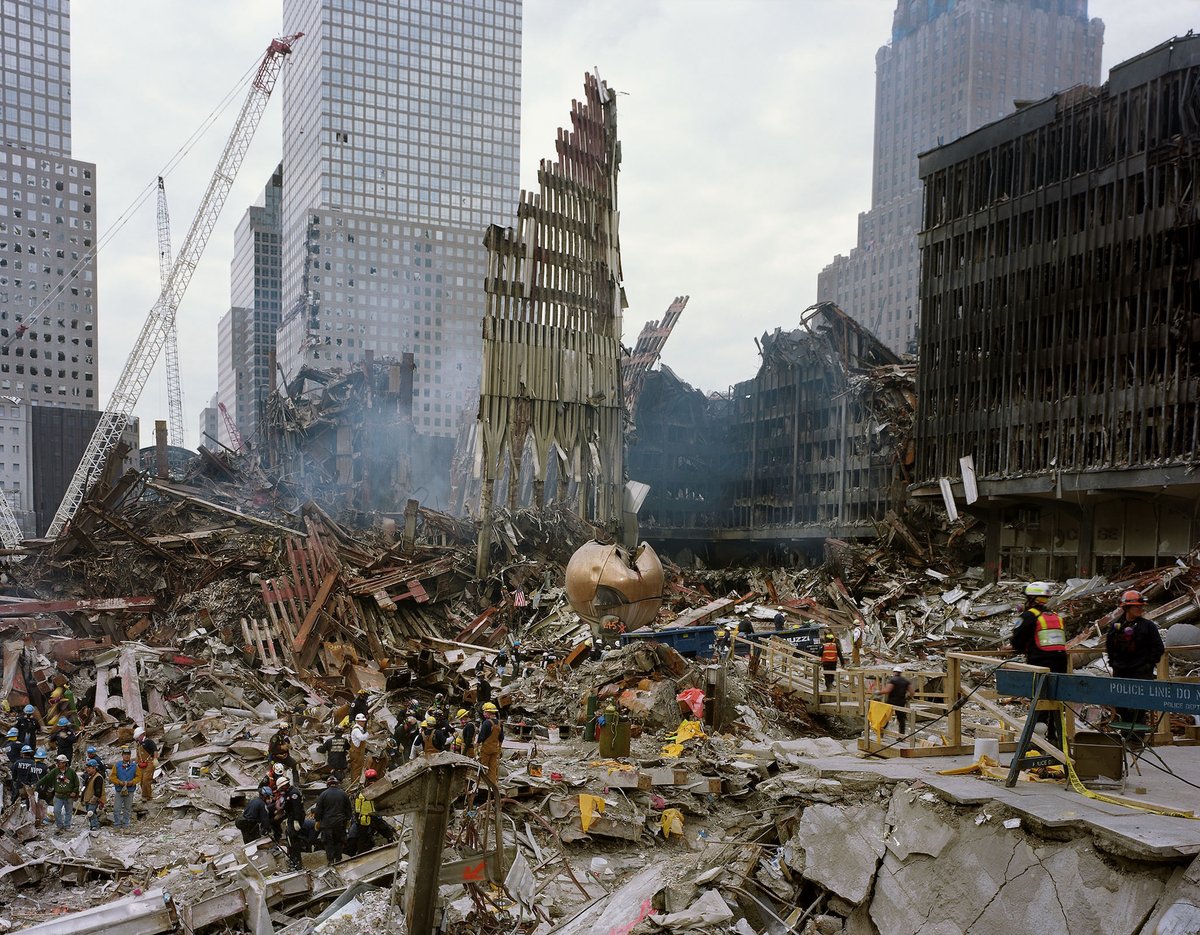
For nine months following the attacks, Meyerowitz, already famed for helping to legitimise colour photography as a serious artistic medium, visited Ground Zero to photograph the cleanup. He took pictures of first responders as they hauled scrap metal and pulled bodies from the rubble. He shot photos of official ceremonies and messages written in the dust-covered windows of nearby storefronts. Intending to make a historical archive of the cleanup, he found the experience profound, affording him a view into the very soul of America.
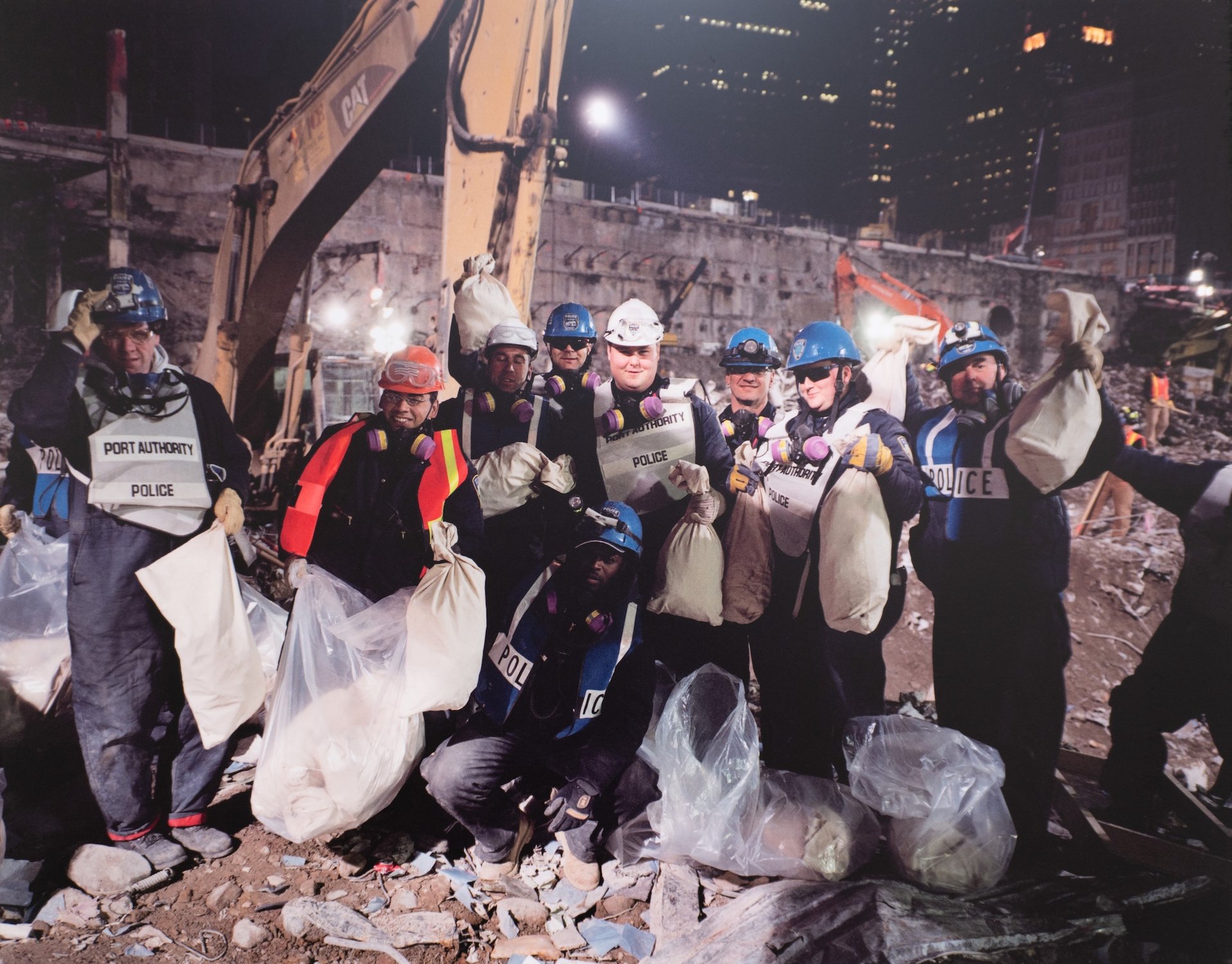
Joel Meyerowitz, The night they found eleven million dollars, New York City, 2002 Collection NSU Art Museum Fort Lauderdale; Gift of Joel Meyerowitz.
“What I saw that was, I think, the most important thing—and over time, I’ve come to see it as a really American thing—the devotion of all those men and women… on their hands and knees, scraping through every layer of rubble, looking to find anything that would yield some DNA and give somebody an identity. A tooth, a belt buckle, a bone, some kind of information, a wallet, anything,” he says. “These cops and firemen and volunteers, on their hands and knees, dusting and scraping and sweeping and sifting all through the rubble, looking for this identity, struck me as an extraordinarily American set of values. We have to identify everyone that was lost. So the singularity and individuality of each person was held to such a high standard.”
The resulting project, Aftermath (sometimes presented as Ground Zero), became an official historical document, eventually shown in more than 200 cities in 60 different countries by the US Department of State, including at the Venice Architecture Biennale in 2002. This summer, the NSU Art Museum Fort Lauderdale near Miami opened an exhibition featuring 28 of Meyerowitz’s photos from the series to commemorate the 25th anniversary of the attacks.
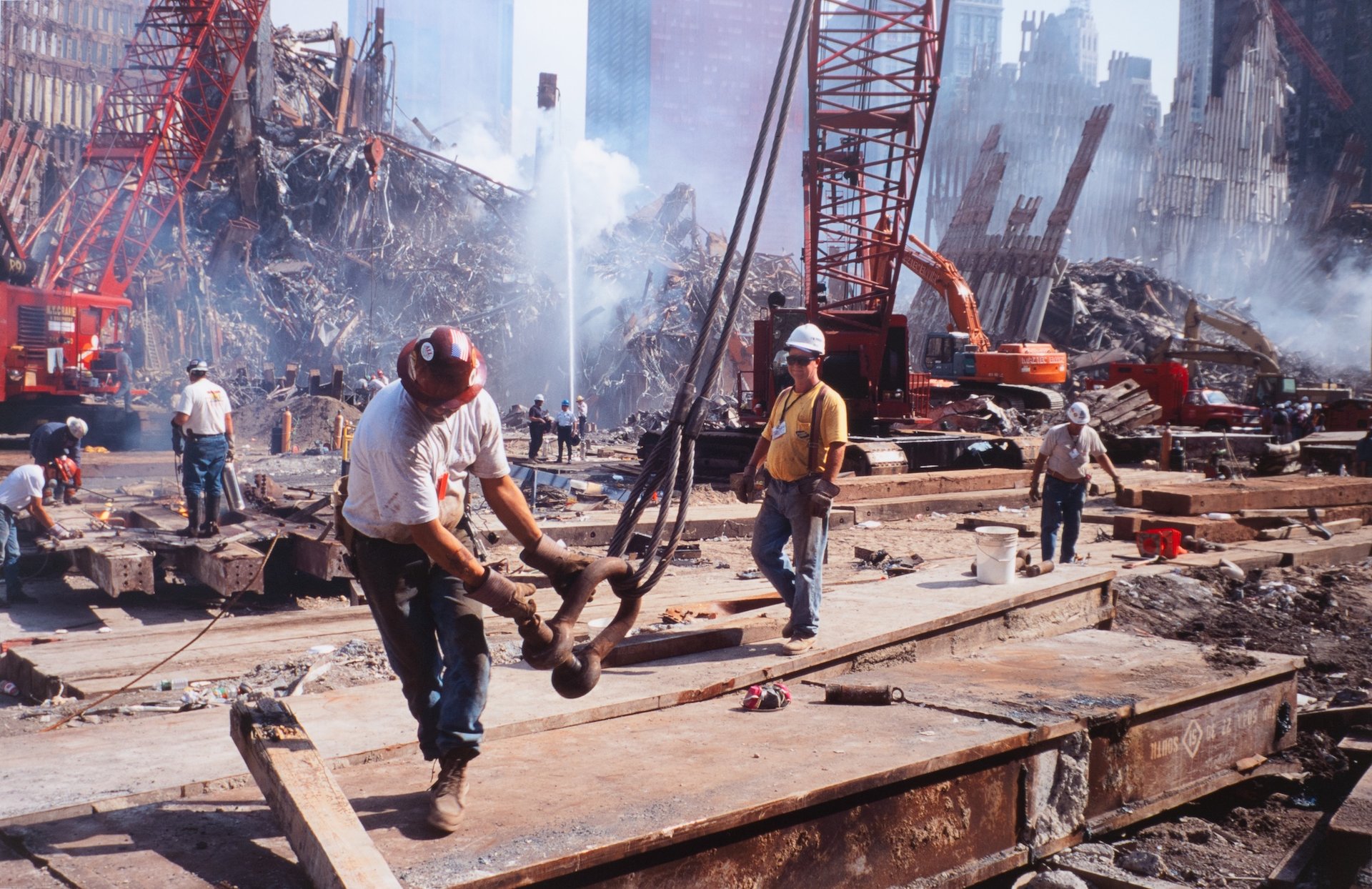
Joel Meyerowitz, Ironworkers, New York City, 2001 Collection NSU Art Museum Fort Lauderdale; Gift of Joel Meyerowitz
Bonnie Clearwater, the museum’s director and chief curator, says the institution decided to show the photographs after Meyerowitz donated them following a 2024-25 retrospective of his work there. “Upon accepting it we realised that 2026 was the 25th anniversary of [the attacks], which seems like yesterday to me,” she says. “And yet there’s a whole generation that has come up since then that was born after 9/11 and really doesn’t have the same connection with what occurred on that date, the heroism and the loss.”
Going undercover
Pulling off the project came with its share of challenges for Meyerowitz. Getting into the site required even more tact than getting back into New York City. He had to forge credentials and call in favours, at one point disguising himself with a borrowed NYPD-labelled hardhat. Eventually, he made some friends in high places, including officers from the arson squad who assisted him in acquiring a police badge and other credentials.
It was only later that the project was given official support from figures including the incoming New York City mayor Michael Bloomberg and, in particular, then-secretary of state Colin Powell, a fellow native of the Bronx who spent time with Meyerowitz at Ground Zero. “Almost every time [Powell] came to the site, he would find me and we’d hang out together and walk through the site,” he says.
It was thanks to Powell’s stewardship that Meyerowitz was made an official cultural ambassador for the United States and was able to tour the photos around the world. Though the photographer disapproves of Powell’s later actions in support of the US invasion of Iraq, he says there were no political motivations behind the exhibition from either himself or the administration.
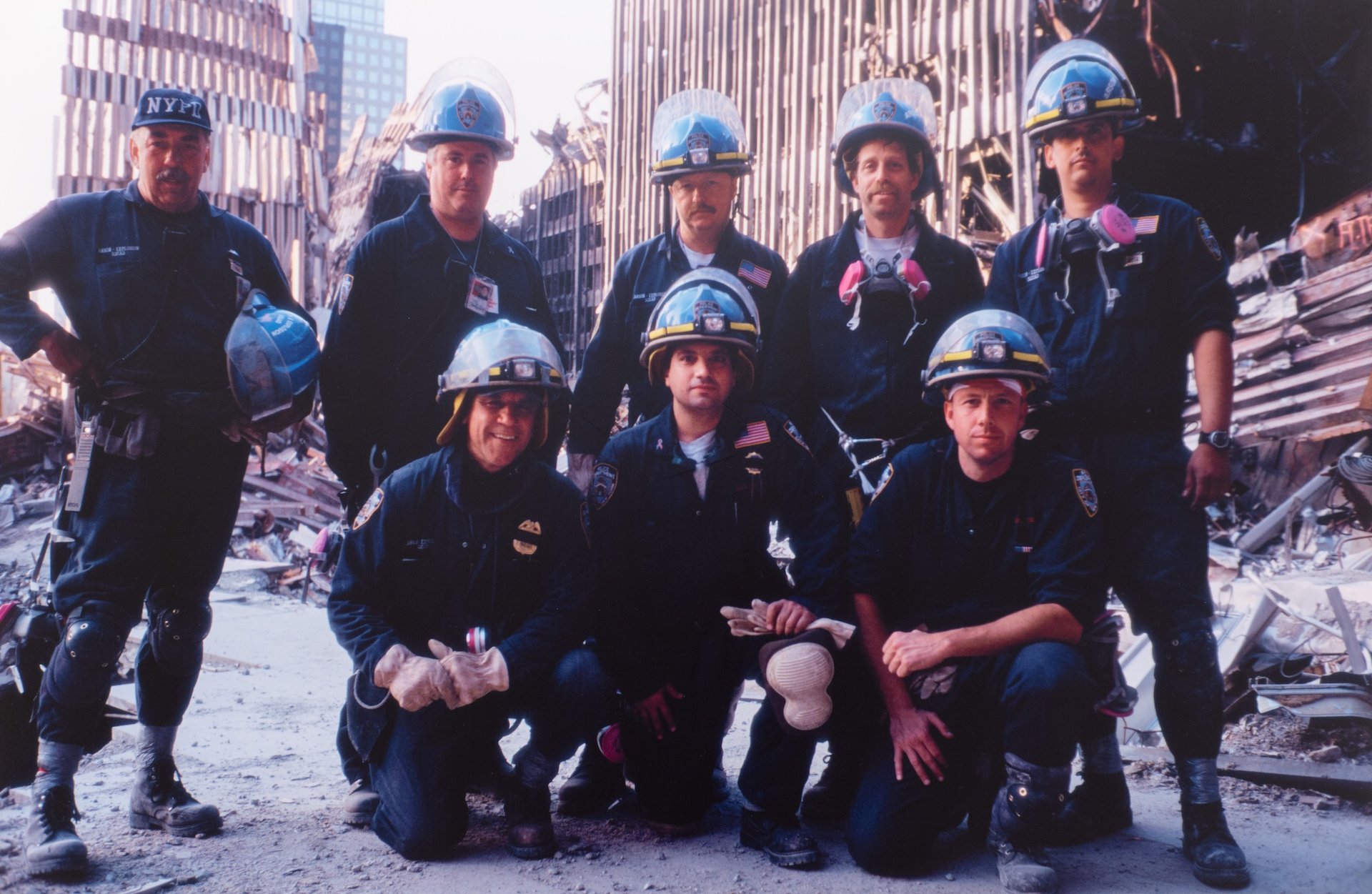
Joel Meyerowitz, Group of policemen, 2001 Collection NSU Art Museum Fort Lauderdale; Gift of Joel Meyerowitz.
“I think he fucked up when he went to the United Nations and he basically lied for the [George W.] Bush administration,” Meyerowitz says. “But that’s his problem. That wasn’t mine. My pictures actually told the story, and I didn’t politicise them. I chose all the pictures, so I felt I was in total control.”
Meyerowitz did not emerge unscathed from Ground Zero. Many first responders have suffered adverse health effects due to their work on the site, and the photographer has dealt with respiratory issues for years, although in some respects he is one of the lucky ones—most members of the arson squad he knew, for instance, have died in the intervening quarter-century. Still, he says, he would not trade his experience for anything.
“It was a calling,” he says. “I don’t regret a minute of it. It was actually some of the most profound human experiences I’ve ever had.”
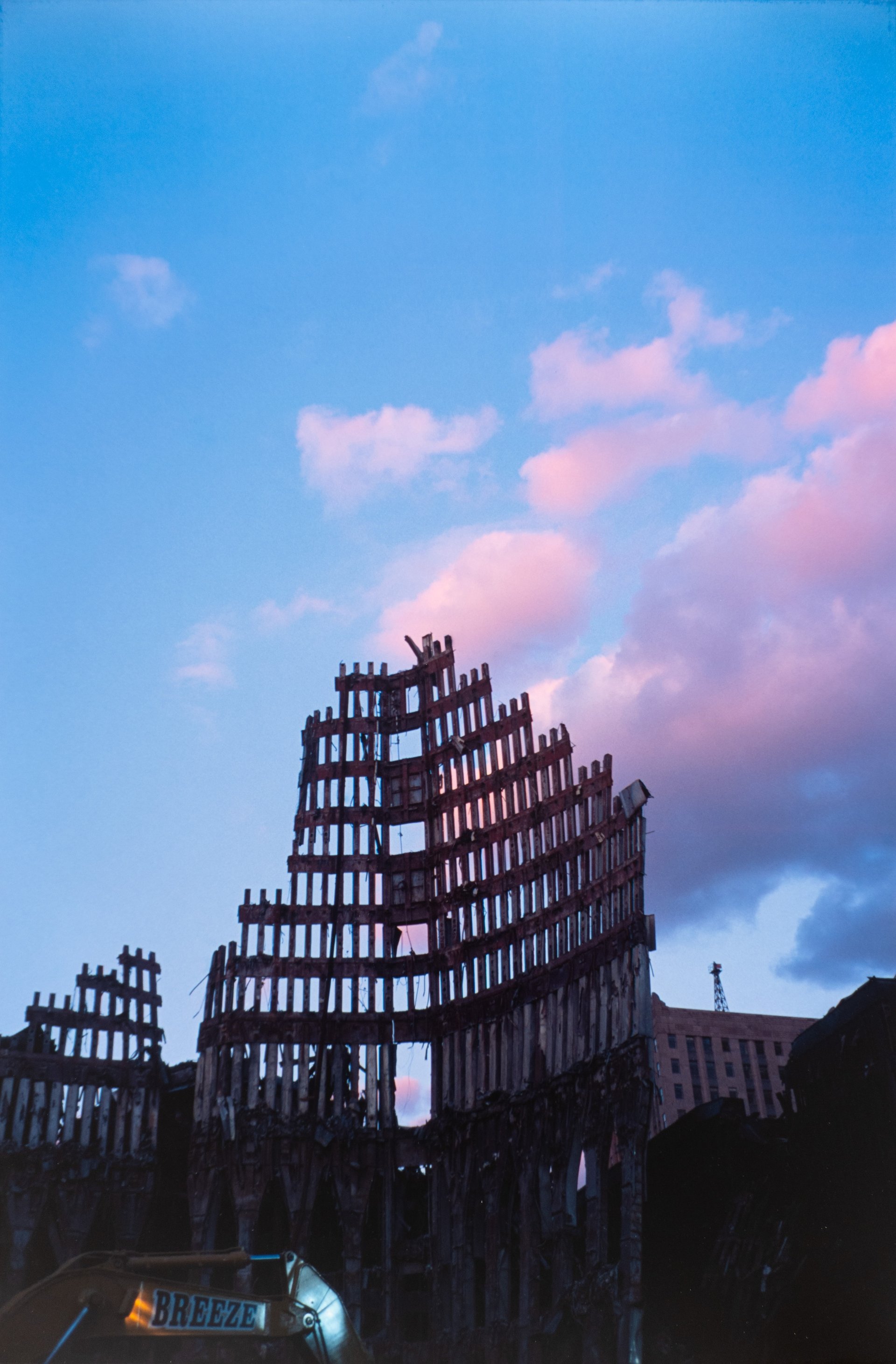
Joel Meyerowitz, The North Wall, New York City, 2001 Collection NSU Art Museum Fort Lauderdale; Gift of Joel Meyerowitz.
- Joel Meyerowitz: Aftermath, until 14 February, NSU Art Museum Fort Lauderdale, Florida