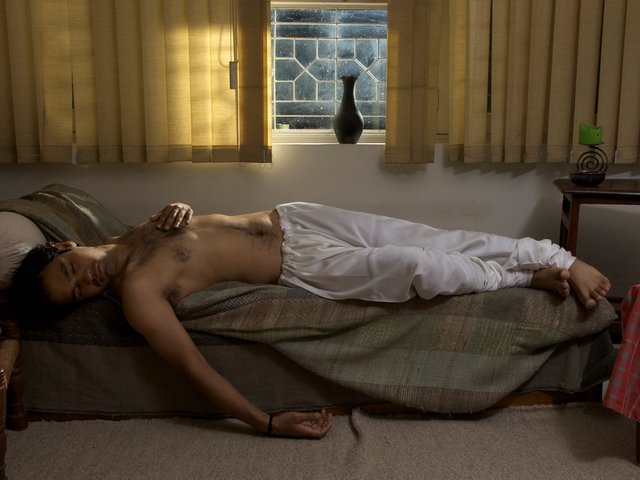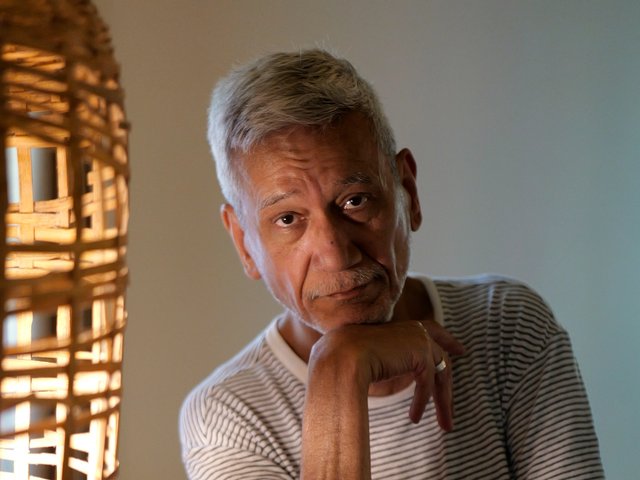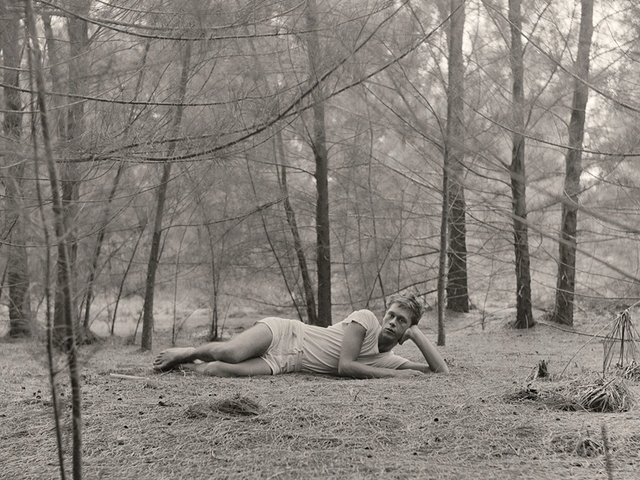
Sunil Gupta’s From Here to Eternity (1999), which features in his survey at Kettle’s Yard in Cambridge opening this month, is suffused with bittersweet poetry. He depicts himself in six photographic diptychs, made in the wake of his HIV positive diagnosis four years earlier. He is often naked or half-naked, in moments of reflection and isolation, sometimes while getting treatment for the virus. These intimate self-portraits are paired with tightly cropped, unpeopled urban locations with closed or half-closed shutters, locked doors and bolted metal gates. These are spaces of nocturnal pleasure—queer clubs and saunas—captured dormant in the daylight.
Gupta has said the images are ambiguous, evoking the limbo he found himself in at that time. He noted a proliferation of gay sex clubs just at the moment where illness prevented him from visiting them, amid thoughts of his mortality. His question in From Here to Eternity, he said, was “are these sex clubs and their patrons shutting me on the inside for good, or on the outside for good?” As a person with HIV he felt unwanted in LGBTQ circles.
In addition, the photographs make a broader social point, because many such spaces began to close at that time. So they are also about protecting a precarious community and its spaces. With grim serendipity, Gupta shot the gate to the building that hosted the club Fist alongside a billboard poster for the Universal Church of the Kingdom of God, which asks, “If God exists, why doesn’t He help you?”
Eternity and tragedy
The work’s title, too, carries multiple meanings. Gupta said he felt grateful for every day he had following his diagnosis, and that each moment felt “like an eternity”. Yet he had witnessed a more tragic meaning of eternity in the deaths from Aids-related illnesses of so many people within the gay community.
As the Kettle’s Yard show will reveal, Gupta has a knack for fusing activist social commentary with lyricism. I have written before in this column about the compatibility of art and activism in the face of laments by critics over the politicisation of art practice in recent years. From Here to Eternity is but one of several eloquent retorts to those views in Gupta’s Cambridge show. Crucial to this fluency is the subjectivity of his work—the (sometimes literal) nakedness of his personal connection to his subject matter.
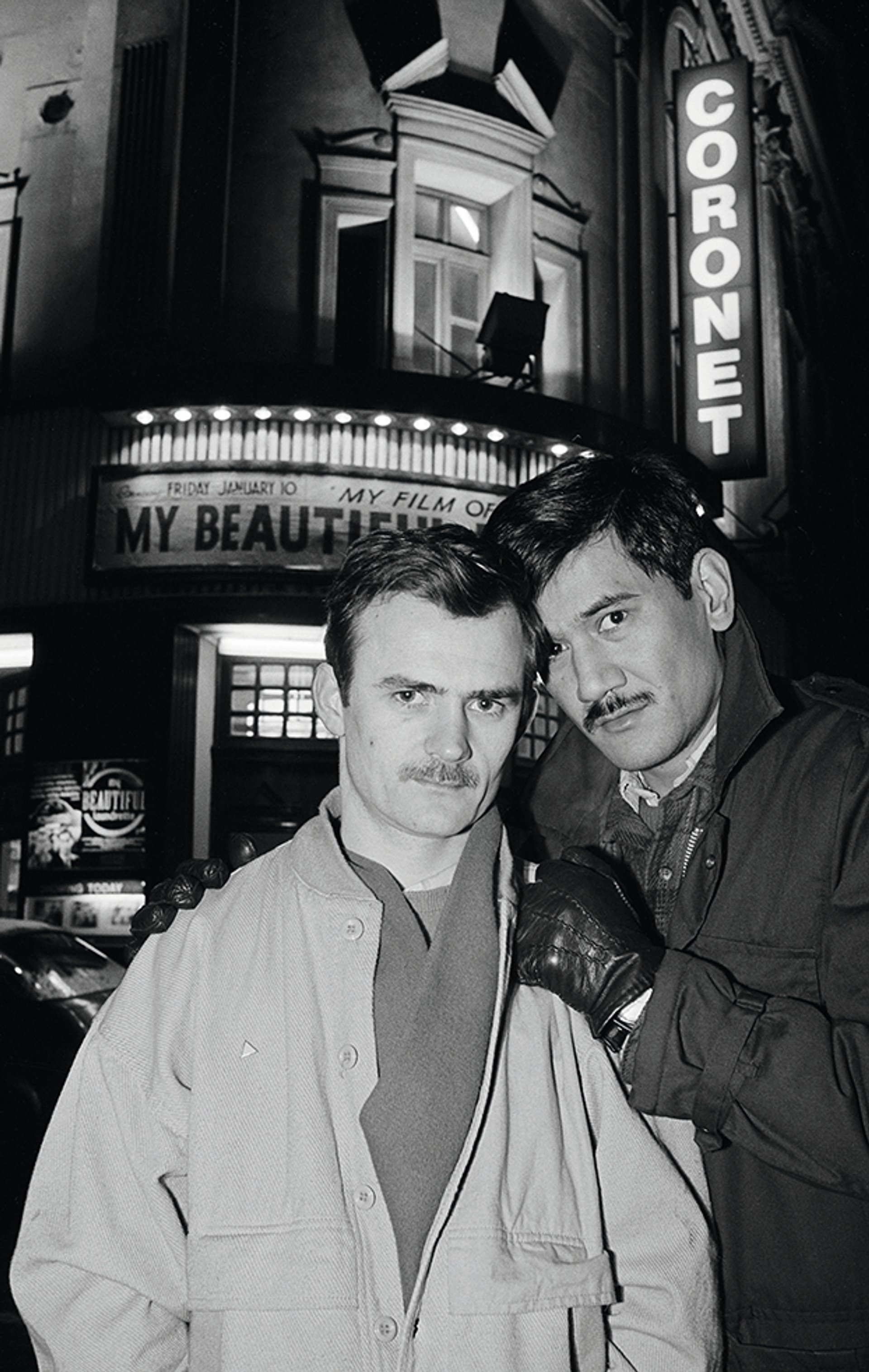
Gay, from a series of London-based photos by Gupta called Black Experience that he created in 1986 Courtesy of the artist and Hales Gallery, Materià Gallery, SepiaEye, Stephen Bulger Gallery and Vadehra Art Gallery; © Sunil Gupta
It is there from his earliest projects: Friends and Lovers captures Gupta and his family in Montreal after they moved there from India in the 1970s. It describes how Gupta’s assimilation into Canada was intimately connected to the gay liberation movement thriving there, pictured in intimate scenes of camaraderie and love, as well as of queer rights protests. In this anthology of photographs, Gupta discovers new filiations and siblinghoods in an “extended gay family”, as he described it.
Key to the photographs’ emotional impact is the way Gupta’s camera seems to embody desire or yearning
Key to the photographs’ emotional impact is the way Gupta’s camera seems to embody desire or yearning. The pictures of queer men on Christopher Street—the locale that he characterises as a halcyon centre for the expression of gay identity in post-Stonewall and pre-Aids 1970s New York—possess an almost libidinal gaze; he described the images as a means of “having” the men without having to have sex with them. In Lovers: Ten Years On (1984-85), meanwhile, the camera becomes a conduit for longing, as he responds to the breakup of a long-term relationship by photographing devoted gay couples. That it has since become a memorial to several of the sitters who died in the Aids crisis only adds to its poignancy. In Exiles (1986-87), meanwhile, he constructs scenes of gay men meeting in cruising sites in Delhi with simultaneous rigour and tenderness, deliberately avoiding the brutality of a reportage approach to a then-illegal activity in India, but picturing real members of the queer community.
The magic of analogue
Gupta once explained his project thus: “What does it mean to be a gay Indian man? This is the question that follows me around everywhere I go and is still ever present in my work.” Writing about From Here to Eternity and confronting his HIV diagnosis, he described returning to the “still magical” analogue darkroom after experimenting with digital printing. “The process itself seemed therapeutic.” His brand of activist photographic poetry resonates so profoundly in part because of this symbiosis of subject matter and medium. His profoundly personal touch is embedded in both his thoughts and his tools.
• Sunil Gupta: Life with a Camera, 1970-Now, Kettle’s Yard, Cambridge, 19 September-31 January 2027; Sunil Gupta features on our podcast, A brush with… and as a video on The Art Newspaper’s YouTube channel