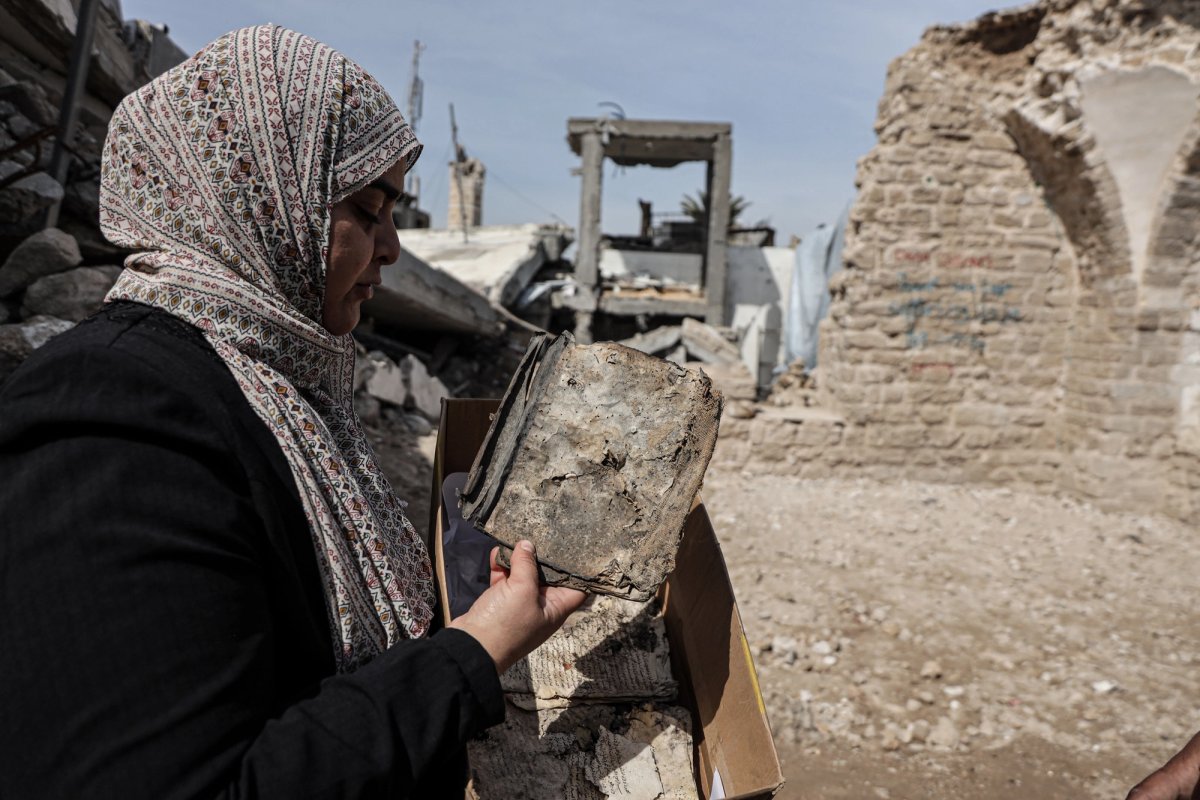
Unesco's Director General Khaled El-Enany has named two Gazan heritage professionals as the laureates of the 2026 Unesco/Jikji Memory of the World Prize, following the recommendation of an international jury of experts.
The historian Abdul Latif Hashim and the researcher and engineer Haneen Al-Amassi were awarded the $40,000 prize—given to “reward efforts contributing to the preservation and accessibility of documentary heritage as a common heritage of humanity”—in a ceremony in Cheongju, Korea, on 4 September for their efforts to rescue and digitise rare Palestinian documents and manuscripts from Gaza. Usually awarded to heritage institutions, Hashim and Al-Amassi are the first individuals to receive the prize since its establishment in 2004.
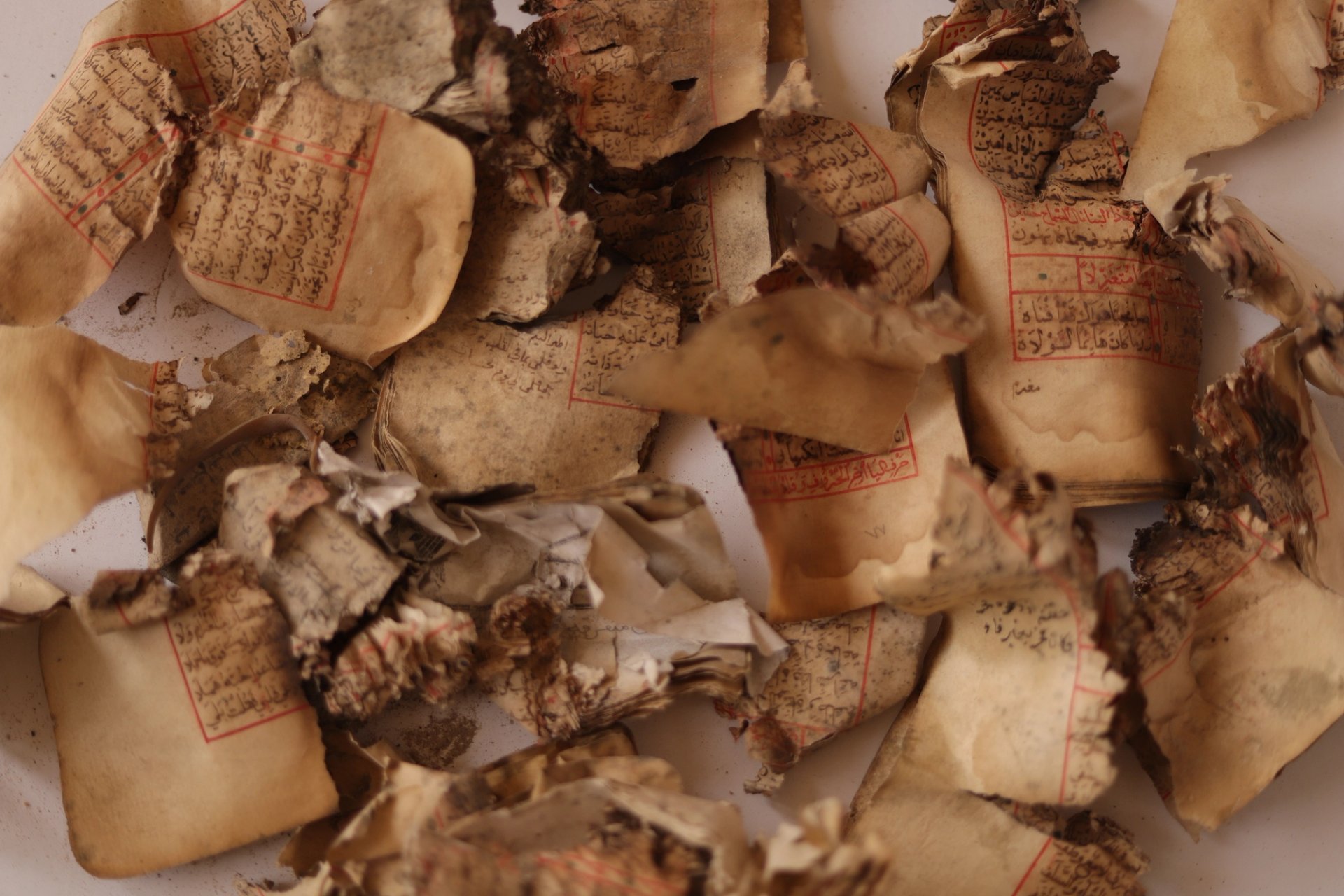
A damaged book from the Al-Omari Mosque library Courtesy of Unesco
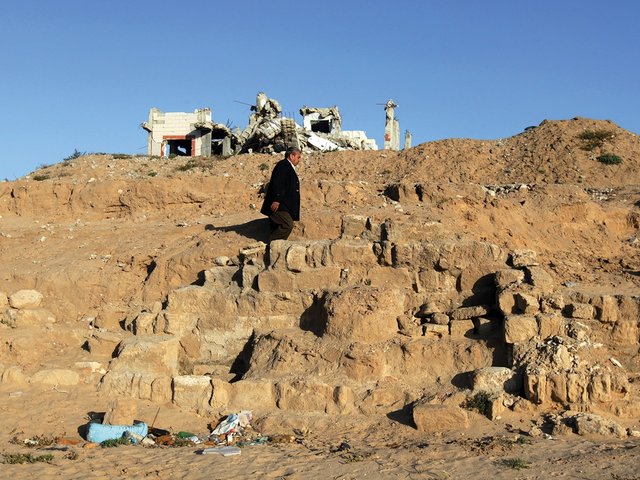
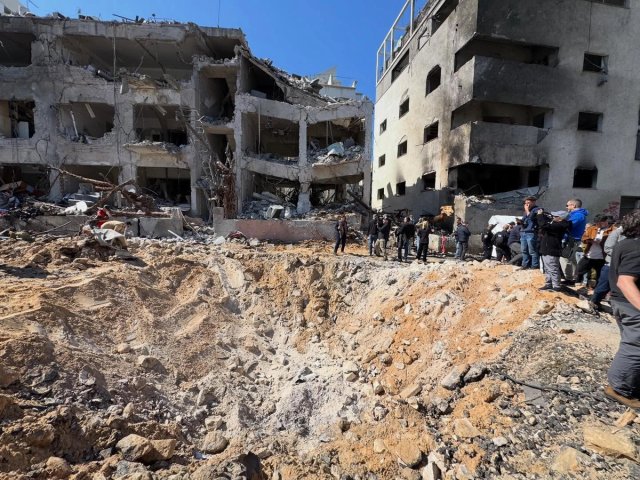
The pair were selected from 58 official international nominations—the highest number in the award’s history—in recognition of their work establishing an emergency response team that rescued rare documents from beneath the rubble. These include holdings from the Medieval Great Omari Mosque Library in Gaza’s old city, which was mostly destroyed in December 2023 by Israeli shelling.
Their efforts preserved and digitised more than 25,000 pages from the Mamluk and Ottoman periods, including Quranic manuscripts adorned with exquisite calligraphy, legal, medical and literary works as well as other rare documents vital to Gazan heritage.
According to a statement from Unesco, Hashim and Al-Amassi have developed an integrated approach combining long-term preservation and emergency heritage response, with support from the British Library’s Endangered Archives Programme. The team—working under the auspices of a local non-governmental organisation (NGO) called Eyes on Heritage, which is supported by the International Council on Archives—have established Gaza’s first specialised manuscript restoration laboratory to strengthen local preservation capacities.
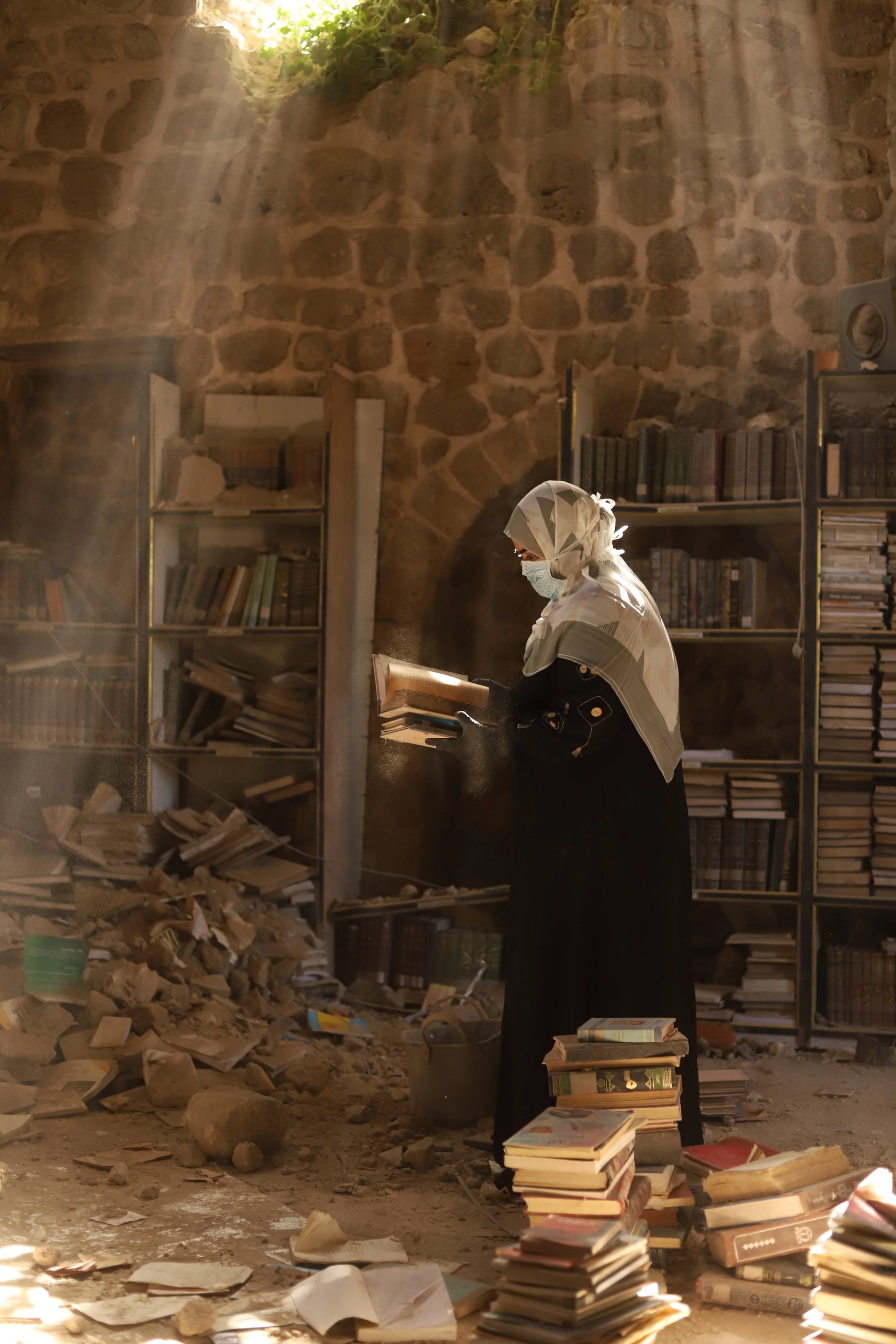
The Al-Omari Mosque library Courtesy of Unesco
“In its recommendation, the international jury of experts recognised the two professionals for their exceptional efforts to safeguard endangered documentary heritage under extremely challenging circumstances in Gaza, and their contributions to strengthening local capacity for long-term preservation,” says Mariya Gabriel, Unesco’s assistant director-general for communication and information.
The laureates pledge to continue their work. “Projects dedicated to the preservation and protection of documentary heritage are among the most vital means of safeguarding the identity and collective memory of peoples,” they said in Unesco's statement.
Jehad AbuHassan, who co-ordinates Gazan heritage programmes for the international NGO Première Urgence Internationale (PUI) tells The Art Newspaper that in spite of Hashim and Al-Amassi's efforts, manuscripts are still at risk. Through PUI’s INTIQAL programme, he plans to work with Eyes on Heritage to further support work on the library of the Omari Mosque. “The cooperation would focus on further stabilisation of the library building, documentation and preventive conservation of the book and manuscript collection, and technical measures to reduce ongoing risks,” he says.