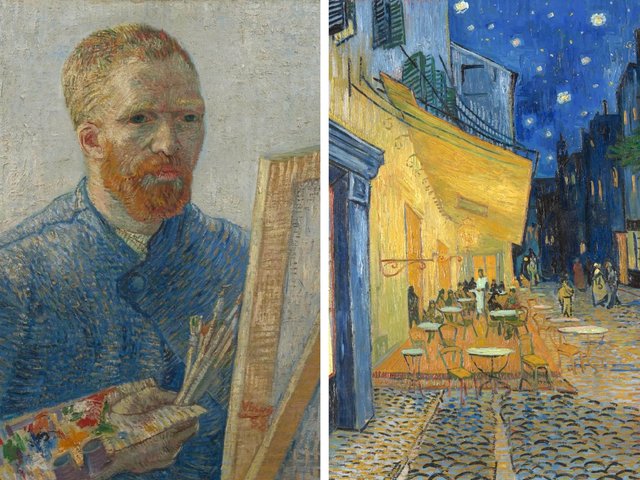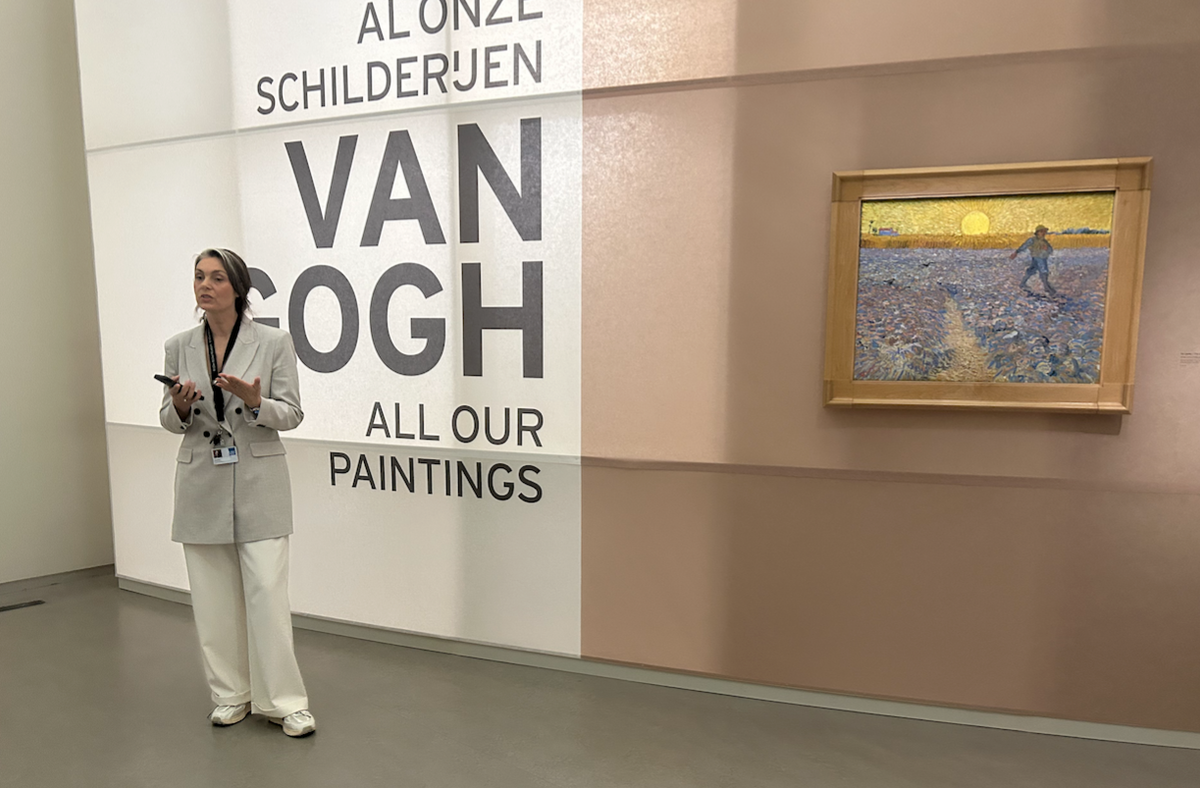

The Kröller-Müller Museum, which owns pictures donated by the greatest private collector of Van Gogh, has just hung all of its paintings by the artist for the first time since 2003. Based in a national park near the Dutch village of Otterlo, the museum usually has space for only half this number. The remainder of the Van Goghs are usually in store or on loan, with an occasional one in the conservation studio.
Helene Kröller-Müller, a connoisseur and the wife of a wealthy businessman, acquired the works in the period 1908-30 (it remains the world’s largest collection of the artist’s work, after that left by his family at Amsterdam’s Van Gogh Museum).
Van Gogh, All Our Paintings (until 3 January 2027), which opened this week, is an unusual presentation as it is not a chronological display. General exhibitions of Van Gogh’s work normally start with his early, Dutch works, reaching a climax with his late, exuberantly coloured French paintings. Instead, the museum has mixed pictures from throughout his brief, ten-year career (1881-90), hanging together works with similar motifs, to create a dialogue between them.
A good example greets visitors at the start of the show, with two depictions of rows of trees under setting suns. These are Lane of Poplars at Sunset (painted in the village of Nuenen, October 1884) and Pine Trees at Sunset (Saint-Rémy-de-Provence, December 1889).
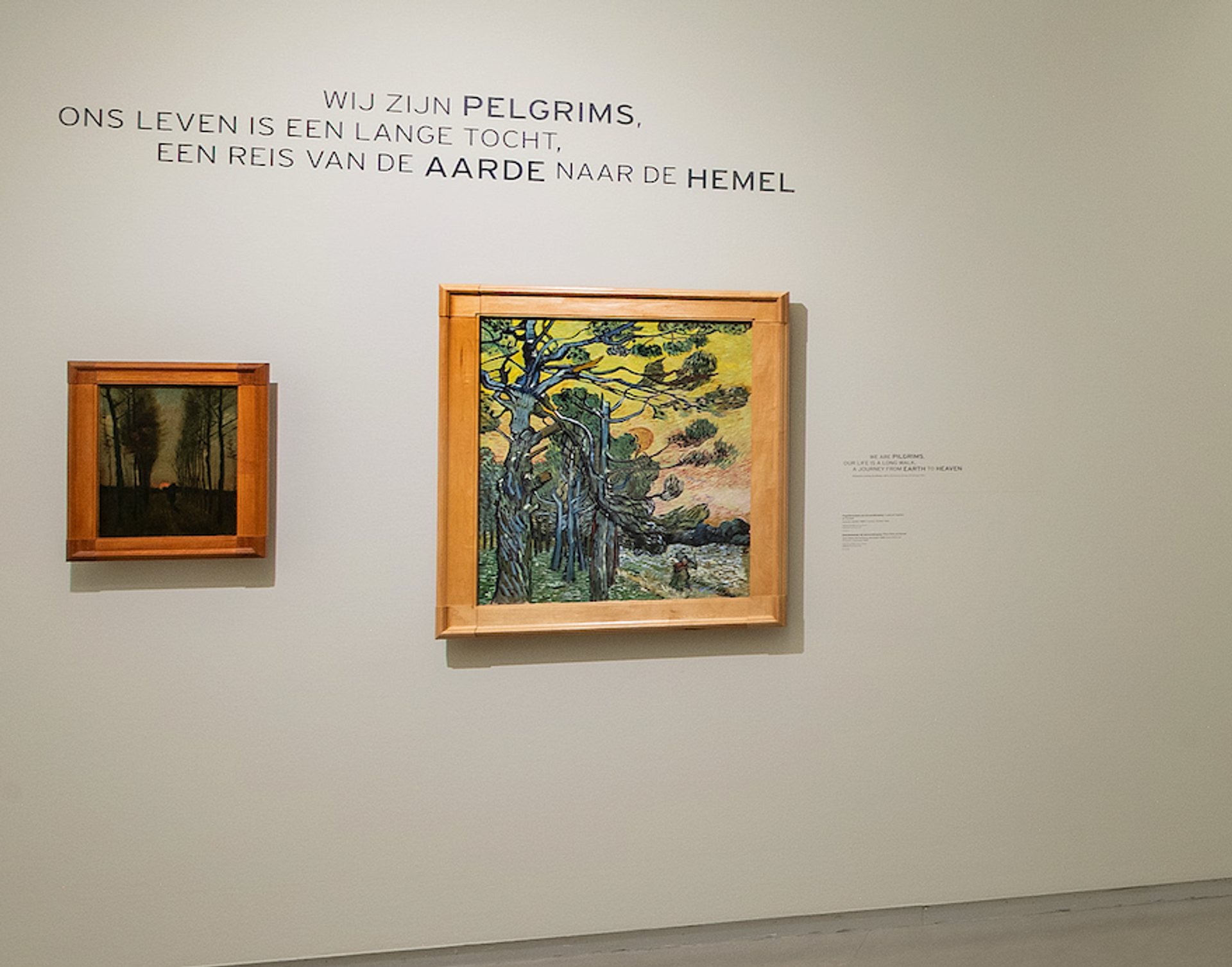
Hanging together: Van Gogh’s Lane of Poplars at Sunset (October 1884) and Pine Trees at Sunset (December 1889)
The Art Newspaper (photograph)
The exhibition is divided into three sections loosely inspired by the three Christian virtues of faith, hope and charity. Curator Renske Cohen Tervaert has played with the concept, changing charity (as in towards one’s neighbours) into “love”.
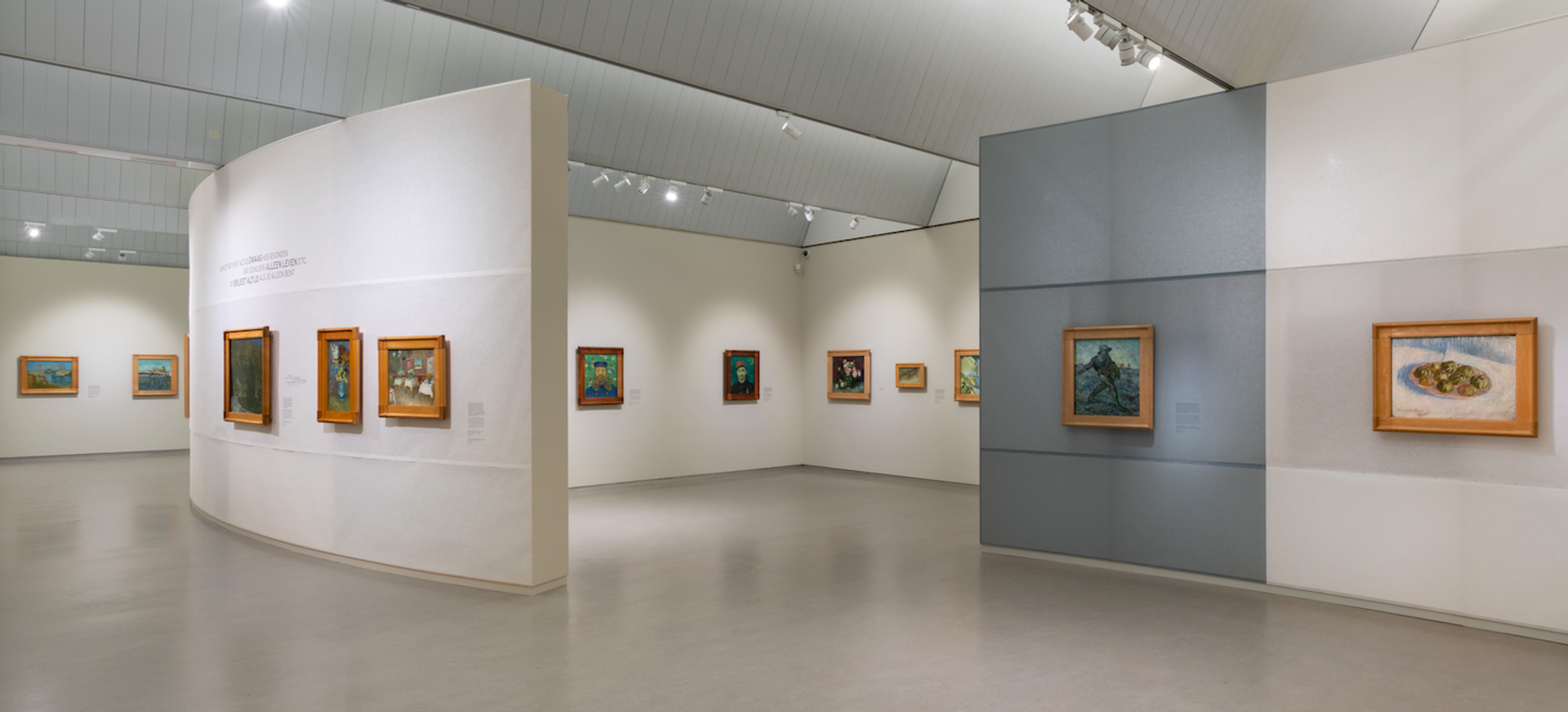
A view of Van Gogh, All Our Paintings
Kröller-Müller Museum, Otterlo (photograph Marjon Gemmeke)
Tervaert’s idea came from Van Gogh’s only known sermon text, which he delivered 150 years ago on 29 October 1876 at Richmond Methodist Church. Aged 23, Van Gogh had recently been sacked as an art dealer in London’s Covent Garden and was then working as an assistant teacher in a small school in Isleworth, in west London. We have no idea what the congregation thought of this young Dutchman with his strong accent, but his preaching career lasted only a few weeks.

Extract from Van Gogh’s sermon, 29 October 1876, at Richmond Methodist Church, written out by him in English
Van Gogh Museum, Amsterdam (Vincent van Gogh Foundation)
Among the 88 works in Van Gogh, All Our Paintings are a significant number of masterpieces: a large study for The Potato Eaters (April-May 1885), Four Sunflowers Gone to Seed (August-October 1887), Pink Peach Trees (March 1888), Terrace of a Café at Night (September 1888) and Country Road in Provence by Night (May 1890).
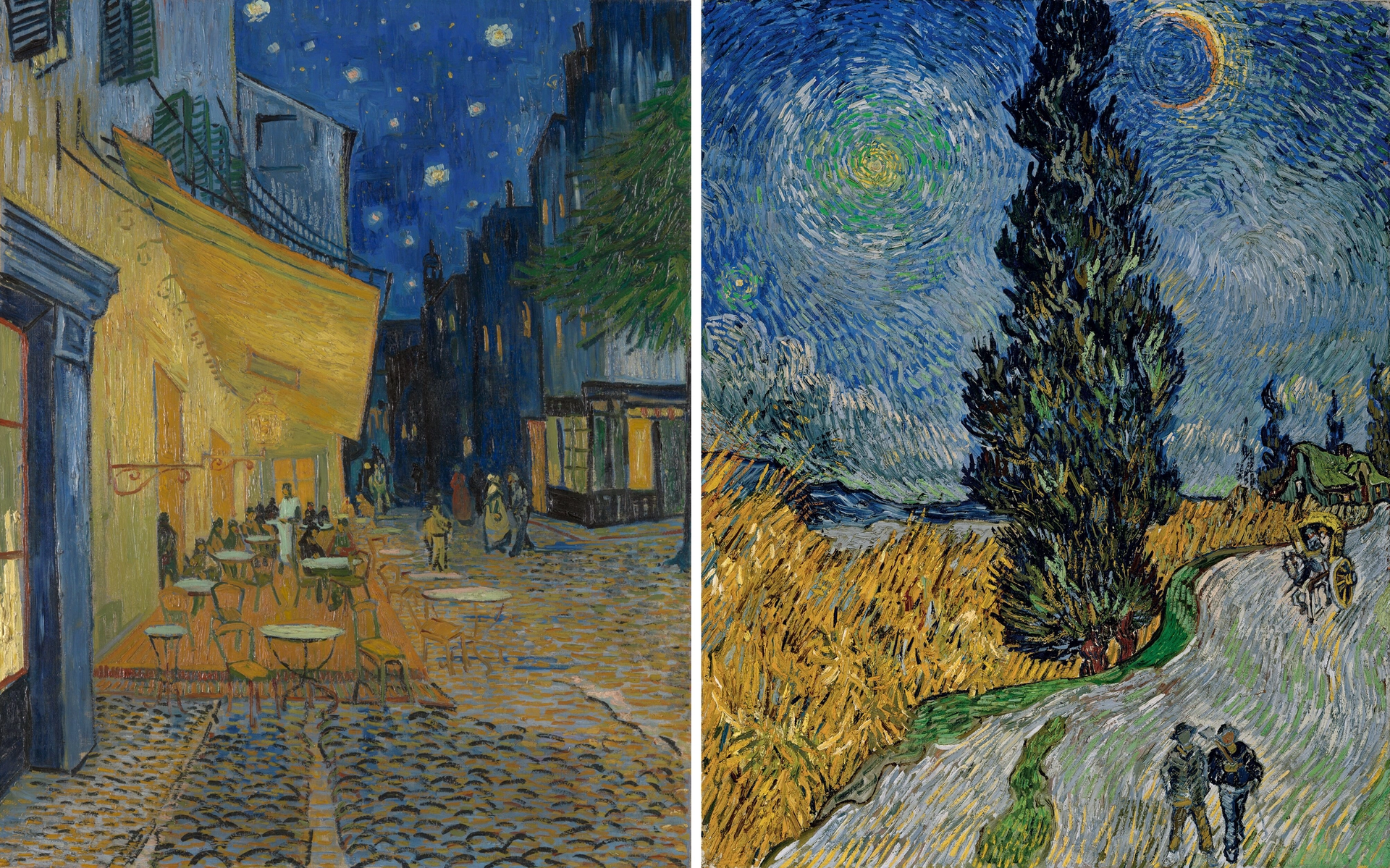
Van Gogh’s Terrace of a Café at Night (September 1888) and Country Road in Provence by Night (May 1890)
Kröller-Müller Museum, Otterlo
The show also includes a rarely seen landscape, Falling Leaves (Les Alyscamps) (November 1888), which has not been displayed for more than 20 years, due to its fragility. It is one of his four views of Les Alyscamps, an avenue of trees and ancient tombs on the outskirts of Arles. These paintings were done just a few days after the arrival of Van Gogh’s colleague, Paul Gauguin, when they were working cooperatively side by side.
Van Gogh depicted the autumnal falling leaves symbolically, as light marks scattered throughout the composition. After the Kröller-Müller show closes, the painting will go to its conservation studio for treatment.
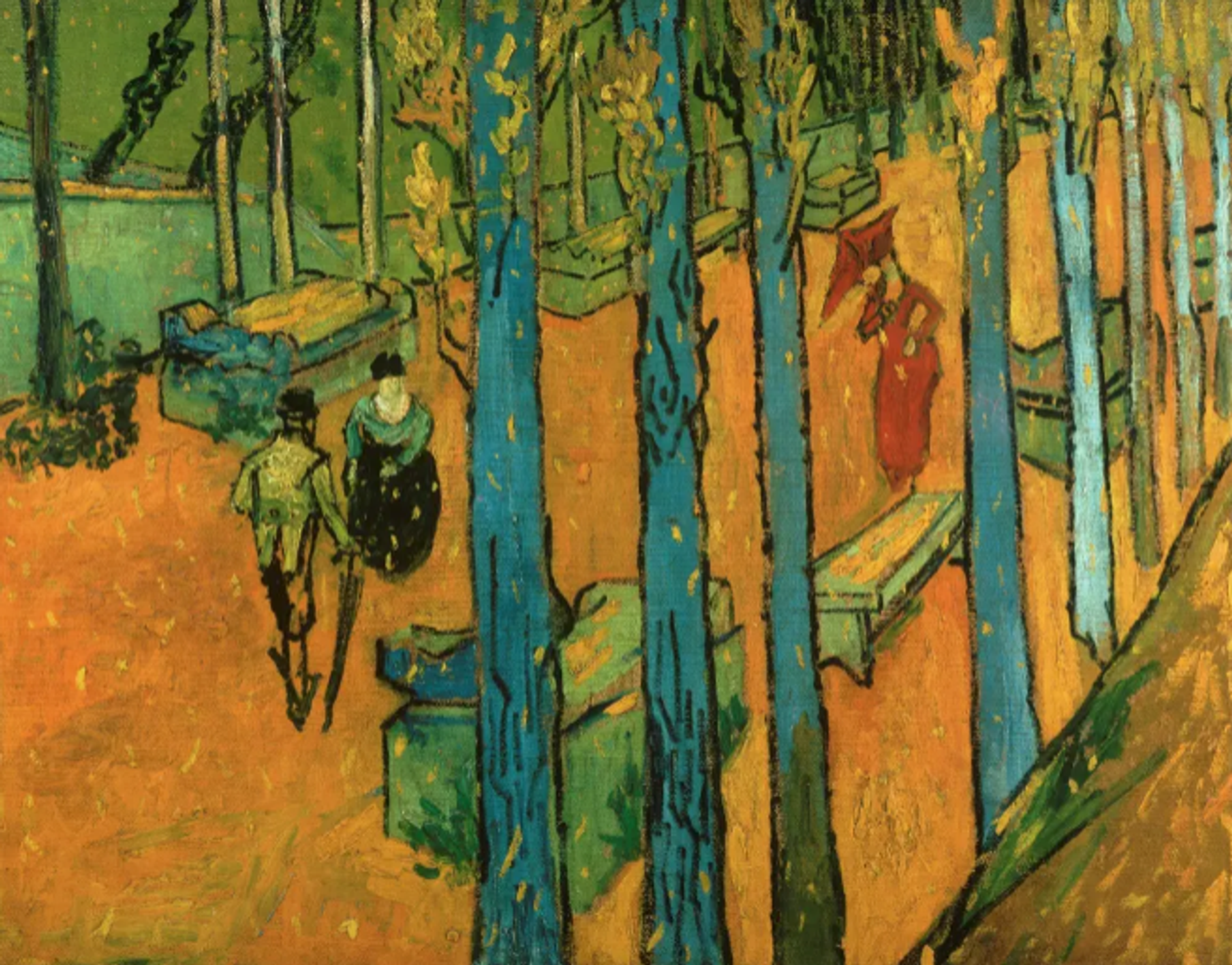
Van Gogh’s Falling Leaves (Les Alyscamps) (November 1888)
Kröller-Müller Museum, Otterlo
One of the most intriguing and personal paintings in the exhibition is Still life with a Plate of Onions (January 1889), completed just three weeks after the artist mutilated his ear. Along with a medical manual and his consoling pipe and tobacco, there is a letter envelope depicted in the foreground. The handwriting and postmark reveal that it came from his brother Theo in Paris.
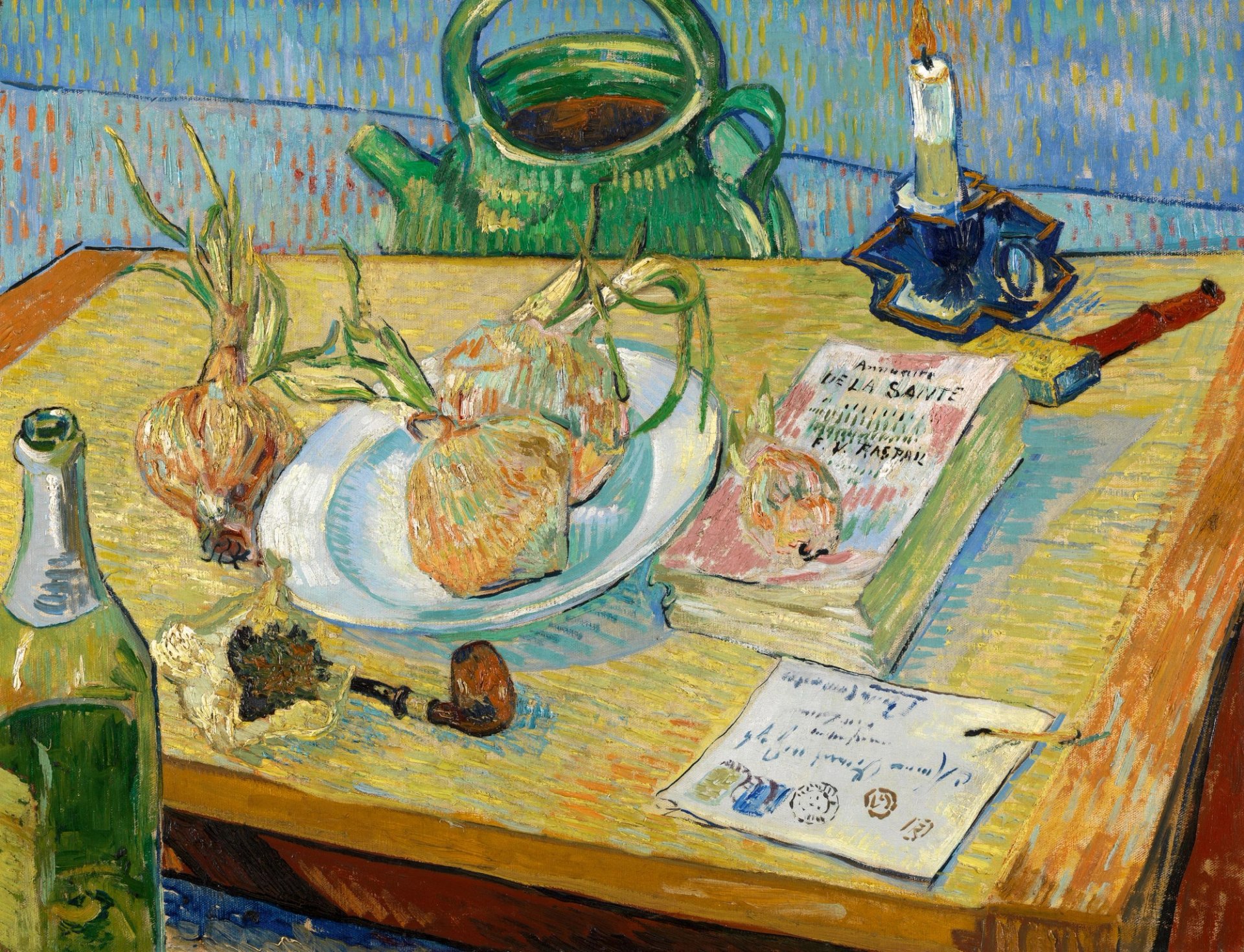
Van Gogh’s Still life with a Plate of Onions (January 1889)
Kröller-Müller Museum, Otterlo
I believe that it represents a letter which Vincent received on 23 December 1888, just a few hours before the self-mutilation. It carried news of Theo’s sudden engagement to Jo Bonger, which made Vincent worry that he would lose the financial support and deep friendship of his brother. It was not the fundamental cause of this terrible act of self-mutilation, but the trigger.
The importance of the onions, either aesthetically or symbolically, remains obscure. In view of the envelope’s importance, it might be appropriate to consider retitling the painting “Still life with a Plate of Onions and Letter” (or perhaps even “Still life with Letter”).
Seeing the 88 paintings hanging together in the exhibition highlights their very unusual frames, with distinctive raised square corners. The frame designs were chosen by Helene Kröller-Müller.
The museum’s current wooden frames are replicas of these early frames. The originals were created from around 1910 by the Dutch interior designer Jacob van den Bosch, who worked in an early Art Deco style. These were discarded in the 1950s and replaced with cheap-looking linen-edged frames.
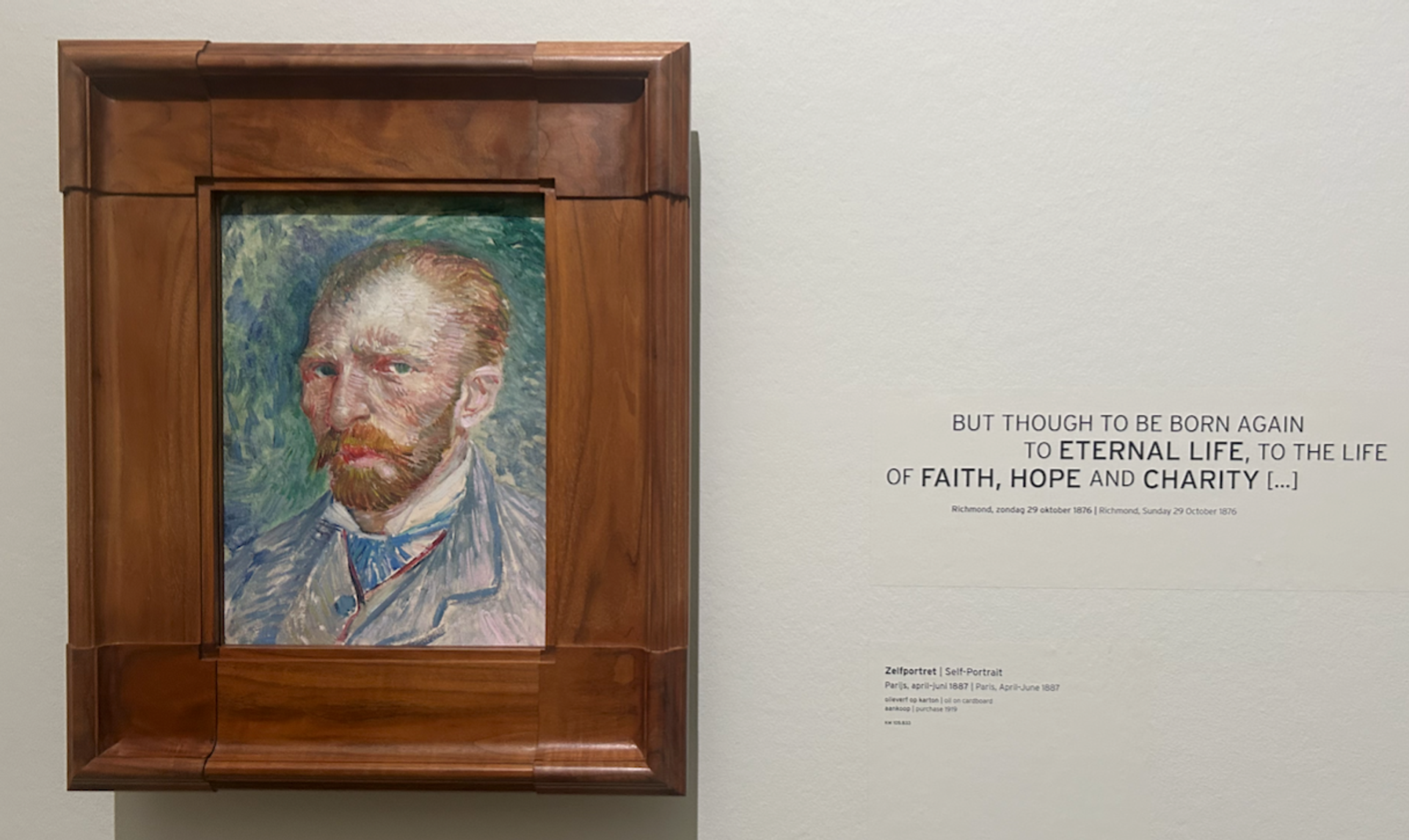
In a Jacob van den Bosch replica frame: Van Gogh’s Self-portrait (April-June 1887)
The Art Newspaper (photograph)
Eventually in 2003 it was decided to revert to the design of the Van den Bosch frames, and to commission replicas. When individual works are lent to outside exhibitions, visitors sometimes feel that they appear over-decorated for Van Gogh’s work. But when the Kröller-Müller Museum presents just its own collection, as in the current exhibition, the replica Van den Bosch frames unify the collection and one hardly notices the unusual design.
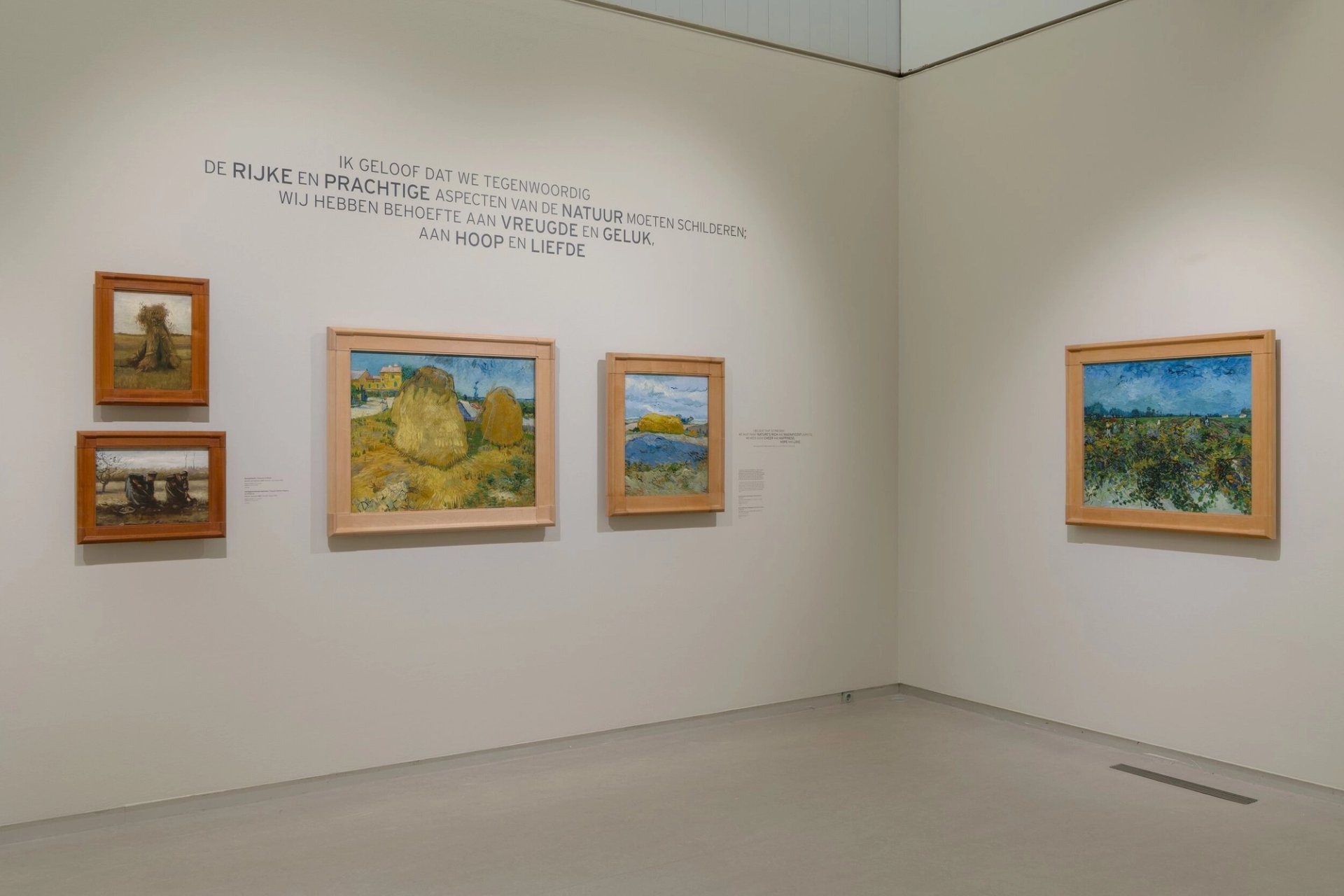
More framed pictures in Van Gogh, All Our Paintings
Kröller-Müller Museum, Otterlo (photograph Marjon Gemmeke)
Van Gogh, All Our Paintings will be the last chance to see many of the pictures before a group of 29 works from the period 1888-90 goes to Japan for a touring show which will help raise money for a new extension for the Otterlo museum. Van Gogh drawings and works by other artists will also be included in the Japanese exhibition.
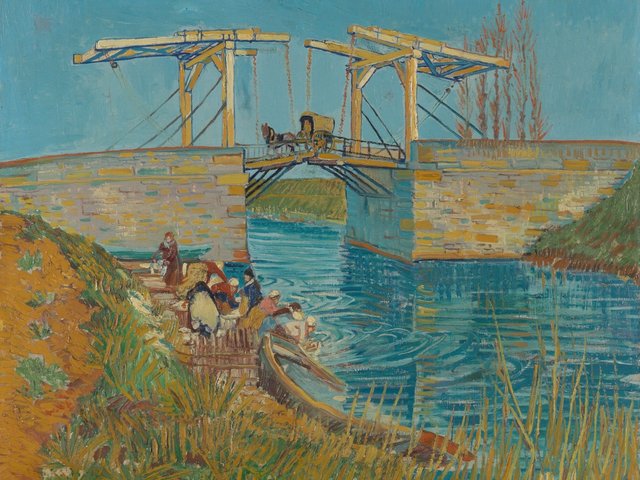
The Grand Van Gogh Exhibition, as it is entitled, will go to three venues: Kobe City Museum (6 February–30 May 2027), Fukushima Prefectural Museum of Art (19 June-26 September 2027) and Tokyo’s Ueno Royal Museum (9 October 2027–30 January 2028). The centrepiece of the show will be Bridge at Arles (Pont de Langlois) (March 1888).
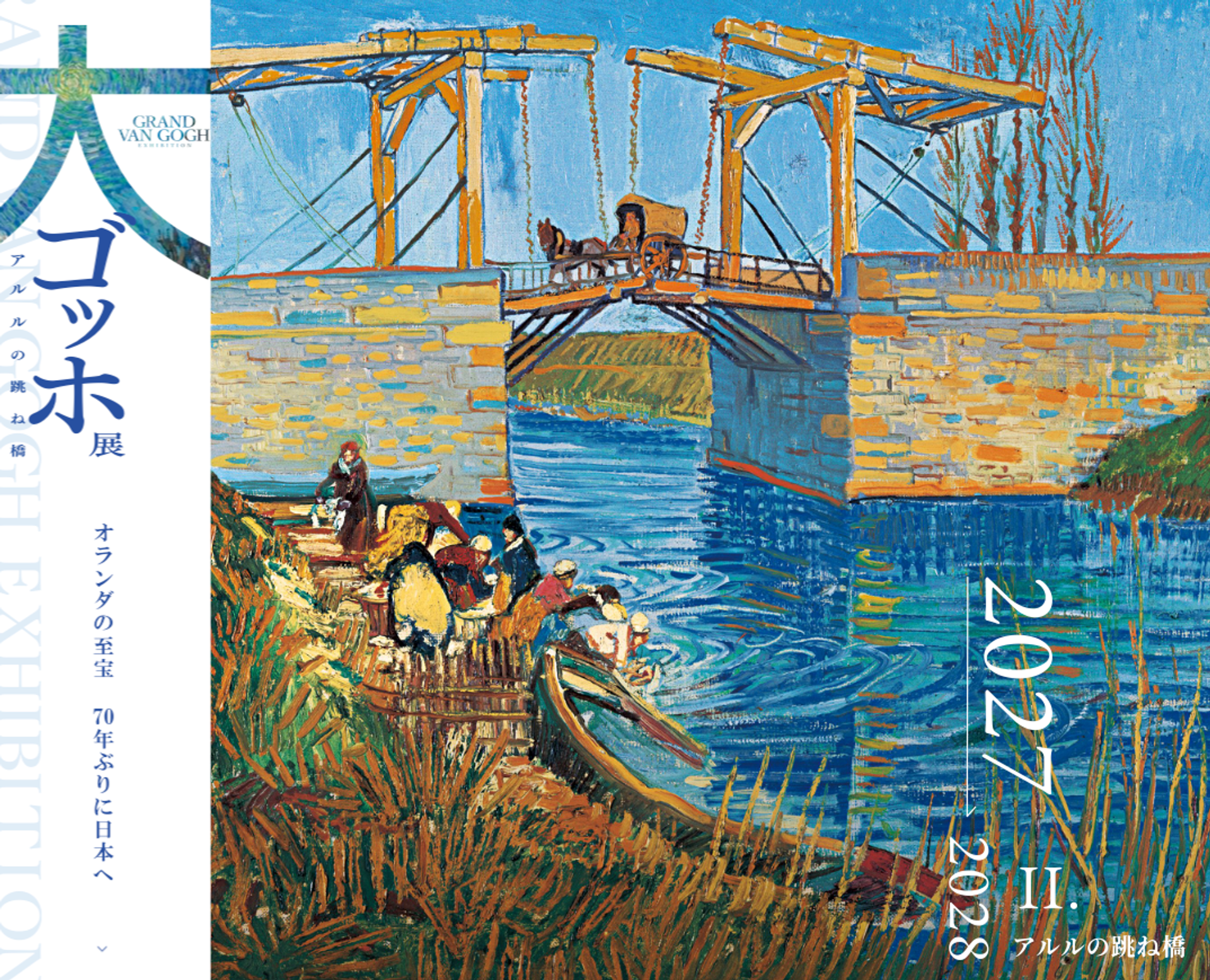
The Grand Van Gogh Exhibition will travel to three Japanese venues (2027-28)
Grand Van Gogh Exhibition
Although other Van Gogh paintings will continue to be displayed at the Kröller-Müller Museum, the museum will be partly closed for a €125m building project from September 2027 until around 2030. Following the reopening, the museum’s director, Benno Tempel, has ambitious plans to mount special Van Gogh exhibitions with outside loans.