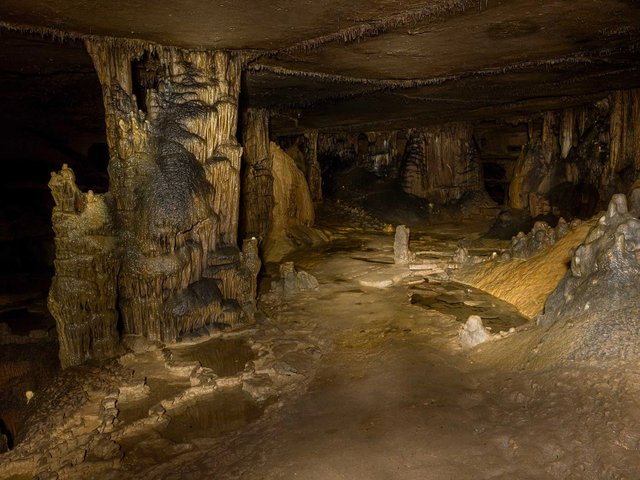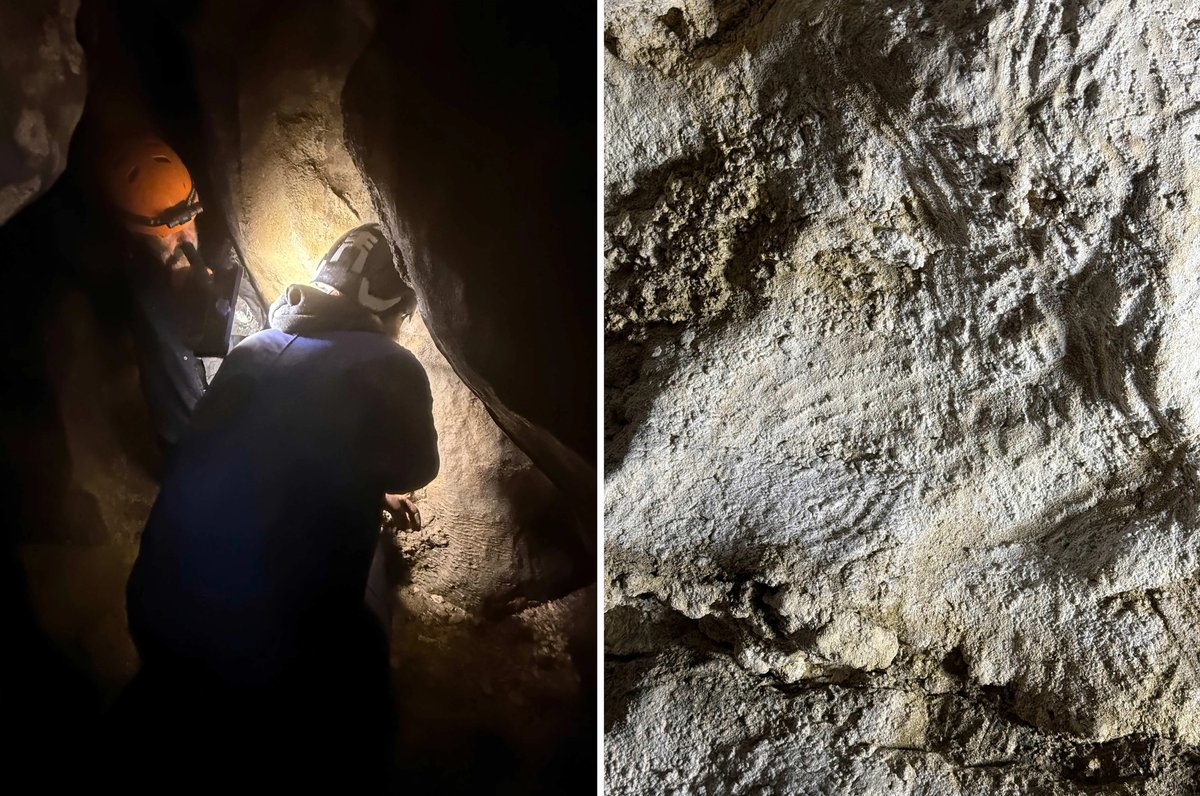
Newly identified cave markings at eight sites in Ireland suggest that the country was inhabited by humans thousands of years earlier than originally thought. If the markings are confirmed to date to between 15,000 and 10,000 years ago, they would also constitute the first known cave art in Ireland from the last Ice Age. The research project, directed by Genevieve von Petzinger with George Nash and Barbara Oosterwijk, remains in its early stages.
Ireland has long been considered one of the last parts of northwestern Europe to be settled by humans. A bear kneecap from County Clare with cut marks, dated to around 12,500 years ago, is the earliest accepted evidence of human presence. Marks on a reindeer bone from Cork dated to around 33,000 years ago were posited by the zooarchaelogist Ruth Carden in 2021 to have been created by hunters, though this is still debated.
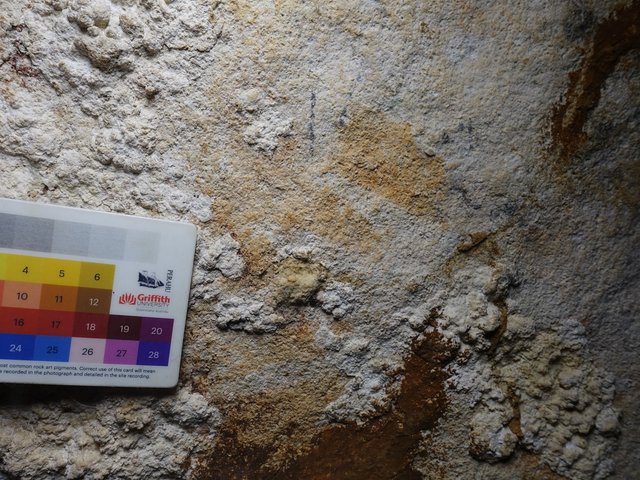
This summer, Petzinger’s team—under the title of the Lost Land Bridge Project—found intentional markings in caves in southwest Ireland, including finger flutings made by tracing fingers through soft cave-wall material. They also found ochre and charcoal marks, including some potential animal silhouettes. Technical analysis will allow the team to date the findings.
Von Petzinger, a palaeoanthropologist and rock art specialist, highlights the finger flutings as a possible sign of the age of the markings. “Over 90% of the known sites that have finger flutings are from the Ice Age,” she tells The Art Newspaper, noting she has analysed some sites herself and others have been confirmed through studies by others. Usually, with the exception of what Von Petzinger describes as “show caves”, such as Altamira in Spain and Lascaux in France, experts find only find scratchings, minor marks or remnants of paintings in sites like this.
The “lost land bridge”
The decision to search for cave art in Ireland was sparked by the researchers’ belief that during the Late Ice Age, sea levels changed the landscape around Ireland, likely creating a more accessible land route between it and nearby Wales. This idea, while unproven, derives from previous geological research initiatives such as the BRITICE Glacial Mapping Project .“If humans lived in Wales during the Ice Age, why not walk across when it was close?” von Petzinger says. Human presence in Wales dates much earlier, with rock art at the sea cave Bacon Hole recently dated to at least 17,100 years ago, making it the oldest known in north-western Europe. These discoveries led the team to search for cave art in Ireland.
To decide on their geographical focus the team used the Living Intelligent Archive of Ancient Culture, Art, and Relational Archaeology (LIACARA), a new artificial intelligence (AI) system that draws on archaeological knowledge, maps, images, data and published research. The team then incorporated into LIACARA limestone formations, water, sea levels and glacier levels into a predictive model. “We taught AI to hand us a heat map of places most likely to have the converging factors that could lead to caves and human presence,” says von Petzinger, who designed the system. The team inspected the 28 caves that LIACARA highlighted eight of which contained markings meriting closer study. The team say they would prefer not to share more details on the locations in order to protect the sites.
Further analysis will reveal more about what they found. Work will include radiocarbon dating of charcoal, Raman spectroscopy on red pigment and uranium-series dating of calcite. Researchers will also attempt ancient DNA analysis of the finger flutings, following a novel approach von Petzinger tested in Málaga, Spain.
Historic cave markings are rare in Ireland in general. Prehistoric rock art has been found at historic sites like Newgrange in County Meathe but not in caves.
The team plans to make LIACARA open access. “LIACARA is designed to help researchers connect evidence across thousands of sources, spot patterns and trace conclusions back to the evidence,” von Petzinger says.
The team’s expedition was documented in The Lost Bridge, a Newstalk Futureproof documentary accompanied by an interactive webpage.