“Let’s make some money!” yells Steph McGovern, the host of The Big Deal, BBC TV’s new reality-style game show, exhorting her seven pairs of novice contestants to become “successful art dealers”.
Created by the Northern Irish production company Stellify Media, the six-part series follows the basic format of the BBC’s long-running Bargain Hunt, in which two pairs of amateur contestants try to make money out of buying antiques. Here the teams are expanded to seven, contemporary art is the stuff they are trying to turn into big profits and there is an episode-by-episode knockout element, as in shows like the Great British Bake Off. This will leave one winning pair to enjoy a prize of £50,000 worth of “brilliant British art”.
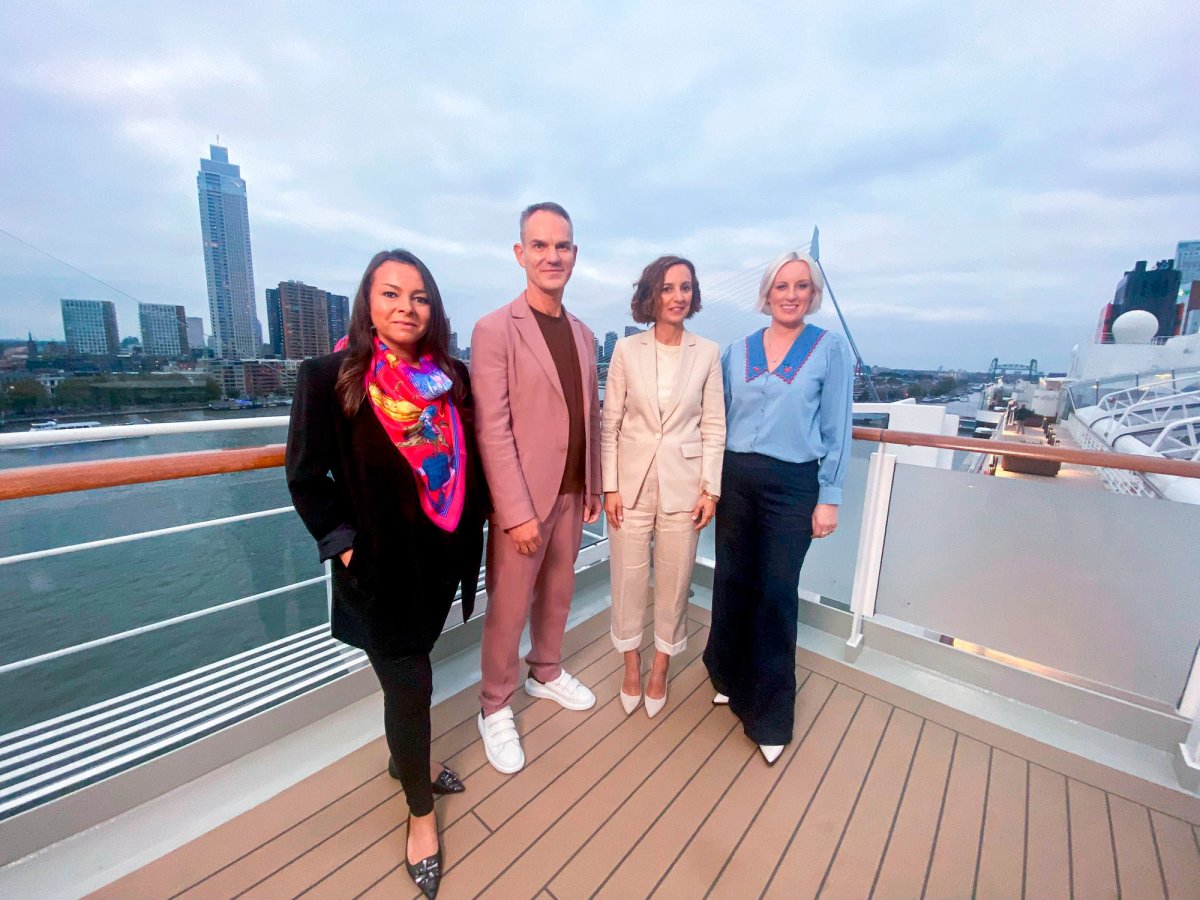
The contestants, chosen “from all walks of life”, try to make as much money as possible by selling works by recent art college graduates at a small auction in London; by decorating luxury executive homes; by selling prints at a specialist fair in Margate; by marketing works by two Berlin-based artists at an online auction; and so on. The artists are little-known, price points are low and the splashy abstracts and “post-Pop” pieces being traded have an easy-on-the-eye, decorative appeal. The competition is overseen by McGovern, a financial journalist and daughter of a sculptor, and Cordelia de Freitas, the director of the Aqua Art Fair in Miami.
Purists might throw up their hands in horror at the gamification of a niche business as financially and intellectually weighty as the contemporary art market, but, hey, The Big Deal is meant to be harmless fun.
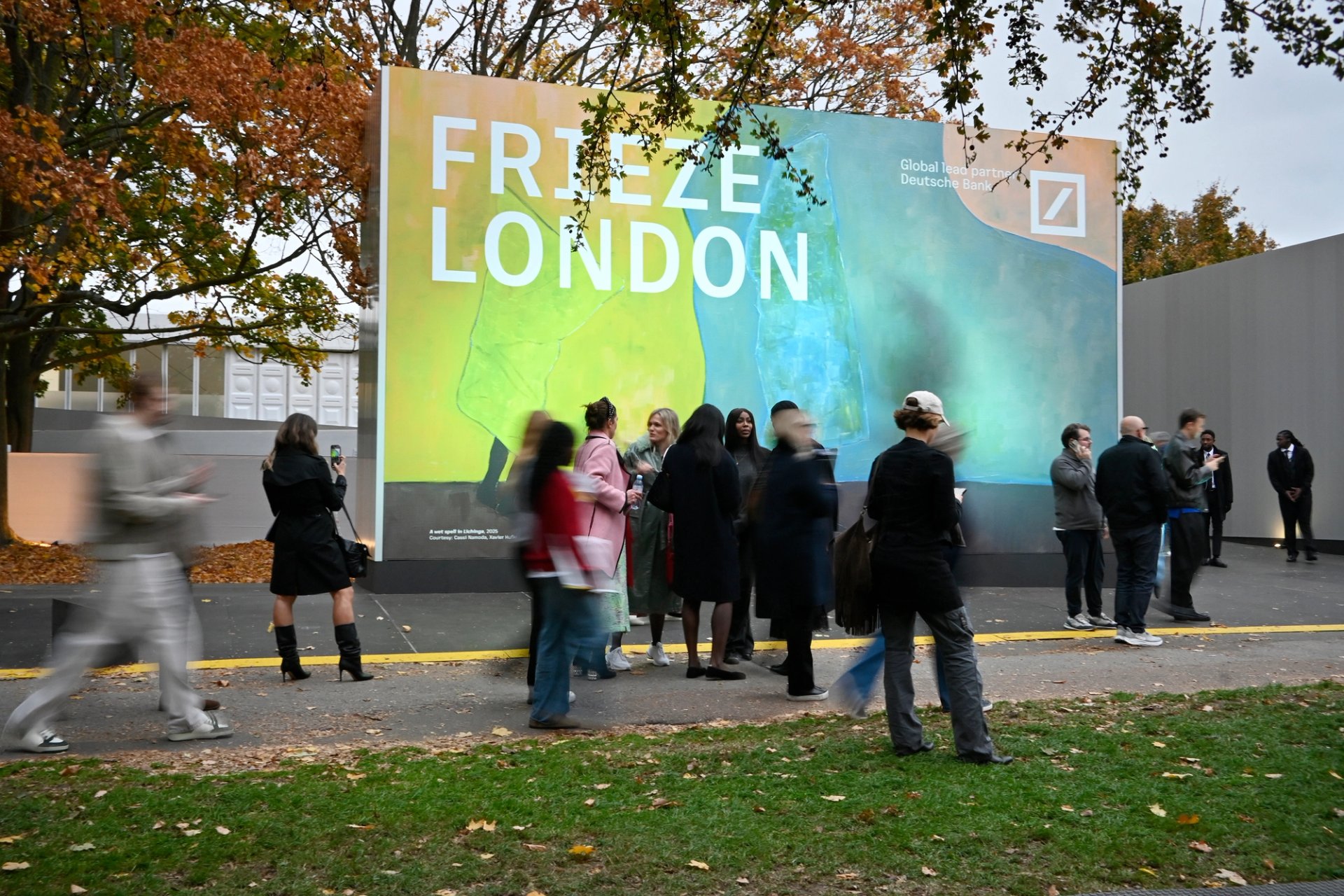
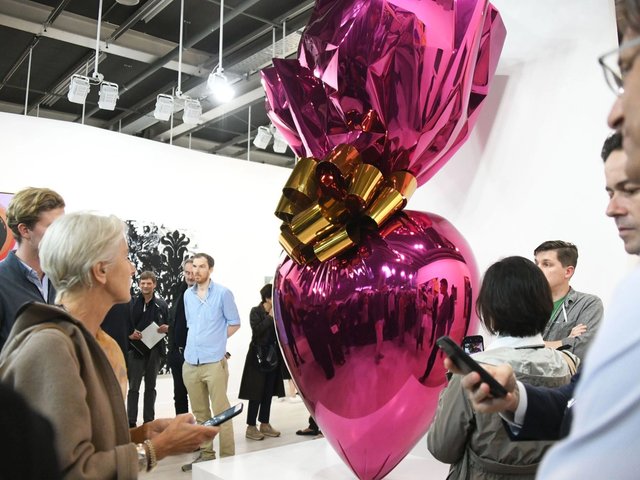
All eyes will be on Frieze London this month © Katherine Hardy
“We all think we have great taste,” says McGovern, “buying and collecting art is something we can all have a go at”. Fair enough. And the show does have its moments. Episode three’s focus on limited-edition prints at that specialist fair in Margate, for example, does give exposure to a worthwhile entry level of the market that rarely gets much in the way of media attention.
But for heaven’s sake, this is the BBC. This is the broadcaster that once brought us John Berger’s Ways of Seeing, the first television series to make the structural analysis of art accessible to a popular audience, and David Sylvester’s astonishing interviews with an eloquently inebriated Francis Bacon.
Perhaps the most dispiriting aspect of The Big Deal is not that its engagement with the contemporary art market is so dumbed down, but that the art itself is treated just as a money-making commodity. Whether it is the Inigo Philbrick freak show (The Great Art Fraud, aired in 2025) or the McGovern game show, art on primetime BBC TV these days seems to be all about the deal, rather than the art. As one half of the Berlin artist duo, 44flavours, wearily notes in the fourth episode, as a contestant haggles over commission rates: “The focus should be more on the work, not selling it.”
A cash-in-the-gallery mindset
These BBC shows reflect, in their own small ways, the concerted attempts tech-driven finance has made over the last few decades to monetise and commodify fine art; to treat it as a flippable investment. The wider TV-watching public—and the people who commission the programmes they watch—have clearly bought into this cash-in-the-gallery mindset.
Now the real-life international art market is about to enter a fresh trading cycle: the Frieze London and Art Basel Paris fairs loom in October. Professional dealers with expensive-to-run physical galleries are concerned about how much money they can make at a moment of tumultuous geopolitical, technological, financial and demographic change. As has been widely reported, the auction houses are doing just fine. But selling contemporary art, particularly new art, is proving a struggle for many gallerists at every level of the market.
“Art Galleries Art Not OK” was the headline of a much-discussed opinion piece by Marc Spiegler, the former global director of the Art Basel fair group, published in The New York Times in June.
It’s as if the art world [that dealers] know has fallen off its axisMarc Spiegler, former global head of Art Basel
“Uncertainty abounded,” wrote Spiegler, having spoken to several dealers ahead of the Art Basel fair in Switzerland. He added: “Many are questioning the fundamentals of their business. It’s as if the art world they know has fallen off its axis.”
Plenty of people are offering remedies to this malaise. Spiegler has suggested that galleries should clamp down on flipping and cultivate local markets, rather than spending a fortune on fairs and international outposts. Many think price transparency would boost gallery sales. Concentrate on what you can sell, don’t take risks. And surely artificial intelligence (AI) can bring benefits, perhaps by enabling dealers to share mutually beneficial information, like the best-value shippers, or by providing transformative data analytics? The art and technology edition of the Art Business Conference in London in October will be asking young tech companies for four-minute pitches on how to “revolutionise the market”.
“More than ever, one thing is clear, this is an urgent issue with no easy fix,” wrote the art market commentator Josh Baer in his Baer Faxt online newsletter in August, after hosting a podcast with Spiegler and the top New York art adviser Amy Cappellazzo on the challenges facing contemporary galleries.
Once again, there is an element that tends to be overlooked, if not forgotten, within this debate: the art. The actual product that these businesses are trying to sell. Thanks to decades of financialisation, when words like “art” and “artists” are raised in these discussions, they tend to become vague and indivisible abstracted nouns. This is the commodity, these are the commodity providers, the numbers and names that galleries offer through their tech-enhanced trading channels.
“You have to question your assumptions all of the time to be excellent,” Cappellazzo asserted on Baer’s podcast. Yet one of the market’s unspoken, abiding assumptions is that the world’s art colleges, particularly in the US and Europe, will keep on churning out excellent artists, some of whom will become the Next Big Thing and drive growth, or at least stable levels of business.
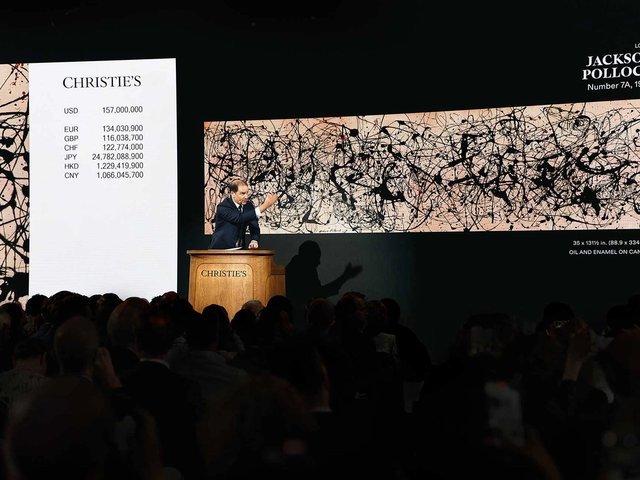
In the meantime, the contemporary art market’s Biggest Things are ageing and passing. Yayoi Kusama, whose works generated $162m of auction sales in 2022, according to Artprice, died in August. David Hockney, whose 1972 painting Portrait of an Artist (Pool with Two Figures) fetched $90.3m at Christie’s in 2018, at the time an auction record for any work by a living artist, died in June. Both were old enough to have been making groundbreaking art during the seismic counter-culture years of the 1960s when all assumptions were being questioned.
Of course, paintings by Kusama and Hockney, particularly from their key early periods, will continue to fetch huge prices in a market that increasingly values the so-called “blue chip”.
Disappearing paintings
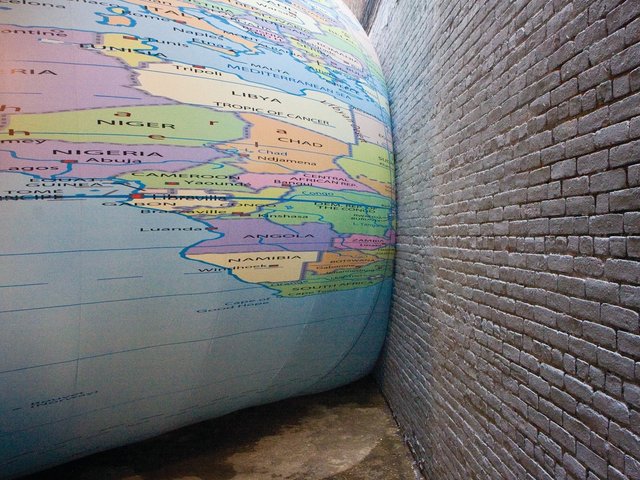
But where are the living painters who are going to fill the gaps in the market left by these giants? Because the market, whether it is an auction house, an art fair or a gallery, is still all about the centuries-old medium of painting, even as it struggles to say anything particularly original or assumption-questioning about the frighteningly entropic times we live in. Frieze magazine’s biennial-minded choice of the 25 Best Works of the 21st Century, published last October, did not feature a single painting (though there was one work-on-paper by Marlene Dumas). Of course, dealers find it far more difficult to make money out of performance, installation and video art. They are an awkward fit in a Manhattan, Miami or Mayfair apartment.
According to Cappellazzo, artists are using AI “like crazy” at the moment. As our culture, consciously and unconsciously, becomes more and more fixated on machine learning, could AI-generated art be the way forward for contemporary galleries?
In August, the London-based social data scientist Lauren Leek published an outstanding Substack, “Temperature Zero for Culture: Why Everything Is Starting to Look the Same,” which analyses how algorithms are making so many aspects of our cultural life—whether it be pubs, high streets, pop songs or films—“flatten into sameness”.
Leek points out that the algorithmic anticipation of consumer preferences—which, in a sense, is the hyper-fast processing of human assumption—leads to a monoculture that can incur risk. “A monoculture is efficient right up until the weather changes,” says Leek. She adds, more ominously, that if we rely too much on predictive machine learning, “we lose the ability to tell the difference between what people wanted and what the system made easy to want”.
There is no reason why contemporary art—particularly painting—should be immune from this kind of monocultural risk. Look at Instagram. Walk around an art fair. Watch The Big Deal. Is this what people want? Or is this what the system wants people to want?