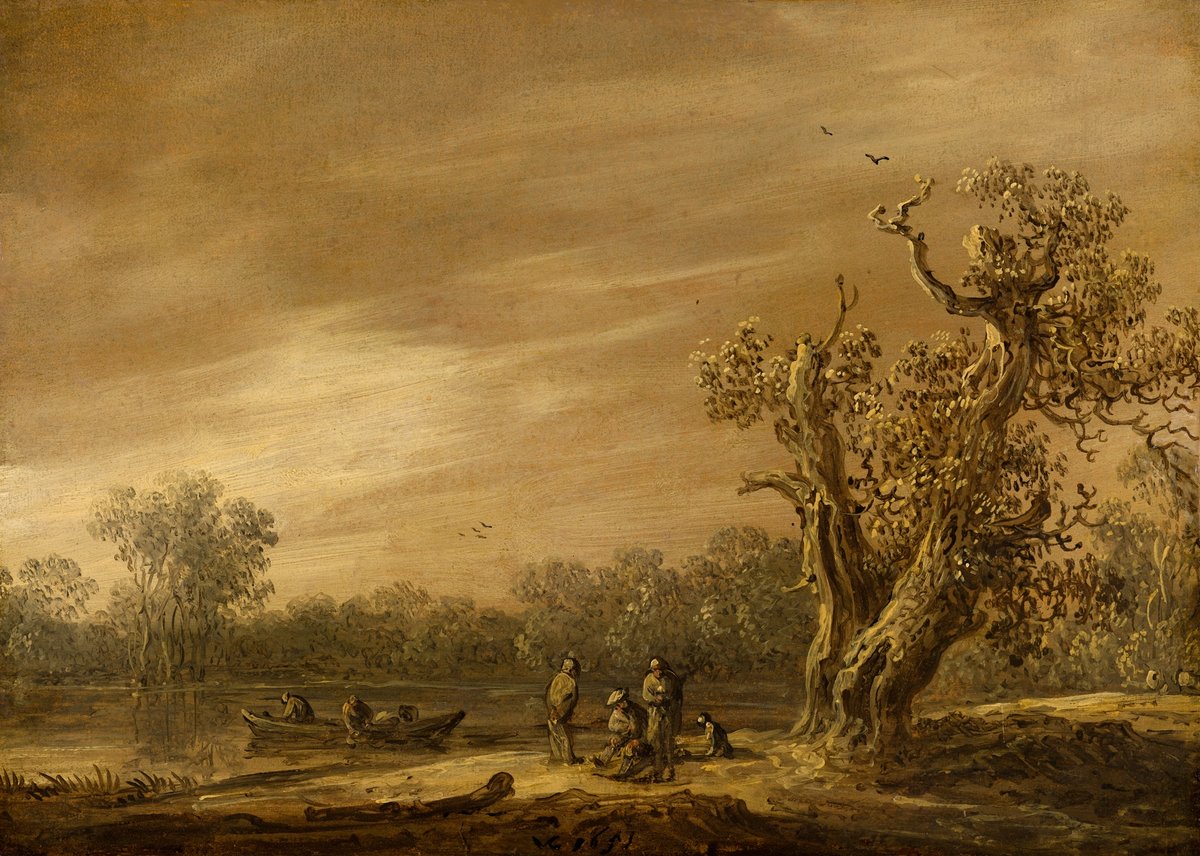
A 17th century Dutch oil painting on paper looted by the Nazis will be returned to the heirs of the renowned art dealer Jacques Goudstikker, thanks to a Dutch museum’s provenance research.
Fishermen by the Lakeshore by Jan van Goyen (1651) was acquired by the Mauritshuis in The Hague in 1967 for 58,000 guilders (around £6,000 at the time). But following new research, it was matched to a record from the collection of Goudstikker, who died while fleeing on a ship to England in 1940. His dealership and its 1,113 works were taken over—without the agreement of his widow—and this was one of a number of artworks transported to Germany then sold into the collection of the Nazi Hermann Göring.
Now, the Dutch culture minister Rianne Letschert has agreed to follow formal advice from the Dutch Restitutions Committee to return the work to Marei von Saher, the widow of Goudstikker’s only son Eduard.
“The loss of possession is considered to be involuntary because Jacques Goudstikker’s widow, who was the major shareholder in the art dealership, did not consent to the transactions,” the committee said in a statement. “The sales were only possible through the appointment of a managing director who was sympathetic to the German buyer [and]… various artworks had already been transported to Germany before the formal purchase agreements were signed. This is consistent with the image of the Nazi authorities as people who robbed or forced sales and then subsequently gave such acts an appearance of legality.”
The committee's advice represents a change of heart in Dutch restitutions policy to show more “humanity, transparency and goodwill” in cases of Nazi looted art, which it announced in a report in 2020. Two decades ago, the return of 202 works from Dutch museums to the Goudstikker heirs sparked public criticism and fears from museum directors that they would lose many more artworks.
Auke van Hoek, an art lawyer at the Amsterdam-based law firm Bergh Stoop & Sanders, told The Art Newspaper that because of that case rulings became stricter, making it “harder for other claimants to get their works back”.
But Judith Niessen, the head of collection and research at the Mauritshuis, tells The Art Newspaper that it was important to do the right thing in the case of this Van Goyen painting, which was not identified in previous restitution requests. “We bought the painting in the 1960s in good faith and of course we are sad that we’re going to have to say goodbye,” she says. “But it doesn’t belong to us: it left the Goudstikker collection in an unjust way.”
She adds that many Jewish families struggled to reclaim lost artworks after the war. “Everyone was like: ‘well, just be happy that you’re alive’,” she says. “I think we feel [now] that you need to make it right, in a sensible way.”