Can artificial intelligence (AI) benefit museums? A report by Remuseum—an independent research project organised by the Crystal Bridges Museum of American Art in Bentonville, Arkansas—argues that the technology could help museums without necessarily causing a much-feared loss of jobs.
While acknowledging AI’s ethical, environmental and copyright risks, the report outlines five possible uses of AI at museums—from fundraising and communication to visitor services. It draws on a January 2026 convening of representatives from seven US museums. These included New York’s Museum of Modern Art (MoMA), the Cleveland Museum of Art (CMA), the Detroit Institute of Arts (DIA) and the Frye Art Museum in Seattle.
Titled Five Ways that AI Can Humanise Museums, the report stresses that AI’s use in art institutions is already underway, yet museum workers often resist it because of concerns about intellectual property and their own jobs. A January survey of 2,045 US adults by the American Alliance of Museums found resistance among audiences as well: more than 70% of those polled said opposed AI use in exhibitions, while 43% expected humans to create all museum content. Beyond surveys, the British Museum’s sharing of AI-generated images on Instagram in January also drew backlash.
Amid renewed concerns over AI regulations, the Remuseum report seeks a more neutral territory. “It felt that museums were missing a ‘middle-ground’ conversation that acknowledged the risks of AI but also explored the opportunities,” Stephen Reily, Remuseum’s founding director, tells The Art Newspaper. “As it turned out, those opportunities were less about automation (or cutting jobs) and more about strengthening human connections to museums and art.”
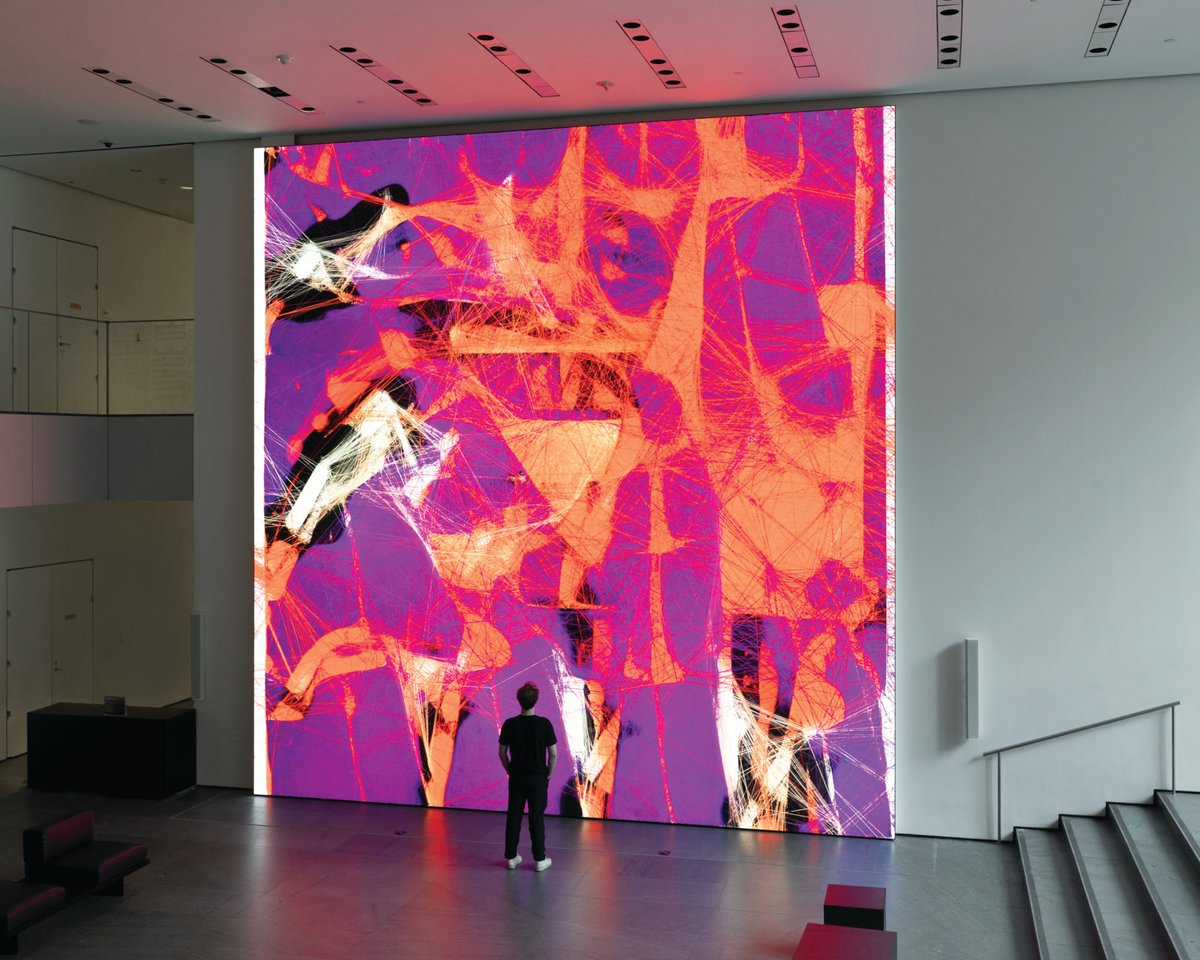
The first of the report’s five uses for AI brings art and technology to life through residencies and commissions. For example, MoMA launched its building lobby’s digital wall in 2022 with Refik Anadol’s Unsupervised, a digital installation displaying AI-based abstract compositions inspired by the museum’s own collection. The work, however, received mixed reviews. “At most, the installation conveys a generalised awe at the machine’s superhuman capacity of visual analysis,” wrote Ben Davis in Artnet News.
A second application is fundraising. While many museums struggle with outdated databases, the DIA uses AI to connect its databases through an “institutional brain” that helps staff extract information. Other examples in the report also note the use of museums’ existing knowledge rather than sourcing the web.
Communication is the third way museums can personalise their voices, which may sound counterintuitive. Yet the Frye uses AI to maintain a consistent voice based on a staff-developed guide. The move may have helped increase web traffic from repeat visitors by 20%, though other factors could explain the gains. The fourth application is key: investing in staff development through AI training.
The fifth use, personalising visitors’ experiences, is a polarising one. The CMA, a leader in digital innovation, enlists AI to help produce descriptions of works for its open-access digitisation project. And the National Gallery of Art (NGA) in Washington, DC, is exploring the thorny topic of using AI for art-historical interpretation; there, AI generates drafts from the museum’s authoritative sources for staff to develop. But the NGA also raises questions about synthetic media and fakery, responsible reuse of museum assets and tensions between open access to collections data and proprietary approaches. According to Remuseum, “this report does not resolve those questions, but every institution will have to face them”.
At Crystal Bridges, an AI companion named Rosie offers another approach, designed to “meet each visitor where they are emotionally, cognitively and situationally”. Conversation begins with visitors pointing their phones at any work of art. “The work with AI is about engagement, information-sharing and extending limited resources’ impact,” says Crystal Bridges director Rod Bigelow. “We're just beginning to understand what's possible, and on the verge of discovering new ways to connect with our audiences.”
But Rosie may not be for everyone, so the Toledo Museum of Art is developing AI experiences that could extend beyond the visit, allowing interaction with works visitors lingered over. One possibility is bringing together the 20 people who stayed longest before a particular Claude Monet painting for a conversation with the curator.
While optimistic, the report stresses that the use of AI requires ethical guidelines and oversight. AI also does not replace the connection between a work of art and its observer. “After spending days talking about AI, we were still hard-pressed to imagine how it could top the original immersive experience: standing in a gallery, IRL, face-to-face with a work of art,” says Jamilee Lacy, the director of the Frye.