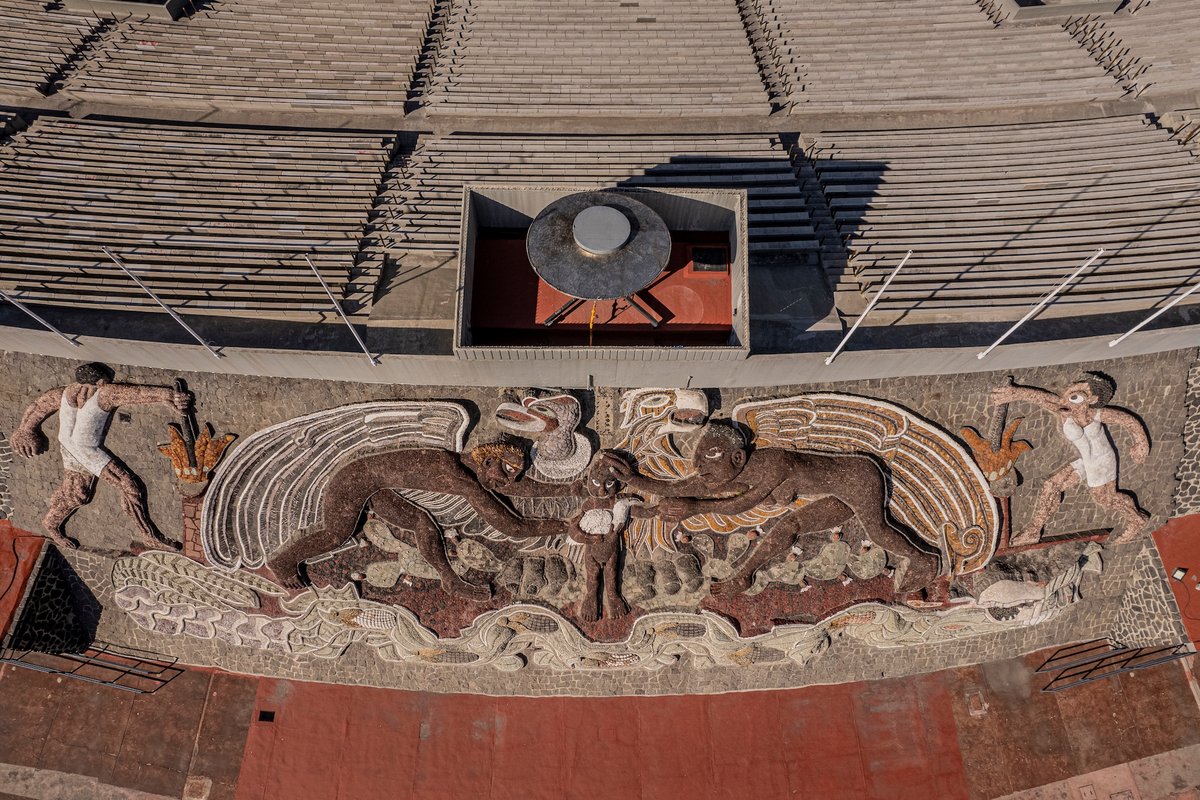
Diego Rivera’s early-1950s monumental stone relief on the exterior of Mexico City’s Estadio Olímpico Universitario, at the Universidad Nacional Autónoma de México (Unam), will be restored. The project launches the World Monuments Fund’s (WMF) multiyear collaboration with Unam to preserve major murals across its central campus. This will include David Alfaro Siqueiros’s three-dimensional mural on the rectory's tower and Juan O’Gorman’s stone mosaic mural at the university’s main library.
The US embassy in Mexico City, through the US Department of State’s Ambassadors Fund for Cultural Preservation Freedom 250 initiative, is supporting the restoration of Rivera’s work, which local experts will carry out.
The Olympic stadium sits at the heart of Unam’s campus, which was declared a Unesco World Heritage site in 2007. Completed in 1952, it is an architectural and sports landmark. Built into a volcanic hollow with local stone, it exemplifies plastic integration.
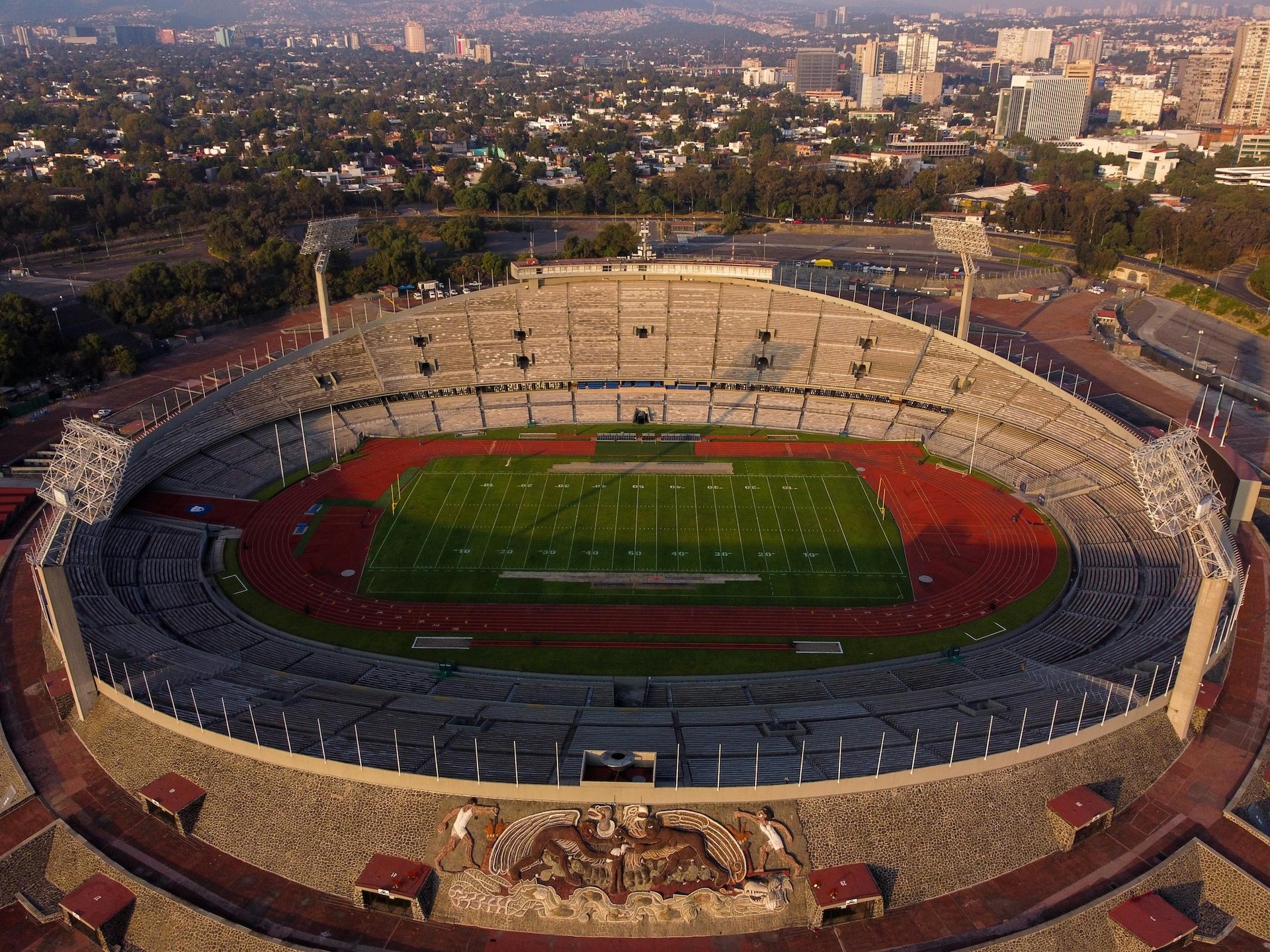
An aerial view of the Estadio Olímpico Universitario at the Universidad Nacional Autónoma de México, with Diego Rivera's bas-relief work in the foreground Photo by Antonio Ochoa
“Plastic integration is one of the elements that makes Unam unique,” Mónica Cejudo Collera, the director of architecture at Unam, tells The Art Newspaper. “It is not simply about placing art within an architectural complex, but a conception in which architecture, art and space are integrated.”
The project also reflects a shift in Muralism. “At this time, mural art shifted from indoor to public spaces, conveying to passersby a utopian message of modernity and progress,” says Renato González Mello, a Muralism expert at Uname’s Institute of Aesthetic Research.
Rivera’s The University, the Family and Sport in Mexico (1952-54) is a “sculpture-painting” tracing Mexico’s sports history from pre-Hispanic times to the modern Olympics. He used a novel technique developed with O’Gorman at Mexico City’s Museo Anahuacalli, embedding volcanic stone, marble and river stone into the stadium’s sloping masonry. “The technique was an innovation which Rivera and O’Gorman applied differently,” González Mello says, noting that there is still much to learn about the materials and techniques.
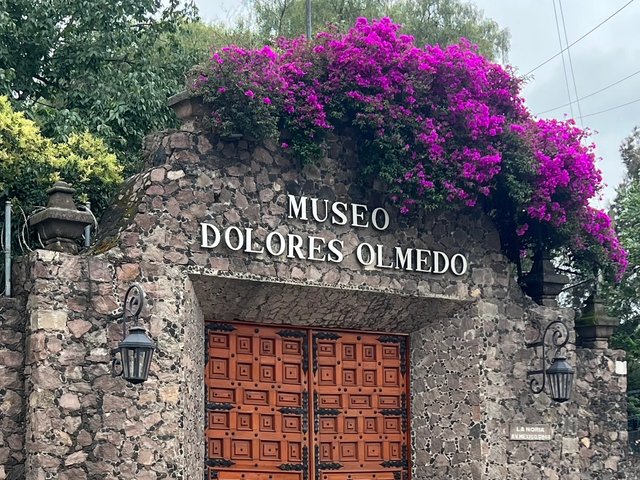
The work remains unfinished. Rivera’s health declined, but he also clashed with Unam’s architecture team. The stadium’s eastern façade shows a family beneath the eagle and condor, echoing Unam’s crest. Below, the Mesoamerican deity Quetzalcoatl appears as a serpent, while two figures light Olympic torches. Rivera’s full sketch for the project is displayed at the Museo Dolores Olmedo in Xochimilco.
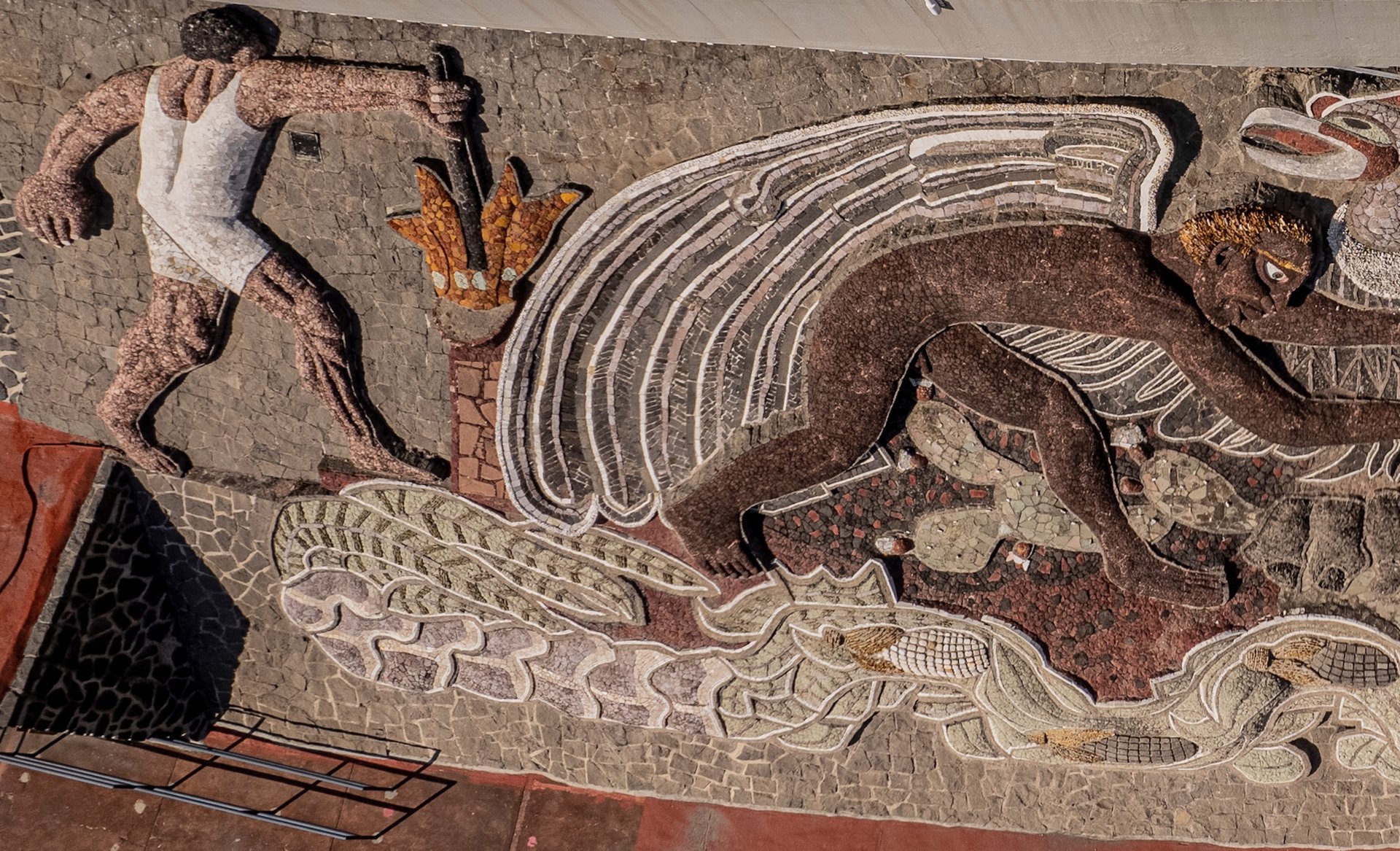
A detail of Diego Rivera's bas-relief work on the exterior of the Estadio Olímpico Universitario at the Universidad Nacional Autónoma de México Photo: Stephanie Ortiz. Courtesy World Monuments Fund
Since the 8.1-magniture earthquake that struck Mexico City in 1985, WMF has completed more than 60 projects at 32 sites in 17 Mexican states. “Our renewed focus is on the country’s rich mural heritage, which is a thread throughout its history, from pre-Hispanic times to Muralism and beyond,” says Caterina Toscano, WMF’s vice president of development and partnerships. “We recognize Unam’s murals as a jewel of 20th-century Mexican architecture.”
Stephanie D. Ortiz, WMF’s regional director for Latin America and the Caribbean, says WMF previously helped restore murals at Teotihuacan’s Temple of Quetzalcoatl and Rivera’s murals at the ministry of education building in Mexico City. The restoration of Rivera’s Estadio Olímpico sculpture is timed in anticipation of 2028, which will mark the 60th anniversary of the Mexico City Olympics.
The murals show varying levels and types of deterioration from environmental exposure, including structural and surface damage. Local experts will lead the restoration under Mexico’s Centro Nacional Conservación y Registro del Patrimonio Artístico Mueble. “Mexico has high-level restoration expertise to share with the world,” Toscano says. Ortiz notes WMF will facilitate international exchange through public programmes.
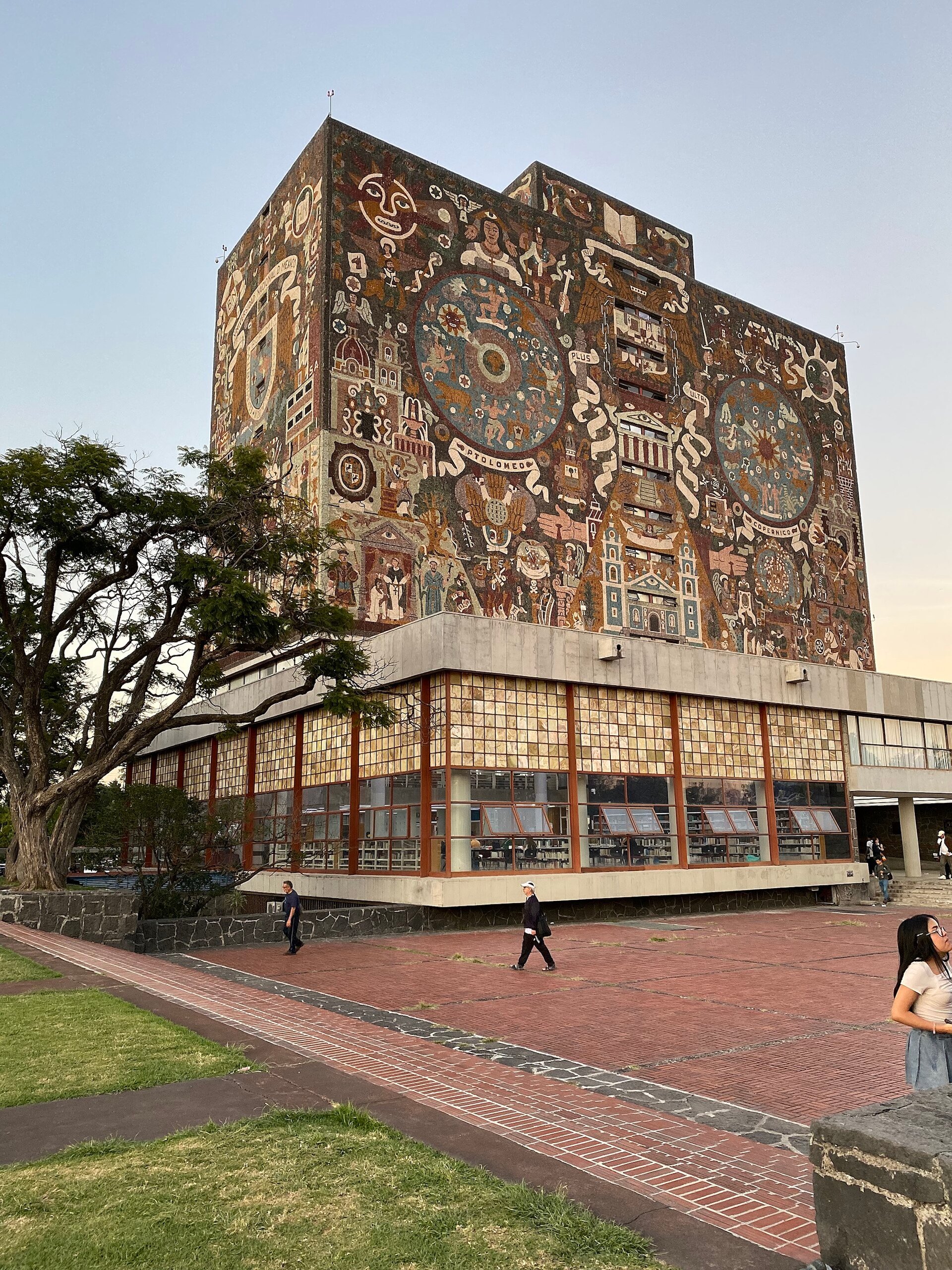
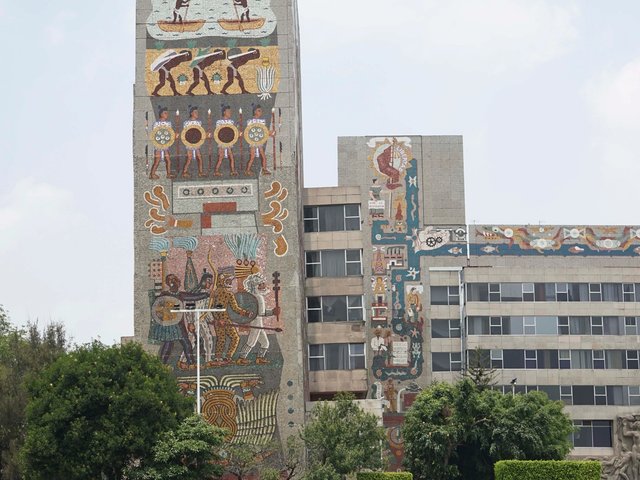
A partial view of Historical Representation of Culture (1950-52), Juan O’Gorman’s stone mosaic mural on the exterior of the central library at the Universidad Nacional Autónoma de México Photo by Nomandsof, via Wikimedia Commons
Thorough studies are planned. “A new research seminar led by Unam experts will promote the historic, scientific and material study of each mural as a basis for conservation work,” González notes, adding that 2027 marks the 20th anniversary of Unesco’s inscription of the university campus.
The most fragile three-dimensional mural of those due to undergo restoration work is Siqueiros’s The People to the University, the University to the People: For a New Humanist Culture of Universal Depth (1952-56), which has been covered for years amind conservation concerns. O’Gorman’s Historical Representation of Culture (1950-52), a 4,000 sq. m stone mosaic at the university’s central library, would follow.
“A long-term restoration project goes beyond repairing or conserving the murals,” Cejudo says. “It means preserving the memory, materials, techniques and meaning of a cultural and architectural project that remains relevant.”