Few museums have reshaped their collections over the past decade as dramatically as the Pola Museum of Art in Hakone, Japan. Since 2015, the museum has quietly become one of Japan’s most active institutional buyers of international art, acquiring works by Gerhard Richter, Felix Gonzalez-Torres and Wolfgang Tillmans at a time when many museums in the country were reducing acquisitions.
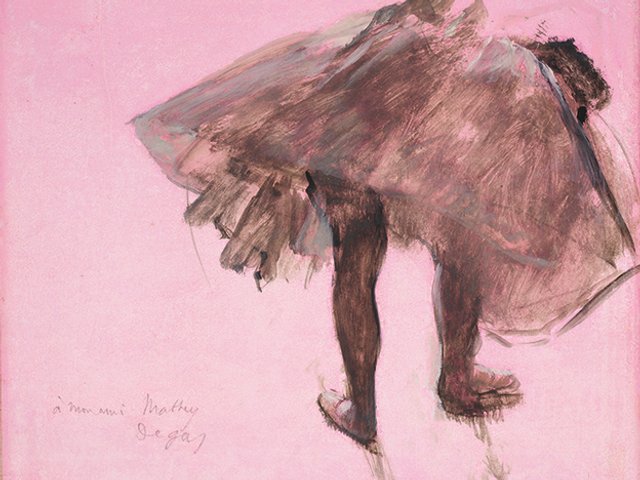
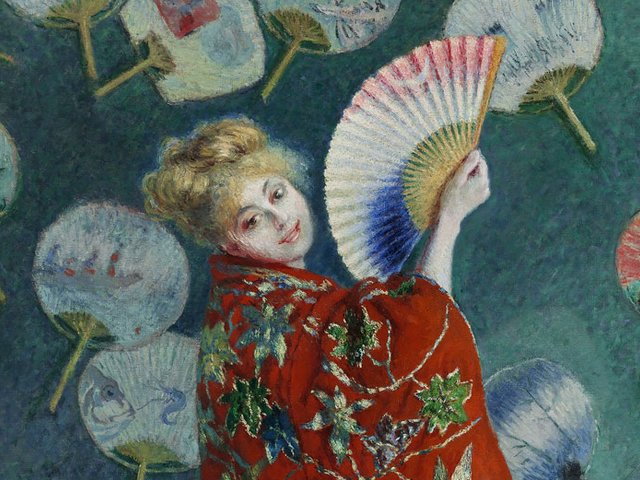
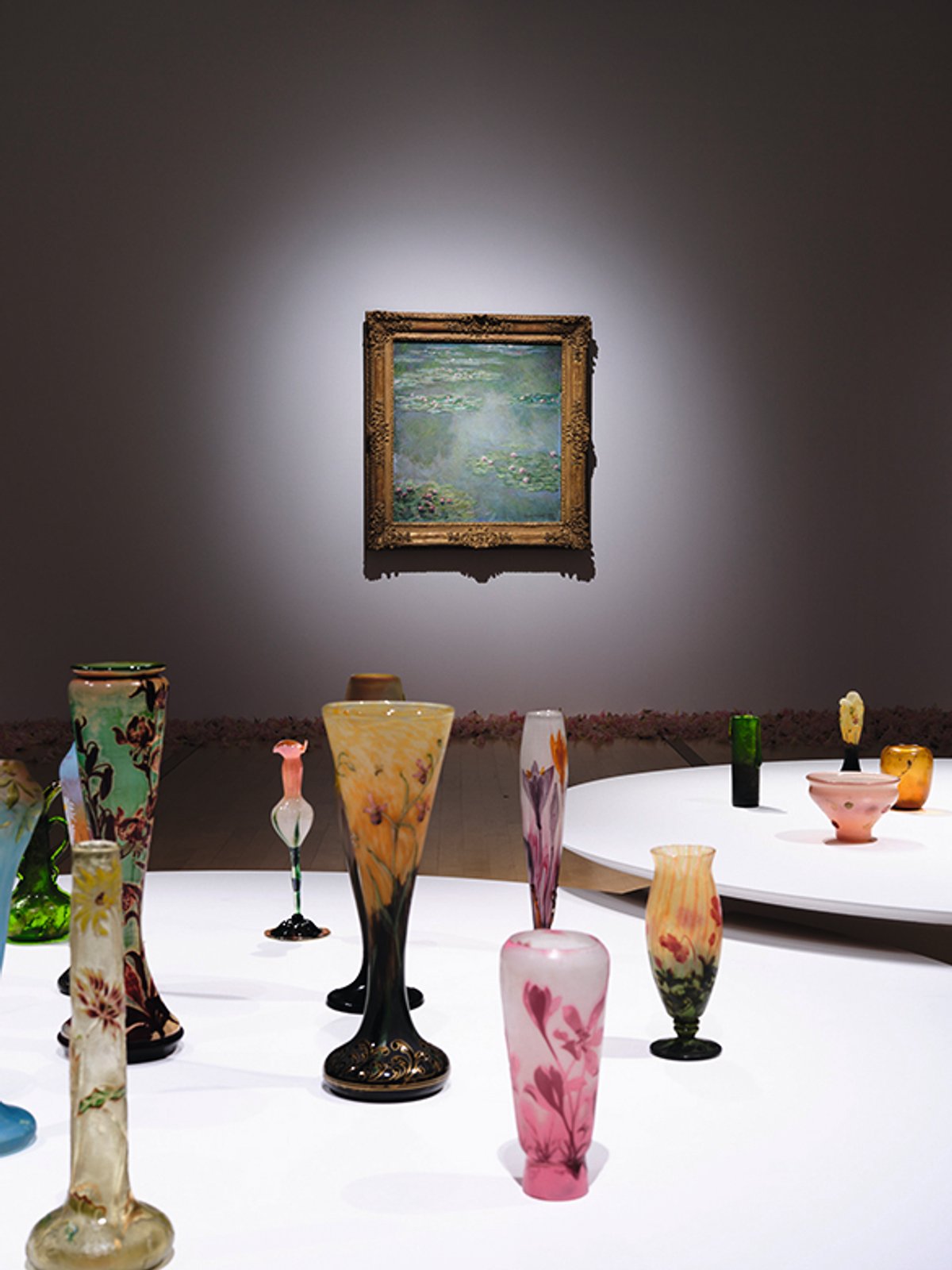
Now, some of those purchases underpin The New Vision: Monet and the Contemporary Gaze (until 7 April 2027), an exhibition that places the museum’s 19 Monets—the largest collection of the French painter in Asia—into dialogue with works by more than 20 Modern and contemporary artists, including Gonzalez-Torres, Tillmans, Roni Horn, Pierre Huyghe, Fujiko Nakaya and Noémie Goudal. “The aim was not simply to arrange Monet’s paintings chronologically,” a museum spokesperson says. “We wanted contemporary artists to become another set of eyes through which Monet can be reconsidered from the perspective of the 21st century.”
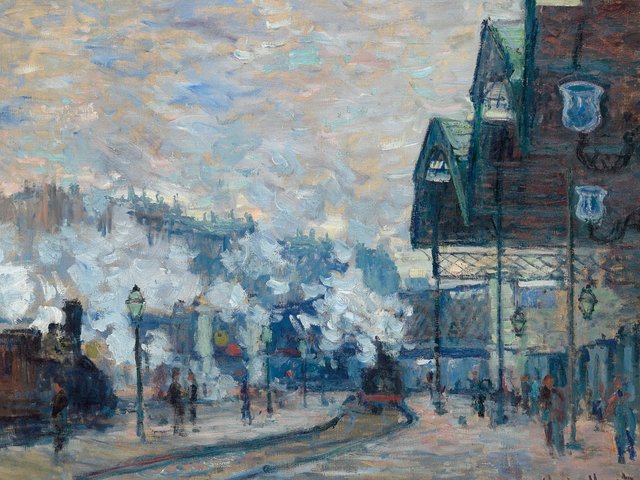
The museum’s holdings span almost four decades of Monet’s career, from scenes along the Seine and Saint-Lazare Station in the 1870s to the Normandy coast, the celebrated Haystacks, Rouen Cathedral, and the London and Venice series, culminating in The Water-Lily Pond (1899) and the late Water Lilies, tracing Monet’s artistic evolution from 1872 to 1908. The show places his paintings alongside artists exploring similar questions of perception, memory and landscape.
Nakaya’s site-specific fog installation transforms dry stream beds in the museum’s woodland into ephemeral rivers, echoing Monet’s creation of the garden at Giverny. Horn’s 1999 Still Water (The River Thames, for Example) revisits the Thames not simply as a landscape but as a repository of memory and history, while Gonzalez-Torres’s candy spill and light installation are paired with Monet’s Sunset on the Seine in Winter (1880), drawing out shared meditations on grief, absence and the passing of time.
Shifting priorities
The exhibition also reflects a broader transformation within the museum. Founded in 2002, the Pola Museum is built on a collection assembled by Tsuneshi Suzuki, the second-generation head of the cosmetics company Pola, who began buying art in 1958. Over four decades he developed one of Japan’s finest collections of Western Modern painting, with Impressionism at its core.
Yet Pola’s collecting story did not end with Impressionism. Since around 2015, the museum has expanded its holdings into contemporary practice. Recent acquisitions include Gerhard Richter’s 1987 painting Abstraktes Bild (649-2), bought at Sotheby’s Hong Kong in 2020 for HK$214.6m ($29.2m), and Felix Gonzalez-Torres’s Untitled (America #3) (1992), acquired at Christie’s New York in 2024 for $13.6m.
Pola’s collecting strategy also mirrors broader shifts in Japanese collecting. Monami Tsukada, the lead researcher and senior art adviser at the Chain Museum, says Japan’s enthusiasm for Impressionism dates back to the Meiji era (1868-1912), when Western art became closely associated with modernisation. One of the earliest milestones was the Matsukata Collection, assembled by the industrialist Kōjirō Matsukata, who visited Monet’s studio at Giverny and acquired thousands of Western works that later formed the foundation of Tokyo’s National Museum of Western Art. That enthusiasm intensified during the asset bubble of the late 1980s. In the years leading up to 1990, Japanese collectors and corporations poured billions of dollars into art acquisitions, with Japan accounting for around 30% of global art imports by value.
Cyanne Chutkow, Christie’s deputy chairman of Impressionist and Modern art, describes a shift since the early 1990s, with acquisitions by Japanese institutions increasingly driven by “connoisseurship, scholarship, collection-building, art-historical significance and long-term cultural value”. She argues that this has created “a more sustainable and intellectually driven collecting environment”, making today’s Japanese market smaller than during the bubble years, but also more mature and discerning.
Pola’s recent acquisitions reflect that evolution. Rather than moving away from Impressionism, the museum has expanded its collection across media and geographies to strengthen its representation of 20th- and 21st-century art, aiming to give visitors a more continuous view of art history. As the museum puts it: “Our goal is not to preserve the collection as a historical legacy. We want it to remain an open resource that can continually be reinterpreted from the perspective of the present.”