Two Nazi-looted art claims landed in California courts on 14 September, just two days before the window slammed shut to do so. The lawsuits, brought in state and federal court against the Norton Simon Museum of Art (NSM) in Pasadena and the Auschwitz-Birkenau State Museum (ABM) in Poland, were the only claims ever to make use of a now-expired 2024 California statute that created a new right to sue for art lost due to political persecution.
The cases may be in for a bumpy procedural ride. In permitting new claims even where otherwise barred by statutes of limitation or previously dismissed on procedural grounds, the California statute could see challenges of invalidity from the museums. And as both complaints allege wrongdoings by foreign governments within their own territories, the museums could seek to raise the traditional defence that such foreign “acts of state” are off limits for US courts. To do that, the museums would have to challenge the recent Holocaust Expropriated Art Recovery (Hear) Act of 2026, which denies specifically that defence, and others, to current owners in claims to recover art lost due to Nazi persecution.
Watercolours made under duress
The federal claim, in the US District Court in Los Angeles, is brought by the heirs of Dina Gottliebova Babbitt, a Czech Jew who survived the Auschwitz-Birkenau concentration and extermination camp in Poland and later became an animation assistant for Hollywood studios. Her heirs are demanding the return from the ABM of seven portraits of Roma prisoners that Babbitt created in 1944 while an inmate, on the orders of Josef Mengele, the notoriously cruel Nazi designer of experiments with inmates’ bodies, purportedly in the name of the scientific study of racial inferiority.
Mengele selected the Roma portrait subjects to capture their purported “racial inferiority”, and Babbitt agreed to paint them, the heirs say, “only on the condition that Dr Mengele spare her and her mother from the gas chambers”. But she never voluntarily sold or assigned the works, which the museum “never obtained lawful title” to and has not returned. The claimants are seeking return of the works, damages for their wrongful use and a declaration that they own them.
The museum, which sits on the site of the extermination camp, is quick to agree that Mengele ordered the watercolours’ creation and Babbitt’s role as painter. But the museum appears to see the works as evidentiary artefacts inextricably linked to the horrors at that place.
Pawel Sawicki, the deputy spokesman for the ABM, tells The Art Newspaper that the portraits ordered by Mengele “must remain at the Auschwitz Memorial as unique evidence” of the persecution of and crimes committed against Roma and a subgroup, Sinti. The watercolours are “not simply works whose ownership can be considered separately from the circumstances in which they were created”, and are instead among the “very few surviving documents” connected directly with Mengele’s pseudoscientific racial research and Roma and Sinti persecution, he adds.
Treating the watercolours as equivalent to art confiscated from owners by the Nazis would be “a fundamental mischaracterisation of their origin and historical function”, Sawicki says, nor were they works created freely by Babbitt that were later lost in a confiscation from her private collection. “She was a prisoner of Auschwitz, compelled by Josef Mengele to produce them” for his racial research. Mengele controlled the process, providing the paper and watercolours, selecting the Roma prisoners, and determining how the portraits were to be made. “Their origin, purpose and historical meaning are inseparable from the crime and from the place in which they were created,” Sawicki says. The ABM’s statutory responsibility, he adds, is to gather and preserve evidence of crimes and objects related to the history of Auschwitz.
The ABM, which the heirs say is an instrumentality of Poland, would normally be immune from lawsuits in the US. But they are suing under an exception to the Foreign Sovereign Immunities Act that allows claims against a foreign government instrumentality for property taken in violation of international law if it engages in commercial activities in the US. The heirs say that it does.
Fate of “Adam and Eve” in question again
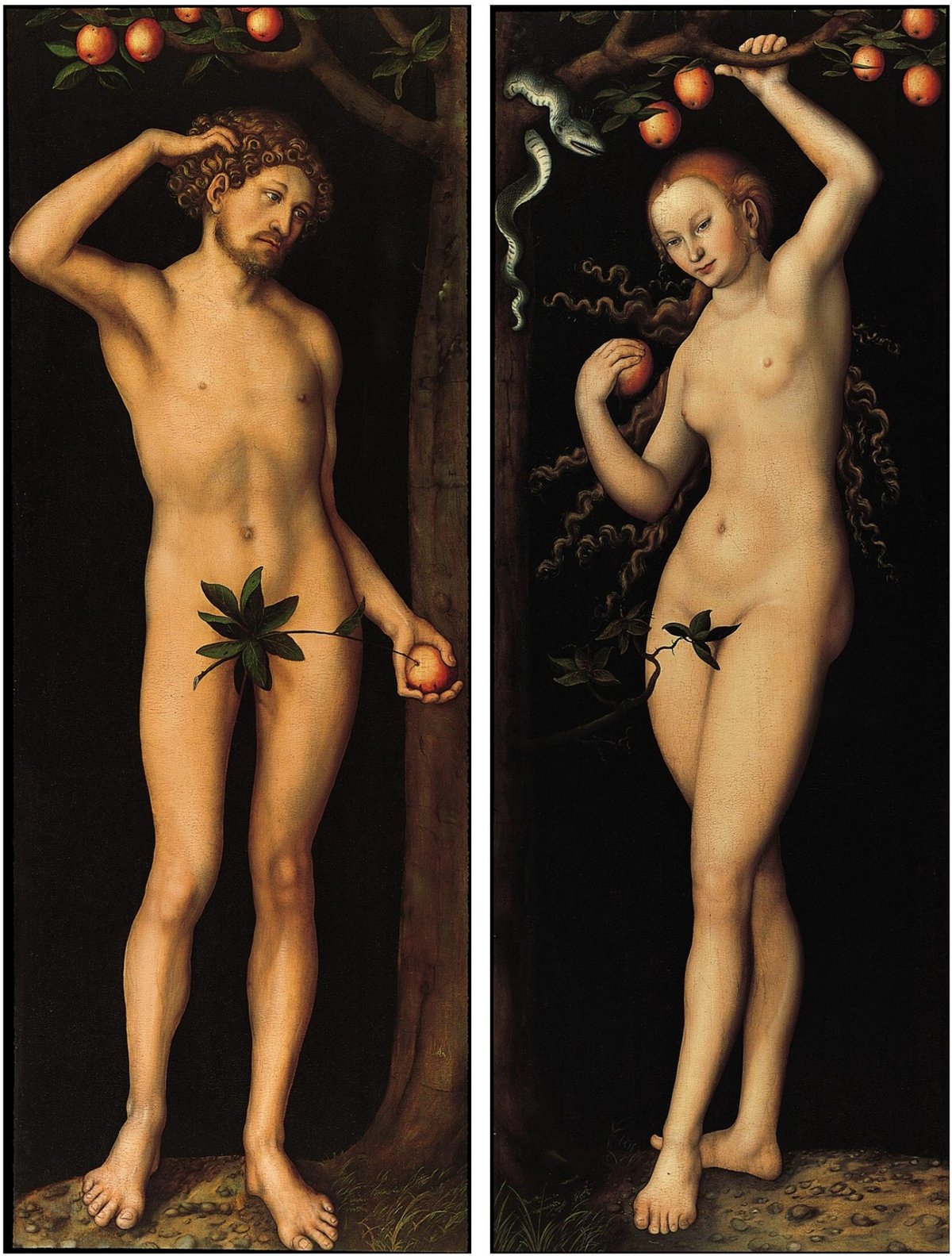
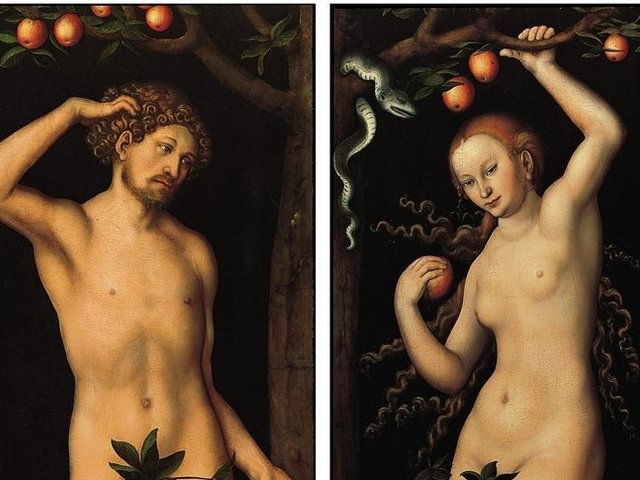
In the state case, filed in the Superior Court for Los Angeles, the claimants are demanding that the NSM return a diptych, Adam and Eve (around 1530), by Lucas Cranach the Elder, which was among more than 800 works stolen in June 1940 by Nazi Reichsmarschall Hermann Göring from the Netherlands gallery of the renowned Jewish Old Masters dealer, Jacques Goudstikker. After the war, the Allies transferred some of the Goudstikker art, including the diptych, to the Dutch government for restitution. But in 1966, the Dutch government wrongfully delivered the diptych, the claimants say, to a Russian noble who had wrongfully claimed it, George Stroganoff-Scherbatoff, and who then sold it to NSM in 1971.
Goudstikker’s daughter-in-law launched an 11-year court battle against the NSM for recovery. She lost in 2018, when the Ninth Circuit Court of Appeals in California dismissed the case because, under the “act of state” doctrine, actions of foreign sovereigns within their own jurisdictions, which would include the Dutch government’s sale to Stroganoff, cannot be adjudicated by US courts. The Hear Act of 2026 expressly cites the Ninth Circuit’s dismissal of that case as a reason to eviscerate the act of state defence.
The 2018 dismissal, the claimants say, places them squarely within the express permission of the 2024 California law to bring new claims even where previously dismissed on procedural grounds. They are seeking a declaration of ownership delivery of the work and damages for wrongful detention and use. The claimants are successors in interest to Goudstikker’s last surviving heir, his daughter-in-law.
A spokesperson for the Norton Simon Art Foundation told The Art Newspaper in a statement that “after decades of litigation, court after court” had confirmed that the NSM “has proper title to Adam and Eve”, and that the museum would “continue to make these important artworks accessible to the public”.
Both cases will now proceed. Based on usual court deadlines, the museums’ responses, whether a motion to dismiss or otherwise, could possibly be filed around mid-October or later for the NSM, and mid-November or later for the ABM, depending on completing the formal steps required to join a foreign government instrumentality to a lawsuit.