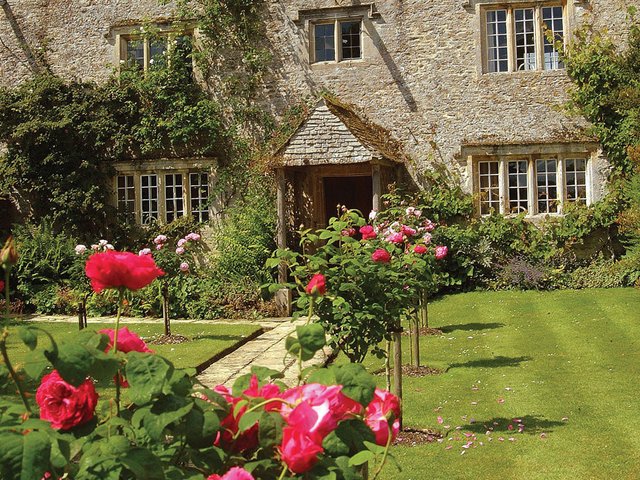
The William Morris Gallery in Walthamstow, northeast London, located in a Grade II-listed manor the artist lived in as a teenager, is reopening this Saturday (3 October) after a major rehang and revamp. Six gallery spaces have been transformed, new discoveries have been brought out on view, while the gallery’s collection has been rearranged in a way that provides a more nuanced, expanded view of its complex and often contradictory namesake.
The project is the first major overhaul at the gallery since it was redeveloped in 2012, and its reopening has been timed to mark the 130th anniversary of Morris's death.
A major focus, says the architect Sam Jacob, has been on the building’s role as a former home: “What we tried to do all the way through was to try to bring a bit more of a domestic sensibility to it,” he tells The Art Newspaper. Interior architectural details have been brought out with the careful use of colour, local craftspeople have been commissioned to create plinths that look like furniture, and new features have been added that give a cosy, accessible feel to the building. Above the front door, for example, hangs a hand-blown lamp by the designer Stewart Hearn, to help “make this feel like a home,” says gallery director Hadrian Garrard, “and like a place that you don't feel intimidated to walk into”.
For Garrard this approach aligns closely with Morris’s own philosophy, as well as the identity of the institution, which is home to the world’s most comprehensive collection of Morris’s work as a designer, writer and activist.
“Morris said that the secret to a happy life is proper attention to the details of the everyday,” he says. “So rather than us building a new wing, having a big piece of glass, and working with an architect to make a very overt statement, this is a room by room, detailed, thoughtful restoration that is financially sustainable and has been done in response to people that use the gallery.” Waltham Forest borough locals have been consulted in the process; community members were invited to contribute interpretation of the works on display, family workshops were held to help ensure labels are accessible to all ages, and a community advisory panel was invited to feed back on curation, communications and interpretation.
The redevelopment has also sought to address the conflicting character and life of Morris, who was born into great privilege but spent much of his life pursuing socialist ideals, and who wished for everyone to own beautiful things but whose own textile creations—through his company Morris & Co—were only affordable to the wealthy few.
Throughout the house are “gentle prompts” towards his complex biography, Garrard explains. They begin in the entrance hall, where the information desk has been redone in copper. “We chose copper because the reason William Morris was so well set up in life was due to his father’s investment in the Devon Great Consols Mine in Tavistock,” in which workers, including children, laboured in poor conditions.
The desk is “a tribute in a way to that complicated history,” Garrard continues. He adds: “we’ve asked a master engraver to come and write some words in memory of the workers of the mine onto it”.
Another example of such a prompt is a room that directly contrasts Morris’s left-wing politics with the high-end products created by Morris & Co. What Jacob describes as a “socialist red” ceiling looms above luxurious, “picture gallery red” walls. Objects in the room, meanwhile, range from a large-scale hanging textile commissioned for a wealthy patron’s home to a satchel with radical socialist pamphlets, which Morris published and distributed, spilling out of it. “The idea was you'd have this beautiful interior and this object that sat really at odds with everything,” Garrard says. “I want people to feel a little bit sick when they come in here.” There are plans to add William Morris’s personal copy of Karl Marx’s Capital—which features an elaborate gold design on its front—to the display in the future.
Garrard is clear that while the gallery is not there to “worship heroes”—a bust of Morris has been moved out of the foyer—he feels Morris is a figure “worth celebrating“. The artist’s contradictions, he says, are often things that “conflict with all of us“. He adds: “I think that's quite a nice thing with Morris: to look at the complexities of being a human being.”
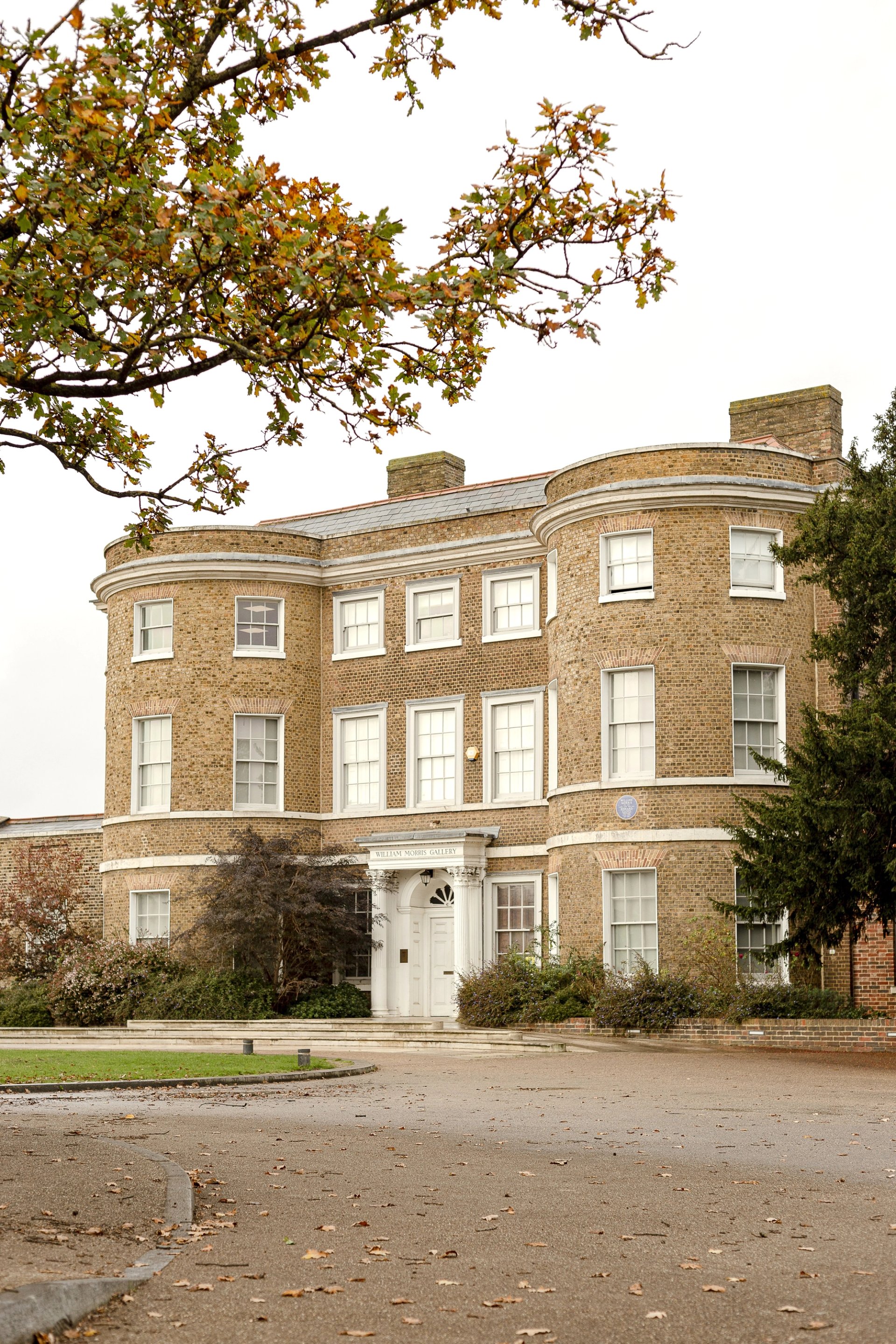
Exterior of William Morris Gallery
© Photo by Chiara Dalla Rosa
Unseen objects and fresh stories
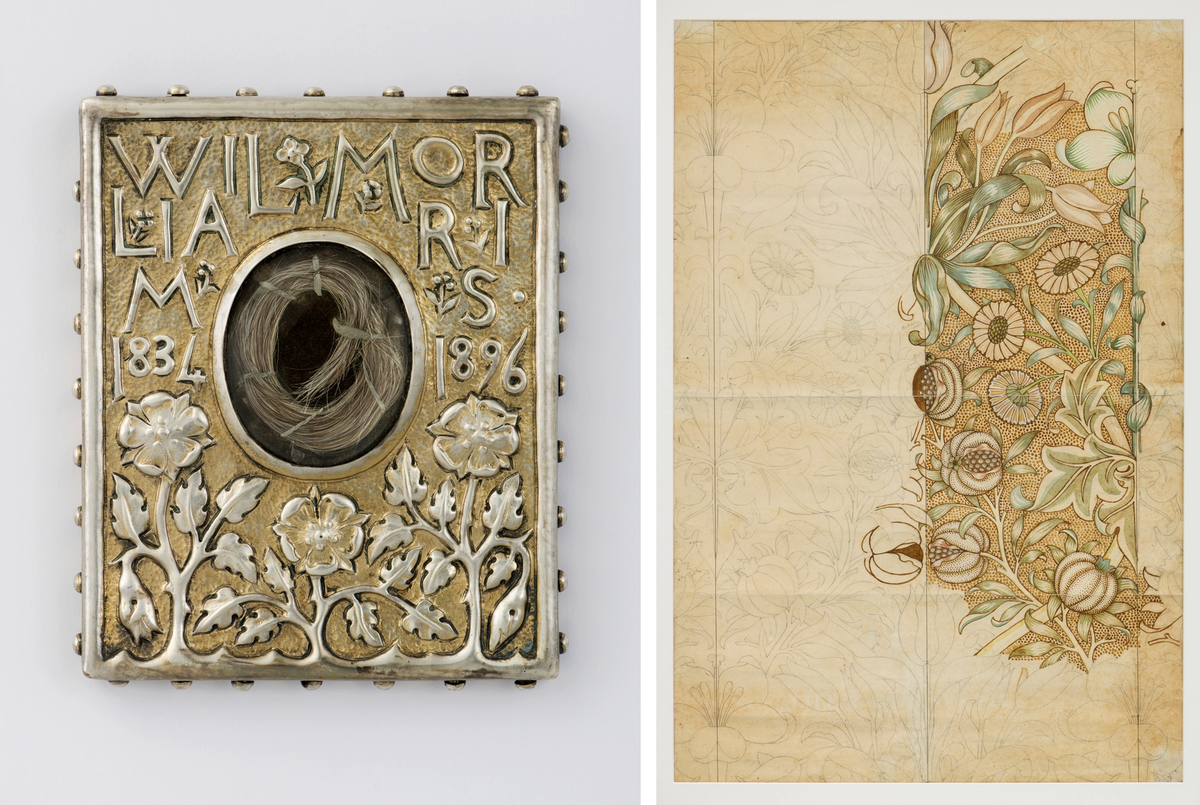
The rehang has brought out many objects that have not been seen in public before or for a long time. There is a dress that Morris designed for his wife, Jane, for her to model in the painting La Belle Iseult (1858), today housed at Tate Britain. There is Morris’s banner for the Hammersmith Socialist League, which he co-founded, on public display for the first time, on loan from The Working Class Movement Library in Manchester. Other objects will bring visitors almost face-to-face with the man himself—chief among them a lock of Morris’s grey hair, cut from his head after his death by his friend John Carruthers. “I think that's a very magical object,” Garrard says.
Another priority for those working on the project was to bring underrepresented stories and figures from Morris’s life to the fore. One section of the second room will focus on the influence of art from the Islamic world on his practice—a theme that was the subject of a temporary exhibition at the gallery in 2024/25. The work and worlds of women in Morris’s life will also be highlighted, such as with his daughter May’s design for a Flower Garden embroidery, created while she was the director of embroidery at Morris & Co, and books from the collection of Morris’s other daughter Jenny.
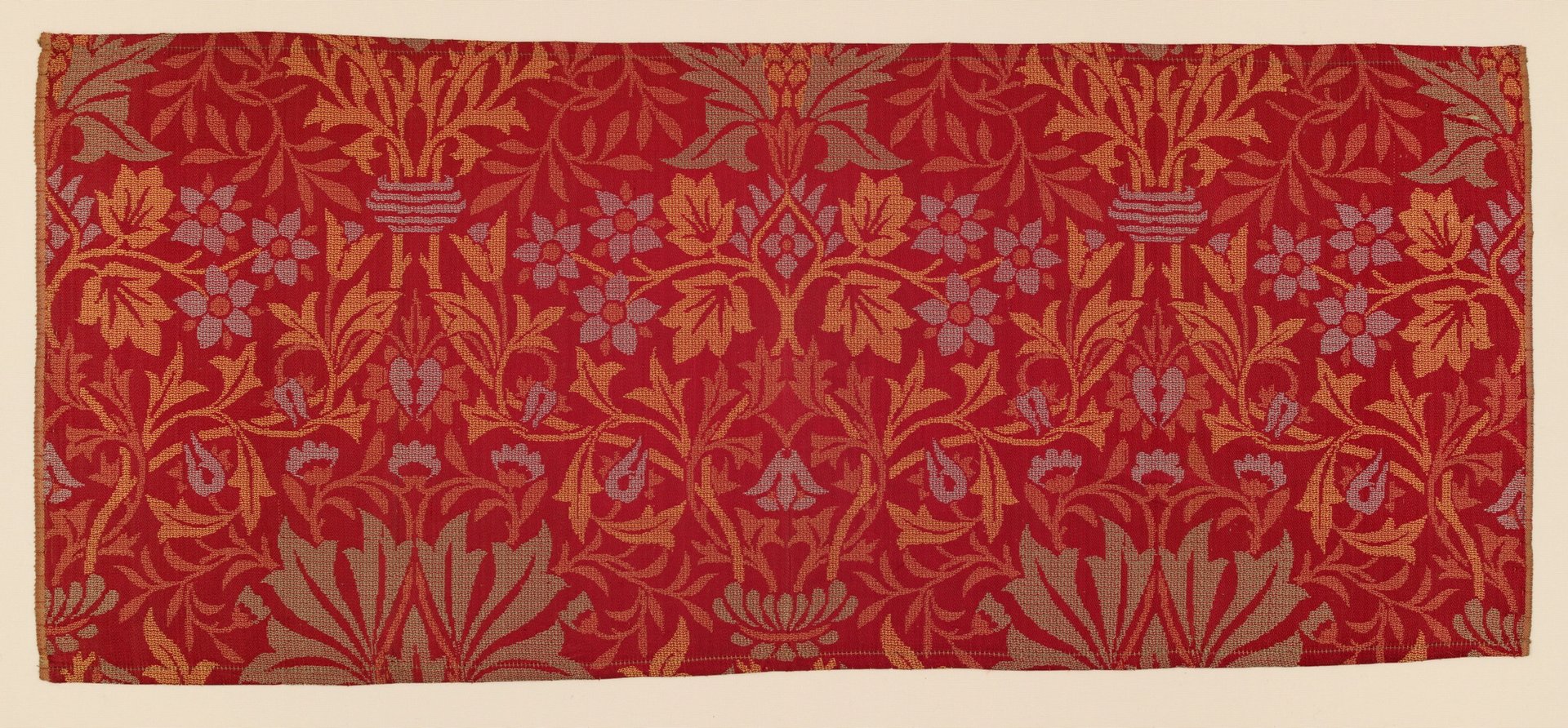
Flower Garden textile by William Morris from 1879
© William Morris Gallery
The gallery is also seeking to support and promote contemporary artists with a new project space. Called “Morris Today”, it is expected to open in 2027.
The project has been funded with the help of around £1.5m raised from trusts including the The Garfield Weston Foundation and the Wolfson Foundation, and further contributions from Waltham Forest Council. The gallery reopens with an exhibition Earthly Paradise: Radical Living in the UK, exploring the lives and homes of people who have pushed artistic and other boundaries in Britain.
Garrard sees the completion of the revamp as perhaps the “most important piece” of the work he’s been doing since arriving as director in 2022. It is, he adds, hopefully just the beginning.
“I don’t think a museum is ever finished; they should change all the time,” he says. “And I think the nice thing about Morris’s ideas is that they're becoming more and not less relevant right now.”
- Earthly Paradise: Radical Living in the UK, William Morris Gallery, Walthamstow, London, 3 October 2026 - Sunday 28 March 2027