When Glasgow became the first UK city to be crowned European Capital of Culture in 1990, the effect was electric. Pundits noted a complete change in the city’s fortunes, an overnight transformation into a tourist destination. They also observed that it was well-deserved. As the Scottish journalist Stephen Khan put it: “Glaswegians told the rest of the world what they already knew—this conurbation is a crucible of creativity and rather pretty with it.”
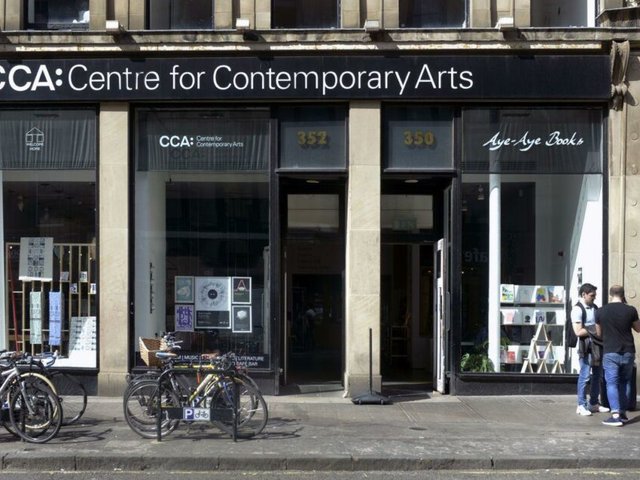
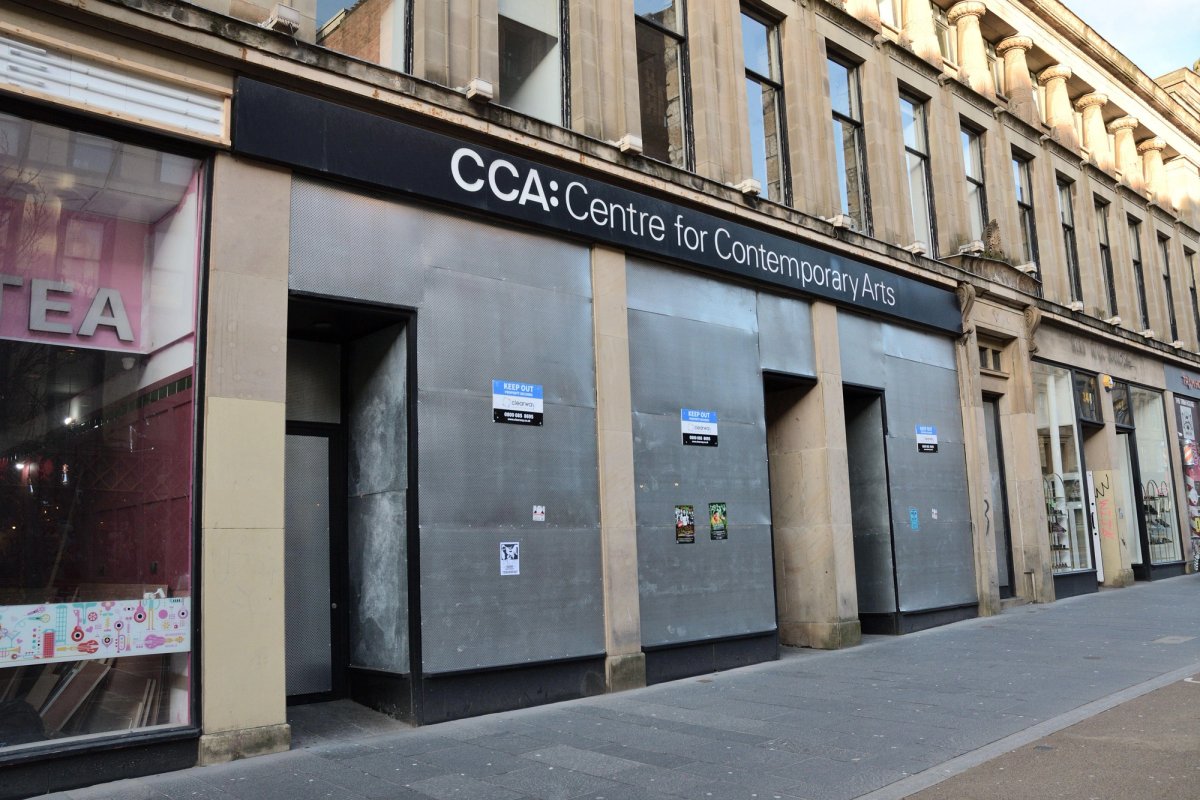
Thirty-six years later, the city’s arts scene is struggling in the wake of a series of crises. The Glasgow School of Art suffered two devastating fires in 2014 and 2018. Then at the beginning of this year, another major shock: the Centre for Contemporary Arts (CCA) announced it would be ceasing operations because its finances were unviable. Since that announcement, the arts community in the city and beyond has been in uproar.
“Glasgow, for a long while, has been seen as a kind of ideal for artists with an ecology and economy that worked,” the artist Mark Leckey said in the Save Our CCA campaign. “To lose the CCA is to lose part of that core, that heart, from which everything else can be sustained.”
The CCA—known as the Third Eye Centre until 1992—was among the Glaswegian cultural institutions that elicited the European Commission’s attention back in the 1980s. Others included the Kelvingrove Art Gallery and Museum, the Burrell Collection, Scottish Ballet and Scottish Opera, not to mention the indelible imprint left by the architect and designer Charles Rennie Mackintosh—especially on the Glasgow School of Art.
The loss of the Mackintosh Building
But Mackintosh’s legacy, too, has received a blow this year. After the two fires that ripped through the Glasgow School of Art’s celebrated Mackintosh Building, the school said in July that it cannot afford the £265m needed to restore this pioneering example of British Art Nouveau on its own. Architects, school staff and politicians alike have decried the potential loss of the building as a loss to Scotland at large and called for the Scottish and UK governments to step in, in recognition of its national importance.
Meanwhile, another grassroots campaign is underway to save Trongate 103: Centre for the Arts and Creativity. In February, the seven arts organisations housed there received notice from the landlord, City Property, of an unaffordable 400% rent increase. A spokesperson for Glasgow City Council says it has set up a £200,000 cultural property relief fund for the 2026-27 financial year, in order to provide cultural organisations with awards of up to £10,000 to assist with rising property costs. They said the council is now working with tenant organisations at Trongate 103 to develop a sustainable plan for the site. However, the council also faces a considerable budget gap, forecast at around £110m over the next two financial years.
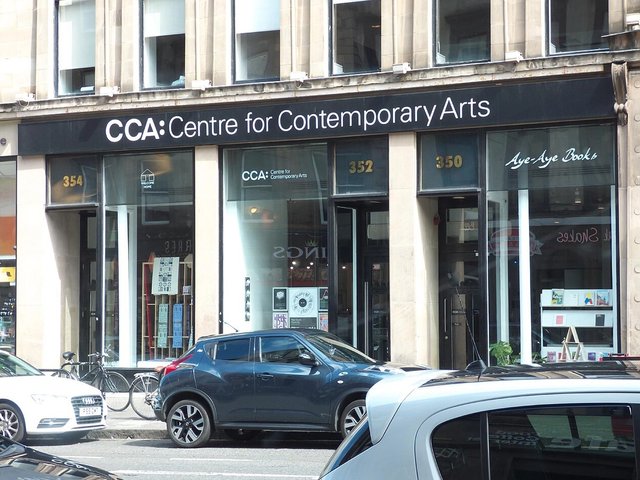
And a reopening of the CCA—or a similar arts institution that upholds its legacy—looks far from assured. After its announcement that it was going into administration in January, staff were given one day’s notice via a Zoom call. Creative Scotland, the arts funding body which owns the building at 350 Sauchiehall Street, put out a call for expressions of interest from cultural organisations to buy or lease the building.
A spokesperson for Creative Scotland confirms that, as specified in the call, it “recognises the importance of 350 Sauchiehall Street as a cultural venue” and that it hopes to see it “remain as an asset for the cultural sector and the public”.
After receiving bids from 13 organisations planning to run the building as a cultural space, Creative Scotland sought more detailed proposals with a deadline of 30 October. The call specified that Creative Scotland's preference was “to sell or transfer ownership of the building”.
When asked whether Creative Scotland was demanding that the next cultural venue ensure continuity with the CCA and that its legacy not be erased, the spokesperson did not respond.
But this summer, the liquidators Middleton Barton Valuation (MBV) seized the building’s contents. On 27 July, online bidding opened for items including office and library furniture, audiovisual equipment and catering appliances, but also categories of things that begged for more clarity: “assorted books”, “assorted contents of rooms”. Asked about the results of this process, a spokesperson for MBV declined to comment.
In an interview in late August, a spokesperson for the Save Our CCA campaign emphasised the extent to which these seizures undermine their hope that the centre might reopen. “It really makes the reopening of the building as a cultural space a lot harder, because this is very expensive equipment, which was bought with public money.”
Concerns over the archive
MBV organised a separate sale of the centre’s archive, with bids to be received by 14 August. An advertorial placed in The Herald on 27 July described the archive as comprising “14 collections, including slides, VHS, photographs, publications and posters”, as well as “ephemera, audio, film, news cuttings and paper records”.
In late August, the Creative Scotland spokesperson confirmed that with the financial support of Creative Scotland, Glasgow Life—the charity that manages the city’s cultural operations on behalf of Glasgow City Council—had submitted a bid to ensure the Third Eye Centre/CCA Archive remains in the city, and is complete, protected and available to researchers and the wider public. “The bid is with the liquidators,” the spokesperson said, “and we will issue an update as soon as we are able to do so.”
Among campaigners there is a keen sense of loss and heartbreak. The prospect of the archive being sold off is “sickening”, the Save Our CCA campaign spokesperson said. “It’s so, so sad.”
Glasgow’s cultural institutions rely on a variety of funding mechanisms. Higher education institutions, including the art school, are funded primarily by the Scottish government via the Scottish Funding Council.
Creative Scotland, meanwhile, is supporting 262 organisations with funding over three years, of which, 83 (32%) are based in Glasgow. “Our most recent figures show that Glasgow received the largest portion of all other awards made through any of Creative Scotland funding routes (35%),” the Creative Scotland spokesperson said, highlighting that wider cultural investment in the city comes from the local authority, cultural trusts and the private sector.
Morale among artists and creative staff who keep these institutions running, however, is low. “There is a really strong feeling in Glasgow that people are expected to do a lot more for less,” the Save Our CCA spokesperson said, “and that the arts are something to be trimmed when times are hard.”