A richly decorated Sicilian vase dating from the third century BC has been returned by the University of Amsterdam’s museum to Sicily, nine years after a restitution request from Italian police.
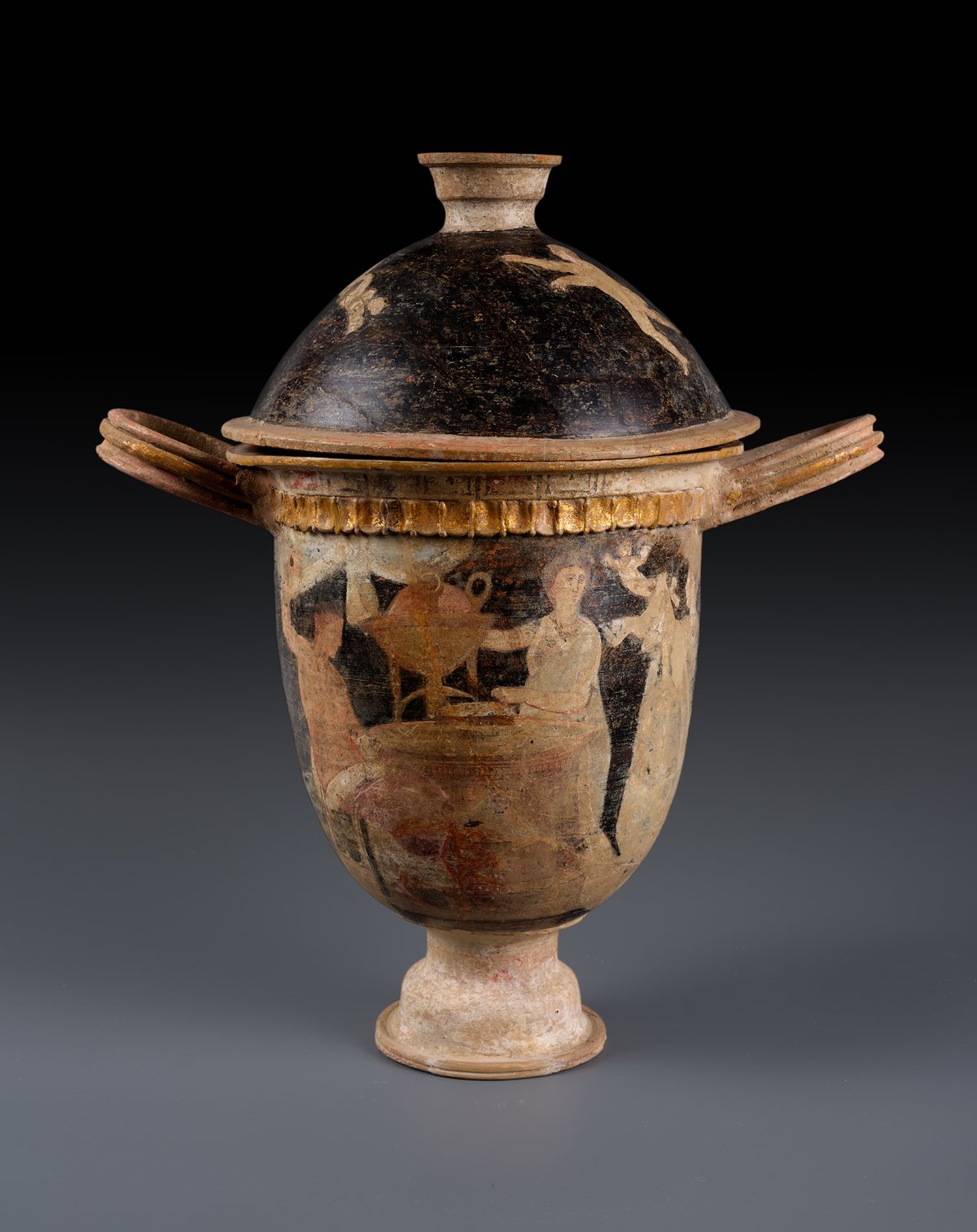
The Centuripe pyxis, a lidded ceramic vase, was handed back to Sicilian authorities last week after the Allard Pierson museum agreed that its provenance was “problematic”.
It was acquired in 1997 at the Tefaf art fair in Maastricht, from a Swiss art dealer who claimed it had been in private ownership since before 1970, the year of a Unesco convention banning illicit trade in cultural property. Research, however, showed this claim not to be true.
The Unesco convention was only ratified by the Netherlands in 2009—and so the Allard Pierson was not legally bound by it in this case—however Rogier Kalkers, the head of provenance research at the Allard Pierson, said the museum felt a moral duty to return the object.
“Instead of waiting for source countries to knock on our door, we changed our approach,” he tells The Art Newspaper. “We approach source countries when we find in our provenance research objects that are of problematic provenance.”
The vase, which features ancient gods like Apollo observing a wedding scene, is thought to have been buried in a rock-cut tomb near to Centuripe, a Sicilian trade centre allied with Rome.
In the 1970s, these tombs were raided by grave robbers and an image of the vase was discovered in a roll of film belonging to a local photographer who was apparently commissioned to photograph recently excavated objects for them. On another picture in the reel, proving the origin story from Switzerland was a ruse, was a group photograph from a wedding in Centuripe in 1976. The discovery of the roll of film the Italian authorities prompted the Italian authorities to make the restitution claim in 2017, which Allard Pierson has agreed to.
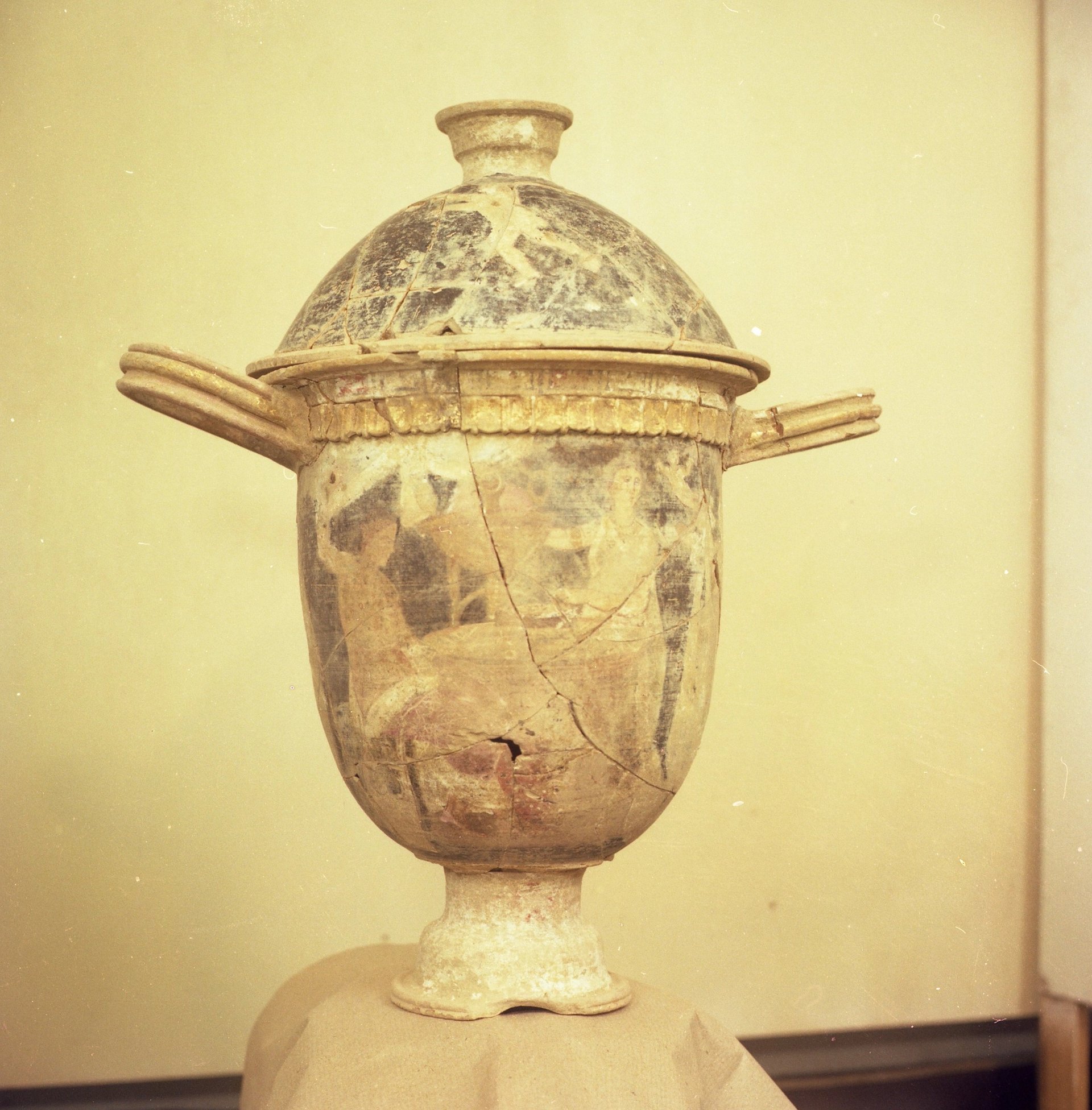
A photo of the Centuripe pyxis found on a roll of negatives in Centuripe Courtesy of Associazione SiciliAntica, Centuripe – Archivio Pino Catania
Although the vase will in future be displayed in the Centuripe Regional Archaeological Museum, Kalkers said this it was the start of a new relationship between the countries. “We don't see this as a loss,” he says.
“We might have lost the ownership of one object in the collection but this is a stepping stone towards further collaboration, provenance research, more technical research into pigments and clays used in this type of ceramics, and inter-institutional loans in both directions. So we begin to see our role more as stewards of cultural heritage rather than owners of cultural heritage.”