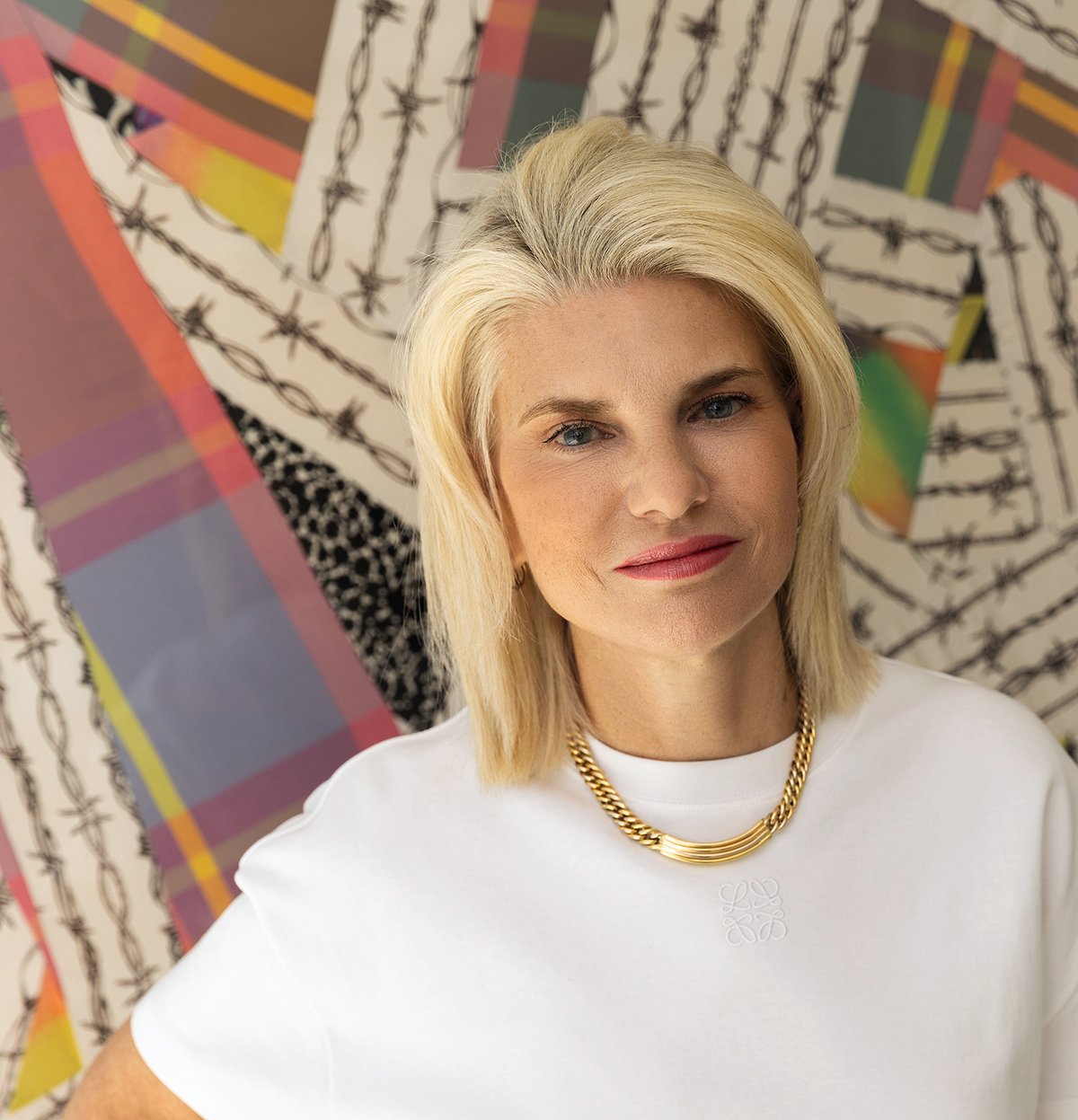
Although Irene Y. Panagopoulos’s father collected Modern art—which filled their house—she did not originally think of herself as a collector. Instead she wanted to be an artist. Born in London, she studied at Mills College at Northeastern University in Oakland, California. But her father, Pericles Panagopoulos, gave her some works and from there her collection began to grow organically, bringing together works that are in dialogue with each other.
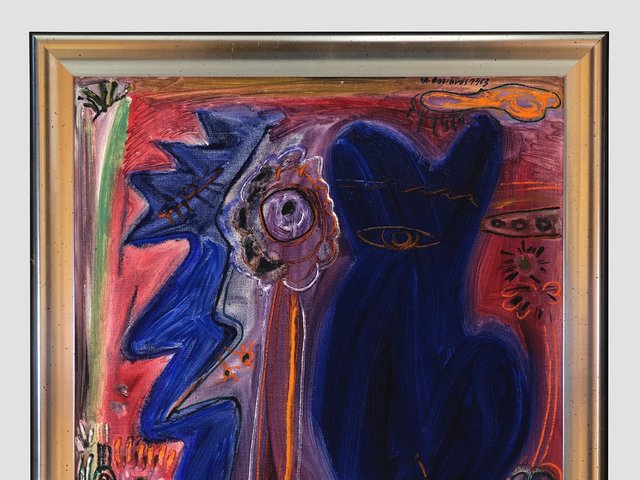
Now based in Greece as the president of the family’s shipping company, Magna Marine Inc, Panagopoulos has built a collection with a particular focus on women and creators from the Greek diaspora. It can be seen at the Irene Y. Panagopoulos Collection in Voula, just outside Athens, and during Frieze week in the exhibition Revisiting: Fernweh, or Nostalgia for Unknown Lands at the Hellenic Centre in Marylebone. The show features 17 works by artists including Kader Attia, Vlassis Caniaris, Brice Marden and Thomas Struth. The title comes from the German word meaning “longing for distant places” and explores how Greece is imagined, remembered and reinvented.
Panagopoulos is a big advocate for the Greek cultural scene, supporting projects at the Museum of Cycladic Art and the National Museum of Contemporary Art, both in Athens, and the Greek pavilion at the Venice Biennale, as well as supporting international institutions such as Tate and the Delfina Foundation.
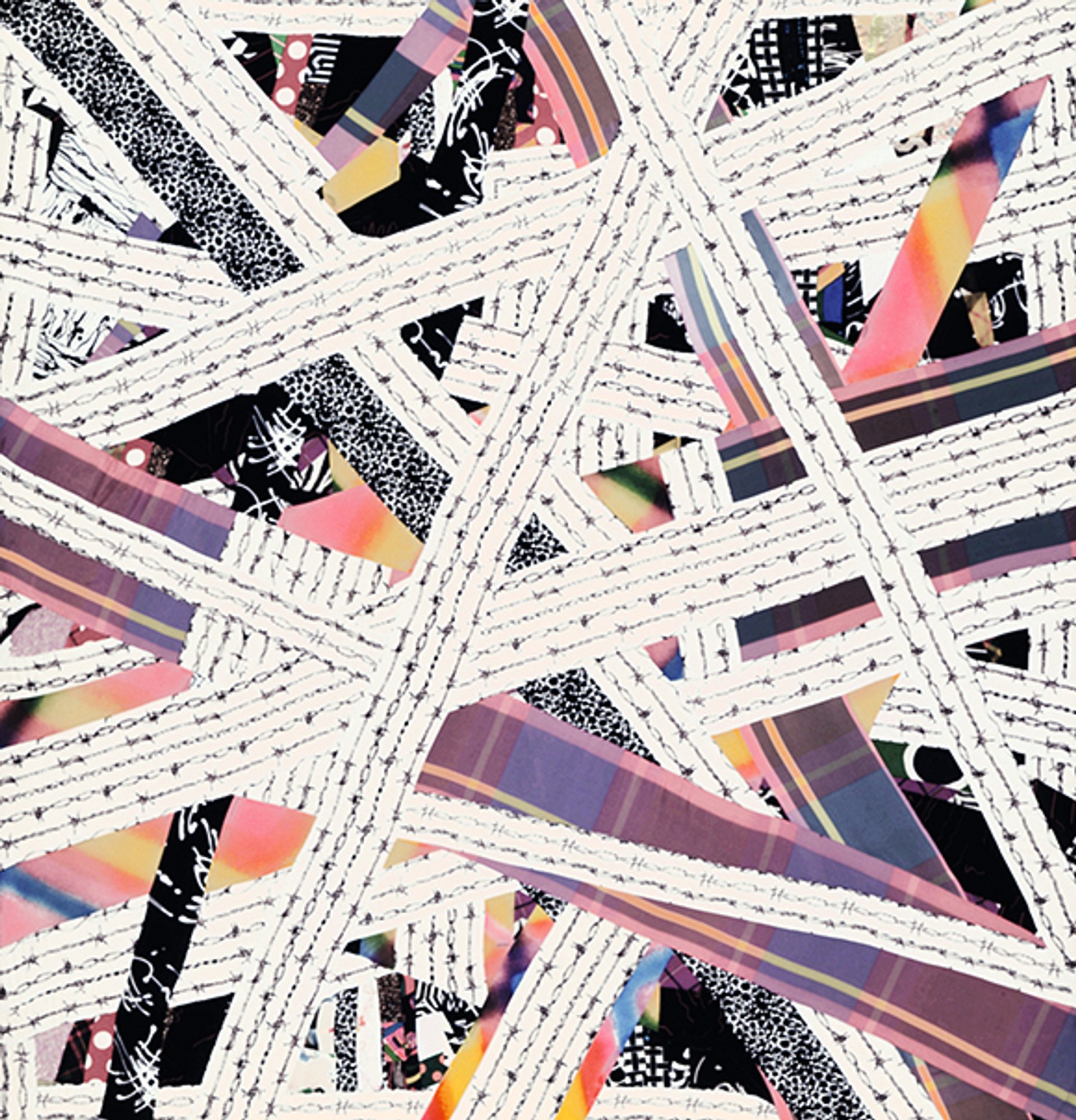
Lucas Samaras’s Reconstruction #9 (1979) was the first work Panagopoulos bought Courtesy of Irene Y. Panagopoulos
The Art Newspaper: What was the first work you bought?
Irene Y. Panagopoulos: A work by Lucas Samaras, an artist of the Greek diaspora. It was an important beginning for me, not only because of the work itself, but because of what it represented. I have always been interested in artists whose work carries a sense of displacement, memory and identity. Called Reconstruction #93 (1979), it explores the artist’s relationship with his mother, who was a seamstress. For me, it carries a particular symbolic significance, as it also evokes the relationship between an artist of the diaspora and his motherland.
What was the last work you bought?
One Hundred and Forty Paths (2026) by Vangelis Savvas, a young Greek artist, in which he captures the plants of the Cyclades using 3D printing technology. This specific piece moved me because I found its connection to the Grand Tourists of the 19th century quite striking. They travelled to Greece and, alongside depicting the achievements of the great Greek ancient civilisation, also sought to capture the grandeur of the Greek landscape and its natural beauty. Nature remains deeply connected to the Greek identity.
How long do you take to decide to buy a work?
I’m not a spontaneous collector. I deliberate. I may have an immediate emotional reaction to a work, but I like to spend time with it before deciding whether it belongs in the collection. For me, collecting is not only about falling in love with a work; it is also about understanding how it speaks to the rest of the collection and whether I will continue to live with it intellectually and emotionally.
What do you regret not buying when you had the chance?
I have a few regrets. But I suppose hesitation is also part of being a collector. You have to accept that you cannot have everything you love. Sometimes the works you do not acquire stay with you just as strongly as the ones you do.
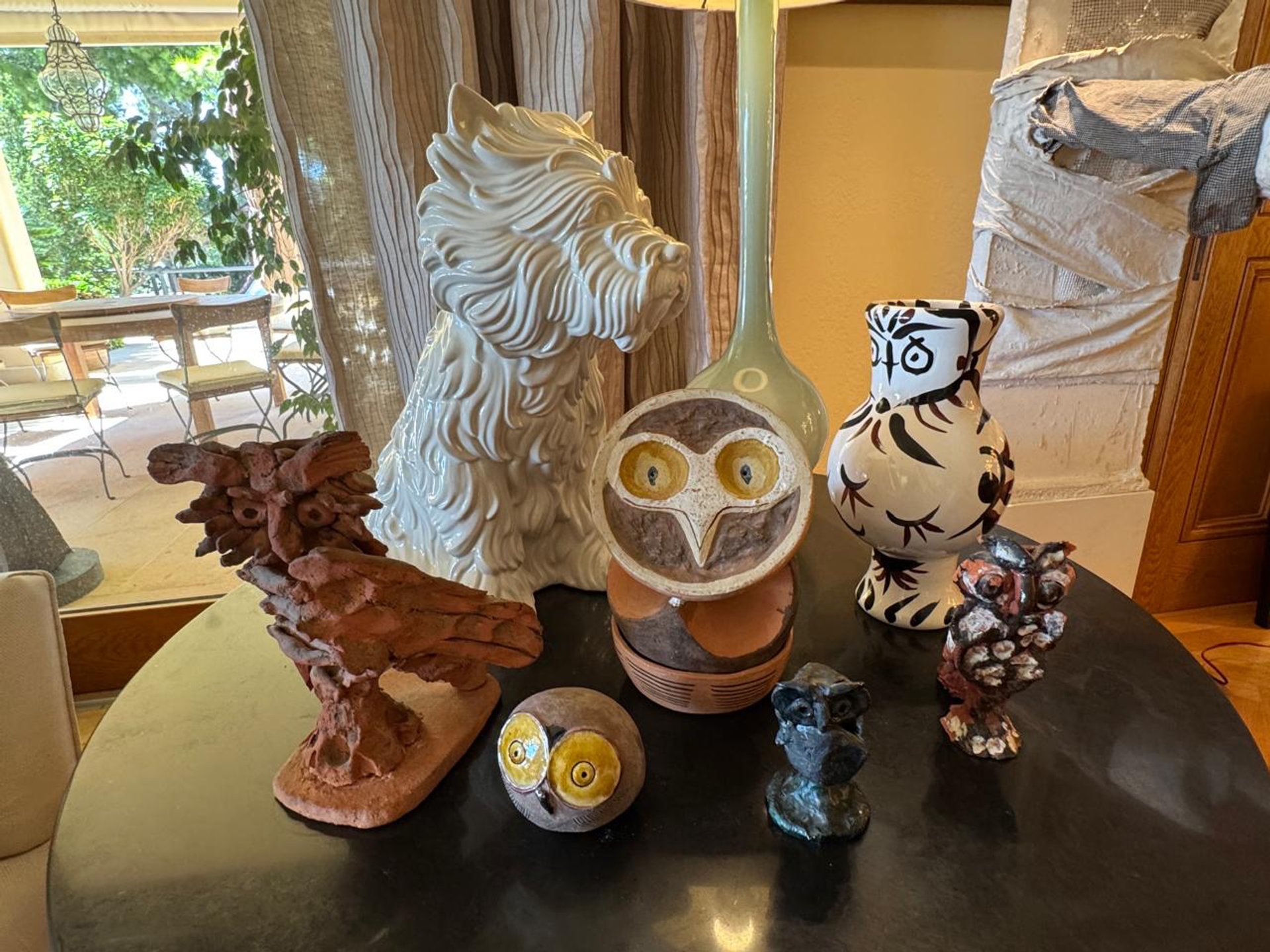
More of Panagopoulos’s collection, including pieces by Jeff Koons and Picasso Courtesy of Irene Y. Panagopoulos
If you could have any work from any museum in the world, what would it be?
As a collector, I have enormous admiration for museum collections. Many museums began, in one way or another, with private collections and the vision of individual collectors.
Recently, I visited the Museum of Fine Arts, Boston, where I saw One Hundred Stitches, One Hundred Villages: The Beauty of Patchwork from Rural China. I was deeply moved by these patchworks. They were presented with such sensitivity, and I found myself thinking about the relationship between art, memory, place and everyday life. It reminded me that great art does not necessarily depend on conventional ideas of artistic hierarchy or medium. So I would find it difficult to choose just one work. What interests me most is the possibility of encountering something that changes the way you see the world.
What’s your least favourite thing about art fairs?
I don’t like the crowds. In recent years, fairs have become larger and the gallery spaces seem to increase while rest areas disappear. It is becoming harder to find a place to take a much-needed break, reflect and properly look at the art.
Where do you eat and drink during Frieze London?
My favourite places are in Marylebone. I like to meet friends at Opso, a Greek restaurant next door to the Hellenic Centre, which makes it especially convenient for me this year. I also like Fischer’s on Marylebone High Street. An old establishment on the street, it features Austrian cuisine. They have, in my opinion, the best breakfast and the best schnitzel in town.
What tip would you give to someone visiting London for the first time?
Walk around the different neighbourhoods. London is a city that reveals itself slowly.
Where do you go in London to get away from it all?
Just a few steps away from the Hellenic Centre is Marylebone High Street and Daunt Books, my favourite bookstore. Marylebone is sometimes described as the “village” of London, and I understand why. It gives me a sense of escape without actually having to leave London.
• Revisiting: Fernweh, or Nostalgia for Unknown Lands, the Hellenic Centre, London, until 7 November