This year’s Frieze Sculpture, curated by Fatoş Üstek,brings together 11 international artists whose works draw on mythology, science, monuments and popular culture, while experimenting with materials and traditional techniques. Many of the works were made specifically for Frieze Sculpture, and all within the past year or so. We asked Üstek to take us through the works in the exhibition.
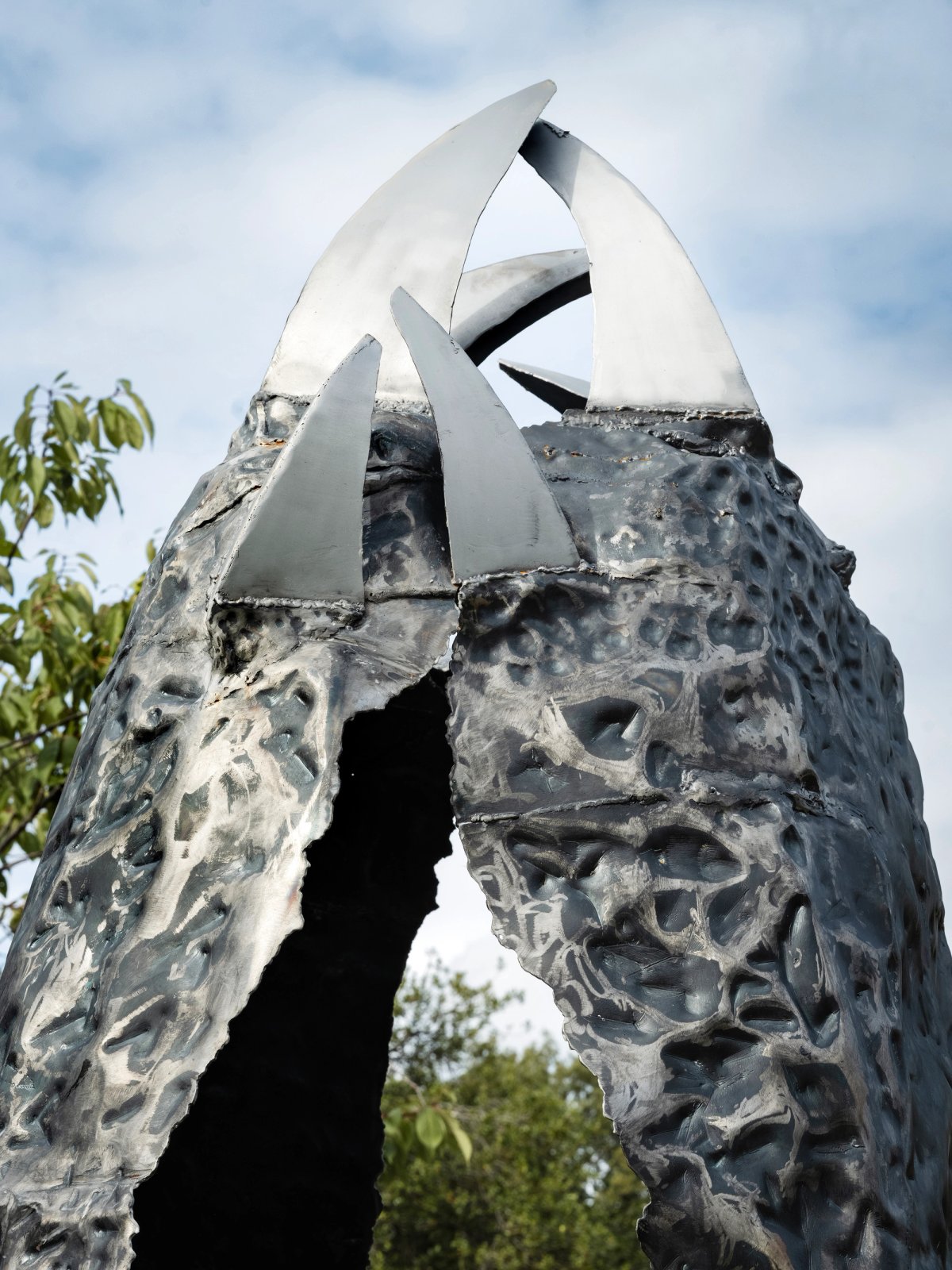
Elena Nemkova, Agony in the Garden (2026, above)
“This year we have a lot of work that leans on the imagination of the artist and the audience. This work looks like an underworld creature, a monster with really sharp claws that has come up through the Earth’s surface. But its claws are almost like in prayer. We have been putting so much of our rubbish into the Earth, and now an entity erupts from the Earth and expresses the agony that nature is in.”
David Owens
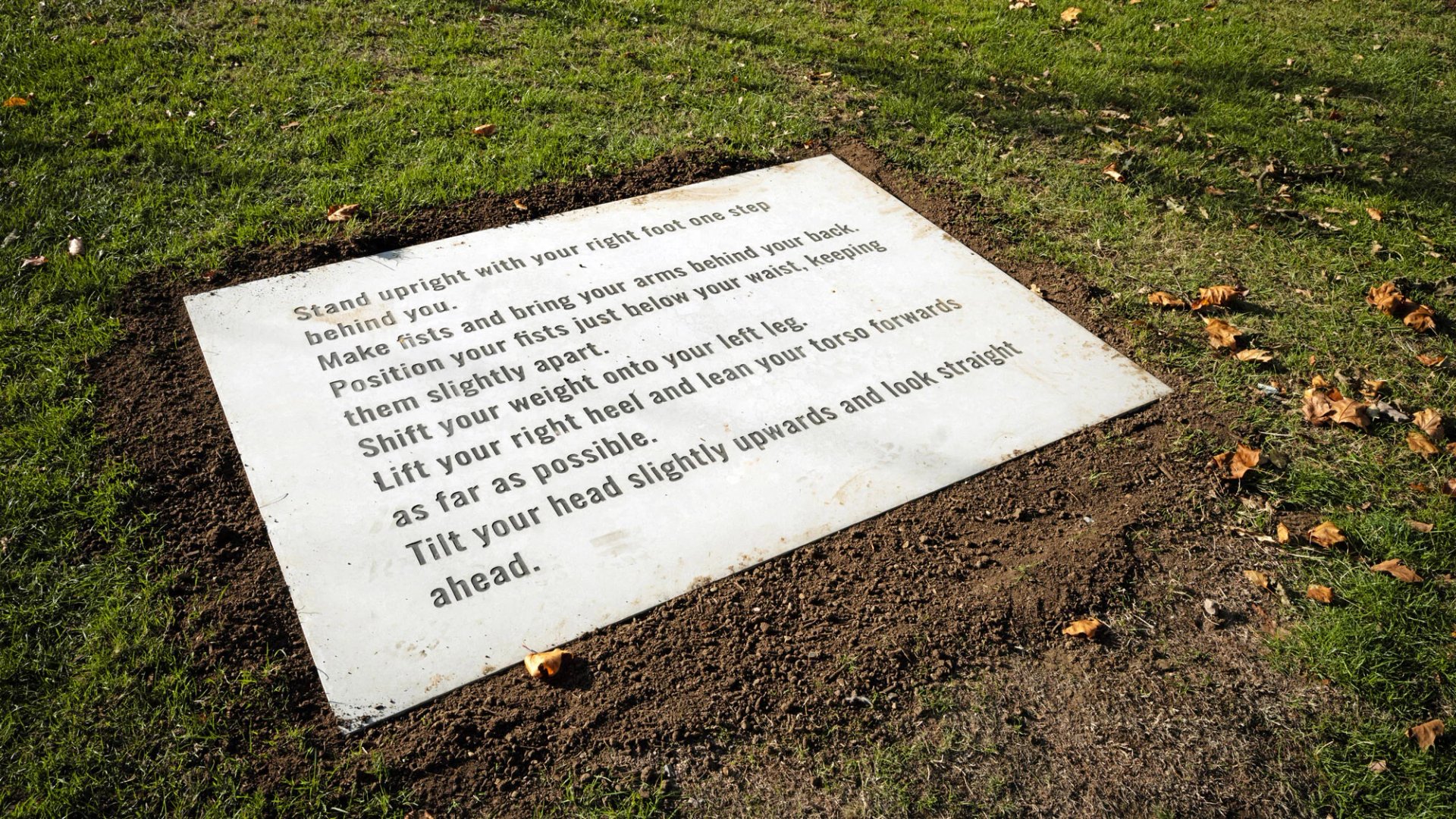
Özlem Günyol and Mustafa Kunt, Possibilities for a Sculpture (2026)
“This Turkish artist duo chose three statues that are prominently located in London and translated their gestures into instructions for the audience to follow. We don’t unveil who the statues are, but through following the instructions and gestures, audiences are able to guess the gender, the affiliation, perhaps even the social status of that individual. It brings everyone down to eye level; everyone who is enacting these statues also becomes them temporarily.”
Linda Nylind
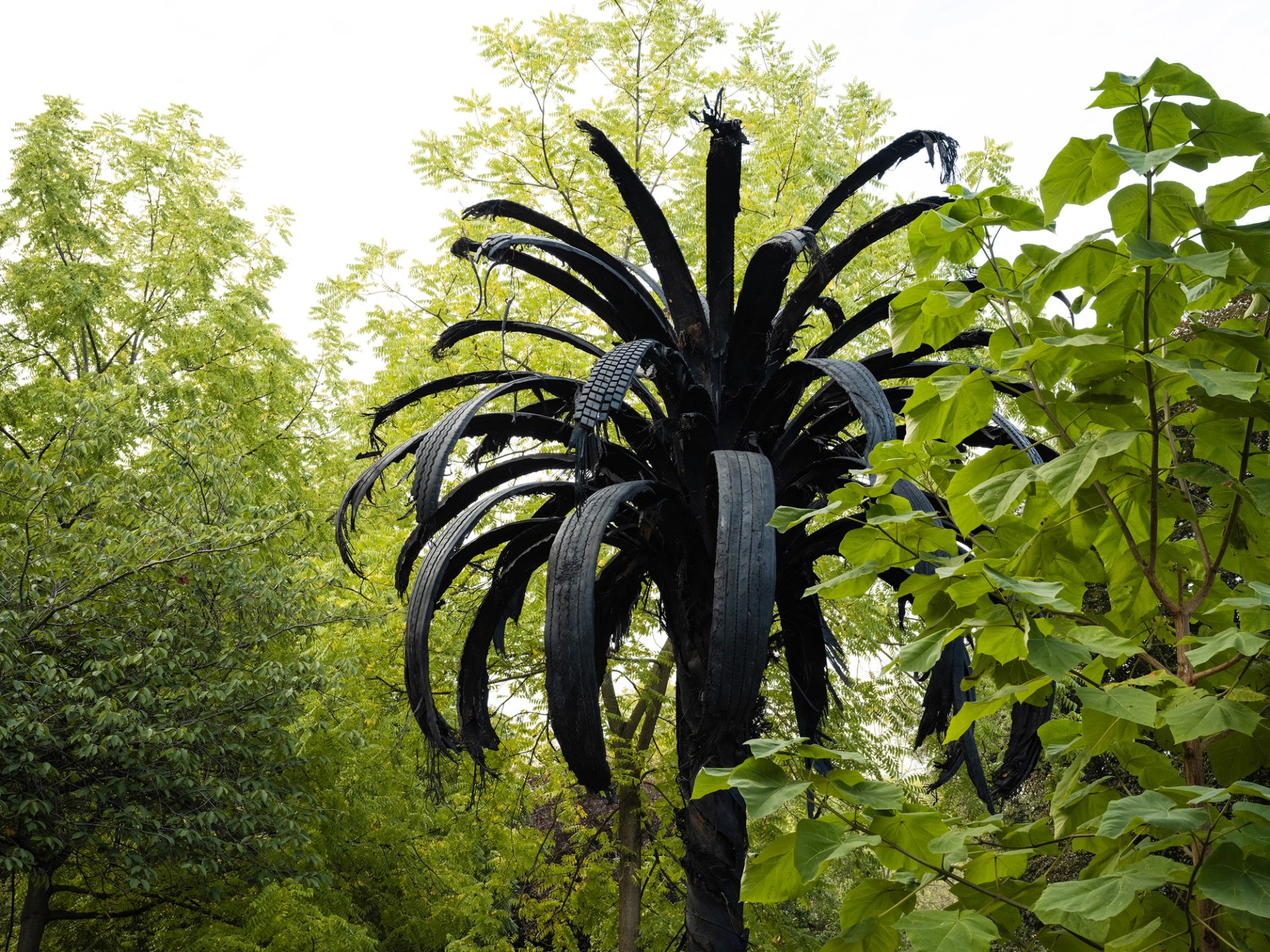
Douglas White, Black Palm (2026)
“This is from a series of work that Douglas White started in Belize, where he had a residency and started spotting exploded truck tyres on the highway. He initially thought they were dead birds or vultures—they look really organic. The Black Palm is composed of tyres that he collected in Ghana and Istanbul. It’s a kind of counter-colonialism; instead of Europe exploiting the palm and rubber tree, Douglas is going to developing countries and bringing their rubbish back here.”
Linda Nylind
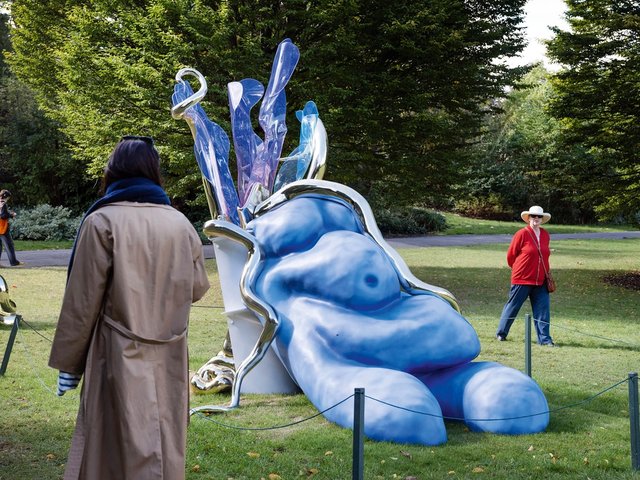
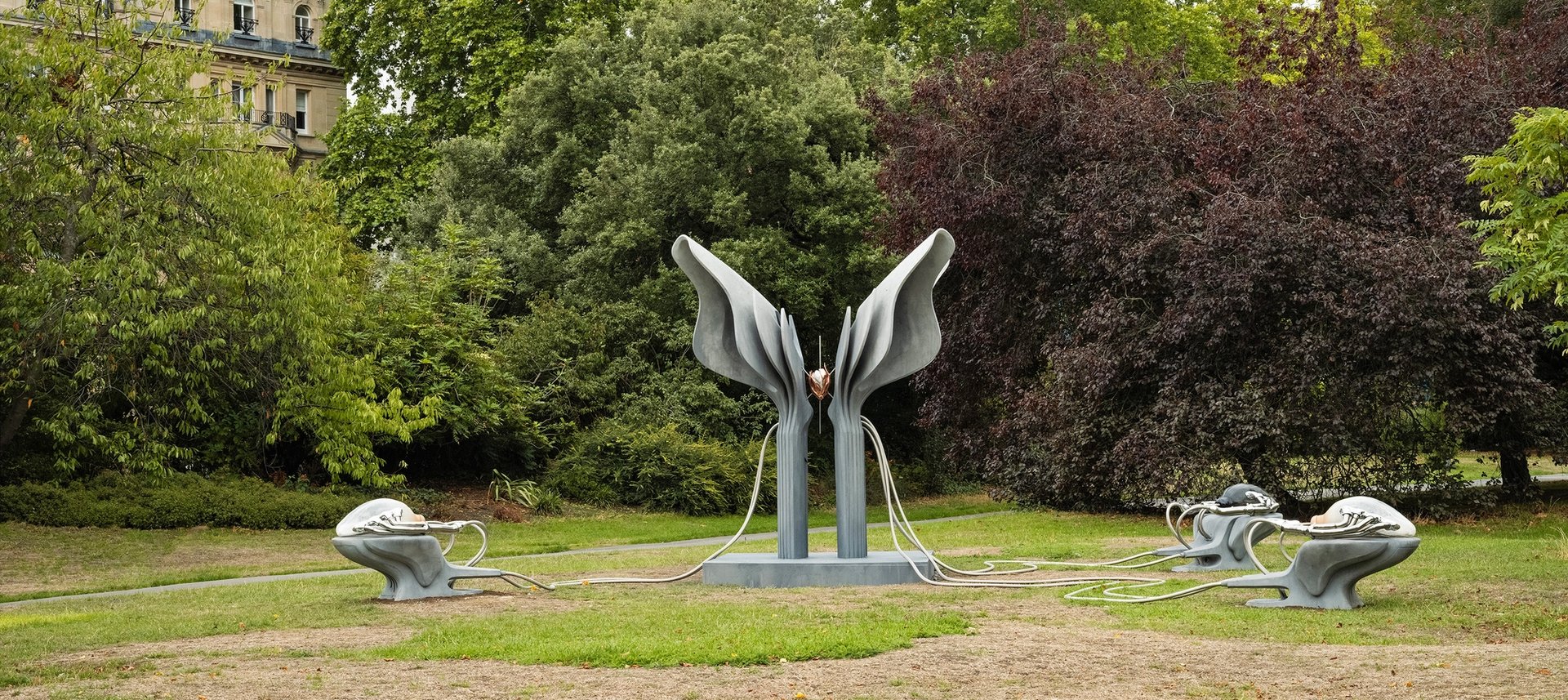
Ivana Bašić, Metanoia (2025)
“This is a revisitation of a Yugoslavian public monument called Flower Monument by Bogdan Bogdanović. The concrete, Brutalist pieces, built between 1945 and 1990, were very much pushing this idea of one body, one emotion, one nation. Bašić has made it into something that has a heart, brain and lungs. It really redefines the boundaries of sculpture—from something that is an object in and of itself to something that is much more relational.”
Linda Nylind
Conrad Shawcross, Eye of the Needle (Time Pebble (E30A13)) (2026)
“Some of the works in Frieze Sculpture are almost like portals. This one is part of a new series that Conrad Shawcross has been developing, inspired by his work with scientists looking at background radiation in the universe. It is a kind of reflection of what if the cosmos observed itself? I really like the idea that this could also be a portal that you could use to step into the wider cosmos.”
Linda Nylind
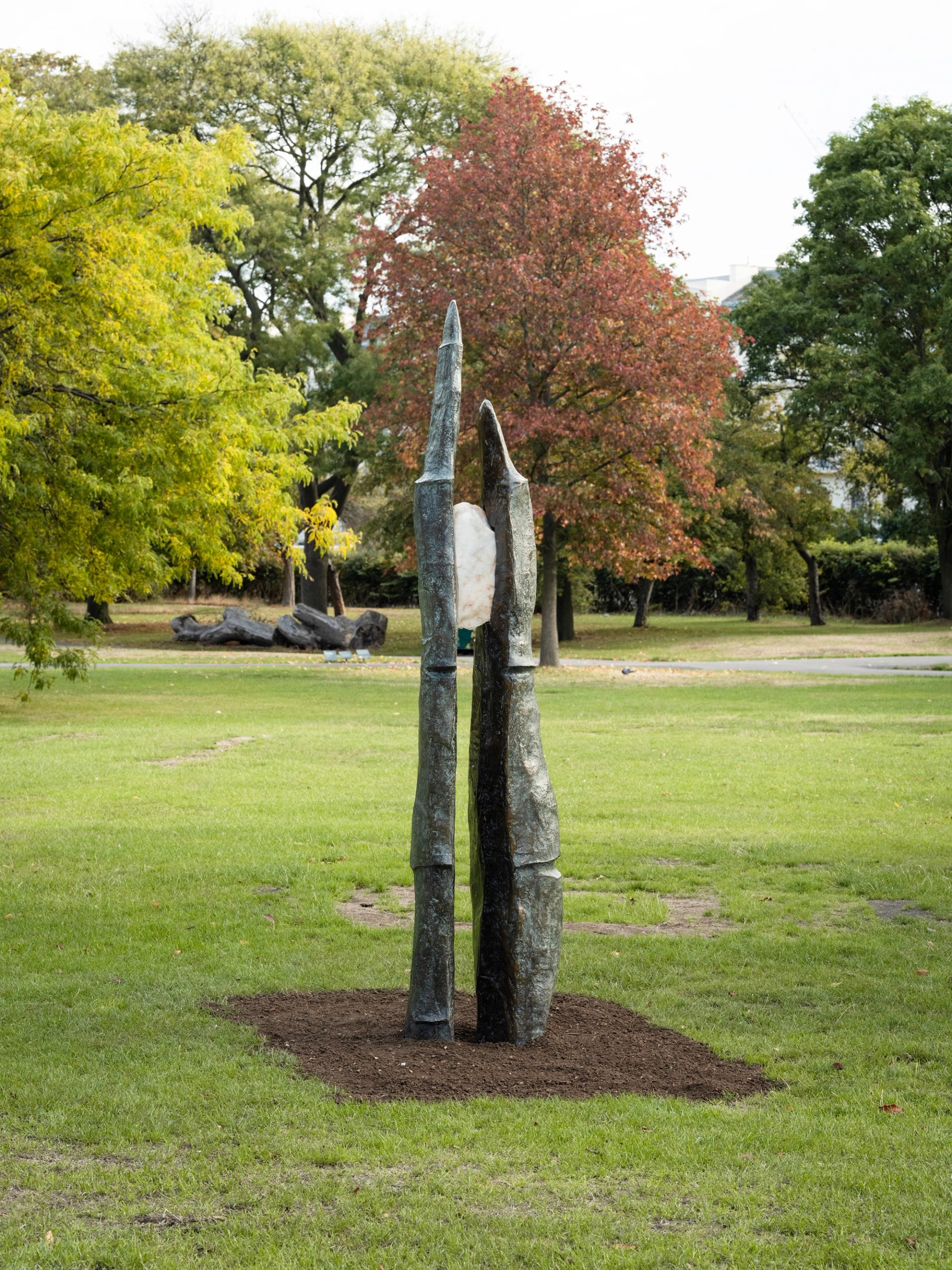
Carolina Aguirre, Held (2026)
“A quartz stone is held by two monolithic hands made of bronze. The quartz is from the artist’s family garden in Uruguay and determined the scale of the sculpture. If the hands moved, the quartz would fall; that is also about how we are being held between the Earth and the sky, but also between our ancestors and our successors. It’s a very fragile and vulnerable existence.”
Linda Nylind
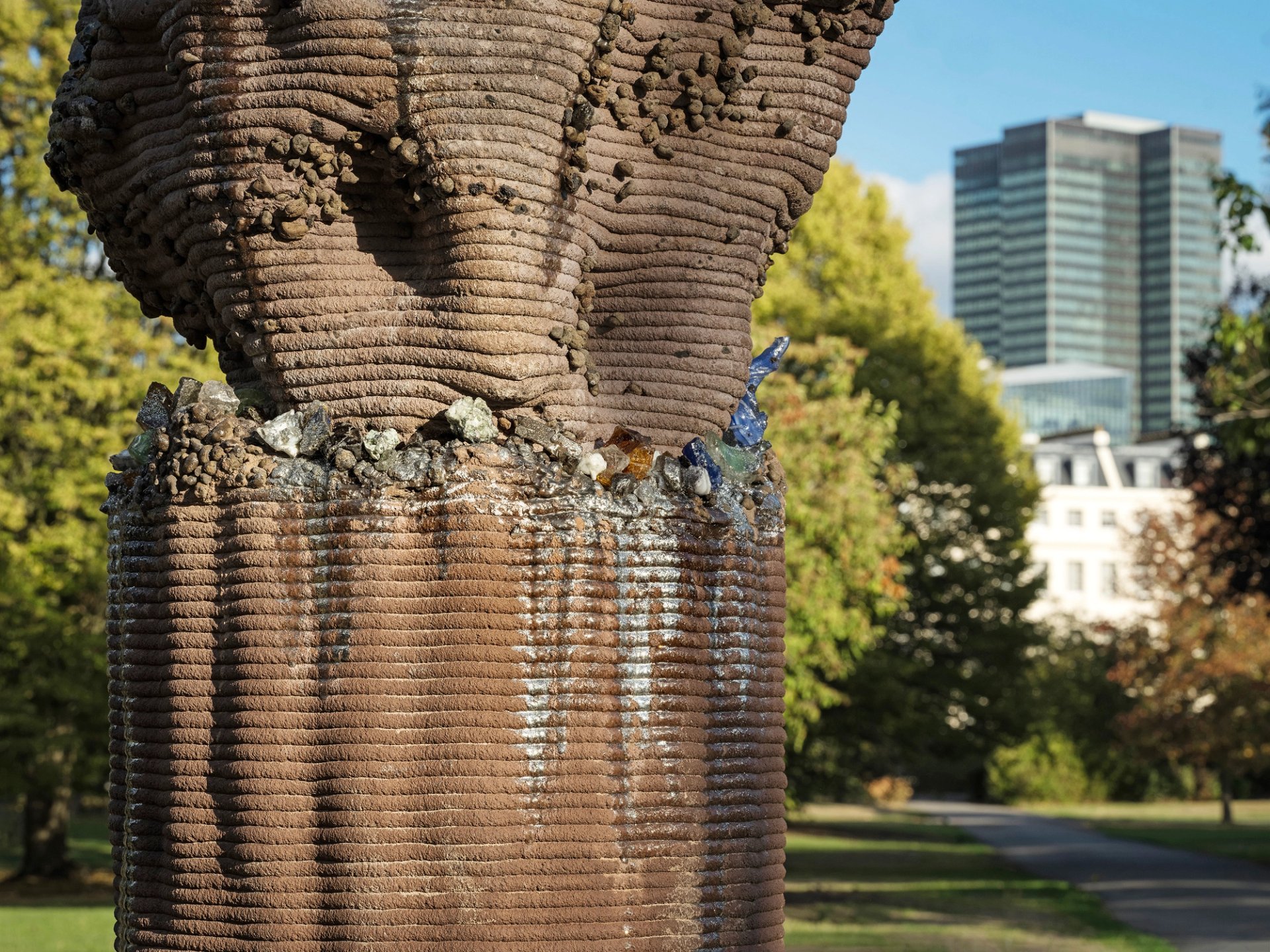
Matyáš Chochola, METEOR, BRUTALIST and MACE II (2024)
“The three pieces are from a series of 12 that reference an 18th-century Baroque sculptor, Matthias Bernard Braun, who was commissioned to contemplate the virtues and vices of that time. Matyáš reinterprets what they would be if they represented 21st-century values. They were created using an innovative 3D-printed concrete technology, combined with materials such as glass, copper powder, bronze and brass.”
Linda Nylind
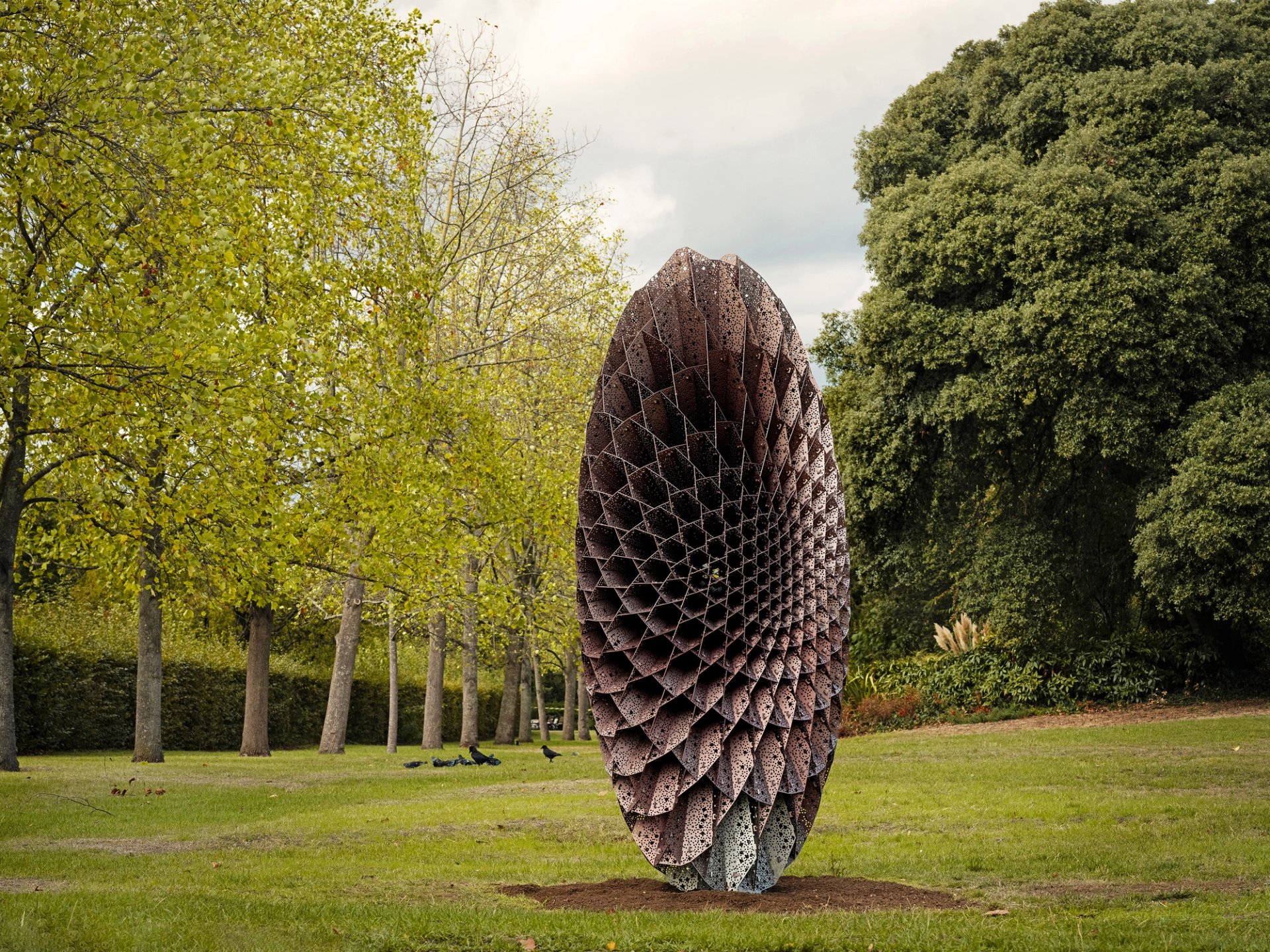
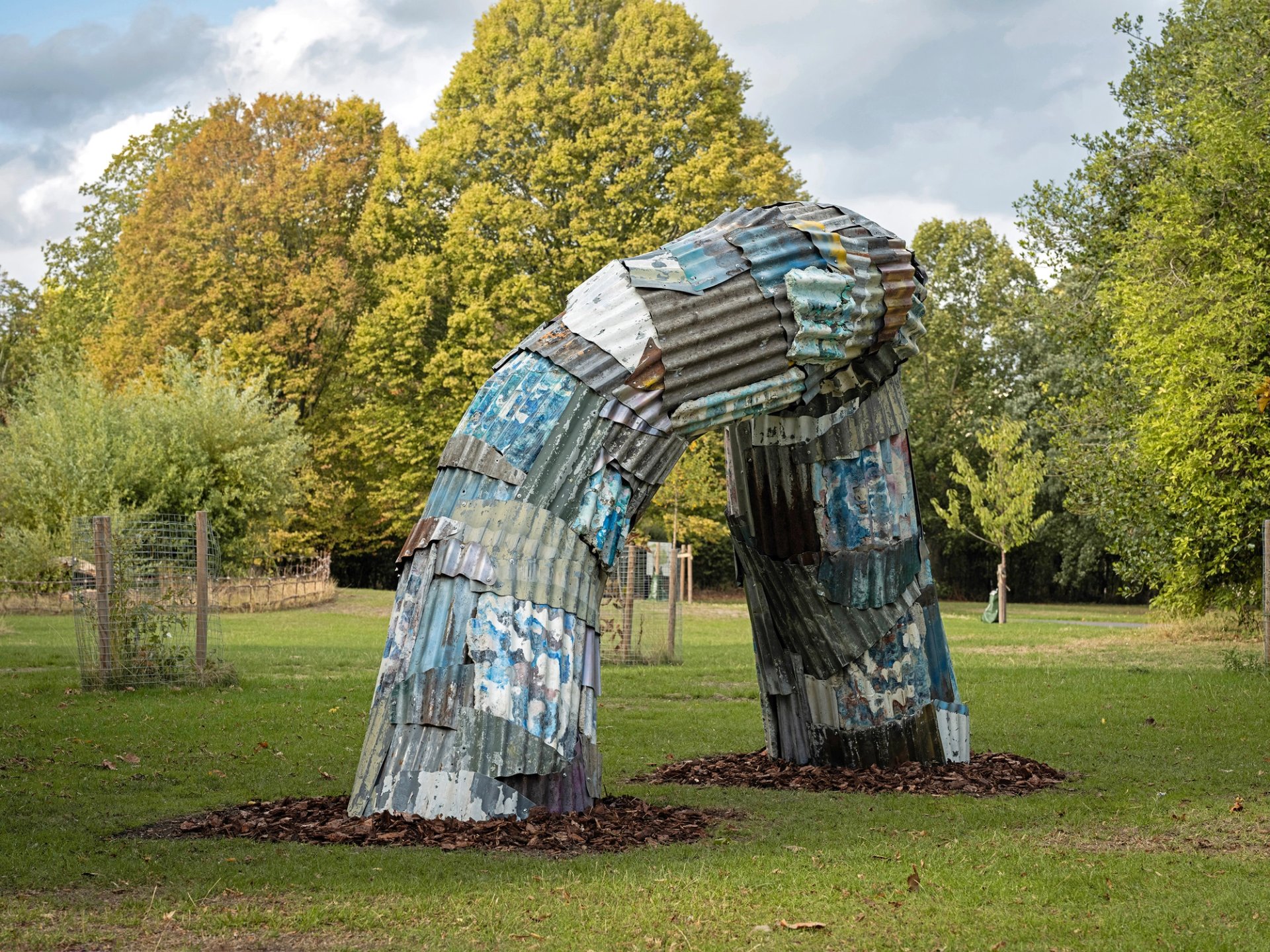
Catriona Robertson, WYRM (2026)
“Catriona Robertson collects perforated metal sheeting from construction sites and artists’ studios and has made her own material she calls papercrete. She uses the London newspaper The Evening Standard as her pulp, mixes it with concrete and perforates it to make it look alive. The work is an imaginative projection into the future, a gargantuan worm going through the Earth, digesting all this metal and concrete that we’ve been putting into the ground.”
Linda Nylind
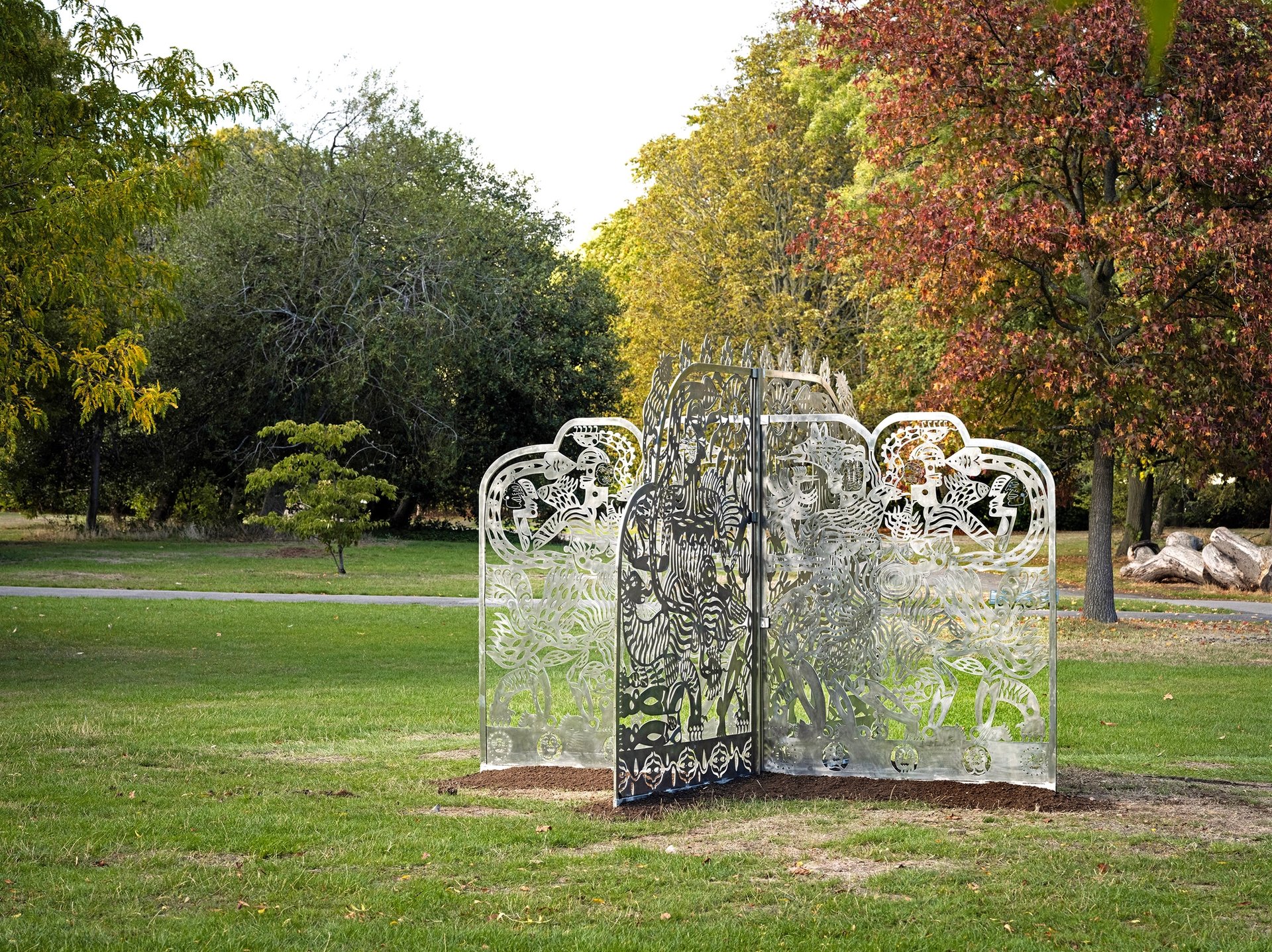
Tarini Sethi, The Sun Bathes Its Friends and Neighbours (2026)
“Tarini Sethi has her first public sculpture at Frieze. You could think about it as a drawing in the landscape, but the laser is the pencil and the stainless steel is the paper. It casts incredible shadows onto the park and is about thresholds; in Hinduism, gates are thresholds of transformation. Sethi thinks that we, as humanity, are going through a transformation where we need to coexist and co-inhabit with beyond-human species.“
Linda Nylind
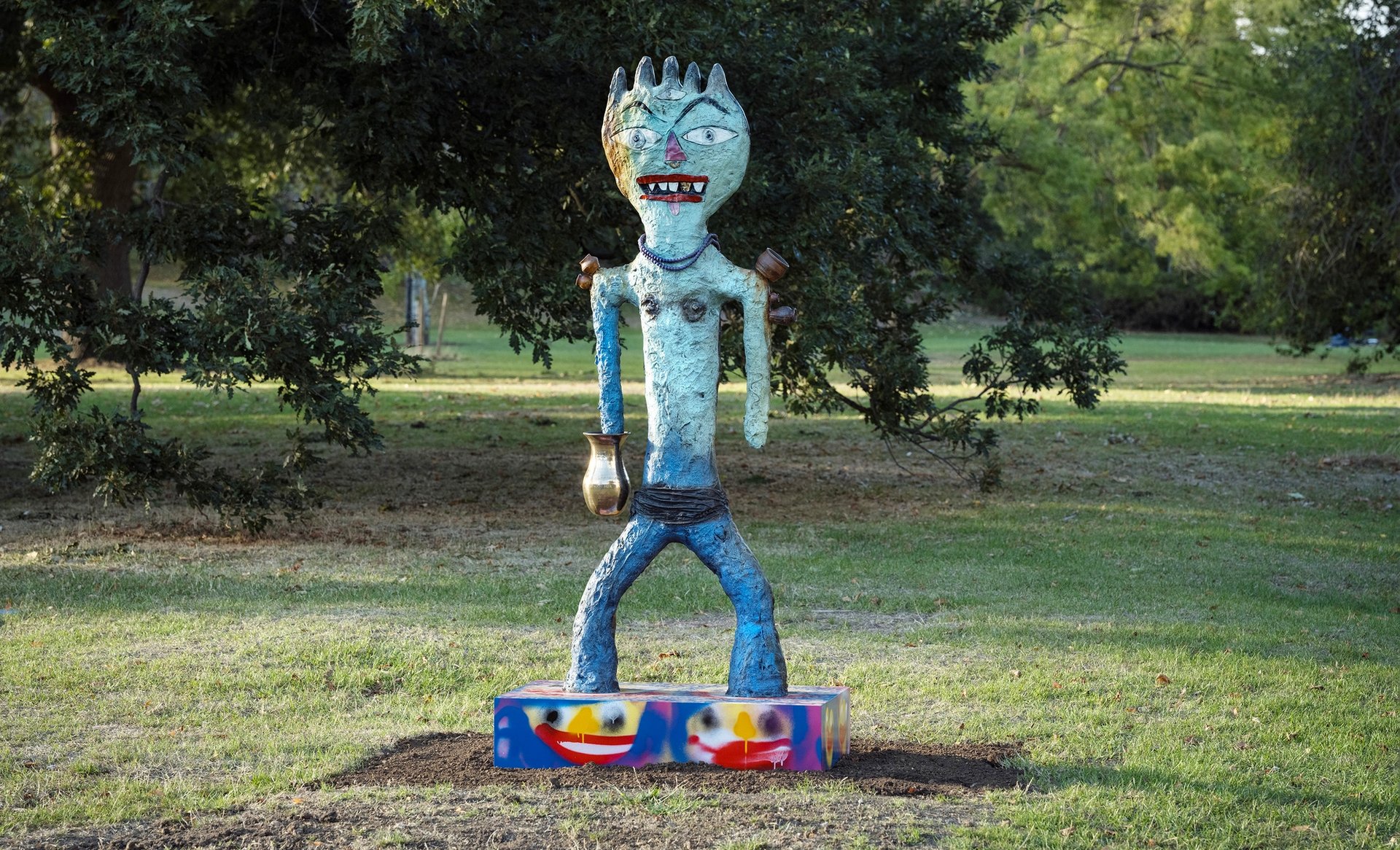
Ramesh Mario Nithiyendran, Warrior Figure (2026)
“Warrior Figure is inspired by the 800BC temples from South India, where these warrior figures appear. Nithiyendran adorns this figure with vessels that are used in the temples, as well as everyday household objects, which it carries instead of weapons. The whole piece has multiple juxtapositions of aesthetics. On one side it looks like a terracotta clay figure, on the other it is like a Basquiat-like figure. And it stands on a plinth [covered] with graffiti, making reference to popular culture.”
Linda Nylind
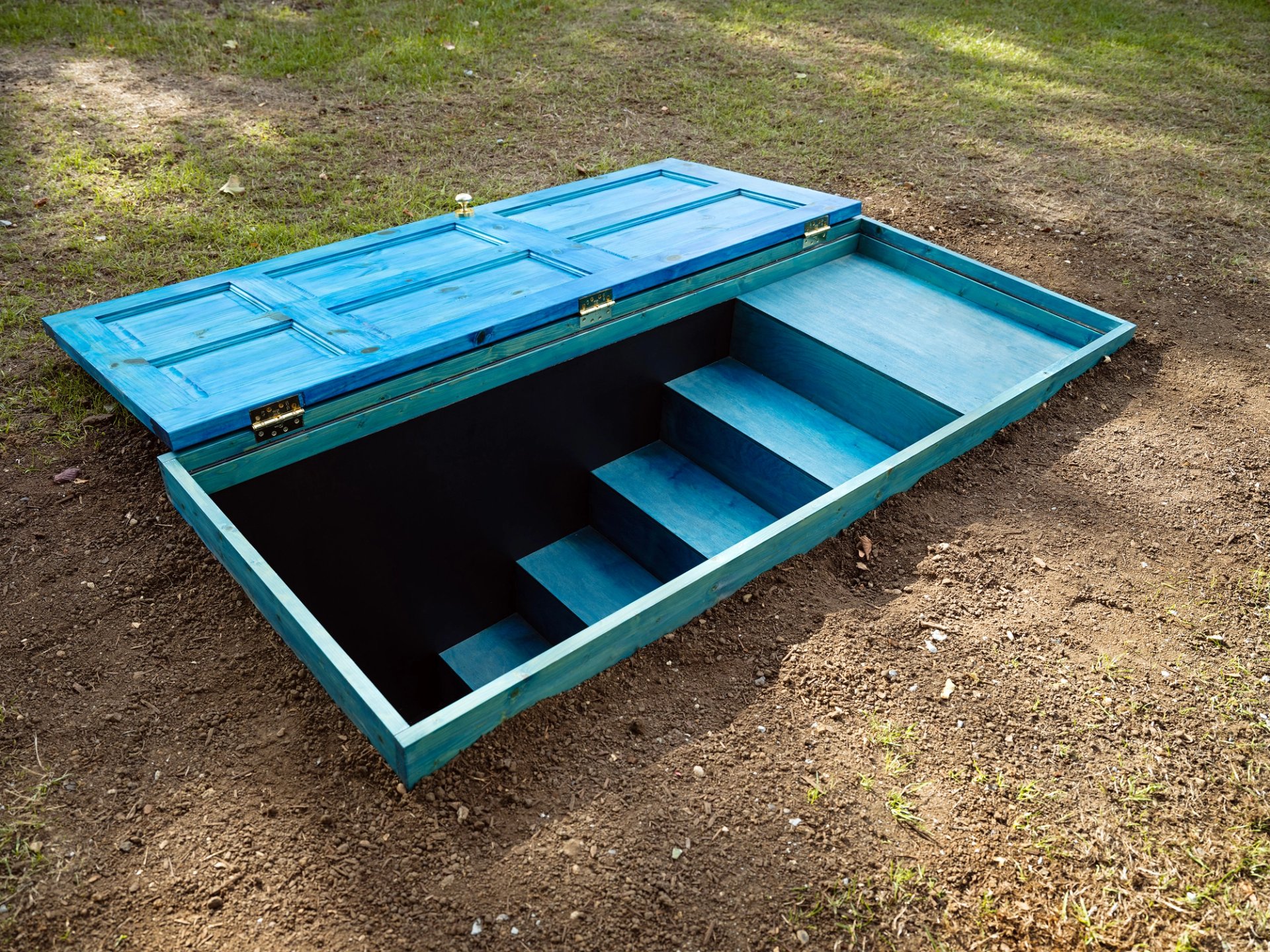
Angel Otero, Dreams and Salt (2025-26)
“Angel Otero is known as a painter; this is his first sculpture. The work talks to the duality of his existence in Puerto Rico, but also of having embedded himself in New York, studying and building his career there. The door becomes that poetic threshold that connects both worlds together. When you’re making a painting on a canvas, it could be a door to a different reality; Otero is doing that in the landscape.”
• Frieze Sculpture 2026, Regent's Park, London, until 1 November