The UK artist Chris Ofili is rewriting the canon in a new show launching in Italy, giving one of Édouard Manet’s most famous figures—Laure, the Black model depicted in Manet’s Olympia (1863)—her own place in art history.
For the latest edition of Beyond the Collection curatorial initiative at the Pinacoteca Agnelli in Turin (30 October-4 April 2027), Ofili presents new works inspired by Laure including a large-scale painting, a watercolour and a series of drawings.
“[The exhibition] means questioning who has written our history and the exclusions involved,” said Sarah Cosulich, the director of the Pinacoteca Agnelli, at a press briefing. “Art historians rewrite history in their own way but Ofili brings this imaginative approach,” the exhibition curator Pietro Rigolo tells The Art Newspaper (Rigolo is also chief curator and head of collection at Pinacoteca Agnelli).
Among the works on view is Manet’s Portrait of Laure (La Négresse), around 1862, which is drawn from the Pinacoteca Agnelli's collection and has been renamed (the piece was originally entitled La Négresse).
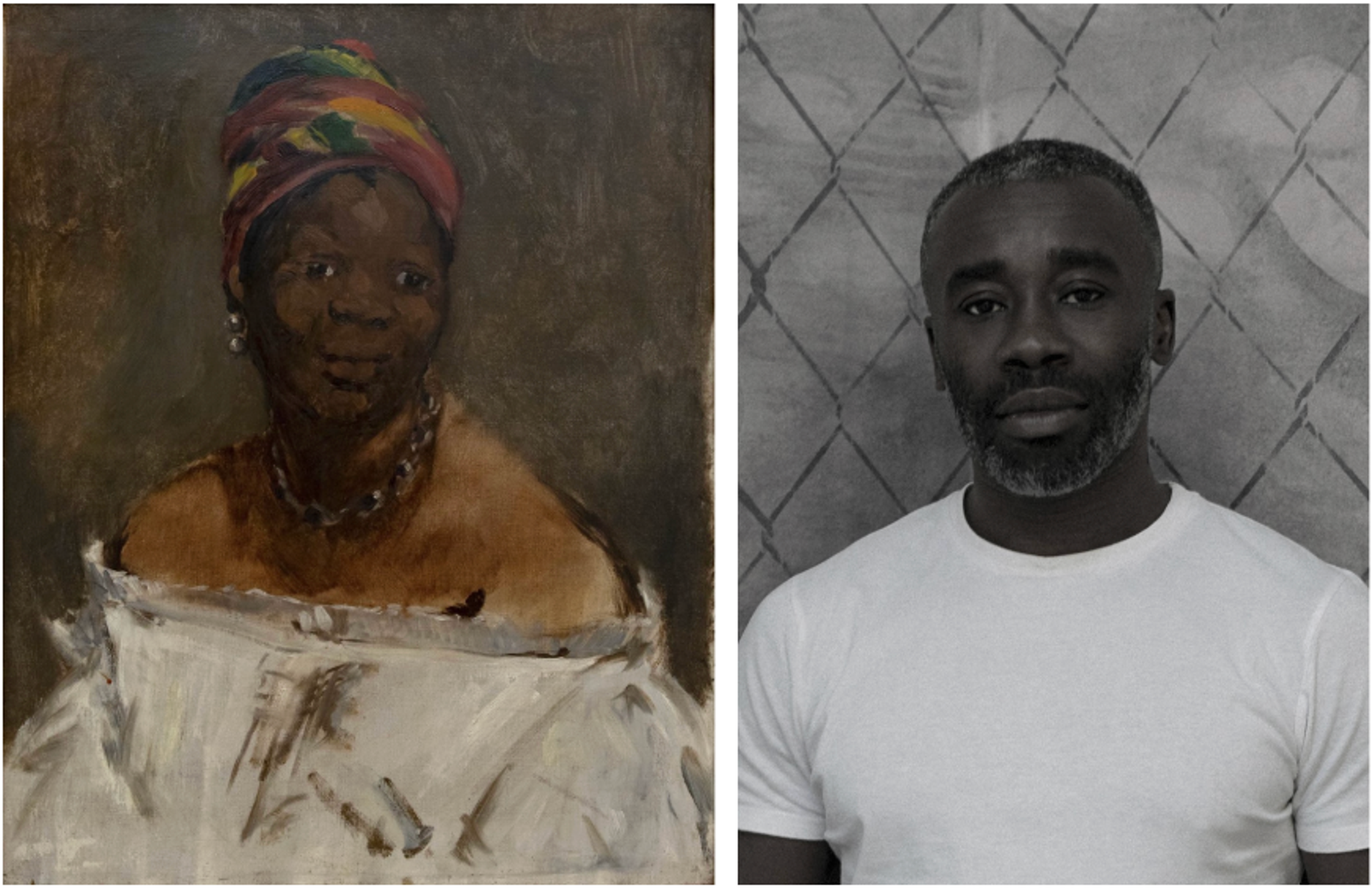
Left: Édouard Manet's Portrait of Laure (La Négresse) (1862); Right: Chris Ofili
Images courtesy Pinacoteca Agnelli; Ofili portrait by Carlos Arias
“Ofili starts with this idea of giving back to this woman her name and her identity, giving her a story and presence,” Rigolo says. “Nobody has objected to the name change [of the work],” he adds.
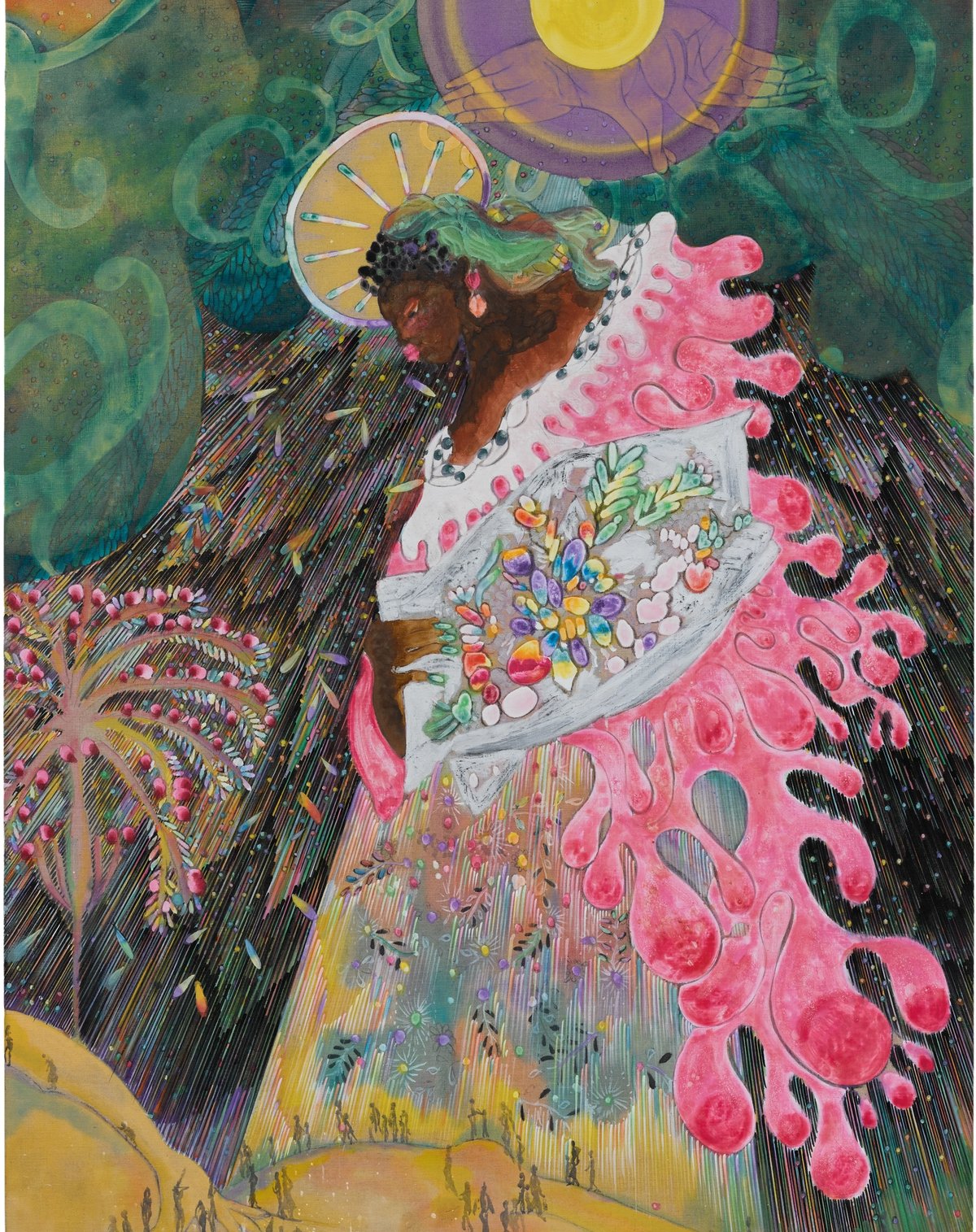
Ofili’s large-scale painting, Saint Laure (2026), is the same size as Manet’s Olympia, in which Laure brings flowers to a nude, reclining Parisian courtesan. In his piece, Ofili turns Olympia’s body into a desert landscape which runs along the base of the work, shifting “Laure from the margins to the centre”, an exhibition statement says.
For the work, “Ofili looks to Italian and religious art—in particular depictions of angelic figures and artists such as Giotto and Fra Angelico (Beato Angelico)—and he also looked to an Italian movie called Io Capitano [2023],” Rigolo adds. Io Capitano follows two young Senegalese cousins on their journey from West Africa to Italy. “There is a debate in Italy about migration—this [Ofili] project is grounded in what is happening in Italy now,” Rigolo says, referencing the ongoing political issue polarising European countries. Ofili bases his depiction of Laure in particular on the film’s unnamed character known as “woman in the desert”.
Ofili’s new works also draw on the research of Denise Murrell, a curator-at-large at the Metropolitan Museum of Art in New York. Murrell has reshaped the role of the Black female figure in Modern art in her studies, as in the exhibition Posing Modernity: The Black Model from Manet and Matisse to Today, which opened at Columbia’s Wallach Art Gallery in 2018. “From the outset, Ofili said he wanted to involve Murrell [who contributes to a scholarly booklet accompanying the show],” Rigolo says.
The new season of exhibitions at the Pinacoteca Agnelli also include a retrospective dedicated to the 20th-century Greek-Italian painter and polymath Alberto Savinio, the brother of Giorgio de Chirico who played a fundamental role in the development of Metaphysical art (30 October-4 April 2027).
Next year, Ofili’s largest solo exhibition in London since his Tate Britain show in 2010 will open at the Hayward Gallery (7 September-9 January 2028). It will survey three decades of his practice and feature key works from the 1990s alongside his latest paintings.
- Laure. Chris Ofili & Édouard Manet, Pinacoteca Agnelli, Turin, Italy, until 4 April 2027