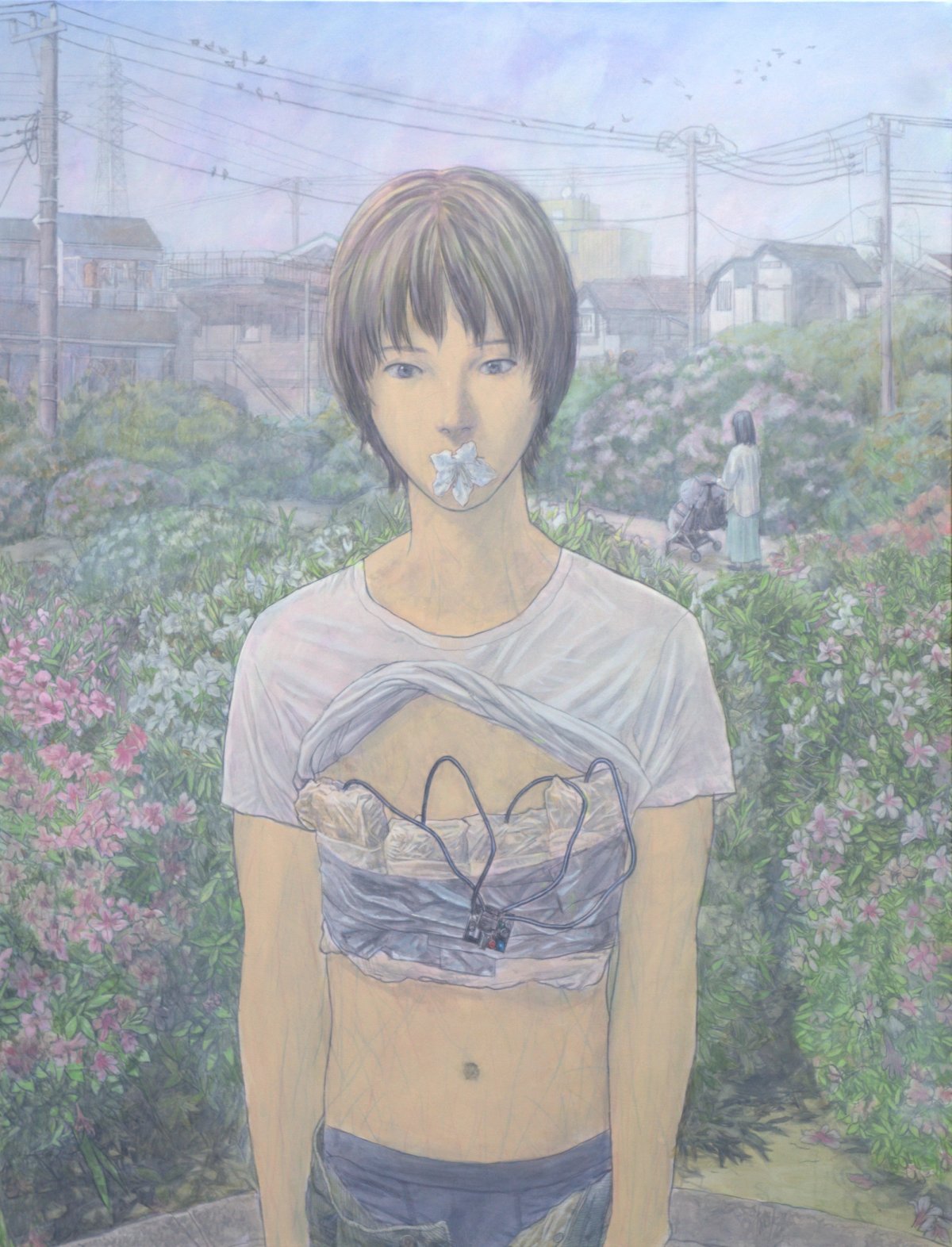
Utanhole, KaiKai Kiki Gallery, ongoing
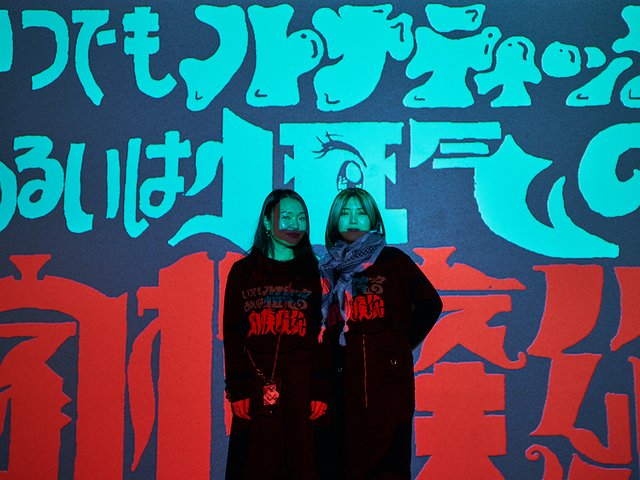
Rising Japanese artist Utanhole creates dreamlike, pastel-hued paintings that blend cinematic suspense with manga-style precision. Born in 2001, she graduated from the Tokyo University of the Arts in 2025. She characterises her signature style as “soft violence”, a thematic concept defined by intense emotional and visual contrasts. Utanhole’s paintings depict calm young figures with soft colours, delicate forms and innocent faces set against chaotic scenes of collapsing cities, weapon-laden spaces and deadly explosions, highlighting the stark contrast between innocence and chaos. Her work draws on chūnibyō, a Japanese term for intense, dark adolescent fantasies. Rather than shocking, the Tokyo-based artist’s solo gallery debut features new large-scale paintings and a selection of drawings that explore the inner coping strategies and desires characteristic of contemporary youth culture.
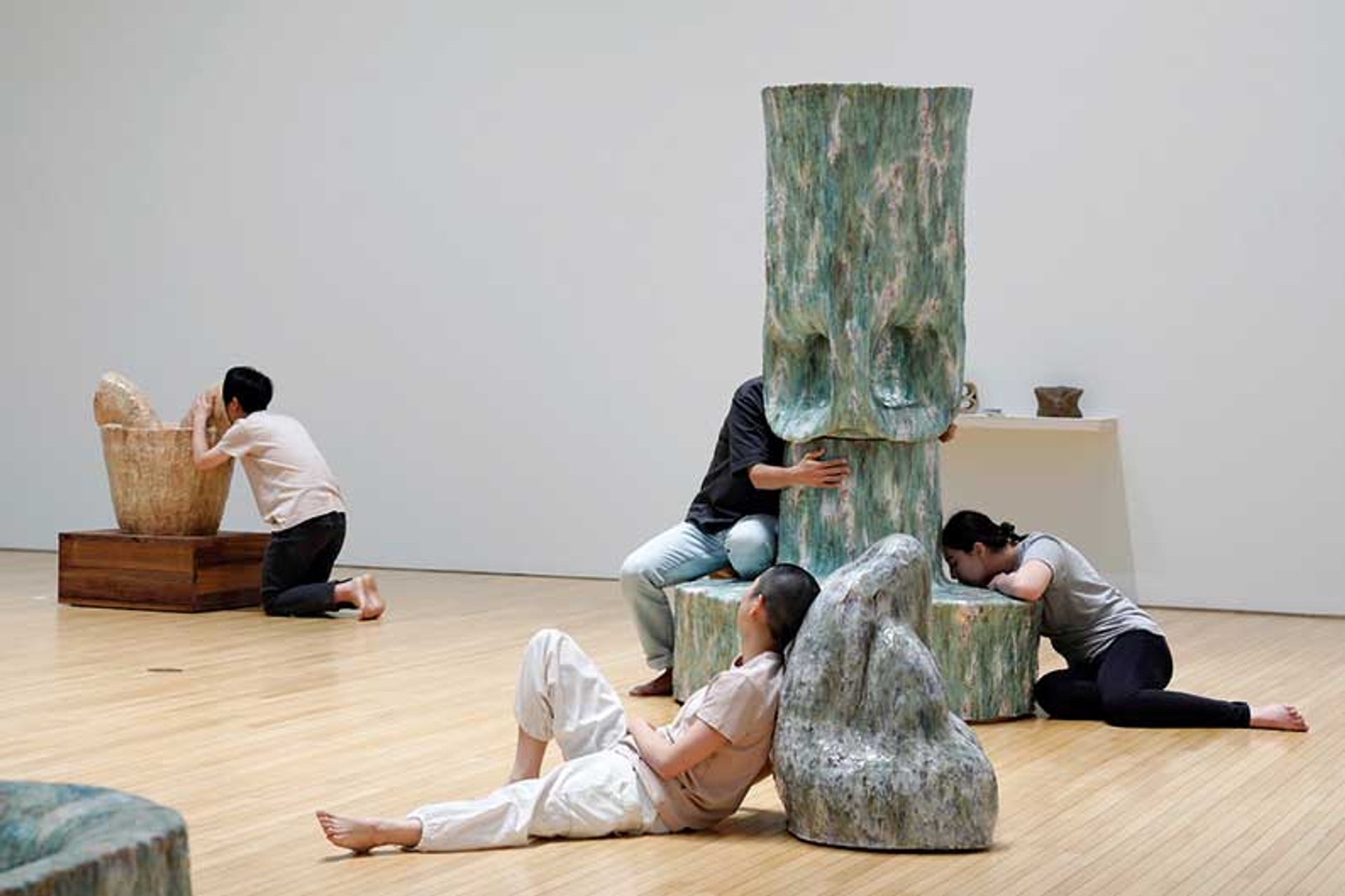
A performance of Akane Saijo’s Double Touch (2025), which will be shown at the Tokyo Opera City Art Gallery Photo: Takeru Koroda
Seeds and Roots: How to Cultivate a City, Tokyo Opera City Art Gallery, until 20 December
Exploring how city residents can re-engage with nature in an increasingly artificial environment, this group exhibition uses art to investigate the new ecosystems thriving in the literal cracks of asphalt, including non-native species, self-sustaining plants and organisms that coexist with concrete and plastic. Core themes include reshaping urban nature, revitalising bodily sensations and integrating cross-disciplinary views. As human activities disrupt ecosystems, the boundary between natural and artificial blurs. The exhibition promotes coexistence with these changes rather than resisting or reverting to the past. Artworks are metaphorical seeds inspiring visitors to imagine roots reconnecting with the earth and senses. The show includes artists such as Tomoko Azumi, Yasutake Iwana, Akari Kaneko, Akiko Ikegami, Yoko Daihara, Yoji Ohno and Akane Saijo, who use everyday activities—living, wearing, eating and excreting—to reimagine our environment.
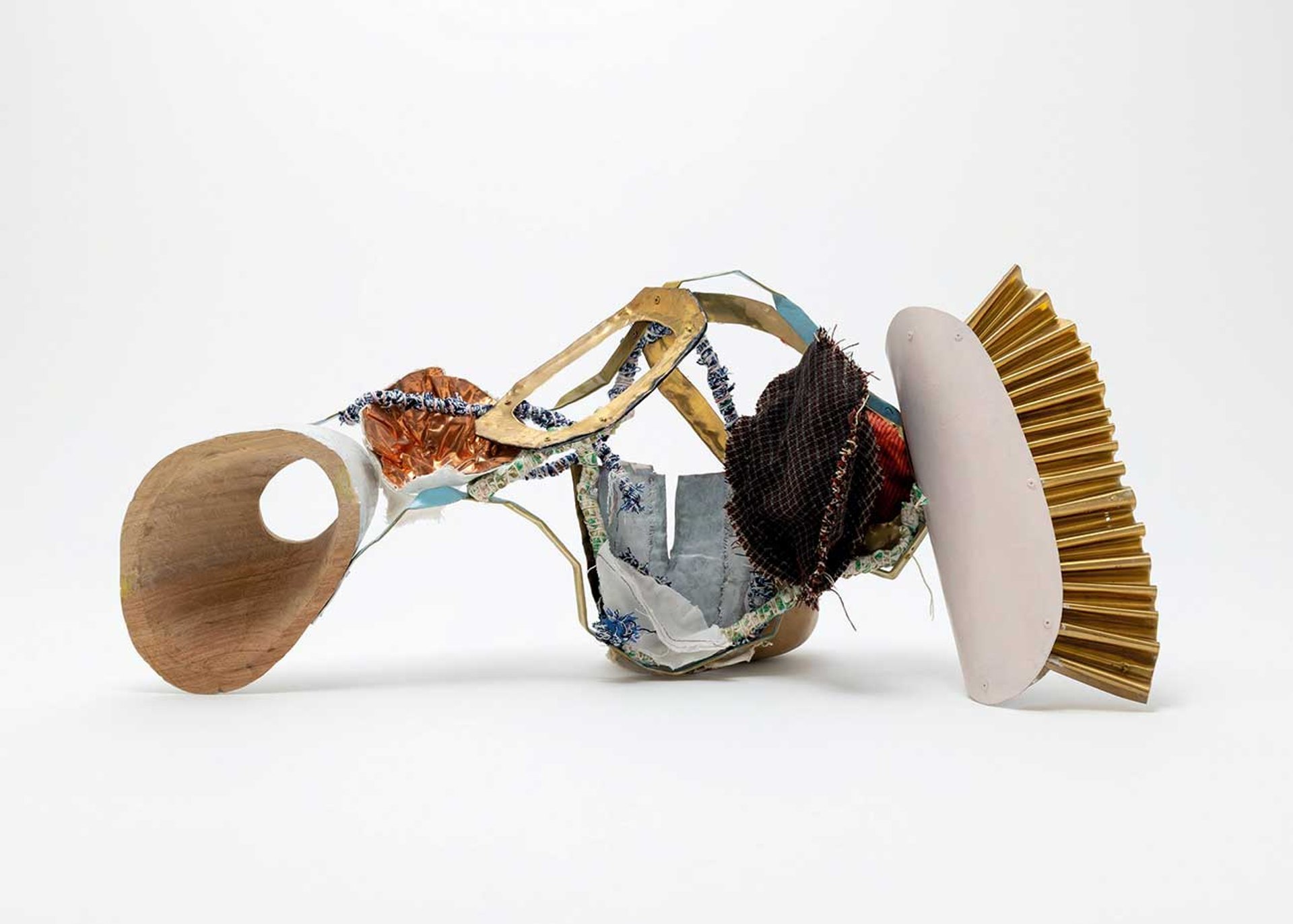
Miho Dohi makes assemblages from everyday items with industrial parts,
such asbuttai 113 (2025). This is her fourth solo show at Hagiwara Projects Courtesy the artist
Miho Dohi, Hagiwara Projects, until 12 December
A celebrated Japanese artist, Miho Dohi is internationally known for her small, intricately layered, tactile abstract sculptures, which she calls buttai, a Japanese term combining the characters for thing and body. She produces enigmatic assemblages that creatively combine common natural materials with industrial parts, relying on intuition, experimentation and physical activity rather than pre-planning fixed forms. During creation, she repeatedly flips her pieces to break away from a single viewpoint. The process is complete when an original, unexpected structure naturally emerges from the chaos. Returning to the gallery for her fourth solo show, the Kanagawa-based sculptor presents new works in materials that seem heavy yet hang lightly on walls or from the ceiling, as if floating in space.
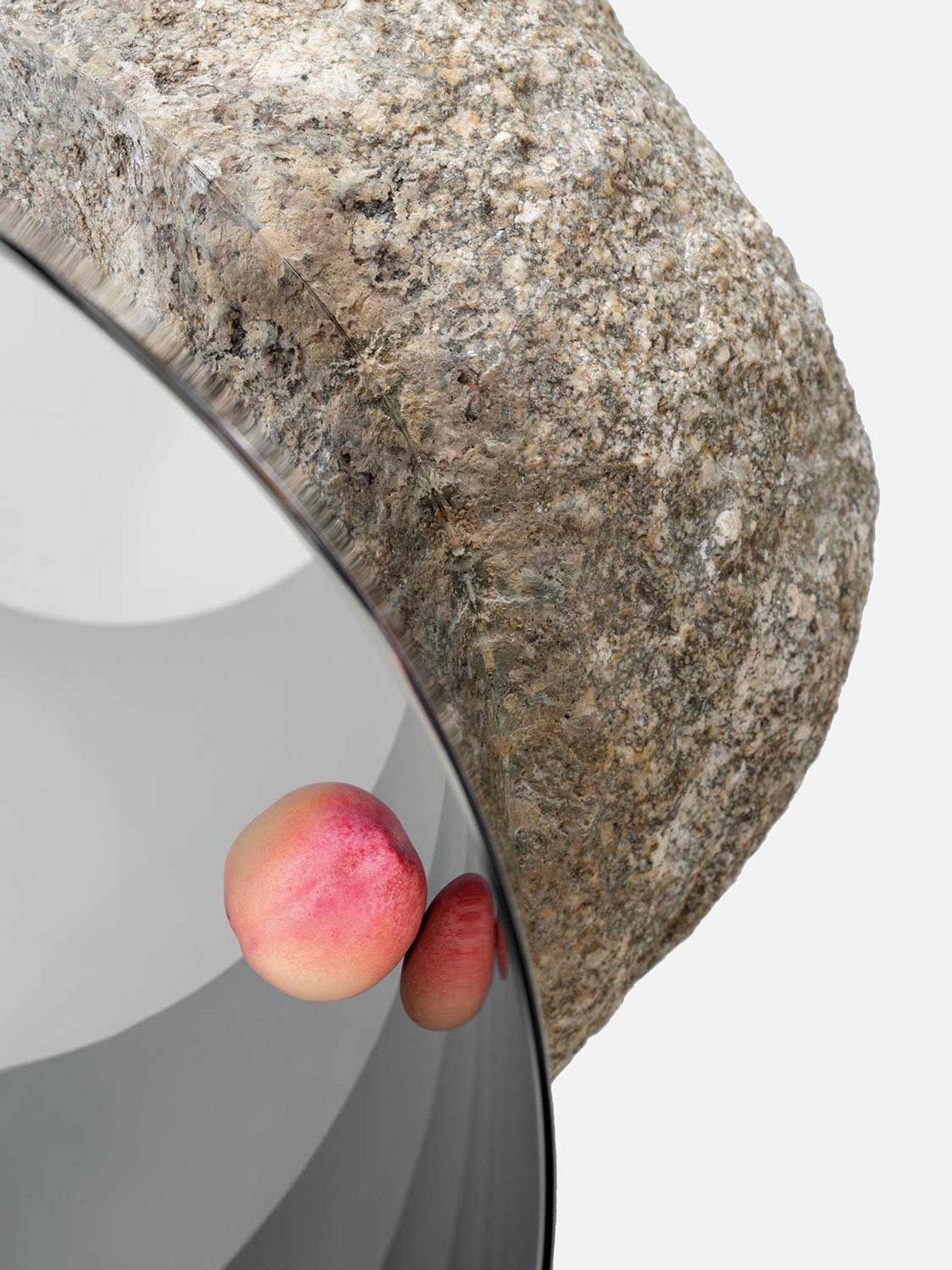
Alicja Kwade’s Tunnel-Tell (Ceci Sera Persicum) (2026) is made from granite, stainless steel, bronze and concrete Photo: Roman Marz; courtesy the artist and Pace Gallery
Alicja Kwade: La Pêche miraculeuse, Pace Gallery, until 25 December
Alicja Kwade is a conceptual artist acclaimed for her interdisciplinary work across various media, all aimed at questioning human perception. The Polish-born, Berlin-based artist is recognised for her methodical, almost scientific approach to abstract existential questions. She uses natural materials and everyday objects to explore deep philosophical and scientific ideas, including space, time, gravity and social constructs. Kwade’s first solo show at Pace Tokyo explores empty space—the space within and between objects—and the unseen, unexperienced, unknowable in-between. Through sculptures and works on paper featuring peaches, clocks, tunnels, stones and clock hands, the exhibition addresses what constitutes the world, the transitional space between objects, and the viewer’s reflections on existence.
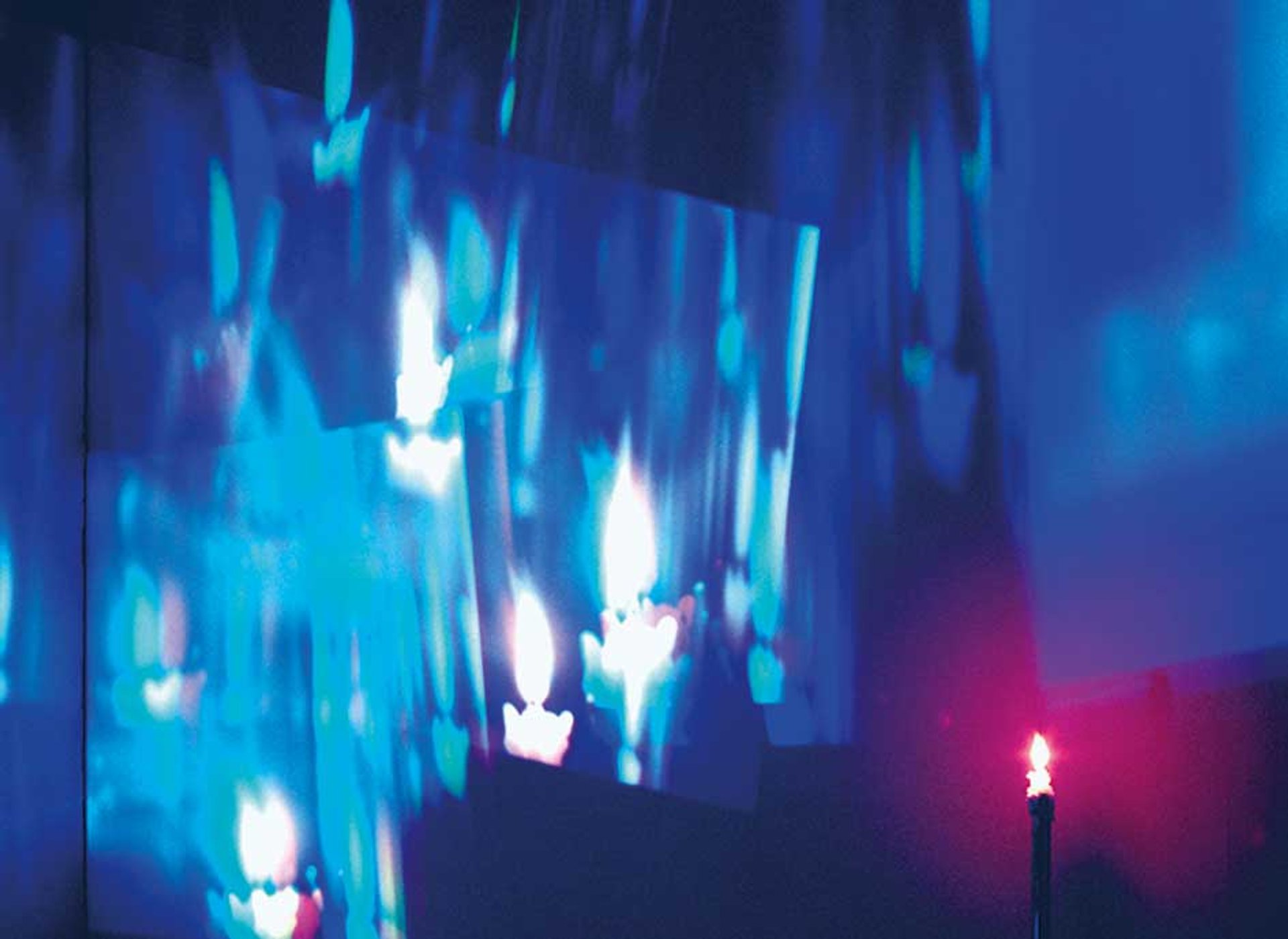
Nam June Paik’s New Candle (1993) is part of an exhibition marking 20 years since his death Courtesy Watari-um
Nam June Paik: The 20th anniversary of his passing, Watari-um, the Watari Museum of Contemporary Art, until 23 November
Known as the “father of video art”, Nam June Paik trained as a classical pianist and musicologist before turning to visual art. A key figure in the 1960s Fluxus avant-garde movement, the late South Korean artist reshaped Modern art by using television sets, broadcasting networks and video recording devices as materials for sculpture, performance and installation. Drawing on the museum’s extensive collection, the retrospective examines how his innovative ideas—combining technology, Eastern philosophy and nature—remain relevant in today’s world of smartphones and AI. Rather than viewing him solely as a tech-focused artist, the show highlights Paik as both a performer and a deep thinker. The exhibition’s Japanese title Jugemu comes from a traditional rakugo story about endless life, symbolising the idea that Paik’s art and impact will endure forever.