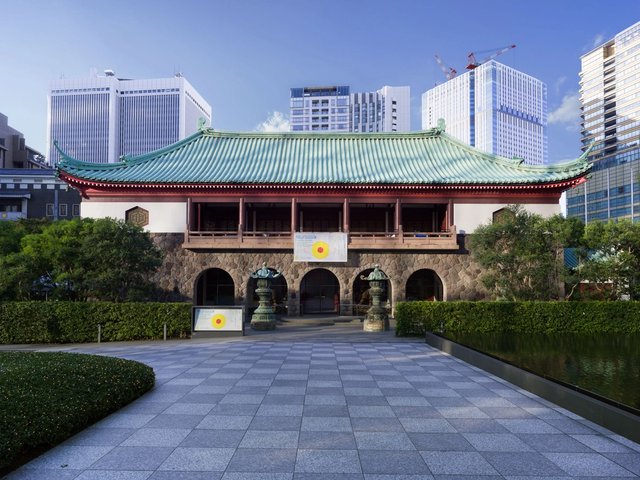
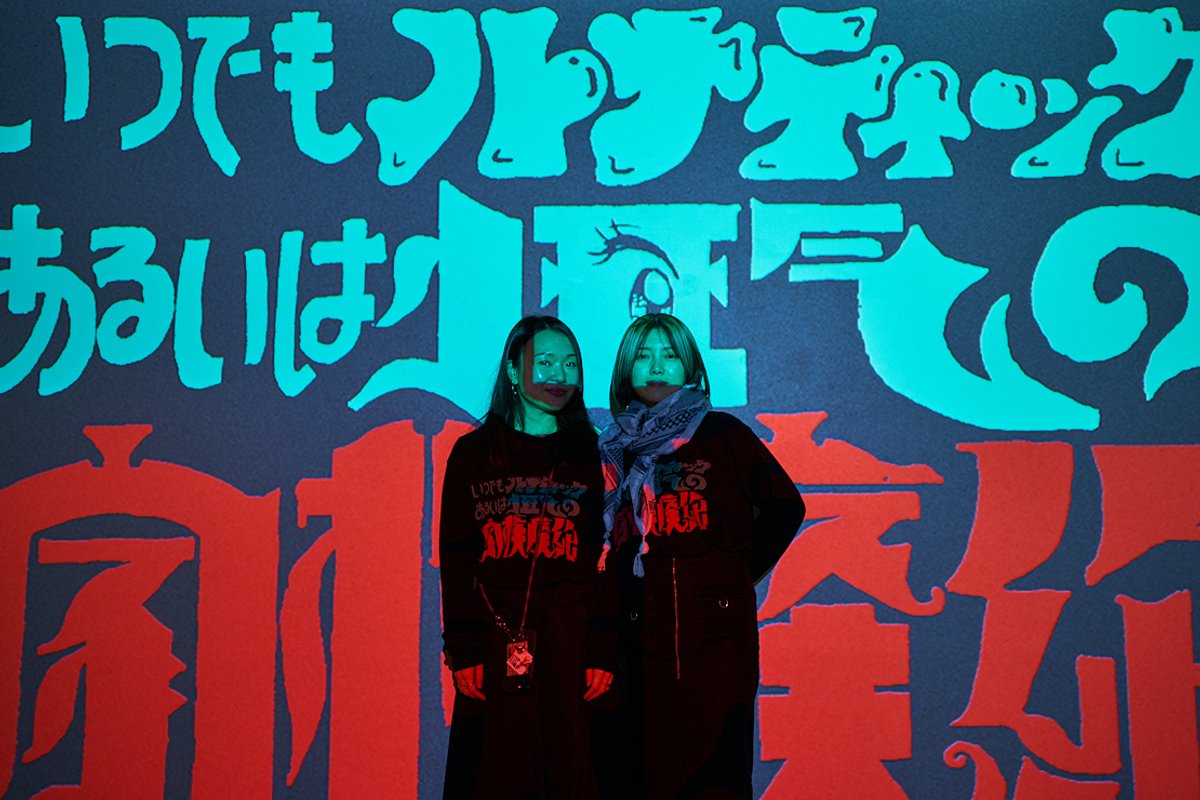
AWT Focus launched in 2023 as Art Week Tokyo’s centrepiece exhibition platform. Last year it took place at the Okura Museum of Art, where Adam Szymczyk brought together more than 50 artists for What Is Real? For 2026, the format is being radically reconfigured. In collaboration with Curated by, the Vienna gallery festival, Art Week Tokyo has invited curators to organise ten exhibitions across ten participating galleries and art spaces around the city.
The shift brings AWT Focus closer to the structure of Art Week Tokyo itself. Unlike an art fair, the annual event has no central venue: its network of museums and galleries is dispersed across the metropolis, with free shuttle buses connecting participating venues during the week. Running from 4 to 8 November, this year’s fifth full edition will bring together a record 56 museums and galleries.
“From the start Art Week Tokyo was conceived of as an event that would evolve in dynamic response to the city,” says Atsuko Ninagawa, the event’s co-founder and director. The multi-venue AWT Focus, she says, offers “another way of engaging the city and its diverse audiences”. Rather than organising the programme around a single curatorial proposition, “the idea is to bring multiple worldviews to Japan”.
Those worldviews take varied forms. Among the ten projects are Polish curator Maria Brewińska’s presentation of Japan-born, Poland-based artist Koji Kamoji at Take Ninagawa gallery; Ekow Eshun’s presentation of British-Sierra Leonean artist Julianknxx at the Space Un arts and culture venue; and New York-based curator Augusto Arbizo’s intergenerational exploration of painting at Yutaka Kikutake Gallery. Elsewhere, curators Greg Dvorak and Kenji Ono draw on the contrasting post-war histories of eastern and western Tokyo for the latest edition of the recurring exhibition series The Constitution of Japan, at Mujin-to Production, with a second site at Aoyama | Meguro.
The city becomes part of the show
For Multiple Spirits, the feminist collective founded by Mai Endo and Mika Maruyama, the dispersed format allows the character of the city itself to enter the programme. “Even within the same city of Tokyo, each place and space has a completely different face,” the collective says. “The location, surrounding environment and flow of people differ from venue to venue”, allowing each exhibition to take shape in relation to its surroundings. The collective also sees potential in moving away from a single curatorial voice towards a more open structure in which “different perspectives by many practitioners” can co-exist.
Multiple Spirits’s exhibition at Waitingroom, Patchwork of Ruffled Wings, draws together zines, textiles and other works through what the collective calls a “vine-like archive”, connecting “girls’ culture, queer culture, artistic movements, underground culture and social movements”. Rather than arranging these histories into a linear genealogy, Multiple Spirits is interested in how cultures are interrupted, inherited or grafted onto others, and how they are shaped by changing social conditions, taboos and forms of resistance. Art Week Tokyo, it suggests, can itself become a site where people with different backgrounds and practices meet, allowing different perspectives to connect while retaining their complexity.
The collective’s own history also complicates any simple division between the “local” and the “international”. Multiple Spirits was founded in Austria and continues to work between Vienna and Tokyo, collaborating with people across national, racial, ethnic and gender backgrounds. Through AWT Focus, the collective hopes to show that the Tokyo art scene encompasses “alternative and diverse activities” that extend beyond any single urban context and are connected through multiple networks.
Looking at Tokyo from elsewhere
For the Seoul-based curator Jaemin Shin, meanwhile, working with Tokyo-based artist and poet Natsumi Aoyagi offers another way of reading the city. Shin first worked with Aoyagi for the 2025 exhibition Patchwork! at the WilloW in Seoul. Her AWT Focus exhibition, Possible Words, Possible World, at Misa Shin Gallery, brings together two multimedia installations concerned with systems of recording and ownership.
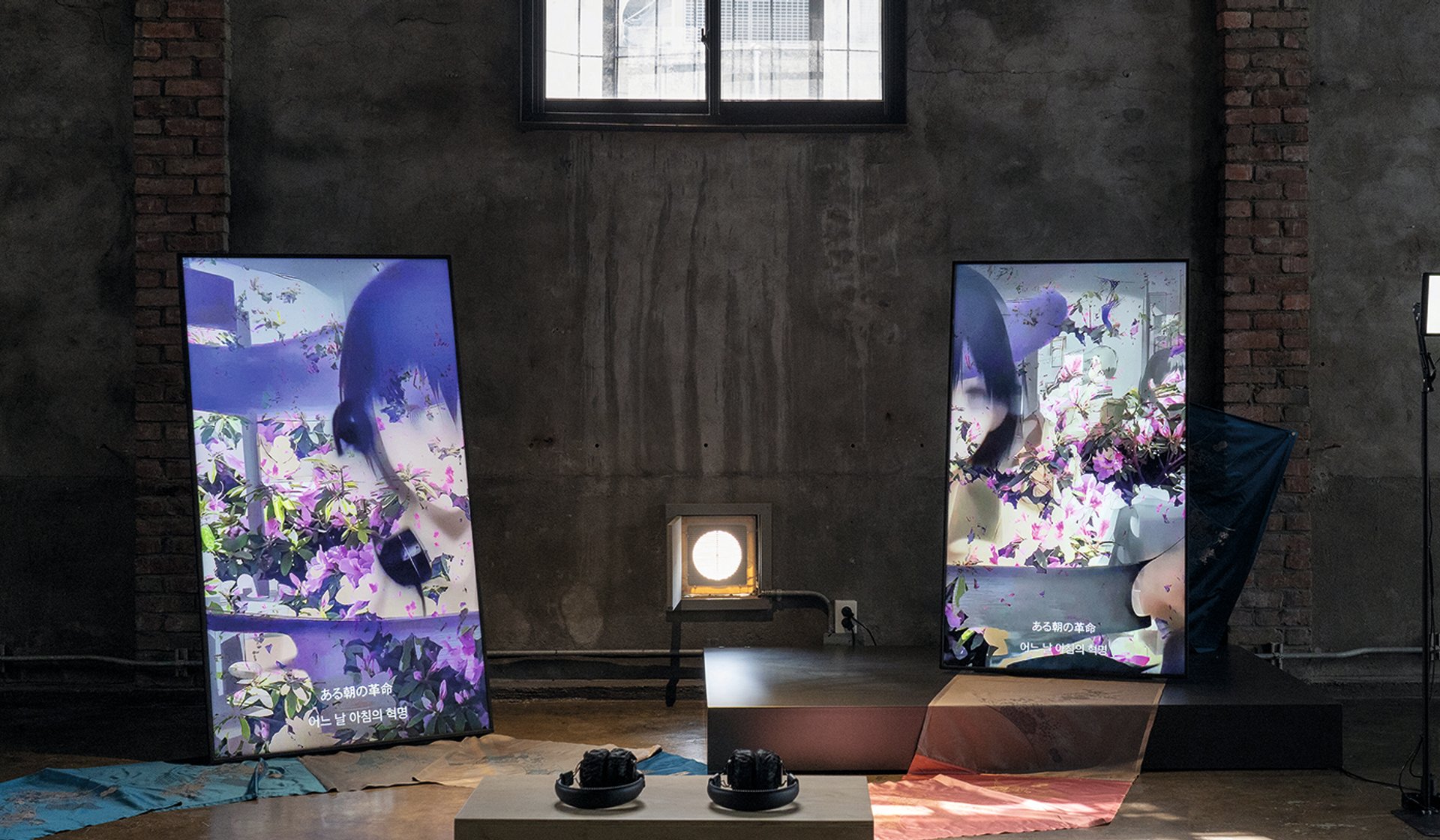
Language for Our Relation: A Demonstration (2025) by Natsumi Aoyagi Photo: Minji Yi; © the artist; courtesy of The WilloW, Seoul
One takes Tokyo Bay’s artificial islands—territories whose histories begin with administrative records such as land registries—as its point of departure; the other reimagines relationships beyond ownership and Japan’s family-registration system.
Shin sees parallels between the systems of registration and record-keeping, and patriarchal structures in Japan and Korea. But Aoyagi’s work has also altered her perception of the Japanese capital. “Looking at Tokyo through her work, I stopped seeing just a rigid megacity,” Shin says. Instead, she came to see it as “not a singular structure, but one with fluid and fragile boundaries”.
For Shin, the new AWT Focus format creates further opportunities for such readings. An outside curator can translate culturally specific ideas into different contexts, she says, creating new connections, while the dispersed format enables a more intimate engagement with particular parts of the city. Rather than simply presenting artworks, she says, an exhibition can connect to specific urban and social sectors in Tokyo, shifting the curatorial gesture towards “actively inhabiting the city” through artworks and ideas.
For Eshun, who returns to Art Week Tokyo after participating last year, the new structure also creates opportunities for exchange among curators. “Part of the goal for me, in travelling internationally to events like Art Week Tokyo, is to discover how different curators are working and thinking and making exhibitions,” he says. “It’s a great opportunity to meet and talk and build new relationships.”
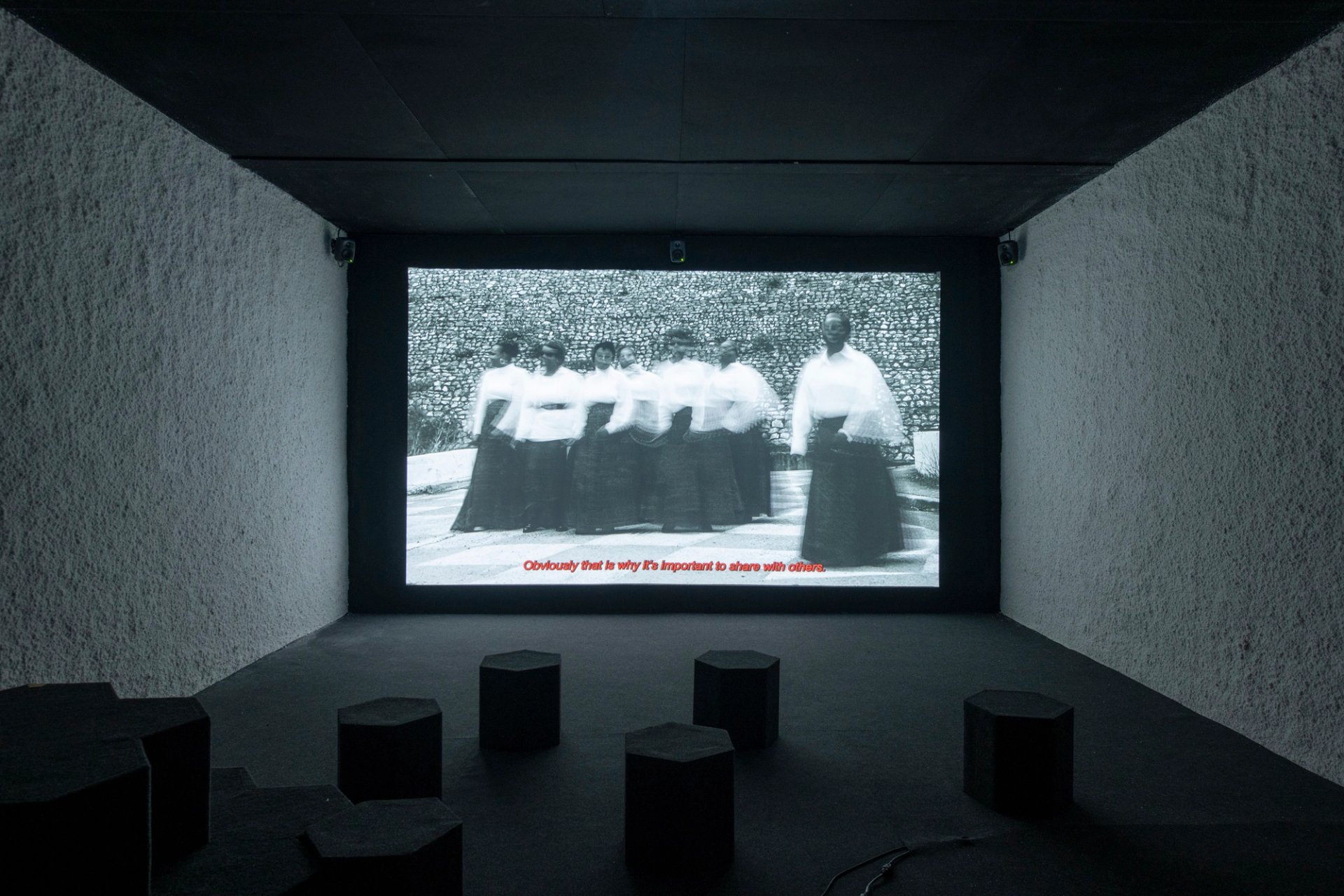
Installation view of Julianknxx’s What Colours Can We Dream in This Night Filled with Salt (2025) at the 36th Bienal de São Paulo. The artist’s AWT Focus exhibition is titled How Much Light Must I Consume? © Levi Fanan; courtesy Fundação Bienal de São Paulo
His exhibition How Much Light Must I Consume? will be Julianknxx’s first in Japan. The artist’s practice spans geographies and diasporic histories, while the central work draws on oral traditions from Comoros, the small island nation near Mozambique. Eshun resists predicting what connections those histories might generate in Tokyo. “All successful art is predicated on discovery, on unknowing, on the revelation of unanticipated connection,” he says. “The hope is that it sparks new ways of seeing and imagining.”
Building networks beyond the week
Art Week Tokyo’s organisers are also looking beyond the encounters generated during a single week in November. Previous editions have recorded rising audiences: overall attendance increased by 33% between 2022 and 2023 and by another 15% in 2024, while international VIP participation has also grown sharply.
Ninagawa argues that the event has helped build networks and visibility that participating institutions and galleries can continue to develop independently. Internationally, she believes Art Week Tokyo has helped “rebrand” a Japanese art scene that had been overlooked in global discourse. Overseas visitors who once came to Tokyo primarily interested in the city as a tourist destination, she says, are increasingly arriving specifically to learn about Japanese artists and art history—and going on to develop projects from those encounters.
Eshun offers a more personal account of that process. Tokyo’s art world may appear smaller than those of some other global centres, he says, “but it runs deep”. He describes himself as still mapping its “paths and roads and streams and tributaries”, with Art Week Tokyo helping him “find my way and keep exploring”.
That metaphor feels particularly apt this year. Until now, travelling across Tokyo was primarily how visitors moved between Art Week Tokyo’s participating institutions. With the new AWT Focus, movement through the city is no longer simply a means of reaching its exhibitions; it has become part of the curatorial proposition itself.
The ten projects in this year’s AWT Focus
The Quiet
Curator: AugUsto Arbizo
Venue: Yutaka Kikutake Gallery
Augusto Arbizo assembles works by six Japanese and international artists into an intergenerational conversation on painting practices that offer a space for quiet concentration amid the frenetic visual culture of the city.
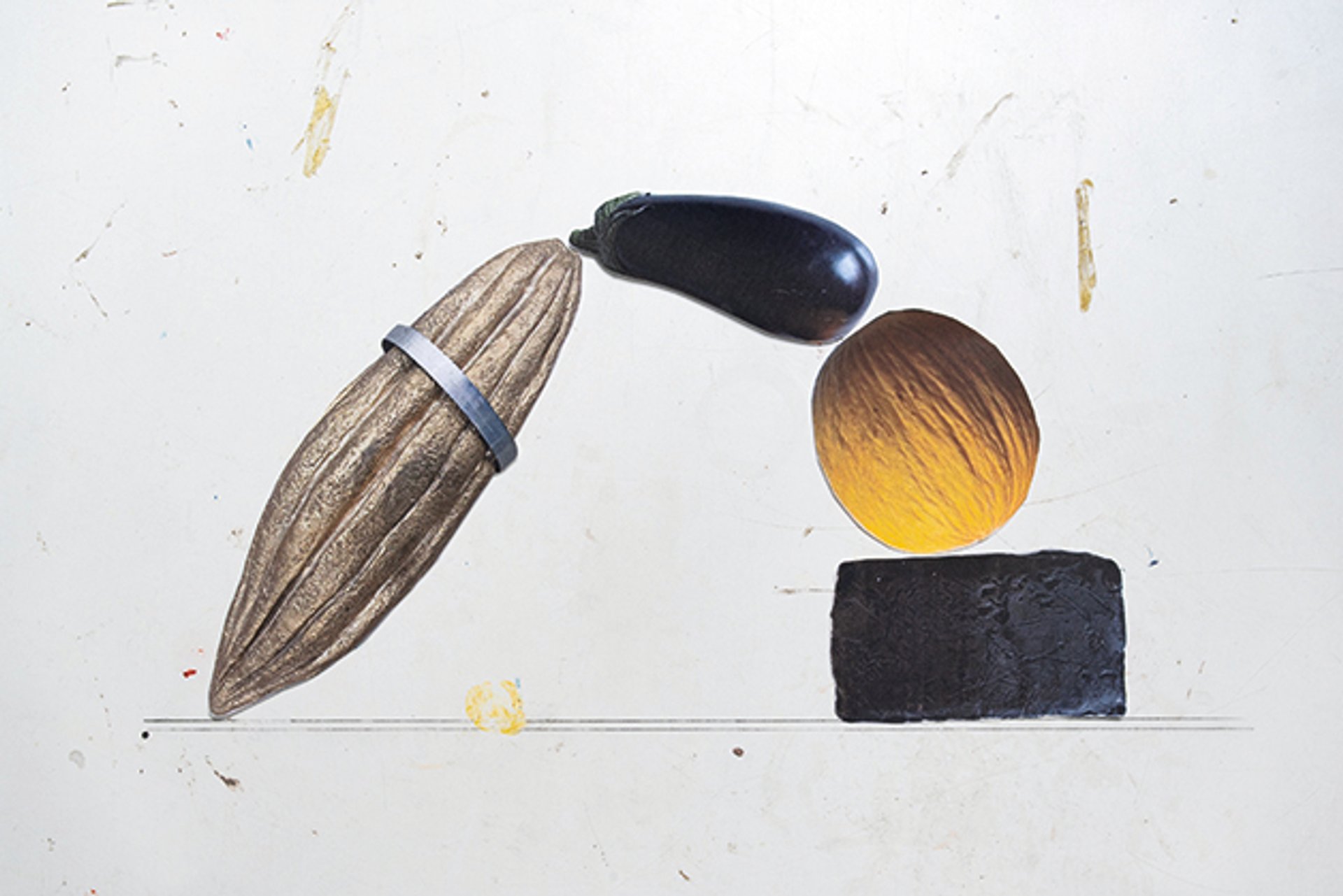
Erika Verzutti’s Study for Dog Sculpture (2025) Photo: Eduardo Ortega; Courtesy the artist and Fortes D’Aloia & Gabriel, São Paulo/Rio de Janeiro
Erika Verzutti: Portrait of Sculpture
Curator: Julie Boukobza
Venue: Misako & Rosen
Artist Erika Verzutti and curator Julie Boukobza extend their collaboration for this exhibition of monoprints, which builds on a show of sculptures the two produced for a room at the Hôtel Balzac, Paris, in 2025.
The Constitution of Japan 2026
Curators: Greg Dvorak & Kenji Ono
Venue: Mujin-to Production
Curators Greg Dvorak and Kenji Ono take charge of the fourth edition of this recurring exhibition using art to reread the Constitution of Japan. This year’s edition includes works by video artist Fuyuhiko Takata, multimedia duo MES and more.
Nobuko Tsuchiya: Ace of Hearts
Curator: Martin Clark
Venue: SCAI The Bathhouse
Martin Clark, the director of London’s Camden Art Centre, oversees a new site-specific project by Nobuko Tsuchiya, a UK-based Japanese artist known for her sculptural assemblages of found objects that play on the enigmatic and the familiar.
Mary Weatherford: Komorebi
Curator: Jeremy Strick
Venue: Shibunkaku
Veteran US museum director Jeremy Strick presents the first exhibition in Japan of leading Los Angeles-based painter Mary Weatherford, with a focus on recent works on paper accompanied by one of her signature neon paintings.
Natsumi Aoyagi: Possible Words, Possible World
Curator: Jaemin Shin
Venue: Misa Shin Gallery
Korean independent curator Jaemin Shin guides this solo project by emerging artist Natsumi Aoyagi, whose multimedia installations juxtapose poems, moving images, AI-generated imagery, recorded sound and fiction. The resulting works generate multilayered meanings shaped by a speculative imagination.
Julianknxx: How Much Light Must I Consume?
Curator: Ekow Eshun
Venue: Space Un
London-based artist Julianknxx addresses the history of Africa and its diasporas through poetry, performance, film, music and sculpture. The artist’s first exhibition in Japan, curated by Ekow Eshun, will feature multimedia works inspired by salt as well as a series of special choral performances.
Koji Kamoji: Everyday Life
Curator: Maria Brewińska
Venue: Take Ninagawa
Koji Kamoji left his native Japan for Poland in 1959 and went on to become a key figure in the Polish avant-garde art scene. Warsaw-based curator Maria Brewińska has worked closely with the 91-year-old artist to develop an exhibition reflecting on the connection between art and survival.
Patchwork of Ruffled Wings
Curators: Multiple Spirits
Venue: Waitingroom
The queer feminist collective Multiple Spirits uses its eponymous zine as a base for producing artworks, exhibitions and other activities. Patchwork of Ruffled Wings explores the concept of the “vine-like archive” through the presentation of printed matter, textiles and other works by Japanese and international artists.
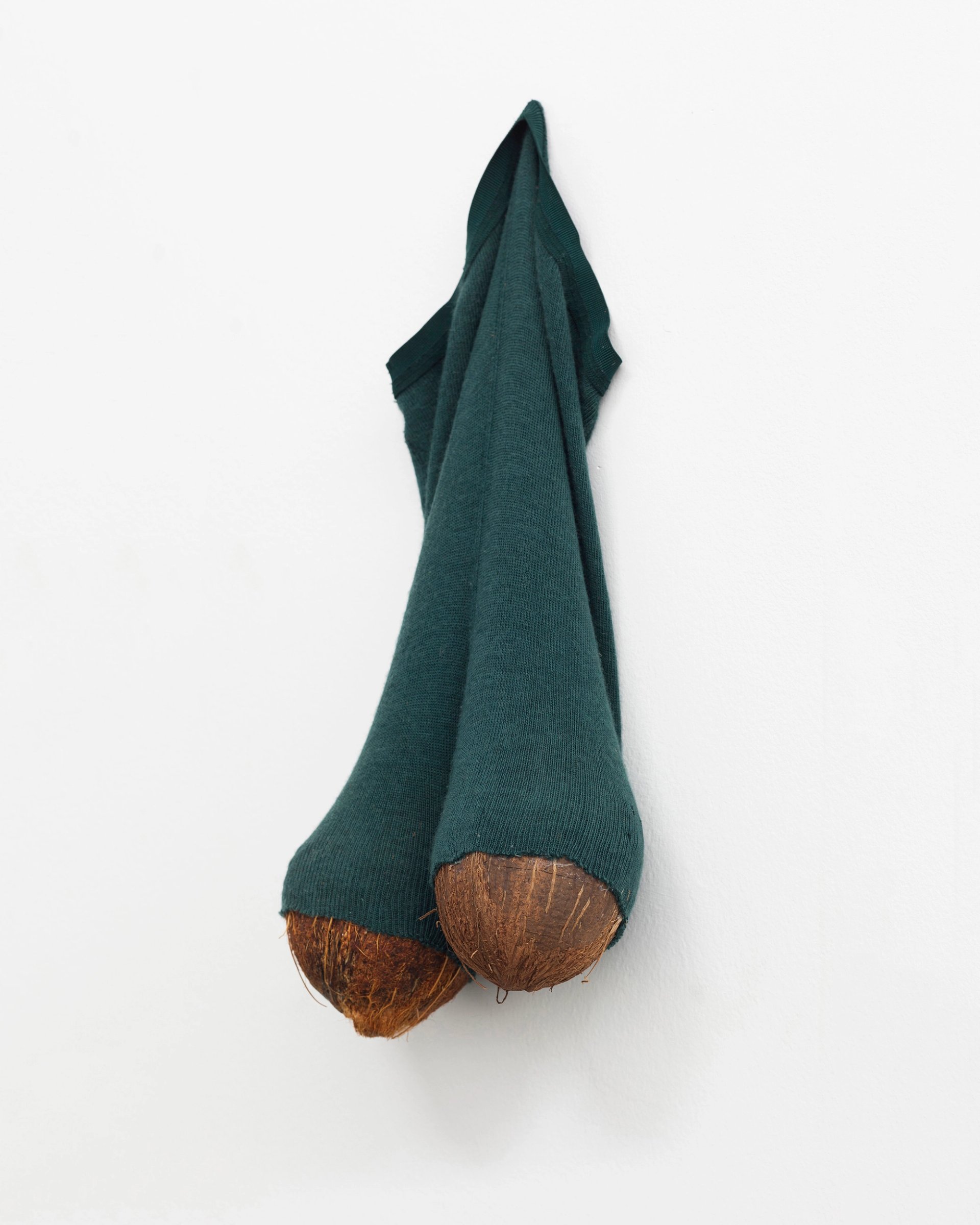
Sophie Nys’s If Nature Didn’t, Warner’s Will (2012) Courtesy of Galerie Greta Meert, Brussels.
Taro Masushio and Sophie Nys
Curator: Olivier Mignon
Venue: XYZ collective
Olivier Mignon, the founding director of Keijiban in Kanazawa, juxtaposes works by two artists at XYZ collective. New York-based photographer Taro Masushio addresses themes of queer embodiment and the politics of the gaze, while Brussels-based sculptor Sophie Nys investigates the relationship between language and objects.