The US curator Alexandra Munroe has three decades of experience working closely with Japanese institutions, going back to her landmark survey Japanese Art after 1945: Scream Against the Sky at the Yokohama Museum of Art in 1994. Now she is back in the country as the co-curator of the current Mariko Mori retrospective at the Mori Art Museum in Tokyo. The show is a collaboration with the Solomon R. Guggenheim Foundation, where she is a senior curator at large, and has been co-curated with the Mori Art Museum’s director Mami Kataoka.
The Art Newspaper: How has Japan’s museum ecology changed over the years?
Alexandra Munroe: It’s changed enormously. The Yokohama Museum of Art opened in 1989, anticipating the museum boom of the 1990s when municipalities and prefectures across Japan were opening new institutions with extraordinary buildings designed by architects like Fumihiko Maki, Arata Isozaki and others.
Although there were important precursors like the Museum of Modern Art, Kamakura, established in 1951, and the National Museum of Modern Art, Tokyo, established in 1952, there was remarkably little concerted historical understanding of Modern and contemporary Japanese art and its role in global art history. Around the early 1990s, curators and scholars were piecing together how such art had evolved under the umbrella of post-war society—defeat in the Second World War, reconstruction, Americanisation—as well as through the contributions of Japanese artists abroad like Yoko Ono, Yayoi Kusama and On Kawara. The new museums contributed to the tremendous growth of the field, both within Japan and internationally.
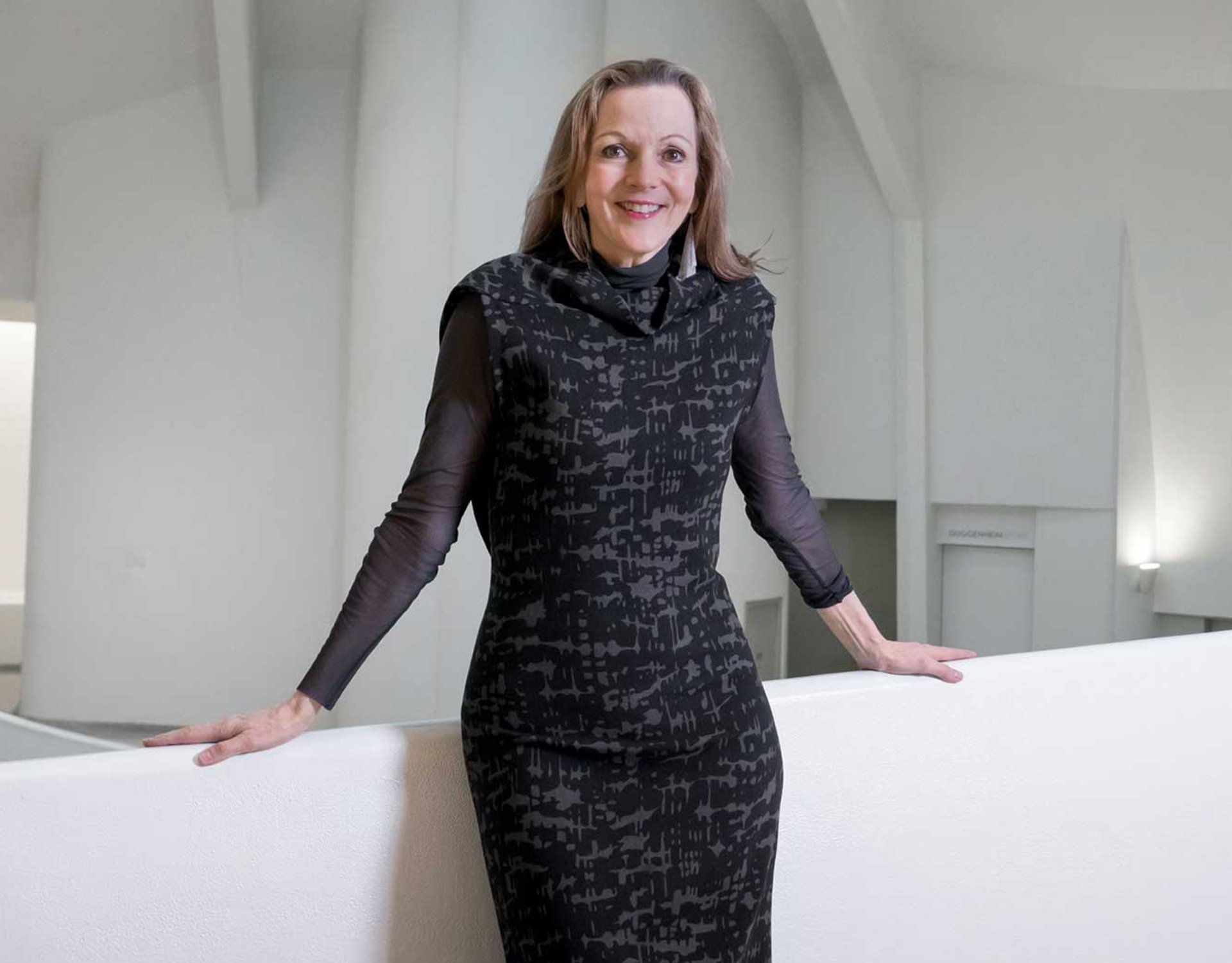
Curator Alexandra Munroe © Solomon R. Guggenheim Foundation, New York/David Heald
Successive institutions have built on that legacy. It’s been gratifying to see the Mori Art Museum develop into a global museum under the trailblazing leadership of Mami Kataoka. The recent Sou Fujimoto exhibition was one of the greatest architectural shows I’ve ever seen, while the solo shows of Louise Bourgeois, Ai Weiwei and Lee Bul, going back 20 years now, are among the most influential for those artists staged anywhere in the world.
All of this has been aided by the simultaneous transformation of the gallery scene, with a proliferation of experimental galleries since 1994, not to mention international galleries representing Japanese artists or movements like Gutai, Mono-ha and Neo-Pop. I also appreciate the role that Benesse Art Site Naoshima has played, through the vision of patron Soichiro Fukutake, in the emergence of Japan as a contemporary art superpower. Only a few hundred people attended the opening of Benesse House Museum in 1992. Now events like the Setouchi Triennale draw millions to the islands when the home population is a few thousand. And Benesse’s commissioning programme has given artists like Yukinori Yanagi, Rei Naito and Shinro Ohtake a platform for staging their most ambitious works.
Recent decades have seen a remarkable expansion of museums in China and Korea, Southeast Asia and the Gulf. At the same time, institutions around the world are facing new challenges with austerity measures and a withdrawal of public support for art. What lessons can Japan offer other art scenes?
I have great admiration—and some envy—for the public funding of Japanese art museums. The Japanese model of collecting regionally yet within an international context is something to emulate. There’s also something to be said for collections focusing on artists whose histories were shaped by the places where they grew up and, in some cases, ran away from. The Nagoya City Art Museum has extraordinary holdings of On Kawara’s works, including rare early reportage pieces, even though he left the region in his teens. The Ashiya City Museum of Art and History’s collection of Gutai is unparalleled in the world. And the Fukuoka Asian Art Museum, under the guidance of curators like Kuroda Raiji, has sought to map and reimagine artistic exchanges in Asia.
I commend all the brilliant scholarship that has emerged out of these enterprises.
That said, in recent years Japan has retreated from its post-war identification as an international country. One motivation for doing the Mori show is to stimulate a revival in collaborations that can help bring the work done in Japan into international circulation.
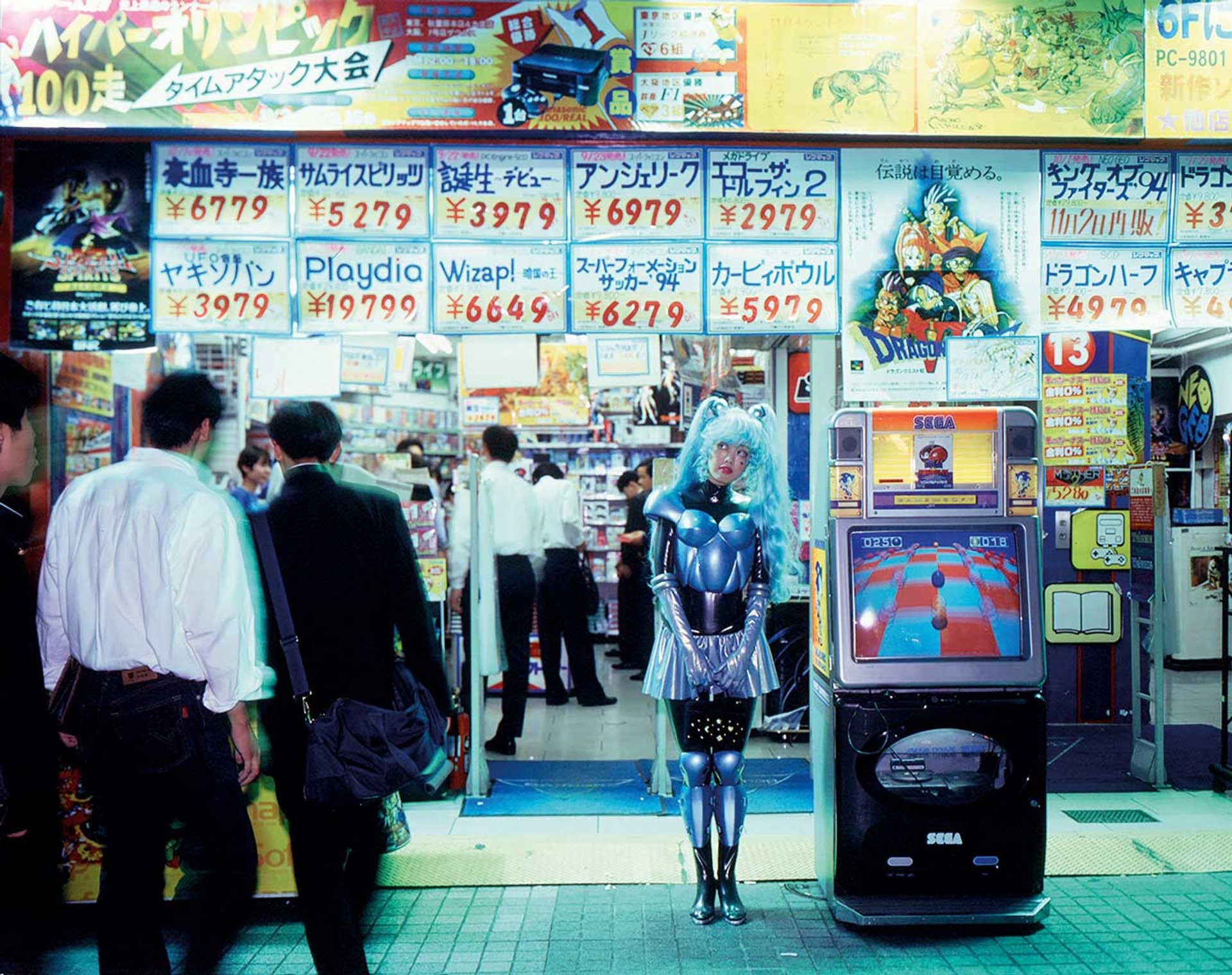
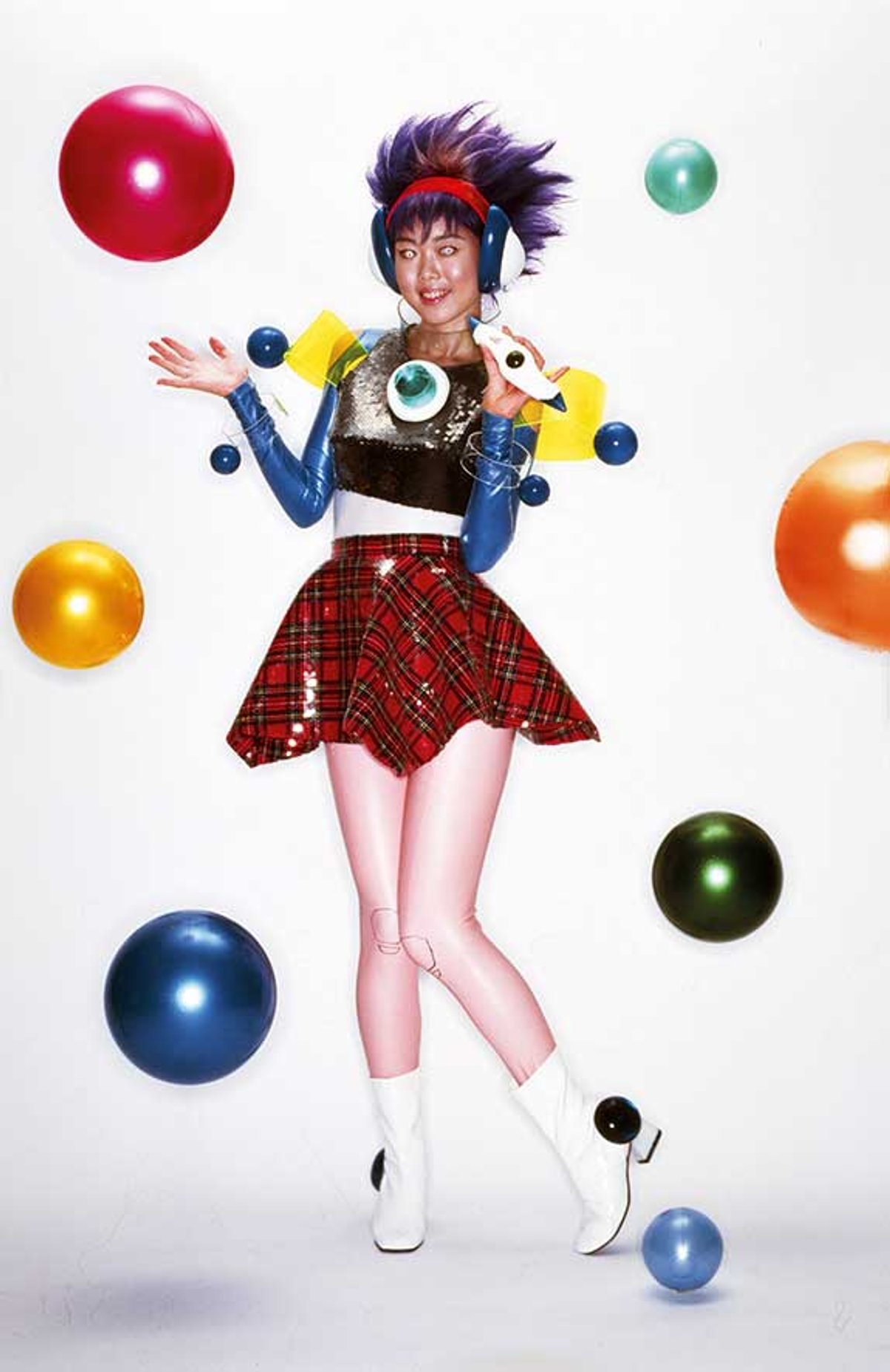
Mariko Mori’s Play with Me (1994) Courtesy Mori Art Museum
Collaborations between Japanese and international institutions typically take the form of touring shows, whereas intensive co-productions are rare. How did the collaboration between the Guggenheim and the Mori Art Museum come about?
It’s called synergy! In the summer of 2024 both Mami Kataoka and I had begun talking to Mariko Mori about staging a retrospective and we combined forces. Mariko rose to meteoric stardom in the 1990s for Cyborg (1994-95), the first of her series of photomurals inserting herself as a cyborg, and later a Buddhist-inflected deity, into digitally rendered settings. That interest in technology subsequently found form in complex multisensory environments like Wave UFO (1999-2002), the first artwork to incorporate brainwave biofeedback.
I was interested in reappraising Mariko’s work in the current context of technology-based art, specifically digital technologies. Technology is not an obstacle to humanism for her, but a means of envisioning a new kind of humanism that allows for higher states of consciousness. At the same time, Mariko’s engagement with [pre-historic Japanese] Jōmon culture, alternative belief systems and the afterlife resonates with Indigenous and First Nations artists incorporating Indigenous knowledge into critiques of Western epistemes of modernity and linear time.
For her part, Mami has a longstanding interest in art that addresses spirituality in the modern era, which opens up a critique of the dominant trends of contemporary art as established by market forces and Western institutions, so I think Mariko’s work felt urgent to that curatorial research and practice.
It’s a creative partnership.
Yes. Collaboration is integral to Guggenheim programmes like the Asian Art Initiative and the UBS MAP Global Art Initiative. We have consistently partnered with museums, curators and artists across Asia to help us collectively think through the larger argument of global art history and how to present exhibitions that map histories and ideas beyond the Eurocentric canon. The collaboration with the Mori is a direct outcome of that, and I’d say it’s a direct outcome of the Mori’s profoundly international outlook as well.
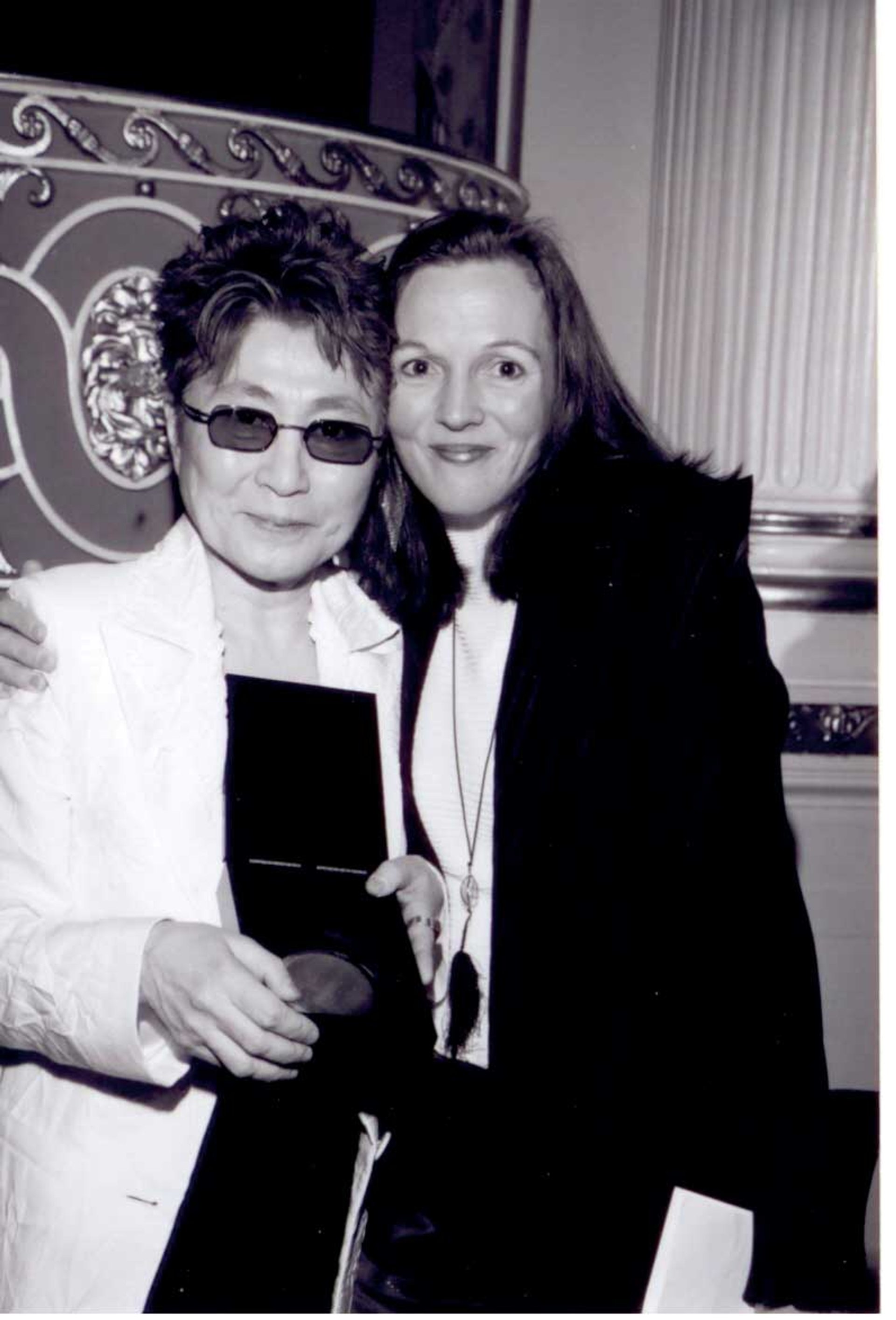
Alexandra Munroe with Japanese artist Yoko Ono at the AICA (International Association of Art Critics) Awards ceremony, New York, in 2001 Courtesy Alexandra Munroe
A compelling retrospective does not just look back but also shows how the artist was ahead of their time. In what ways have we finally caught up with Mariko Mori?
Mariko’s work resonates with the writings of the contemporary philosopher Yuk Hui, who argues for a holistic understanding of technology grounded in Eastern thought and cosmologies, or “cosmotechnics”, as opposed to its bifurcation in modern Western traditions. Mariko anticipated that zeitgeist as a Japanese woman artist who conducted deep research into schools of thought like Pure Land Buddhism and Jōmon cosmology alongside contemporary sciences of the mind.
These are areas of enormous interest to artists now. Look at LuYang, a young Chinese artist who is a serious practitioner of Tantric Buddhism and uses game engines to illustrate themes of transmigration of the soul, multiple selves and the world as an illusion. The Korean new media artist Ayoung Kim also looks up to Mariko for unabashedly drawing parallels between art and technology as ways to “recalibrate our reality”, as Ayoung told me.
I think there will be an enthusiastic response to Mariko’s work from younger artists who are interested in storytelling and altered states of mind, artists who are seeking to break free of the lingering hang-ups of Western art, and anyone looking to just get away to another world.
• Mariko Mori: All That Shines, Mori Art Museum, 31 October-28 March 2027