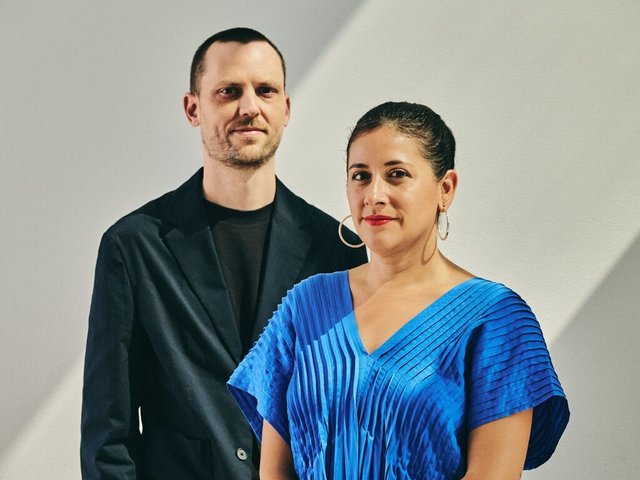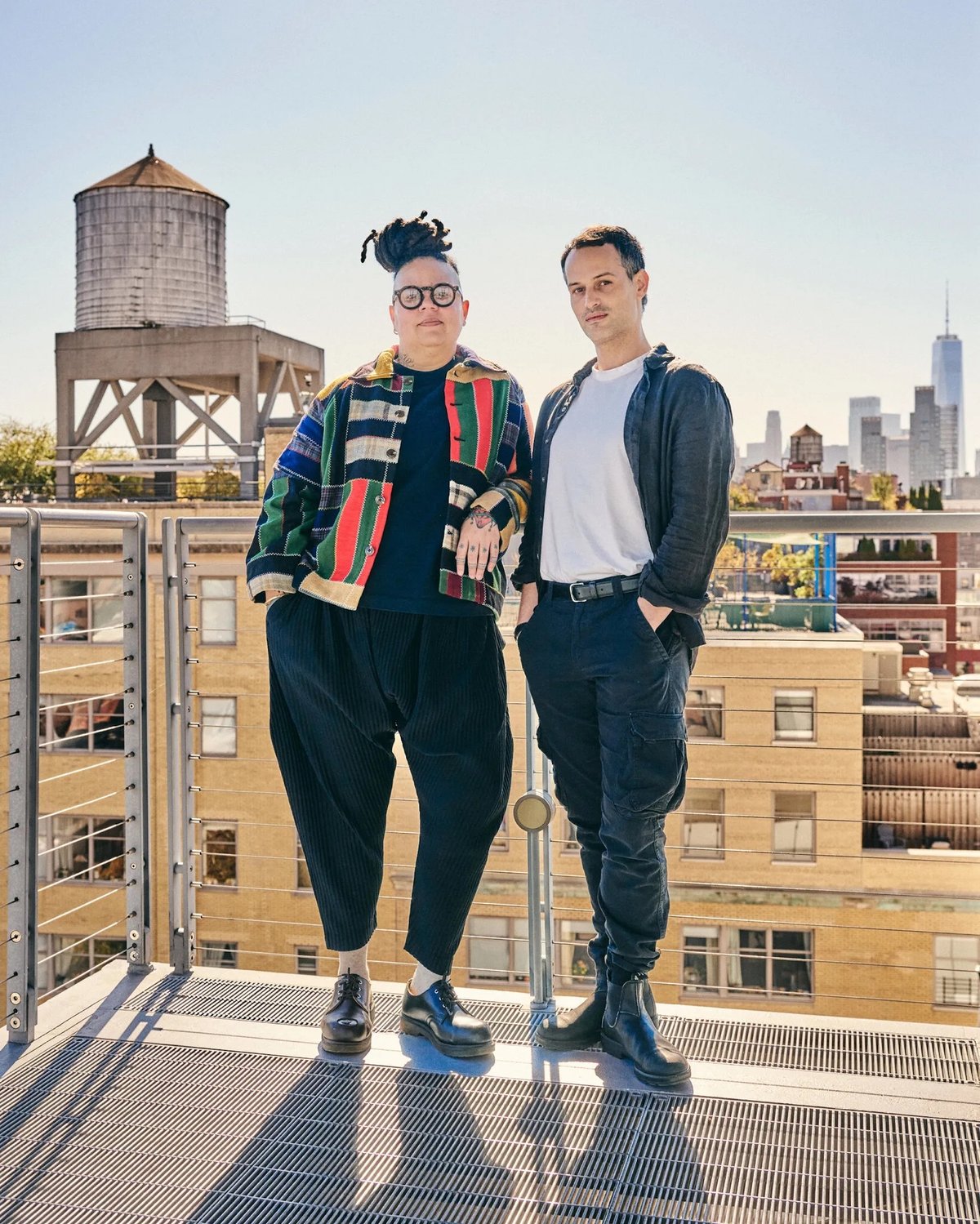
The Whitney Museum of American Art has selected Meg Onli, a curator at the museum, and Zack Winokur, a choreographer and director for the stage, to curate the 2028 edition of the Whitney Biennial. It is due to open in March 2028.
“Every Whitney Biennial springs from a distinct curatorial alchemy,” Scott Rothkopf, the Whitney’s director, said in a statement. “Meg is one of the most compelling curatorial voices working today, with an extraordinary ability to champion artists and bring fresh perspectives to the history of American art. Zack is an equally inventive artistic programmer who has become one of the leading voices of his generation through groundbreaking work across opera, theater, dance and the visual arts. Their partnership promises a radical new vision for the 2028 Biennial.”

The 2024 Whitney Biennial: our review
Onli is one of the Whitney’s star curators, having joined the institution as a curator-at-large in 2023, then as a curator in 2024. She co-curated the 2024 Whitney Biennial, titled Even Better Than the Real Thing, with fellow Whitney curator Chrissie Iles. Most recently she co-curated the museum’s current Roy Lichtenstein retrospective (until 10 May 2027).
“From the Whitney’s early Annuals to its many subsequent iterations, the Biennial has a rich history of reinvention that is already giving us much to think about,” Onli said in a statement. “I couldn’t be more excited to explore what the Biennial can be alongside Zack, who is such a dynamic thinker, and to see where our conversations with artists lead.”
Winokur’s work spans dance, music, visual art, opera and theatre. He is the co-founder and artistic director of the performing arts collective AMOC* (American Modern Opera Company), which last year staged a five-week takeover of the Lincoln Center campus on Manhattan’s Upper West Side. He was previously the artistic director of Little Island, a park and cultural event space designed by Heatherwick Studio and MNLA that rises out of the Hudson River not far from the Whitney. His projects for the stage and screen have included directing productions at Opera Philadelphia and the Santa Fe Opera, and working on the expanded version of The Wizard of Oz currently showing at Sphere in Las Vegas.
“I’m honoured to be curating the Whitney Biennial with Meg,” Winokur said in a statement. “Our shared desire to centre objects and people and the collision between them already echoes our collaboration. It’s that energy that makes the dialogue with her so fun and inspiring. As an artist, what excites me most is being in service to other artists, and I’m delighted to have the opportunity to do so in the context of the Whitney.”

The 2026 Whitney Biennial, which was organised by staff curators Marcela Guerrero and Drew Sawyer, closed in October. It was seen by more than 550,000 visitors, according to the museum’s figures, around 75% of whom identified as either Millennials or Gen Z, making it the youngest audience since the Whitney started tracking visitors’ ages.
The exhibition’s 2026 edition was also remarkably controversy-free, though the exhibition is often a lightning rod for debates, protests and political statements. The 2019 edition was led by Whitney curators Jane Panetta and Rujeko Hockley, and came to be known colloquially as the “tear gas biennial” due to weekly protests and participating artists’ threatened withdrawals over the Whitney’s vice chairman at the time, Warren Kanders, who was the chief executive of Safariland, a defense and security contractor that manufactured tear gas canisters that had been deployed against asylum-seekers at the Mexico-US border, among other materials. Kanders eventually resigned from the museum’s board; he is currently the chairman and chief executive of Cadre Holdings, a Florida-based manufacturer of security and law-enforcement equipment.

The 2017 Whitney Biennial, which was co-curated by Christopher Y. Lew and Mia Locks, was largely overshadowed by the wide-ranging debate over a single painting in the exhibition: Dana Schutz’s Open Casket (2016), in which the artist portrayed the famous image from 1955 of 14-year-old Emmett Till lying in an open casket following his brutal abduction, mutilation and murder. The artist Hannah Black wrote an open letter criticising the work’s inclusion in the biennial and calling for its destruction, sparking protests inside and outside the museum and arguments about censorship, identity and cultural appropriation.
The 2028 Whitney Biennial will be the 83rd edition of the exhibition, which started out as a series of medium-specific exhibitions before becoming the Whitney Annual in 1937, then transitioning to its every-other-year format in 1973. It remains the most closely watched recurring exhibition of contemporary art in the Americas.