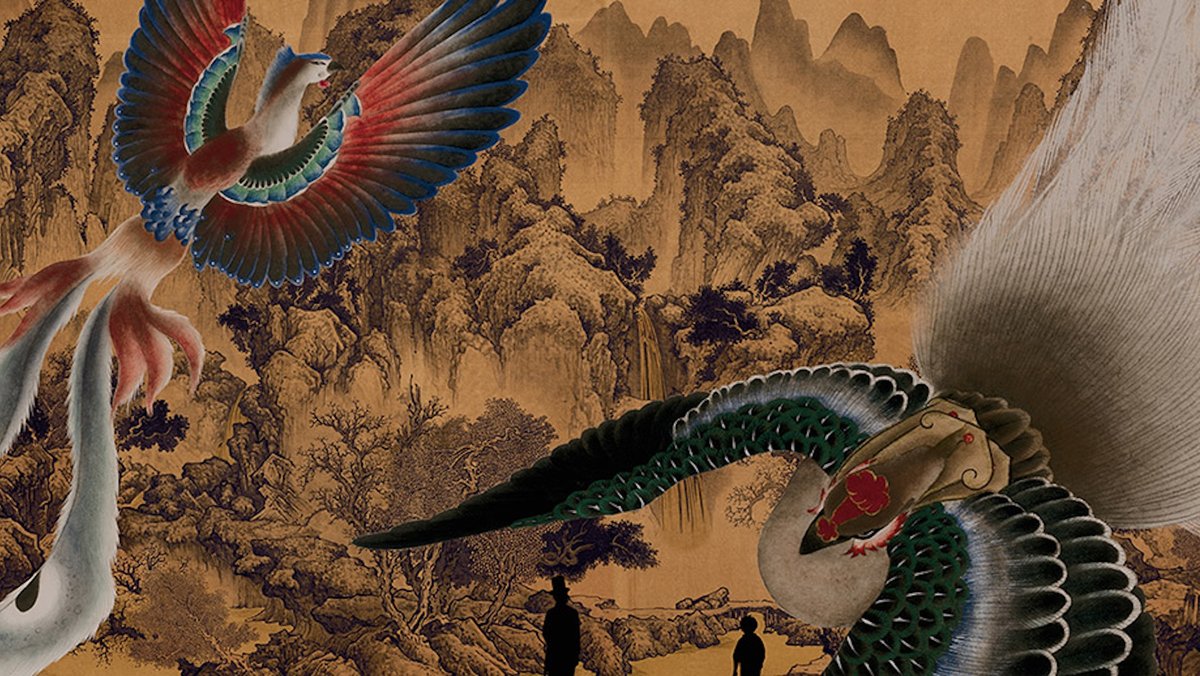
A phrase cinephiles sometimes use to describe a visually beautiful movie is “every frame a painting”, but that is rarely more true than in Magic Atlas, a feature-length animation film by the Chinese painter Sun Xun, which was awarded a Special Jury Prize at the recently concluded Tokyo International Film Festival.
Sun spent ten years, on and off, working on the film, which he largely self-financed; rather than employ professional animators, he employed hundreds of art students (in one interview, he says 500 over the course of production) to produce individual frames, in a sort of supersized workshop model. Each frame has its own tactile quality, particularly in the sequences made in the unconventional animation medium of woodcut. When a shaft of line streams through a high window, piercing the blackness of an otherwise dark room, you can see the individual carving marks scored into the wood, which across several dozen frames dance and shimmer like the scales of a carp moving through a clear pond.
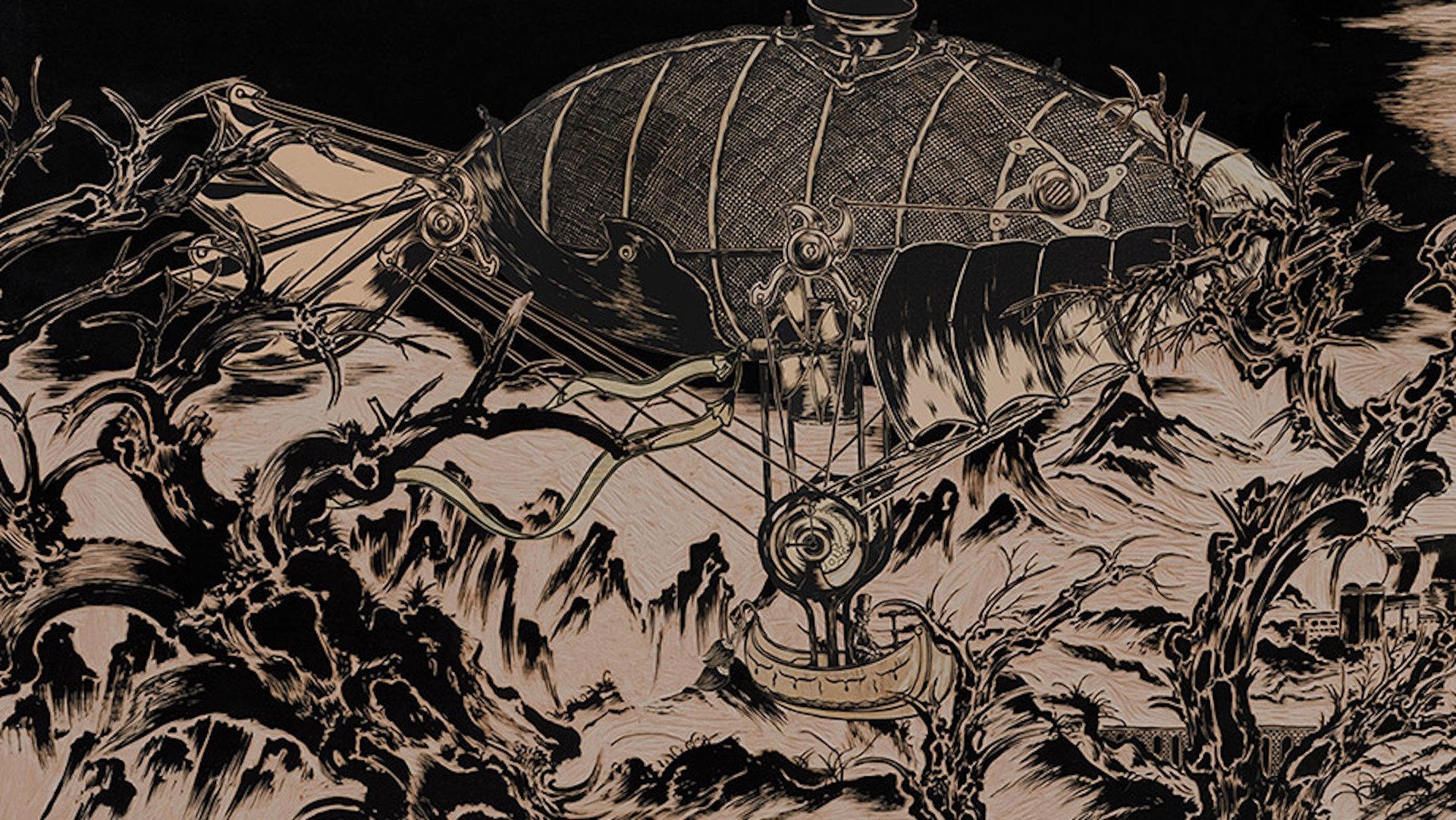
A scene from Sun Xun's Magic Atlas (2026) Courtesy the artist and π Animation Studio
Magic Atlas is a visual artist’s film, and as a storyteller, Sun thinks like a visual artist, proceeding by association, symbolism and dream logic. The magic atlas of the film’s title is a map to the mystic realms traversed by an explorer in a steampunk flying contraption. After the kaleidoscopic imagery of the film’s opening overture, he spends most of the film in one such world, a coal-mining kingdom called Luocha, where he is imprisoned on the eve of a magic festival. Maps are illegal in Luocha, as are memories. The authoritarian logic of the film is definitely allegorical, but the allegory is hard to pin down; the land’s emperor speaks of forced labour and industrial quotas, in perhaps a Maoist register, but the power behind the throne is an Orwellian cabal of anthropomorphised talking animals, who smoke cigars like colonial lords, and the state’s surveillance protocol is carried out by an army of mosquitos with cameras for heads—a swarm, if not a flock (or Flock).
In a manner similar to Chinese cinema’s emerging mystic-virtuoso Bi Gan, Sun is applying poetic ideas derived from Eastern spirituality about the oneness of all things, the many stories that are all one story. The film opens with a quote from Avatamsaka Sutra invoking “the past, the present, the future lying in the present”, and ends with a lengthy monologue, voiced by Sun himself, delivered by a hieroglyphic eagle. Its ideas about the transmigration of souls are mirrored in the mix of animation styles—the film spends most of its time in Luocha, which is rendered in monumental black-and-white woodcuts and illustrations reminiscent of Rockwell Kent, but also jumps at times to different styles that are each a world in and of themselves.
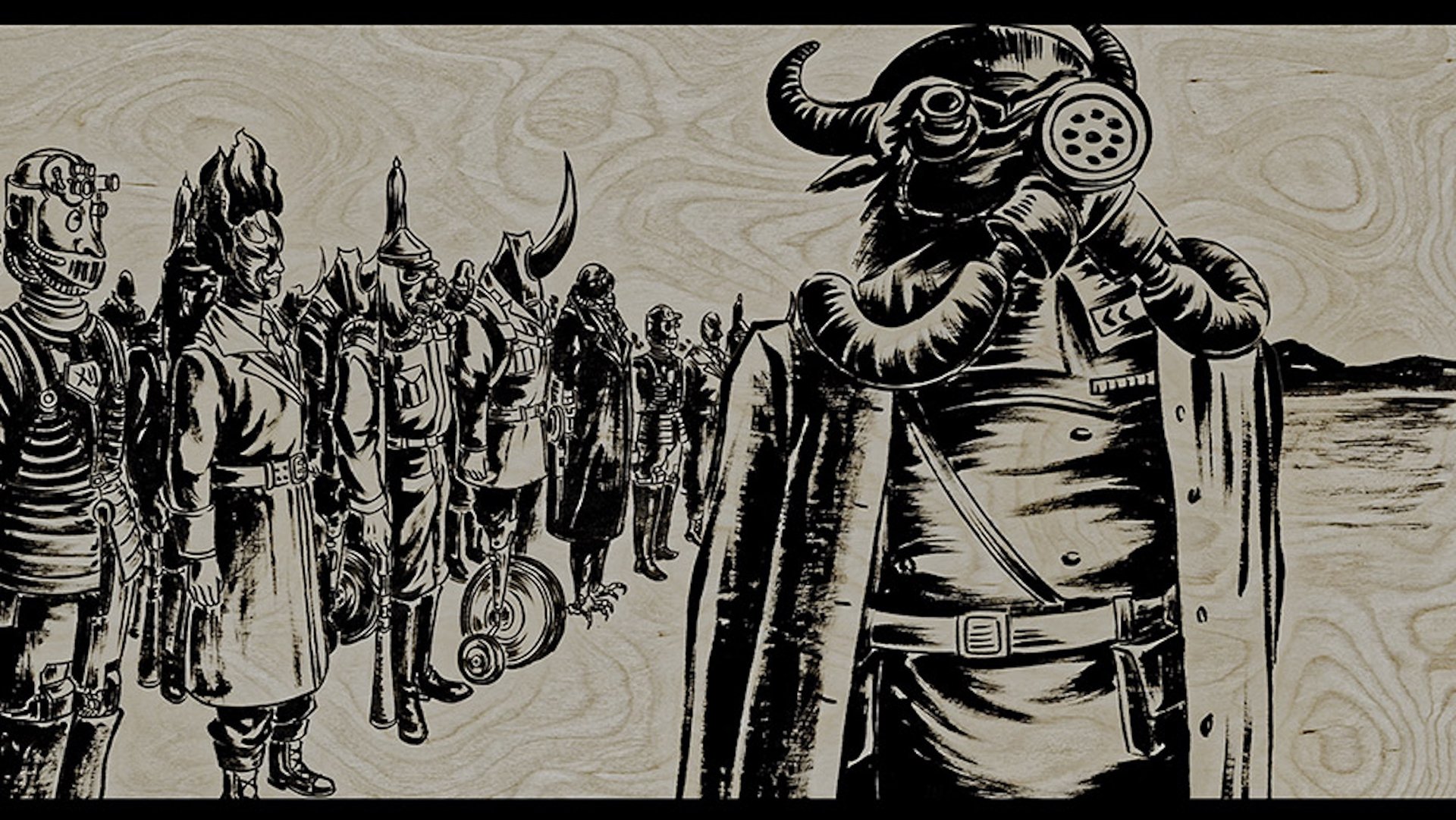
A scene from Sun Xun's Magic Atlas (2026) Courtesy the artist and π Animation Studio
There are homages to Salvador Dalí and Pieter Bruegel the Elder; a segment in riotous pastels with the Jazz Age voluptuousness of Reginald Marsh and a segment animated in crayon and magic marker by Sun’s Instagram followers during the Covid-19 pandemic; and segments informed by Sun’s own research into different styles of traditional Chinese art, including, he said in a post-screening interview, Dunhuang murals, Song dynasty painting, and multiple styles of calligraphy.
Exhibitions of Magic Atlas materials including woodcuts and concept art have shown at the Times Museum of Guangdong, and additional shows are planned in the United States (where Sun is represented by Sean Kelly Gallery). Sun received initial seed funding from Judith Neilson, the Australian philanthropist and founder of the Asian-focused White Rabbit Gallery, whose current show, up through November 15, includes Magic of Atlas – Luocha: An Infinite Journey, an 8ft-high, 52ft- long, 13-panel woodcut relief depicting images from the story in a scroll that can be stopped and started by the eyes of the viewer passing across the work—a static form of visual narrative that can be traced back to antiquity, long before still and moving images diverged.
Watch a clip from Magic Atlas:
- Magic Atlas screened at the Tokyo International Film Festival on 27 and 29 October and 1 November