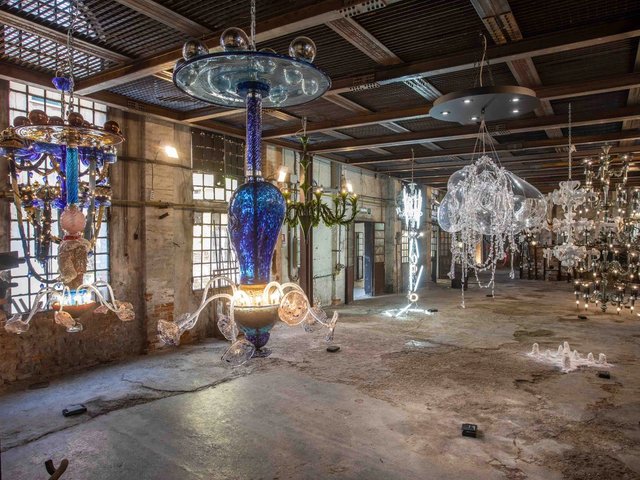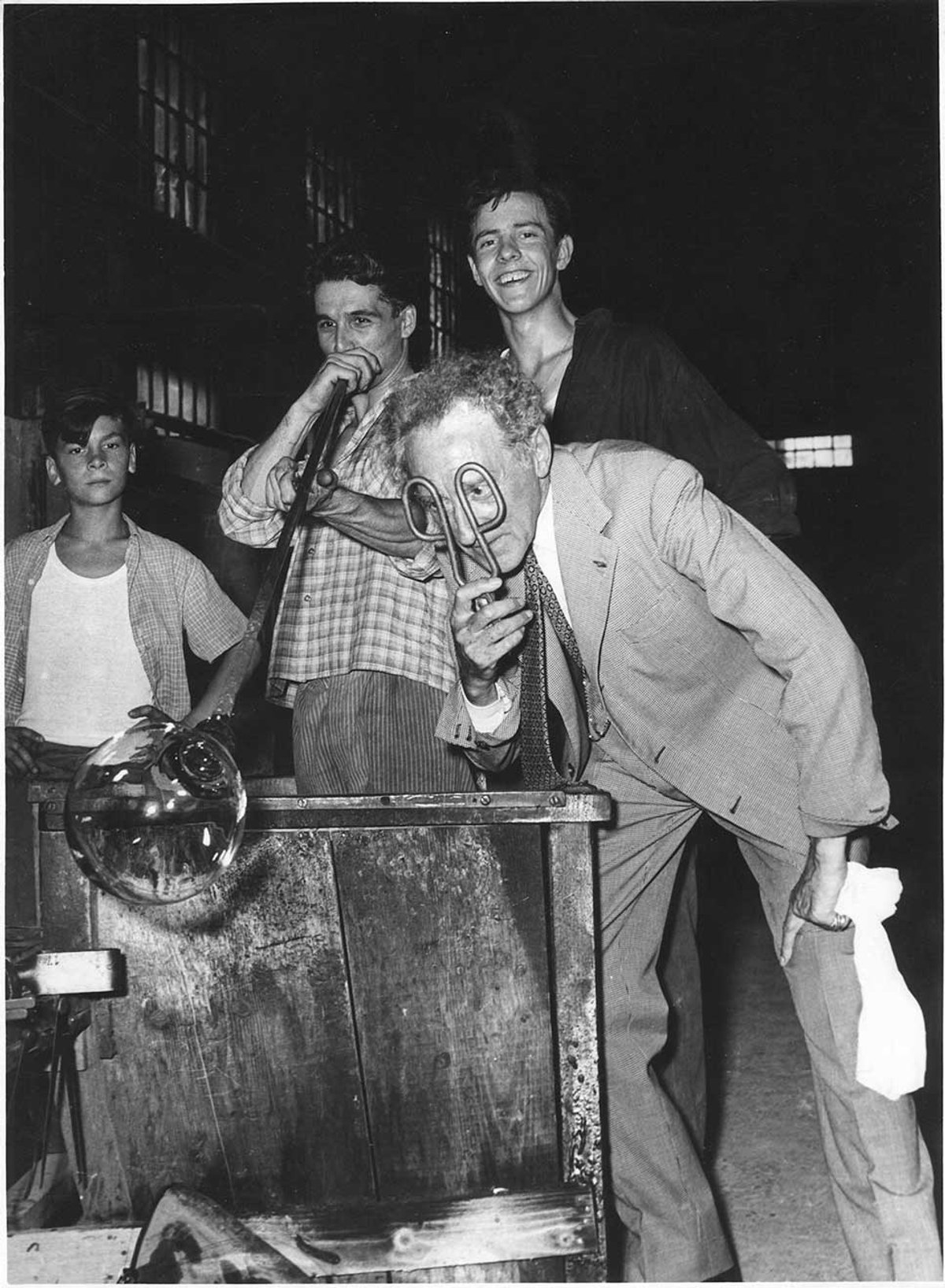
In 1952, Egidio Costantini, an entrepreneur based in Venice, had a brainwave: to take the designs of contemporary artists and, with the collaboration of master glassblowers on the island of Murano, to make artistic sculptures in glass. This was a different approach from that adopted by traditional furnaces like Venini in their decorative glassware, which, although it increasingly involved international designers, was often produced in large, commercially dictated series.
Three years later, Costantini established the Fucina degli Angeli gallery to exhibit the results of his experiment. From then until the 1970s, when other glassmaking companies began to compete, Costantini played a pioneering role in the evolution of glass in Venice, acting as interpreter for more than 100 international artists to Murano’s master glassblowers.
An exhibition opening at the Peggy Guggenheim Collection in Venice this month, curated by the art historian Cristina Beltrami, will tell the Fucina’s story from the 1950s to the 1980s. It will also examine the little-documented but vital role played behind the scenes by Peggy Guggenheim herself, whose purchase of many items helped sustain the gallery financially and whose connections enabled Costantini to exhibit his glass across Europe and even in the Museum of Modern Art in New York. (As it happens, the collector is also the focus of an exhibition opening this month at the Royal Academy of Arts in London, about her Mayfair gallery of the late 1930s—Peggy Guggenheim in London: The Making of a Collector, 21 November-14 March 2027.)
More than 100 works, including glass, painting and sculpture, will be on display in Venice, as well as material from the Fucina’s archives, which have never before been studied in depth. These will be exhibited in 11 rooms organised by artist and theme, and will include glass translations of works by many luminaries of the period, from Max Ernst and Oskar Kokoschka to Lucio Fontana and Paul Jenkins.
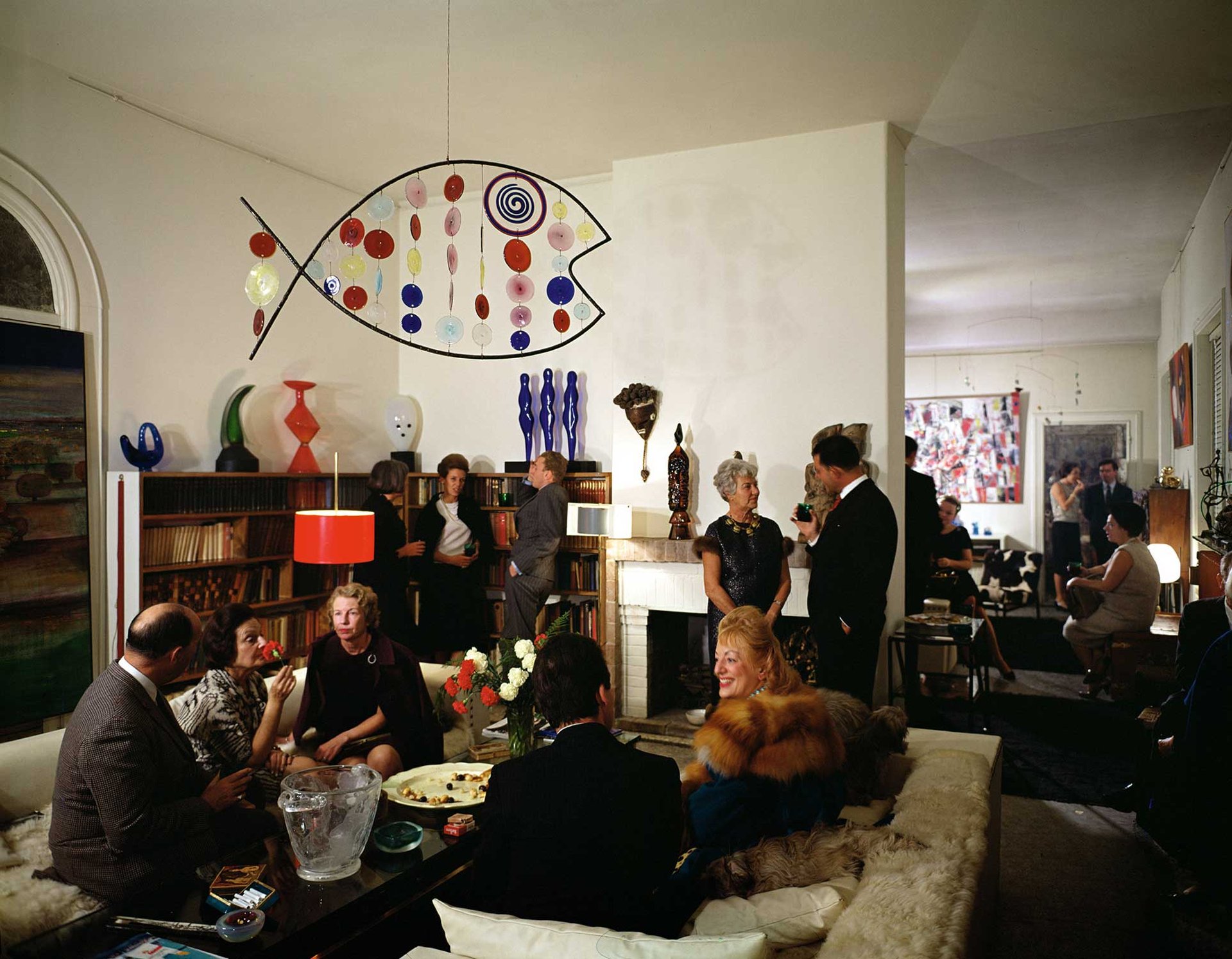
Peggy Guggenheim among her glass artworks and guests at Palazzo Venier dei Leoni, Venice, in 1964 © Getty Images, by SIAE 2026
Born in Brindisi in the south of Italy in 1912, Costantini established himself permanently in Venice, where he had been raised and educated, at the beginning of the 1950s. There he became a commercial agent for several of Murano’s glassworks. It was the time of Italy’s post-war economic boom and the city was teeming with creative energy. Costantini seems to have found no difficulty in assembling a group of Venetian artists to form the Study Centre for Painters in the Art of Glass, a collective that exhibited its work at the furnace of Ferro & Lazzarini in 1953.
A gift from Picasso
The next step was to involve international artists of even greater stature. Acting on his own initiative, Costantini had glass versions made of some ceramic sculptures by Pablo Picasso and then travelled to Picasso’s house in Vallauris, near Cannes, to show him the results. In return, Picasso gave Costantini a copy of the book Faunes et Nymphes de Pablo Picasso (1952). This survives in the archives with markings on the images of ceramic figures that were later reinterpreted as glass sculptures at the Fucina. But who made the markings remains a mystery.
The name “Fucina degli Angeli” (smithy of the angels) was proposed by the French writer and artist Jean Cocteau, a long-term friend and collaborator, apparently in reference to Costantini’s large family. The Austrian Expressionist artist Kokoschka contributed an emblematic sketch of two angels holding up an anvil, which he dedicated to the gallery and its founder, “who first succeeded in making me fascinated with the glass of Murano”.
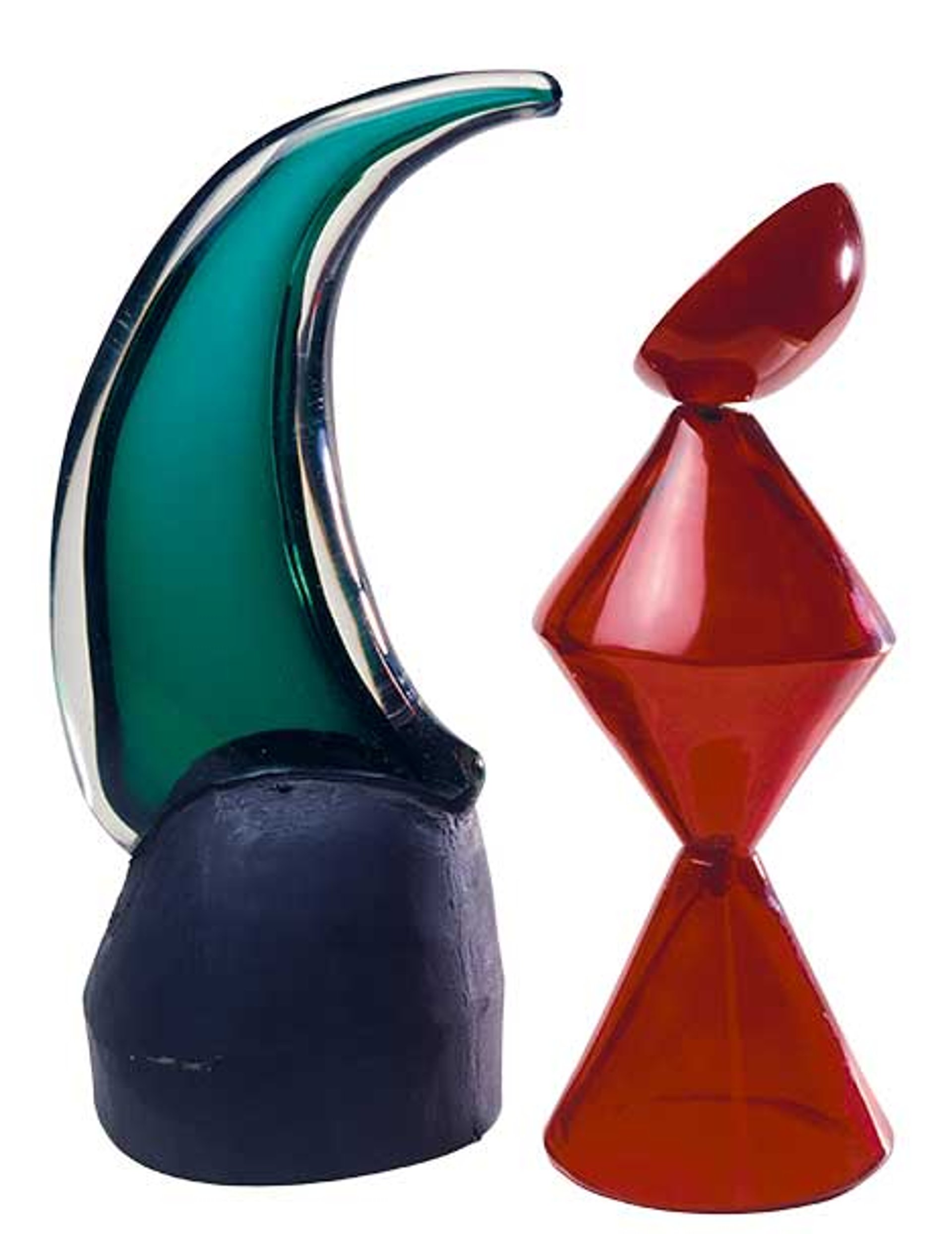
Max Ernst’s King (Re) and Queen (Regina), both from 1964 © Max Ernst, by SIAE 2026
Cocteau enjoyed designing extravagant mythological heads for the Fucina, as well as visiting the furnaces and discussing his ideas with the maestri. Both he and Jean Arp, the German sculptor and painter whose work also features in the exhibition, were “seduced by the colour” of glass and its richness, Beltrami says.
The results, though, may not have pleased everyone. The Swiss artist Walter Bodmer allowed his sketch Asymmetric Cat (1955) to be transformed into an oversimplified glass vessel. But after this, for reasons unknown, he never participated again.
The exhibition looks set to offer a fascinating insight into a very personal approach to collaborations between artist and craftsman, as well as an evocative record of an under-appreciated chapter in Venetian history.
• Fucina degli Angeli: Peggy Guggenheim and 20th-Century Artistic Glass, Peggy Guggenheim Collection, Venice, 14 November-29 March 2027