Since 1989, the Art Dealers Association of America (ADAA) had hosted its Art Show, which brought member galleries from across the country together for an annual fair in New York. Last year, the ADAA cancelled the 2025 fair less than four months before it was set to open, citing a need to take a “strategic pause” to reevaluate how to best serve its members.
This week, the newly-renamed ADAA Fair returns to the Park Avenue Armory (until 16 November), the first solely under the leadership of Kinsey Robb, who joined in 2024. Despite the new name and a few tweaks, it remains the same fair, she says.
“It’s a continuation. It's an evolution,” Robb says. “It is still a small-scale collegial fair of the members, so that hasn't changed either. It's just adapting into the environment and the time that we're in.”
One of those new aspects is a smaller exhibitor list. This year, 63 galleries are participating, around 12 fewer than the last edition. The intention was to give the fair more focus in a time when dealers and collectors alike are complaining of "fairtigue", both due to frequency and size (Art Basel Miami Beach, the largest art fair in the Western Hemisphere, will also scale down participating galleries this year).
The hiatus “gave us an opportunity to look at the oversaturation of fairs that were happening at that time, and the fatigue that people were feeling,” Kinsey says. “This scale feels nice to me.”
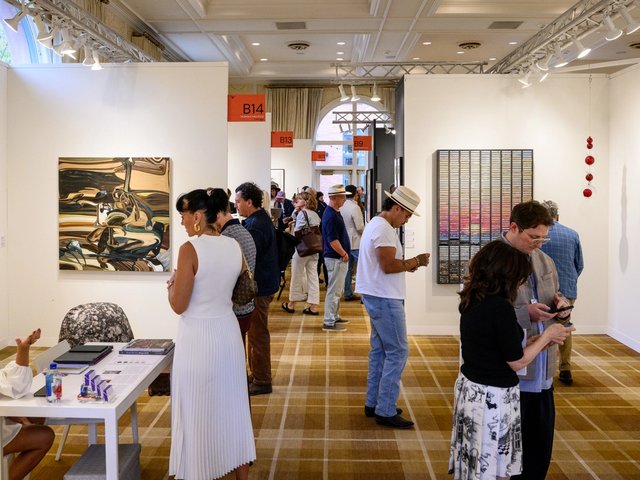
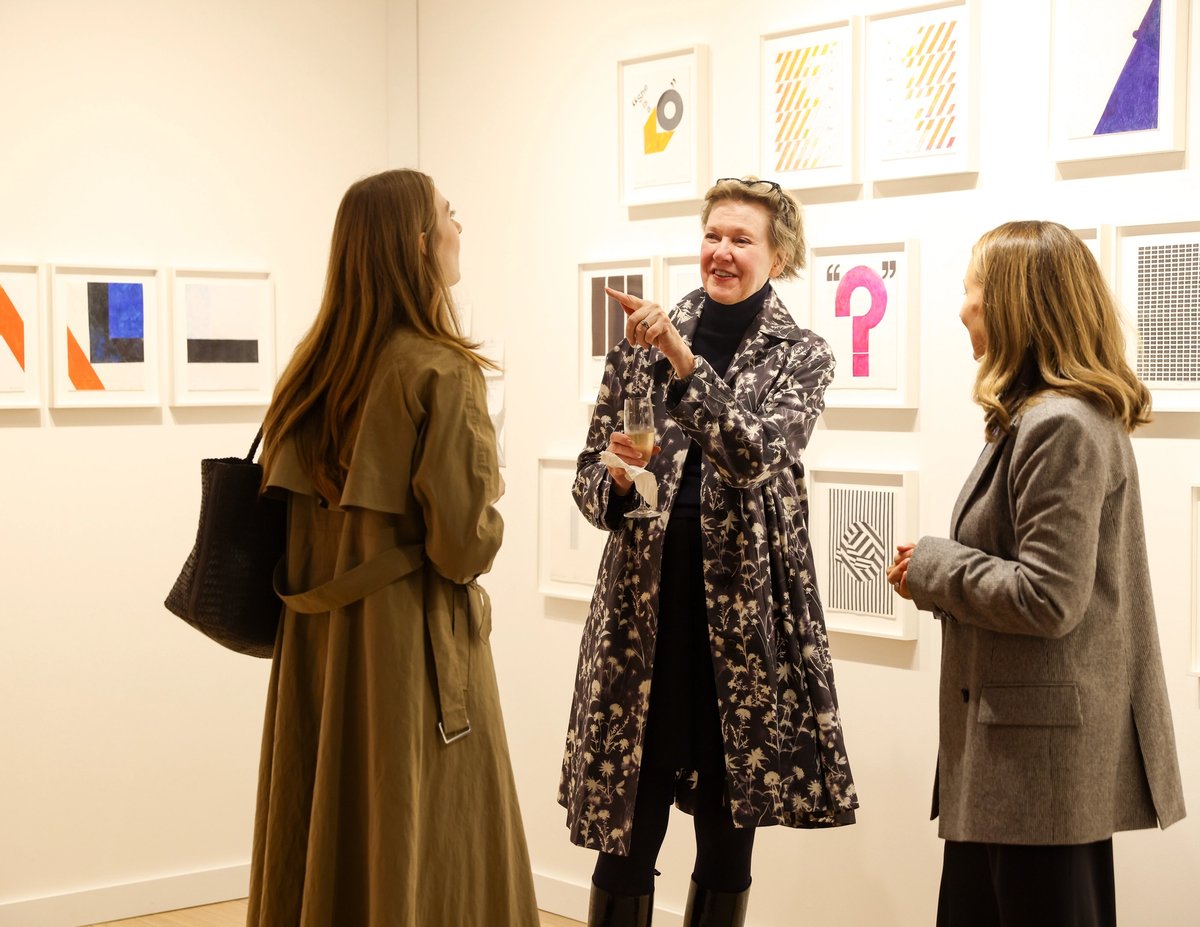
The reduction allows for a larger space around the circular bar at the center of this year’s fair, affording attendees more space to move and cut through the three-aisle expo. Visitors naturally found themselves socialising at the centre of the fair during the opening gala for the Whitney Museum of American Art on Thursday (12 November), which was well-attended despite the stormy weather and even a tornado warning in New York City. (During the ADAA fair's hiatus, its longtime preview night partner and beneficiary, the Henry Street Settlement, teamed up with the Independent fair.)
The partnership with the Whitney Museum has brought in a new, often-younger crowd, participating dealers say; works on display, meanwhile, skew heavily toward Modern and post-war secondary-market material rather contemporary works.
“I think deeply about the ecosystem of the art world, and how we all are connected,” Kinsey says. “Even if we all are in our own lanes or bubbles, we are all essential to each other in service of the art and in service of the artist.”
The dealers participating range from stalwarts like Hirschl & Adler and Kraushaar Galleries, founding members of the ADAA who participated in the Art Show’s inaugural edition in 1989, to first-time exhibitors like Alexander Berggruen, Sargent's Daughters, Piero Atchugarry, Nicodim and Hollis Taggart.
Taggart has run his namesake gallery for nearly 50 years but only recently became an ADAA member, he says, allowing him to apply for and participate in the fair for the first time. He says that in the first few hours of the opening gala, he saw a great crowd of visitors, often from the surrounding Upper East Side, different from the crowd that comes to the openings in Chelsea, where he has a space. The gallery is presenting a dual stand dedicated to two women Abstract Expressionist painters: Michael (Corinne) West and Teruko Yokoi.
“I think it's very mixed, it’s a bifurcated market,” Taggart says of the art market leading up to the fair. “There’s so many daily events that happen politically and financially, like the meltdown with Nvidia. I think the market's OK, but when you consider world events, it's a miracle that it's still as good as it is.”
The most valuable transactions reported to date at the fair are Agnes Pelton’s The Well of Peace (1932), which had an asking price of $2.4m, and Beauford Delaney’s Untitled (Paris) (1986), which was priced at $1.6m, both from the stand of New York-based dealer Jonathan Boos.
Another Upper East Side local, Kraushaar Galleries, reported the sale of two paintings for six-figure sums, as well as several works priced below $2,000. James Barron Art says it sold works by Beverly Pepper, Kenneth Noland and Kikuo Saito, each priced between $40,000 and $85,000, while Yoshii Gallery sold several works priced between $6,000 and $80,000. The Chelsea-based gallery and advisory firm AH Arts sold a work on paper by Helen Frankenthaler for $75,000. The international gallery Perrotin sold two Susumu Kamijo paintings priced between $30,000 and 45,000. Jessica Silverman from San Francisco reported eight sales from its presentation of new works by Julie Buffalohead, ranging in price from $22,000 and $50,000.
The Tribeca-based dealer Charles Moffett, who previously took part in the 2024 edition, says he appreciated the 2025 break and how the ADAA doesn’t pressure members to take part. During the opening gala, Moffett’s gallery sold two paintings by Lily Stockman priced at $20,000 apiece, and three paintings by Julia Joe priced at $30,000 each.
“With so many of the fairs, once you're on the hamster wheel, it's like, go go go. You apply every year, and if you don't apply or if you decide to sit out a year, you go to the back of the line,” Moffett says. “I'm just grateful that this feels more like an organisation that wants to see the best for each gallery.”
- ADAA Fair, until 16 November, Park Avenue Armory, New York