When a major artist dies, the tributes that come pouring in often gloss over personal shortcomings, whether the failure to complete educational degrees or the abandonment of wives and children. But the memorial to Betye Saar this week at the Getty Center did just the opposite, setting into relief how powerfully she managed to balance—even integrate—acts of mothering and artmaking. (She also managed to earn her bachelor’s degree at the University of California, Los Angeles in 1949, a time when there were few Black students.)

Earlier this week the Getty filled its largest, 450-seat auditorium with fellow artists, curators, friends and family members of the artist, who died last July only four days short of her 100th birthday. The tone was sombre and celebratory, ending with her brother-in-law Bennie Maupin on saxophone and the band Bayou Bump leading a procession, as Saar had wanted.
One of the most powerful tributes came from her eldest nephew, Channing Johnson, who described her as a “true” if untraditional matriarch. “She was as impactful and skilful as a family matriarch as she was a gifted artist. She gathered us together whether it was in a back yard or public park. She kept our family history in the forefront of our minds and in the public eye—you can literally see our family in her artwork,” he said, referring to assemblages where she incorporated family snapshots or memorabilia.
Johnson also celebrated Saar’s sense of humour and adventure, noting that she learned to belly dance early on and showed off her dance moves in June when she was honoured by the Museum of Modern Art (MoMA) at its Party in the Garden gala.
His tribute followed one by MoMA director Christophe Cherix, who recalled Saar’s studio in Topanga Canyon being “unlike any other studio I had ever seen…overflowing with treasures, almost archaeological, with objects patiently waiting sometimes years or even decades to be gathered, recognised [and] assembled into works of art”.
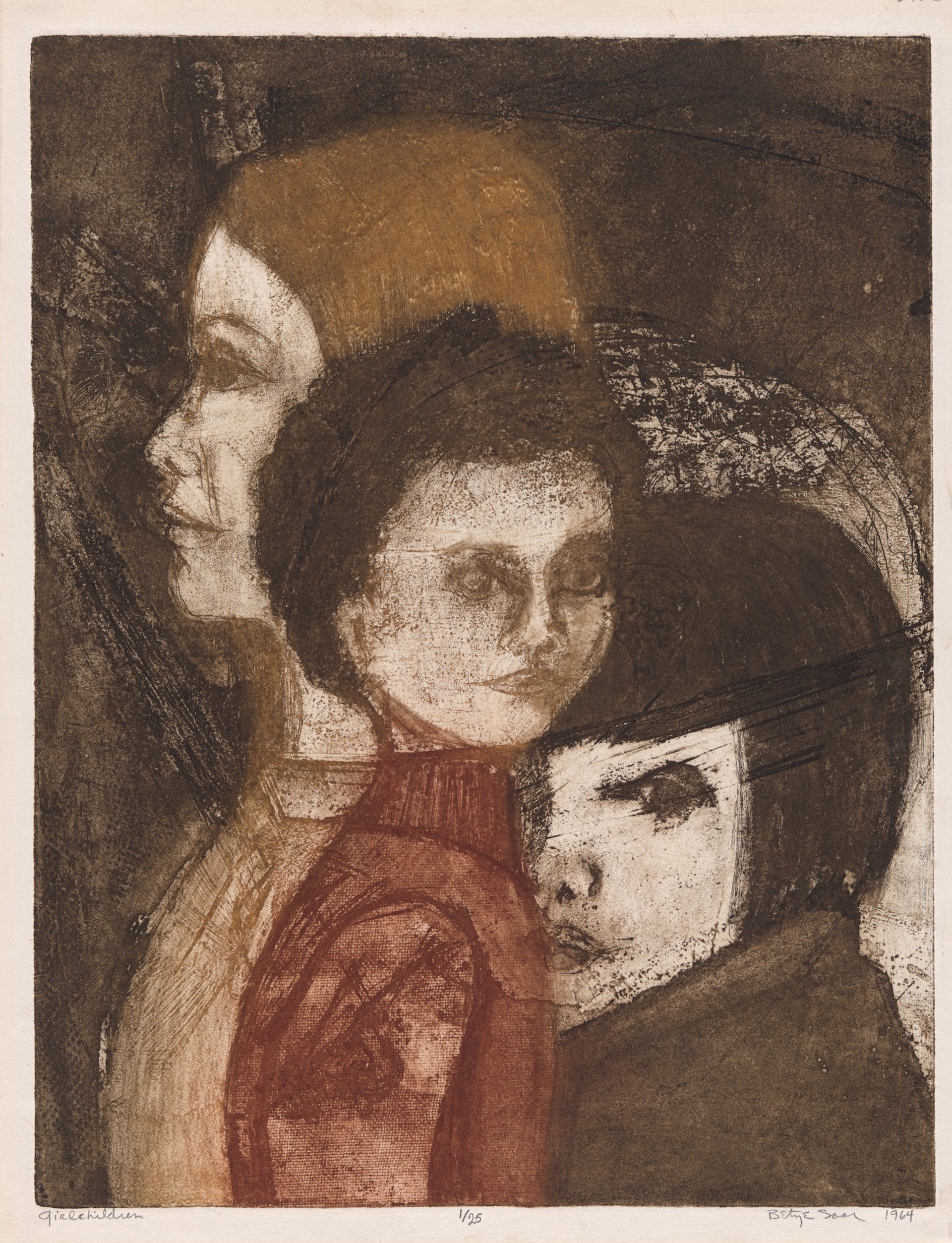
Betye Saar, Girl Children, 1964 © Betye Saar, courtesy of the artist and Roberts Projects, Los Angeles.
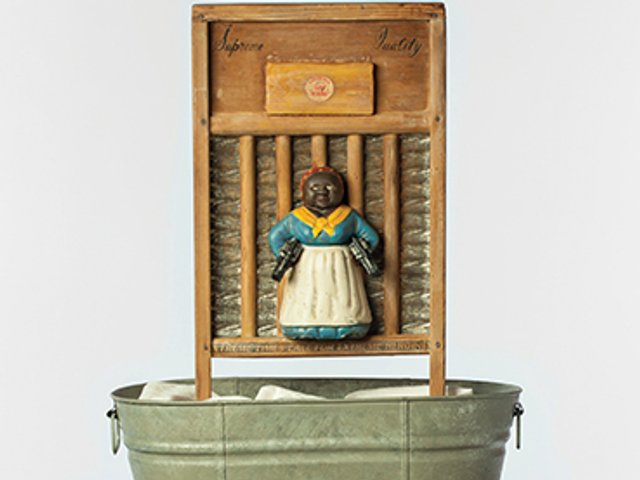
Saar’s longtime home and studio in Topanga is where she developed her deeply spiritualist, Black-centred, female-empowered vision through printmaking and assemblage, most famously using a windowpane to organise the esoteric, celestial images that make up the 1969 work Black Girl’s Window. It is also where she raised her three daughters: the sculptor Alison Saar, the mixed media artist Lezley Saar and the writer Tracye Saar. Early on they liked to pretend the wheel of their mother’s printing press was the helm of a pirate ship, and they have said in interviews they are happy they survived without losing a finger or hand.
The veteran Los Angeles collector Joy Simmons, who recalled bringing her week-old daughter Naima to a Saar opening at the Jan Baum gallery in 1981 (“I was not going to miss this opportunity to celebrate a Black woman opening up at a white woman’s gallery”), described the Saar creative lineage, which extends to grandchildren who work in the arts today.
“To Alison, Lezley, Tracye and the whole family: I’ve watched three generations of Saar women make this city’s art history something special. Betye’s work belongs to museums now,” Simmons said, “but I know her proudest moment and her proudest accomplishment is all of you.”