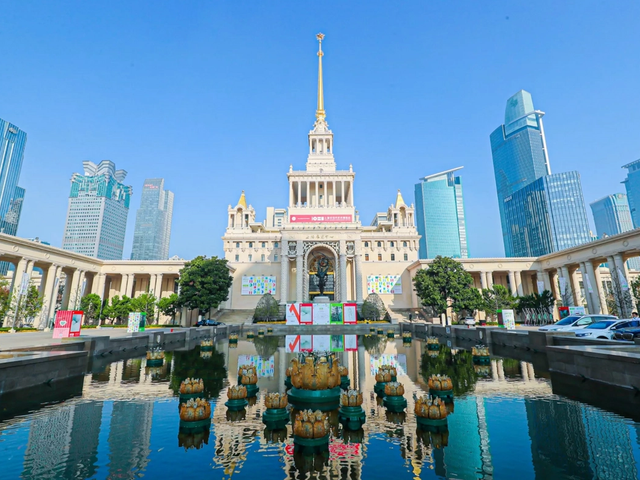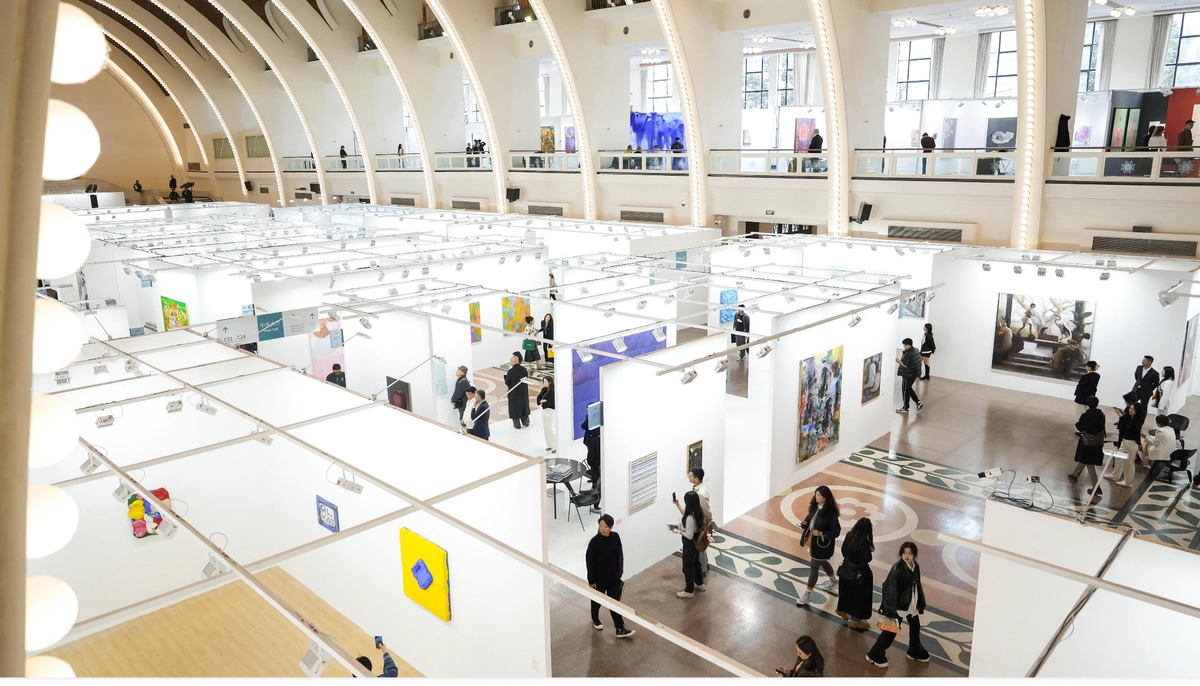
Shanghai’s two leading art fairs, West Bund Art & Design and Art021, opened this week against a backdrop of slowing economic growth, subdued confidence in China’s art market and an increasingly crowded international art calendar. While the city no longer commands the same international panache it enjoyed before the pandemic, galleries report encouraging early sales, suggesting that committed collectors remain active despite a more cautious market.
“I think the serious people who have a long-term idea of what they want to do, they keep collecting,” says René Meile, director of Galerie Urs Meile, which has a location in Beijing. He adds that younger collectors increasingly favour artists of their own generation. While established artists continued to attract buyers, collectors were taking longer to commit to expensive works. Meile attributed the shift partly to the departure of speculative buyers from the market.
Meanwhile this year’s art week brings an explosion of art events city-wide and boasts many newcomers both in terms of industry visitors and new spaces, including three new galleries. Hangzhou’s longtime fair regular Inna Art Space just opened Inna Front Room in the Lujiazui business district, making it the first significant gallery on the Pudong side of the river. Chen Yongwei, the former director of nonprofit Pond Society, has opened Shanghai Industry atop the Suhe House art cluster. PTT Space, a rising star gallery from Taipei, meanwhile this week opened an outpost at the M50 gallery complex.
“Even though the Chinese market is at an all-time low, Shanghai is still a vibrant international city with many art institutions,” says Robert Hsu, who founded PTT in 2020. “Considering the past art week, the number of openings parties and fairs is still through the roof, surpassing Seoul Art Week and coming close to Hong Kong Art Week.”
Hsu says he also has existing “base infrastructure” in the city with staff and relationships with local artists and collectors. “As a second generation gallerist, I feel we have to keep moving in this new era. The market, the business, the people have all changed. To survive, I have to step out of our comfort zone and explore.”
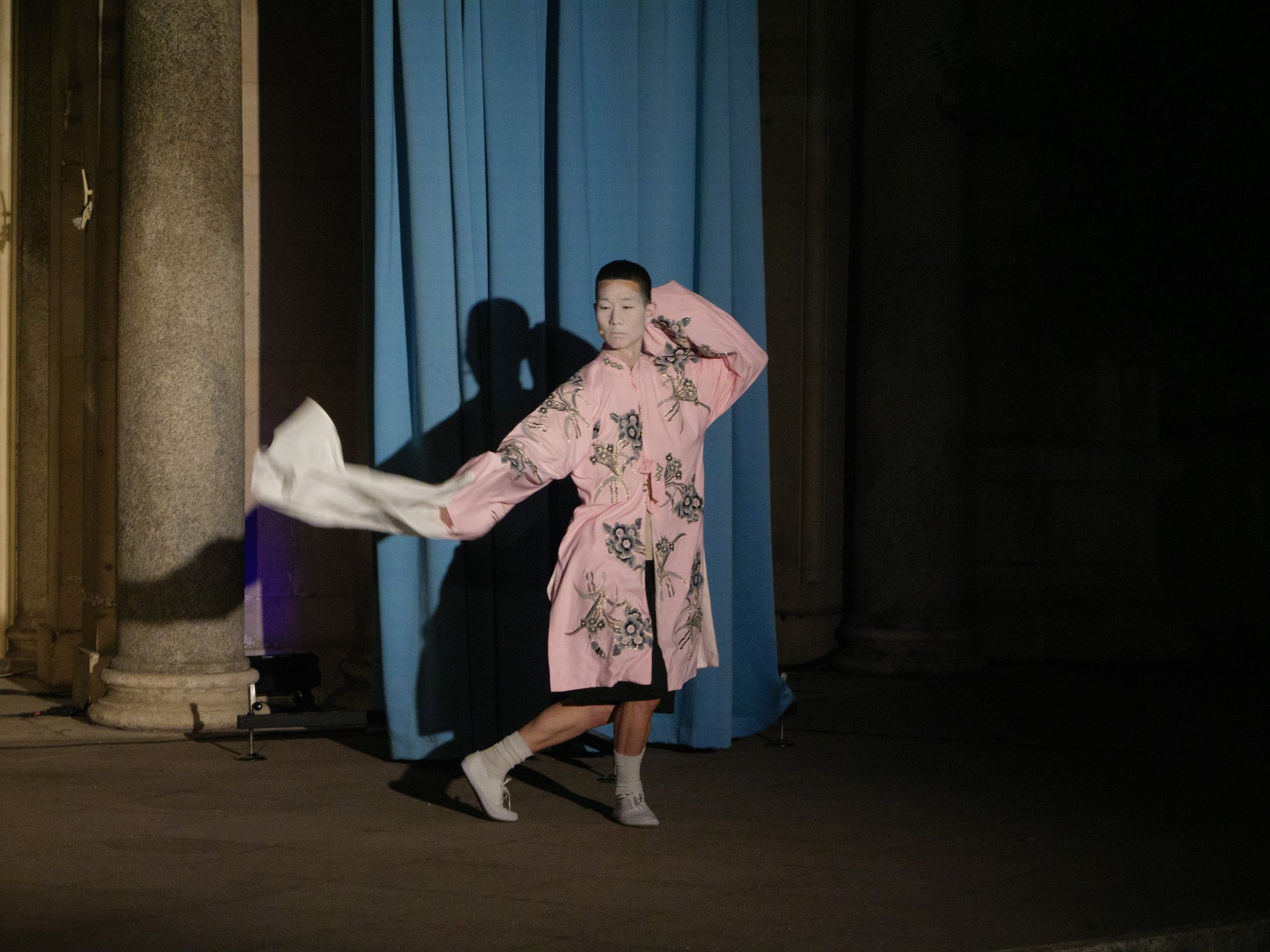
Jae Pil Eun's Night Walking, showing at Hang Over
Courtesy of the artists and SYSTEMA © SYSTEMA, 2026
Along with the gallery, Hsu is part of the team organising the new boutique fair Art Fusion Canton in the southern Chinese city Guangzhou next month (3-7 December). In Shanghai, the popup fair Hang Over (11-15 November) is going strong in its second year. Moving from last year’s restaurant to an event space in a new lifestyle complex on Donghu Lu, it this year features 18 galleries including Tokyo’s Misako & Rosen, Seoul’s Cylinder along with Shanghai’s Antenna Space, Vanguard and Linseed, owned by Hang Over founder Zhuang Lingzhi.
The 13th edition of West Bund Art & Design (10–15 November) brought together 85 galleries, including Hauser & Wirth, Perrotin, Thaddaeus Ropac and White Cube. Meanwhile, the 14th Art021, hosting 111 galleries at the Shanghai Exhibition Centre, has introduced a new acquisition initiative with the Los Angeles County Museum of Art (Lacma), supported by Chinese collectors, aimed at bringing works by Asian and Asian diaspora artists into the museum’s collection.
At West Bund, Thaddaeus Ropac reports several opening-day sales, led by Megan Rooney’s That Sky (Atlas) (2026), sold for £400,000 to a Chinese foundation. Other transactions included a painting by Martha Jungwirth for €200,000, a Robert Longo work for $90,000 and a painting by Han Bing for €55,000, acquired by an Asian museum. A work by Joan Snyder was also sold to a Chinese museum.
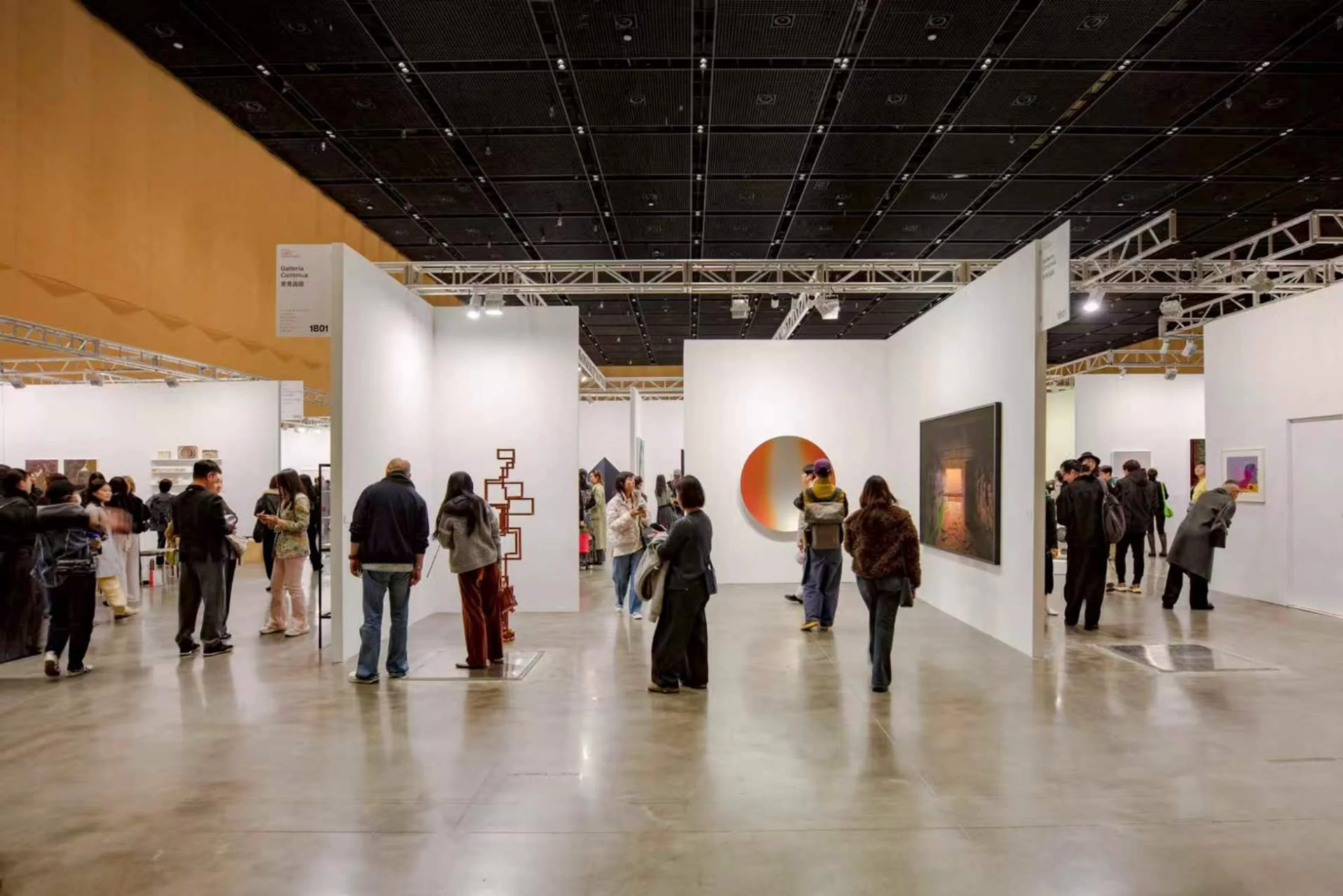
Visitor at West Bund Art & Design 2026
Courtesy of West Bund Art & Design
Dawn Zhu, the gallery’s Asia director, praises the enthusiasm of collectors, noting that the gallery had made early sales to both institutions and private collections. “We are seeing collectors who have travelled from across South East Asia and even a few from Europe,” she says.
Hauser & Wirth also reports significant sales at West Bund, led by Louise Bourgeois’s bronze sculpture Point of Contact (1967–68, cast 2006), which sold for $450,000 to a museum in Kuala Lumpur. Other transactions include Lee Bul’s Perdu XXXIII (2020), sold for $260,000 to a private collection in China, and another Bourgeois work, Femme (2008), acquired by a Chinese private collector for $165,000. The gallery also reports the sale of George Condo’s Black and Red Composition (2026) for $200,000.
At Art021, Galerie Urs Meile reports sales of works by Xie Nanxing for approximately RMB 1.2m and Ju Ting for RMB 400,000, alongside works by younger artists Chen Zuo and Miao Miao priced between RMB 100,000 and RMB 150,000, and a smaller painting by Vietnamese artist Mai Ta for RMB 40,000.
Also at Art021, Shanghai-based gallery Bank reports strong early sales of Liang Hao’s works, priced 60,000 to 300,000 RMB, and of a large Jiang Cheng painting for over 500,000 RMB. The gallery reports that Lacma may acquire a video work made in 2000 by Los Angeles-based artist Patty Chang.
Despite the more subdued atmosphere, some galleries remain optimistic about the depth of China’s domestic market. Liang Xiao, a spokesperson for Perrotin, which has operated a Shanghai space since 2018, says that the slowdown had given collectors more time to select works they genuinely appreciate.
He suggests that the growth of new art fairs in Yokohama, Seoul and elsewhere would not fundamentally undermine Shanghai’s position, given the size of China’s domestic collector base. “Even after all these years, there are still many collectors we have yet to reach,” Liang says, adding that Shanghai remains an important entry point for collectors from across mainland China.
Hsu says the feedback for PTT Shanghai has been “quite positive” in the debut week, but “the market is not at its best.” Transactions have been slow, but included some successful placement of works with established collectors. “As the old saying goes, the gallery business is a marathon, not a sprint.”