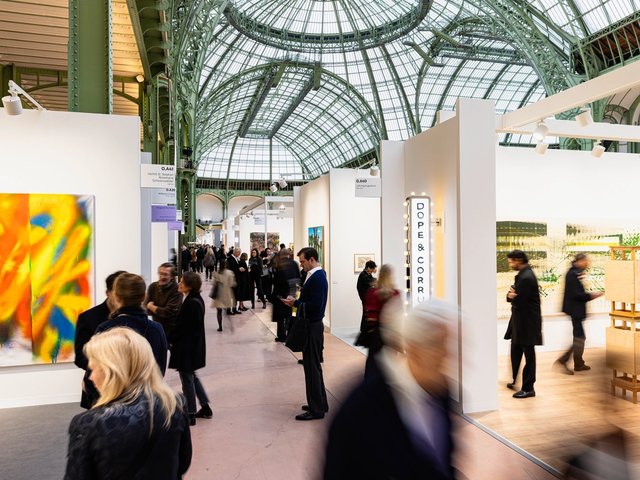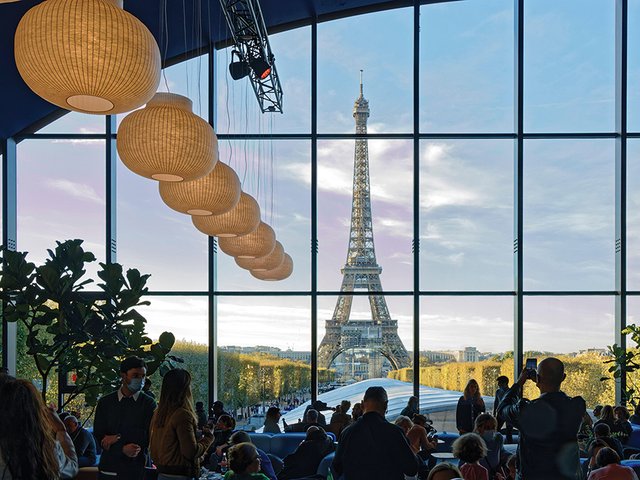
October’s Paris art week had become the must-attend fixture of the international art market calendar, particularly for wealthy Americans. No other city could match the range and quality of the French capital’s art fairs and exhibitions, both at public museums and private foundations. And what about all those charming restaurants, cafes and shops?
“It’s important to be in Paris,” said Chris Sharp, the Los Angeles gallerist and founder of Post-Fair, a boutique California-based event that held its first edition in the French capital this October. “Paris is the undisputed capital of the art world—once a year,” Sharp added, speaking at Post-Fair’s preview on 19 October, in the chic Marais district. Nearby, someone had sprayed “mort aux riches” across the window of a bank.
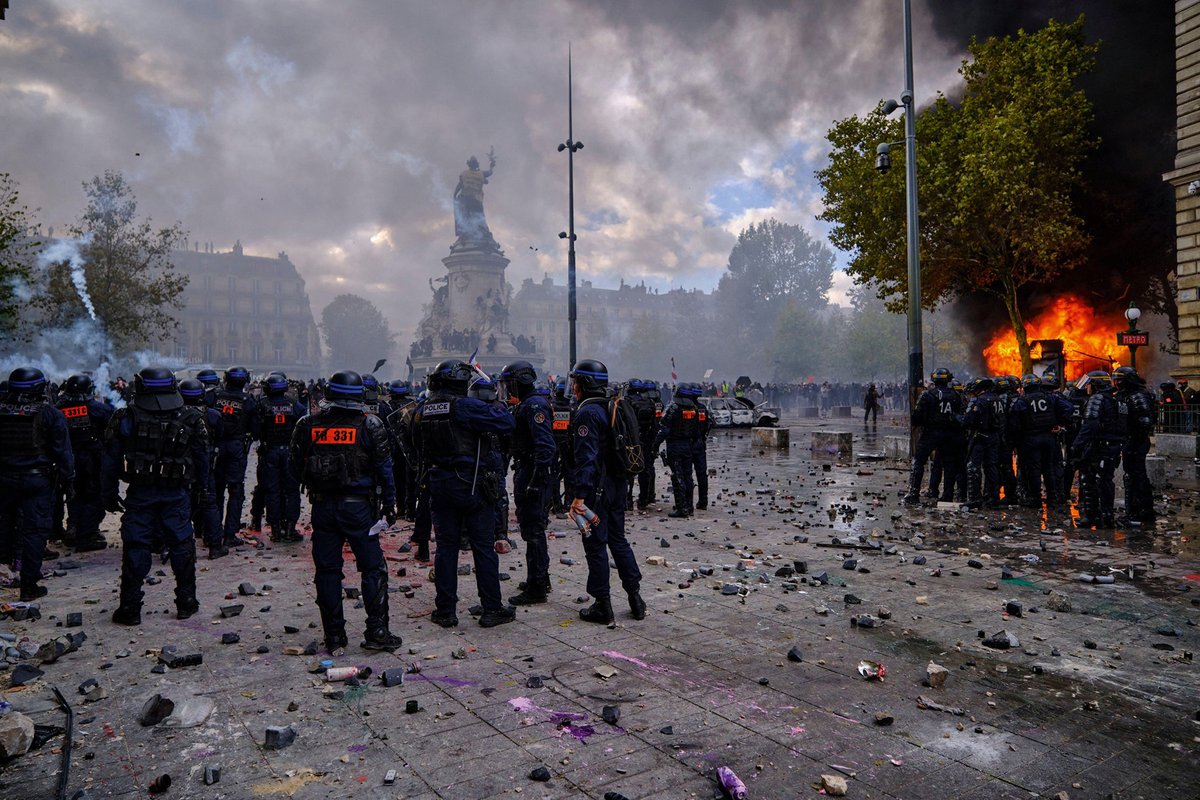
The previous weekend, Paris had been rocked by mass demonstrations that in some areas had escalated into riots and looting. Further demonstrations, highlighting the neglected state of France’s secondary schools, the ever-rising cost of living and other grievances, had been planned in Paris and other French cities on the afternoon of Saturday 24 October. Unemployment in France for those aged 15 to 24 currently stands at 21.5%, almost three times the rate in neighbouring Germany.
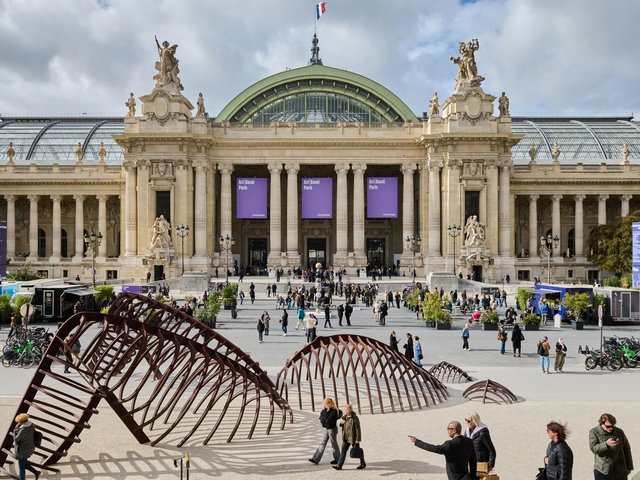
On Tuesday 20 October, the day of the ultra-exclusive Avant-Première pre-preview of Art Basel Paris in the Grand Palais, the French activist collective Pillage de Classe (class plunder) posted a message on Instagram exhorting protesters to “take back” the famous Belle Époque exhibition hall on Saturday, the penultimate day of the week’s flagship fair.
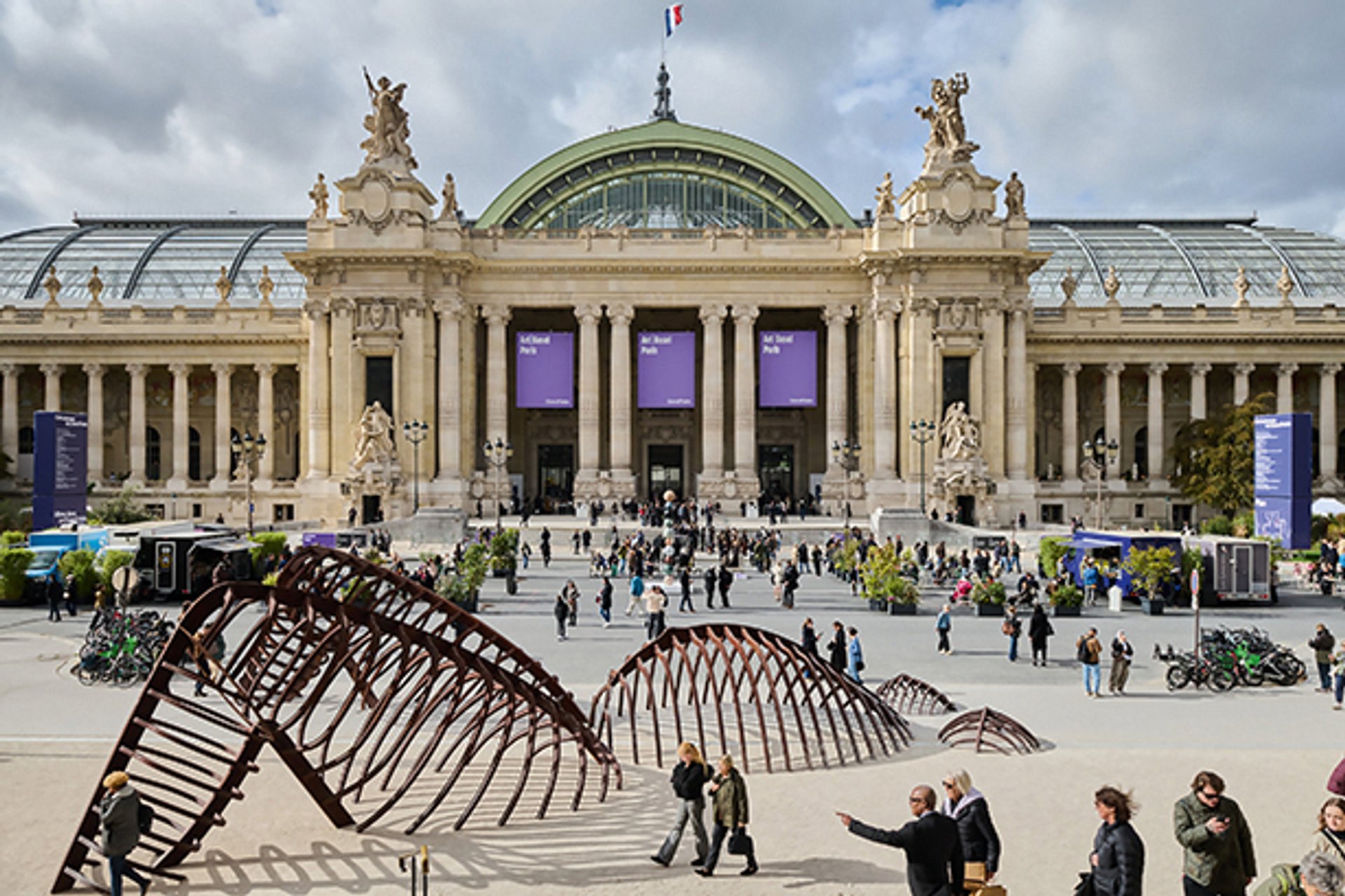
Art Basel Paris has been held in the historic Grand Palais since 2024
Courtesy of Art Basel
Of course, the Grand Palais was not stormed, Bastille-style. In the highly unlikely event of protesters managing to “take back” the building, they would have been disappointed, just as revolutionaries had been in 1789, when they discovered the prison they had liberated contained just seven detainees. Art Basel Paris, taking no risks, had closed the event two days early on Friday evening (after an excoriating letter from France's gallery association to fair director Karim Crippa, Art Basel recompensed exhibitors 20% of their stand fees).
The mega-gallery Hauser & Wirth took even fewer risks, emptying its stand the day before, leaving three paintings by the local artist Hélène Delprat. The fair had been shortened to three VIP preview days plus just one day for the general public. Satellite fairs, like Paris Internationale and Post-Fair, closed at lunchtime on Saturday.
That Saturday afternoon, more than 100,000 people duly turned out to demonstrate. However, these proved predominantly peaceful and were confined by the police to the outskirts of the city.
The disruption in Paris had surely been a momentary blip. And Art Basel’s ultra-wealthy invitees, which the top end of the international art trade likes to call the “right kind of people”, had already been and gone. But what about the reputational impact?
Luxury playground?
“The collateral damage is substantial considering the whole point of being in Paris is to let yourself surrender to its myriad charms,” said Andrew Terner, a New York-based private dealer and collector, speaking in the immediate aftermath of the early closure.
The French authorities blamed “ultra-left radical groups” for the violence that had marred weeks of otherwise peaceful protests, begun in September by discontented teenage lycée students. Pillage de Classe is certainly a left-wing radical group; it views Art Basel Paris as a luxury playground in which art is used by the ultra-wealthy to protect their capital from taxation.
But maybe (leaving aside its desire to take the Grand Palais by storm) Pillage de Classe has a point, at least with regard to the fair’s top French clients. In France, the net worth of the country’s 500 wealthiest individuals has ballooned from 6% of the country’s GDP in 1996 to 42% in 2024, according to a much-cited article in the French business magazine Challenges. Tax reforms introduced by President Macron in 2017 excluded stocks, financial assets (including art) and corporate investments from wealth tax calculations.
Tax breaks
Moreover, in 2003 the French government had granted tax breaks of up to 75% for private individuals and 60% for corporations that supported the arts. This encouraged investment in glitzy private foundations, such as the Fondation Louis Vuitton, François Pinault’s Bourse de Commerce, the Fondation Cartier and the newly opened Île Seguin luxury hotel and Large art centre, which have become such an alluring feature of the Paris art scene for international visitors. According to research by Apollo magazine, Bernard Arnault’s LVMH luxury group received an aggregate tax break of €518.1m between 2007 and 2017 to set against the €790m the corporation spent building the Frank Gehry-designed Fondation Louis Vuitton.
The ultra-wealthy have also grown a lot wealthier in the US in recent years. The share of the nation’s wealth held by the richest 0.0001% (around 200 individuals) is now more than seven times what it was in 1980, according to a November Substack posted by the Nobel Prize-winning economist Paul Krugman.
Today’s art market is dominated by the world’s wealthiest people buying the world’s most expensive art. Most of these people are pretty old. This is not a good look now that the Democrats have won a landslide victory in the US midterm elections, driven by a massive turnout of young voters. Authoritarian rulers like Viktor Orbán in Hungary and Aleksandar Vučić in Serbia have been voted out of office. Young people have been protesting en masse about their diminished life chances in France and more than a dozen other countries across the world.
Suddenly, ordinary people matter again. The young matter. But do they matter at art fairs?
Young people priced out
Take ticket-pricing. In October, the general public were charged £48 each to attend Frieze London, with students being asked to pay £32. Does Frieze, which is owned by the billionaire Ari Emanuel, the former chief executive of the US entertainment conglomerate Endeavor, want to actively discourage young people from visiting? Or is that ticket price an acknowledgement that pretty much the only students who can now afford to attend the UK’s art colleges come from more affluent backgrounds?
The following week, Art Basel Paris, part of James Murdoch’s Lupa Systems investment portfolio, was charging €47 for a standard day pass and €30 for a student ticket. “The galleries pay for the fair. Visitors are a side business,” says Magnus Resch, a New York-based author and art market entrepreneur. According to Resch’s back-of-an-envelope calculations, stand fees generate at least €15m, while tickets bring in less than €3m. “Charging the public €47 isn’t about the money. It’s about keeping the fair exclusive.” (Art Basel does not reveal detailed breakdowns of its revenue streams.)
“It is important for the public to visit an art fair,” says Guillaume Sultana, whose contemporary art gallery exhibited on the upper level of Art Basel Paris, where footfall is slower than down on the ground floor among the mega-galleries. “But a lot of general visitors on the weekend are a bit frustrated because public tickets are very expensive.”
The main business is done during the very first days of an art fair, always
Sultana acknowledges that “the main business is done during the very first days of an art fair, always”. Despite the fair being truncated, Sultana describes the experience as “very good”, having sold a painting by the young Syrian artist Osama Al Rayyan during the preview for €15,000, among other works.
In the funfair-mirror optics of the international art market, €15,000 might appear a relatively “affordable” price point. But traditionally, sensible collectors have been advised to spend no more than 5% of their available wealth on art. So, whoever bought that Al Rayan painting, should, theoretically, have had €300,000 of spare cash available. For would-be younger collectors in today’s tough economic conditions, these are intimidating figures, unless they can call on the bank of mum and dad.
Collecting art is in serious danger of being perceived as something that old, rich people do. With so many established collectors ageing and selling, rather than buying, and a democratic wave pushing back against oligarchical wealth, this might be a good moment for the art market to think more about inclusivity than exclusivity, to take a broader view of who might be the “right kind” of people.
After all, who wants “death to the rich” sprayed across their gallery window?