One of Bolivia’s oldest churches, known as the “Sistine Chapel of the Andes” due to its impressive murals, is nearing completion of a conservation project focused on its roofs, stone buttresses and adobe walls—a process that began in May.
The US Department of State’s Ambassadors Fund for Cultural Preservation (AFCP) financed the work at the Santiago de Curahuara de Carangas church, located in the Andes mountains at almost 4,000m above sea level. Approximately 170km west of the city of Oruro, the church was declared a National Monument in 1960.
“The Curahuara church has great value because of its paintings, so it’s essential that the roof is in good condition to prevent leaks that could compromise the murals,” Josefina Matas, the architect in charge of the project, tells The Art Newspaper. This work follows restoration that took place more than a decade ago, funded by the German embassy in La Paz.
The restoration team has had to learn the church’s unique roof-building technique from locals, placing straw on top of hollow cane mats using a method that makes it more resilient. Hollow cane is hard to find in the highlands, so they needed to bring it in from Bolivia’s southernmost region of Tarija.
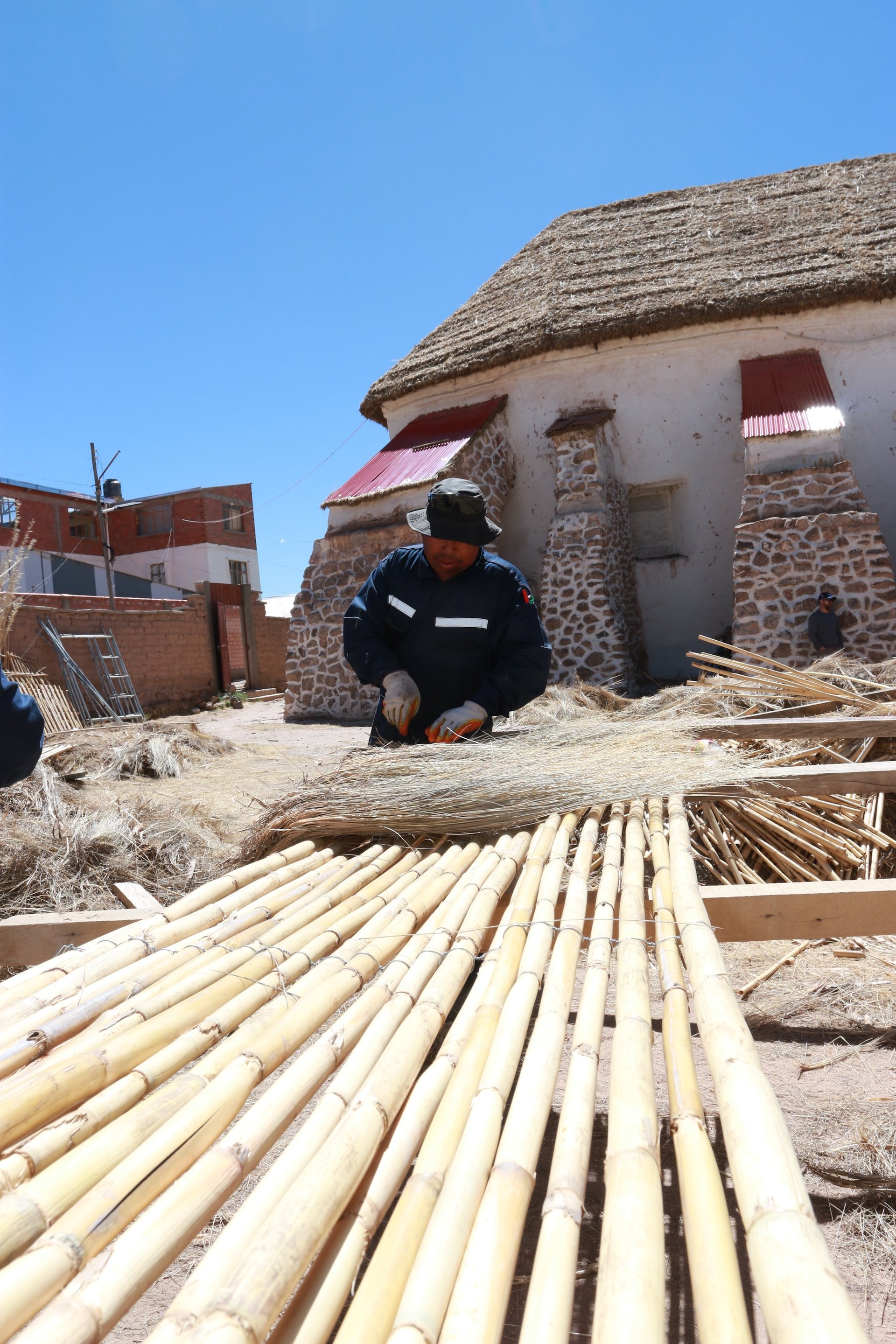
Working on the church’s new roofs Courtesy US Embassy in Bolivia
During the previous restoration, corrugated metal sheets had been added to extend the lifespan of the roofs, which cover 800 sq. m. This time, workers replaced the damaged sections. The project was delayed because of proteststhat blocked roads across the country in May and June, preventing the arrival of materials and postponing its completion by one month—from the end of October to the end of November.
'A complete catechesis'
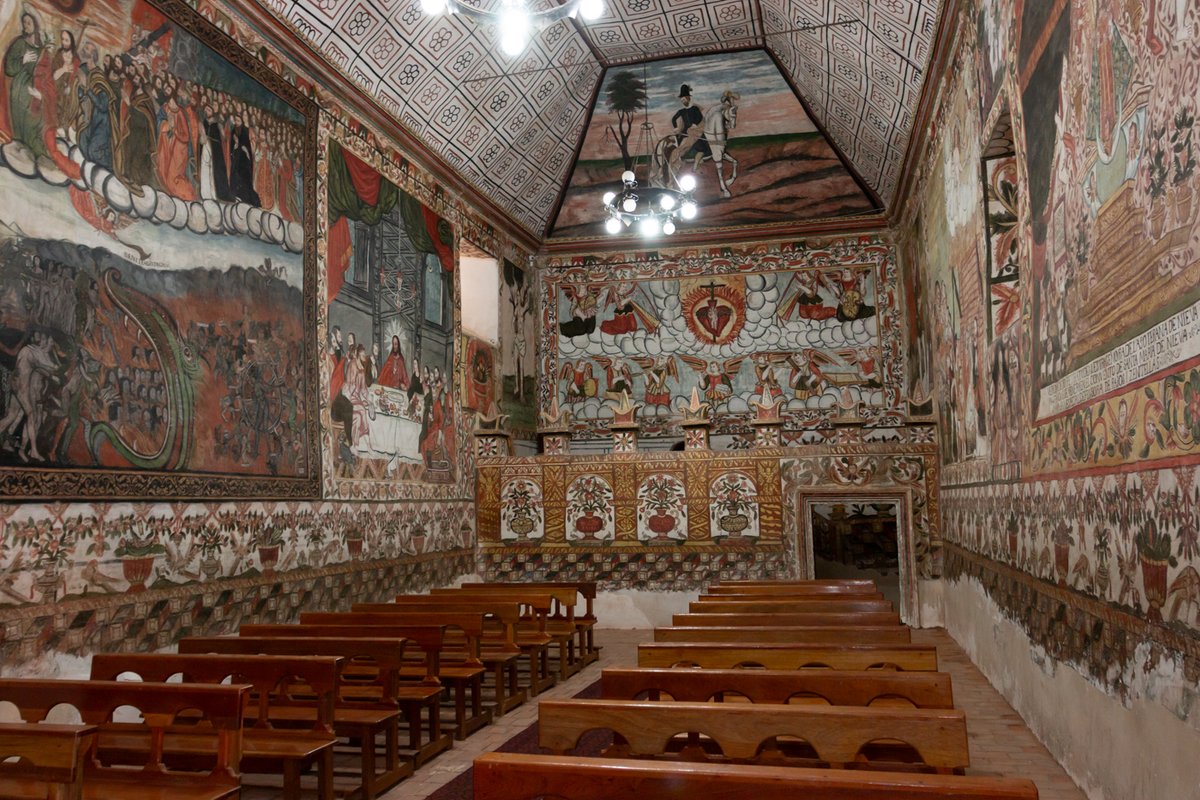
Built by Augustinians between the late 16th and early 17th centuries, the church houses paintings of the Nativity, the Last Supper, the Crucifixion and the Last Judgment in a display of religious syncretism. “It’s a complete catechesis,” Matas says of the murals, which were made using natural dyes and finished in 1777.
There are also representations of the apostle Santiago (James), the church’s patron saint. Local Indigenous people identified him with Illapa, the Inca god of thunder. The style of the paintings ranges from Mannerism to 18th-century Baroque, with depictions of birds and flowers—an example of mestizo art.
“It’s very striking when you enter the church, because there isn’t any empty space,” Matas says. “Everything is painted.” The paintings even cover the baptistery and sacristy. “Most of the churches in the region have murals. Here, they have been well preserved,” she adds.
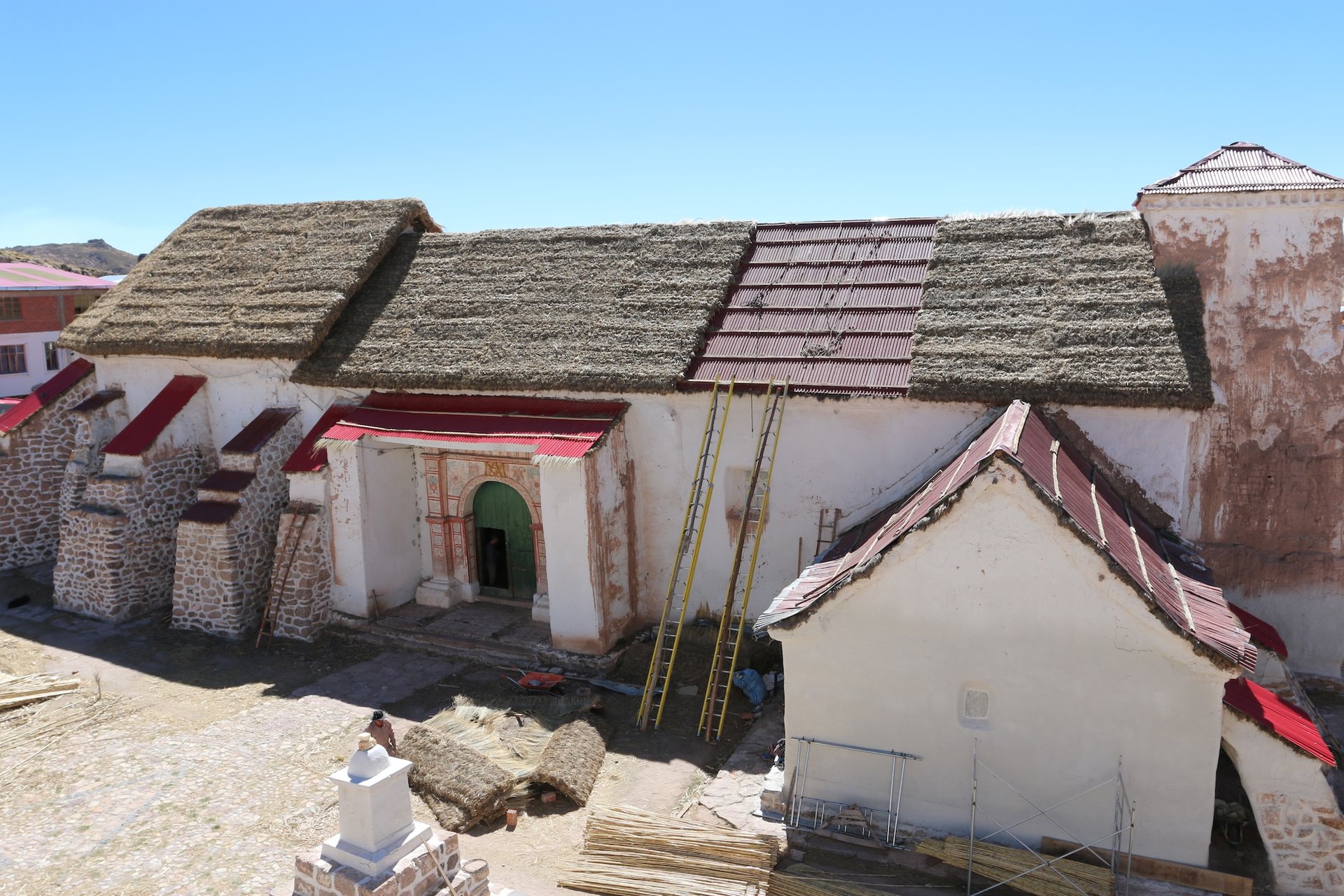
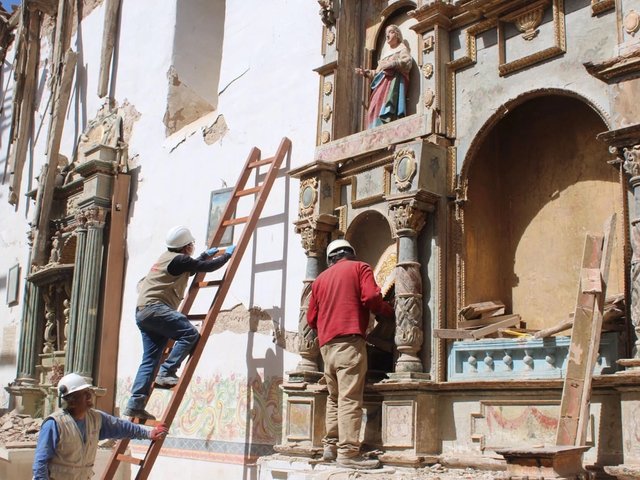
Restoration underway at Santiago de Curahuara de Carangas Courtesy US Embassy in Bolivia
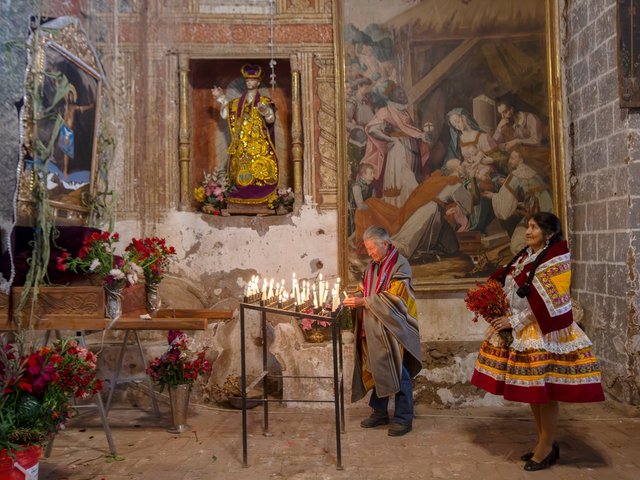
The building has a single entrance through a side wall, similar to other churches in the area, and is surrounded by an atrium with two gates. “Indigenous people weren’t used to entering the building for religious activities, so the atrium was spacious enough to accommodate those who wanted to be evangelised,” Matas says.
The bishop of Oruro, Krzysztof Białasik, was the one who submitted the restoration project to compete for US funding. Since 2001, the AFCP has financed more than 30 projects in Bolivia, including the restoration of colonial paintings, the protection of Baroque musical manuscripts and the creation of a digital catalogue—including archaeological artefacts, pre-Columbian textiles and colonial art—available to customs services to curb the illicit trafficking of these goods.
To celebrate the completion of the conservation of the church, a mass will be held in Santiago de Curahuara de Carangas with the bishop and the apostolic nuncio on 15 December.