The arrival of Frieze furthers Abu Dhabi’s ambitions to become a premier events destination for global elites. Beyond the fair (which runs until 22 November), the coming weeks will see the jetset descend on the emirate to bid on Picassos at Sotheby’s, sit front row at the Grand Prix and Abu Dhabi Open tournaments, and rub shoulders with celebrities and chief executives at the Global Cultural Forum and the Milken Institute's Middle East and Africa Summit.
But a glittering trail of franchised events is unlikely to leave a lasting impact on the local communities that have built Abu Dhabi and will continue to sustain it. Focusing efforts on attracting the itinerant super-rich might also prove short-sighted for a country surrounded by well-armed and hostile neighbours. So, how to engage those who will remain when regional conflicts escalate or the markets turn?
Public art appears to be one strategy, so proposes the second edition of Public Art Abu Dhabi Biennial (until 15 February 2027). Organised by the Department of Culture and Tourism (DCT), the exhibition Home: A Glossary for a Communal Sense of Place has brought 18 works—most of them new commissions—to public sites across the city, with a further four situated in the nearby oasis desert town of Al Ain.
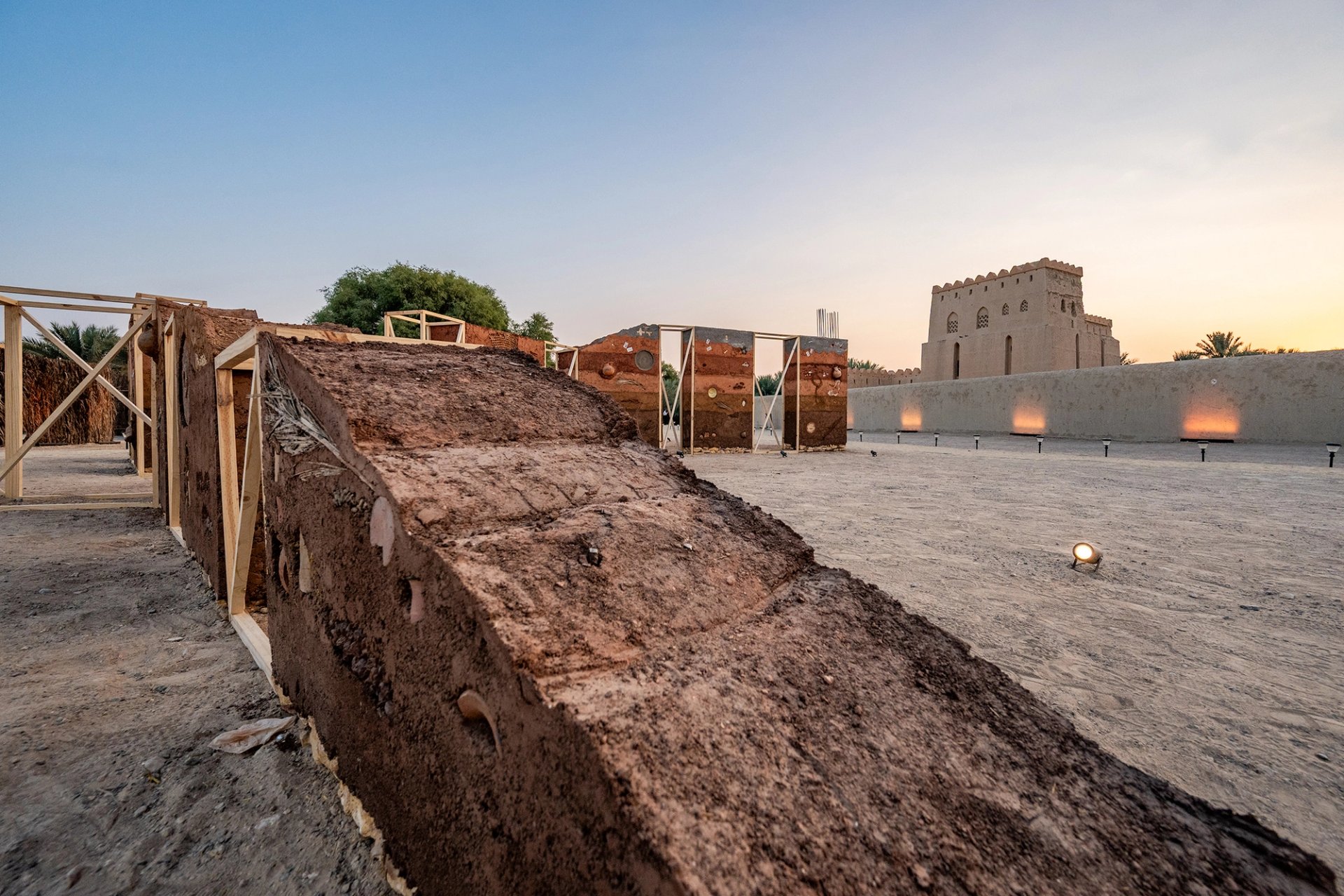
Asunción Molinos Gordo, Bil Hana wa Al Afia (2026), installation view, Al Ain.
Image courtesy of Public Art Abu Dhabi, Department of Culture and Tourism— Abu Dhabi
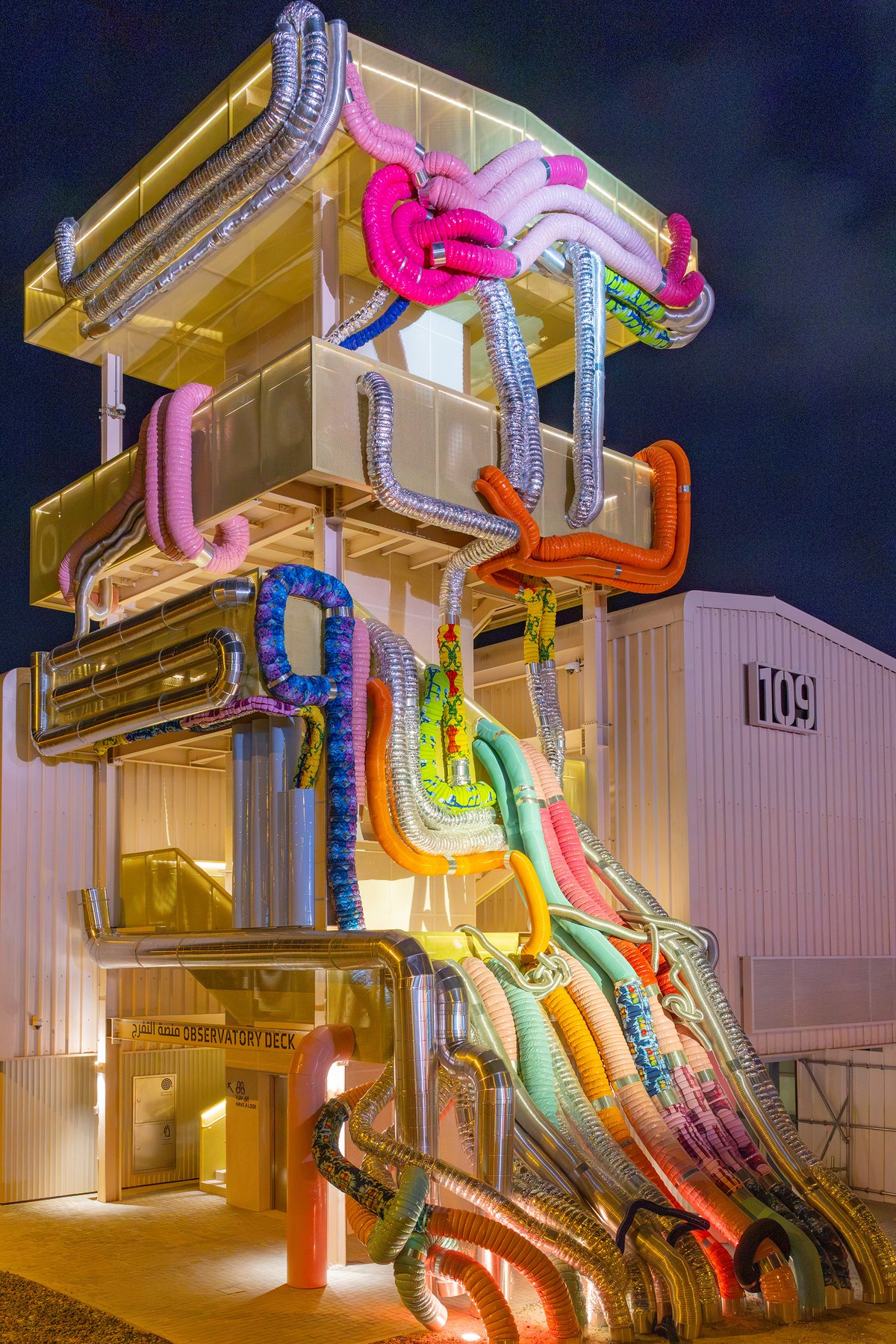
“Everyday life is central” to this biennial “both as backdrop and method”, writes its artistic director, Elvira Dyangani Ose, in the accompanying guide. Out in the desert, Iron Age irrigation systems still used today form the basis of Ascunción Molinos Gordo’s rammed earth sculpture Bil Hana wa Al Afia (2026), installed among working farms during the biennial’s run. Back in the city, the quotidian infrastructure of cooling vents, ubiquitous to all Abu Dhabi's inhabitants, is brought to the fore by Shama Al Hamed’s installation of fluorescent aluminium ducting, which spill out like entrails from the observation deck of the former industrial port.
Key to a public art biennial concerned with the "everyday" is appealing to non-art specialist audiences. This means considering the “many publics” that exist in Abu Dhabi, Dyangani Ose says. Visitors at sunset will see families jumping on Ivan Argote’s see-saw installation and zooming down its animal-shaped slides.
Despite the temporary nature of an exhibition, each edition of the biennial achieves permanence through its acquisition structure. Last edition, 15 works—around half—were acquired by Public Art Abu Dhabi and are now on display across the city. They include a crescent of silver oyster sculptures by the Emirati artist Farah Al Qasimi, referencing the Arabian Gulf’s once-booming pearl diving industry.
The director of Public Art Abu Dhabi, Clémence Bergal, says a similar acquisition round will take place at the end of this edition. “With so many of the biennial’s works being new commissions, it is a great way to collect work that feels deeply connected and responsive to Abu Dhabi,” she says.
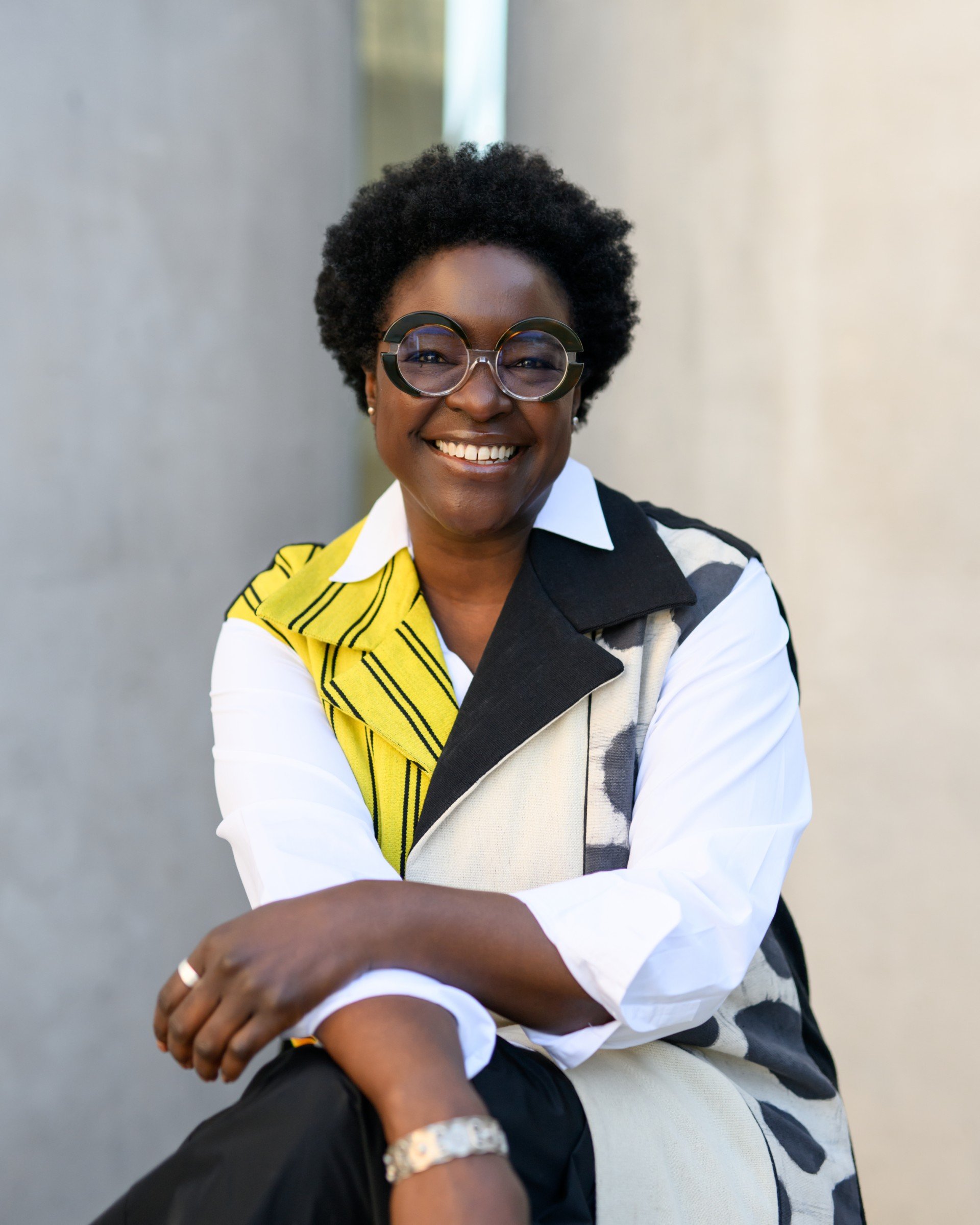
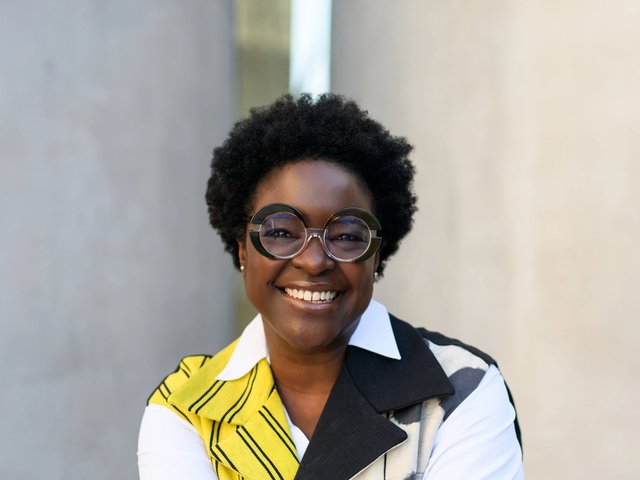
Elvira Dyangani Ose, artistic director of the second edition of Public Art Abu Dhabi Biennial
© Public Art Abu Dhabi
The biennial is not only a tool for engaging Abu Dhabi’s various communities, but for considering how they live with each other. The theme of this year is the unstable and contested definition of “home”, and Dyangani Ose writes in the catalogue that she is interested in how a “communal sense of place” is formed and negotiated by various groups, sometimes of vastly different cultures and material conditions. “Abu Dhabi is a city in which that distinction matters enormously,” she writes. “Communities from across the world share its streets, its coastline, its daily rhythms without sharing the same histories, the same rights or the same relationship to the land.”
The curatorial statement provides a potent line of inquiry in a country where only a small portion of the population—estimated to be around 12%—has citizenship, and in which the working and living conditions of migrant labourers has been criticised by leading human rights organisations.
These issues appear to be broached obliquely in the multiple references to migration and labour throughout the biennial, including in a striking coastline installation by the Ghanaian artist Serge Attukwei Clottey, composed of thousands of interlocking yellow plastic pieces made from Kuffuor gallons—containers that are ubiquitous in Accra and used to transport cooking oil, water and fuel. These Kuffuor installations are Clottey’s signature, and he has spoken widely about how they refer, in part, to the imbalanced relations of labour and resource extraction between African nations and their trading partners. The UAE is Ghana’s third-most important importer, chiefly purchasing gold. Immigrants from Ghana and other West African nations represent an increasingly large portion of the UAE's labour force, chiefly working in construction, hospitality and security services.
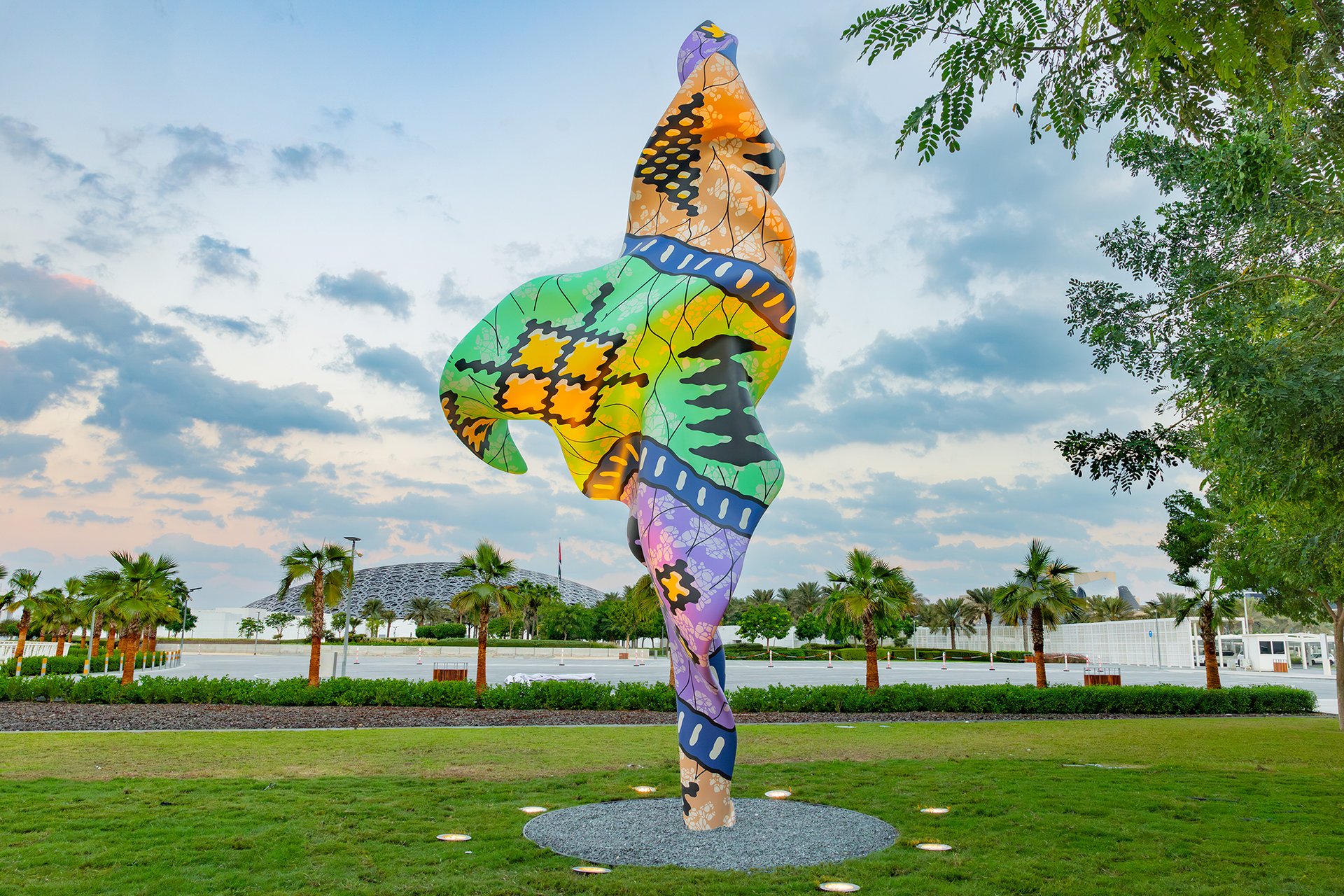
Yinka Shonibare, Wind Sculpture (TG) III (2026), installation
view, Abu Dhabi, 2026.
Image courtesy of Public Art Abu Dhabi, Department of Culture and Tourism— Abu Dhabi
Unsurprisingly considering the emirate's strict censorship laws, little in the show could be openly perceived as critical, at least of the UAE. Dyangani Ose tells The Art Newspaper that there are certain “limits presented by the framework” of a publicly funded exhibition in Abu Dhabi. She adds that "as global subjects", we are all bound within certain limits.
Certainly, the biennial's public setting provides opportunities for conversations that art institutions in other parts of the world might shy away from. For instance, Yinka Shonibare’s towering metal plume, painted in both his signature Dutch wax patterns and those of Bedouin textiles, serves as a much-needed shade structure for outdoor labourers working in the harsh midday sun. "These publics are as important to take into account as any other," Dyangani Ose says.
Providing spaces for such a wide variety of interactions is a vital part of how Dyangani Ose conceives of a communal sense of place, as “making meaning, despite differences, in public”. For the biennial, this might be its greatest impact of all.
- Public Art Abu Dhabi Biennial, until 15 February 2027, various locations, Abu Dhabi and Al Ain