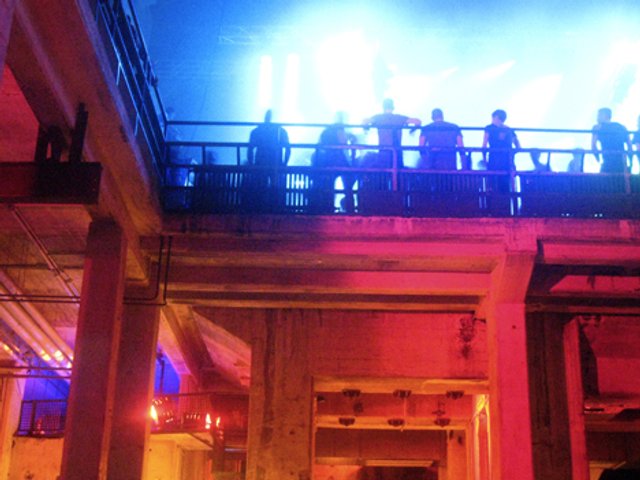

“The world is changed. I feel it in the water. I feel it in the earth. I smell it in the air. Much that once was is lost, for none now live who remember it.” Cate Blanchett, as the high elf Galadriel, spoke these opening lines in The Fellowship of the Ring (2001), and in darkened cinemas around the world, her delivery set the tone for the wonder that followed. Not since my first viewing of that film 25 years ago had I felt that sense of being dwarfed by mythology, and to re-experience it in Berlin’s famous nightclub Berghain of all places was a delight.
Ala Roushan and Charles Stankievech, an artist duo hailing from Iran and Canada, respectively, expertly blended archaeology, artificial intelligence (AI), acoustics, chemistry and sculpture to create a profoundly multi-sensory experience in A Shroud of Woven Solar Threads earlier this autumn (2-18 October).
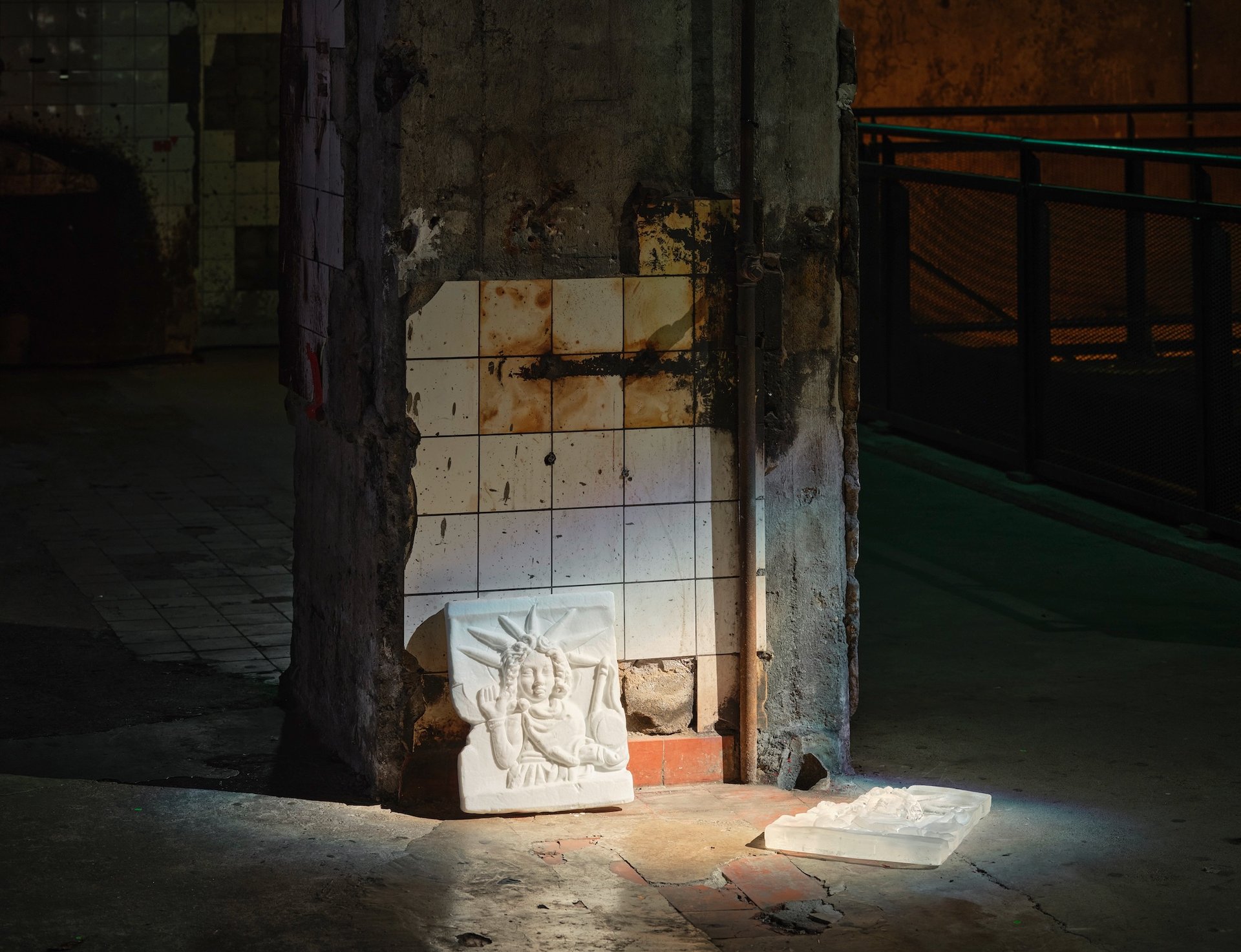
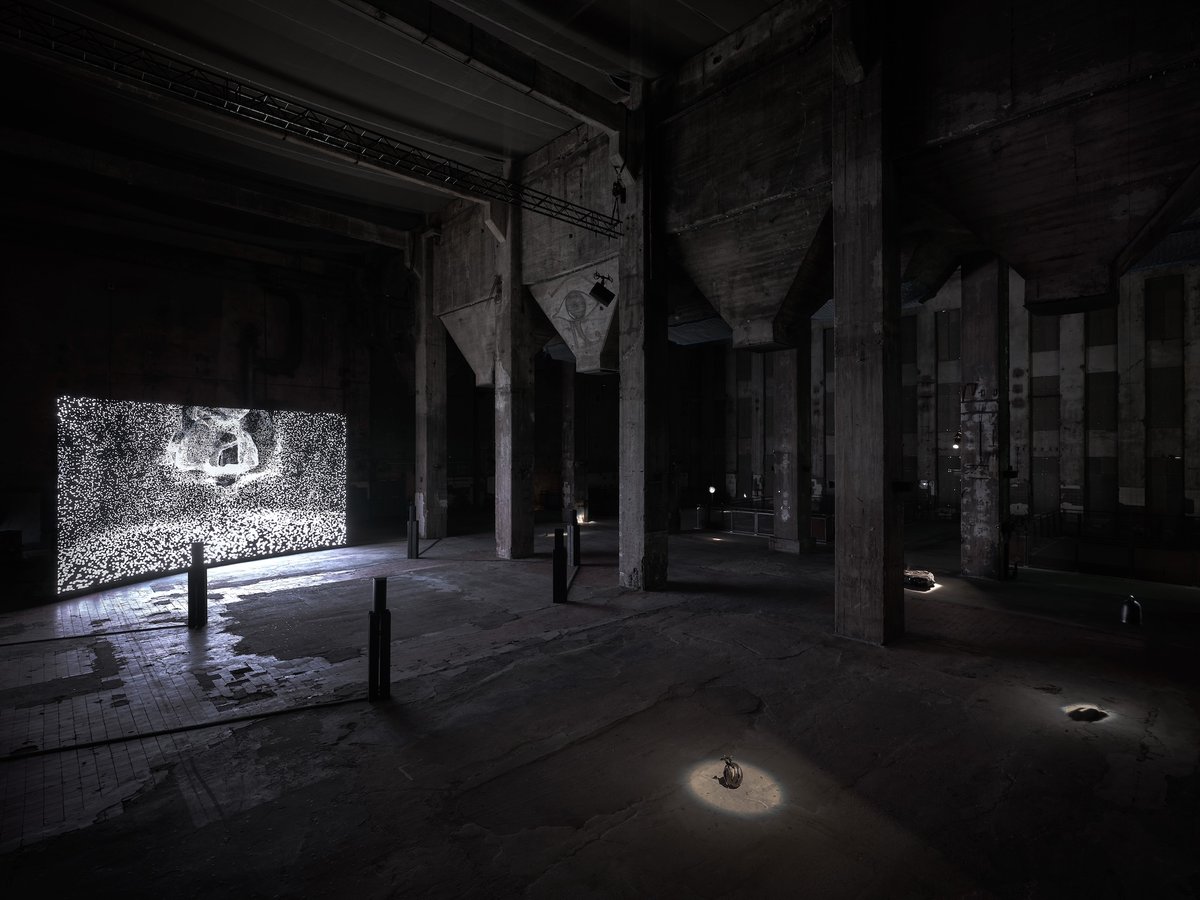
Ala Roushan and Charles Stankievech, Sūryasya Śántau (Within the Solar Silence), 2026. Halle am Berghain Courtesy of HOUSE in partnership with Autotelic Foundation. Photo: Noshe
Situated inside Halle am Berghain—a gargantuan former power station that, yes, was reminiscent of J.R.R. Tolkien’s Khazad-dûm—the installation was presented by the Berlin-based contemporary art initiative House, helmed by Juliet Kothe, who co-curated with Nadim Samman. The exhibition was co-presented by the Autotelic Foundation, whose whimsical take on AI art in Venice had been one of the standout digital presentations during the most recent Biennale.
At the centre of A Shroud of Woven Solar Threads was a towering, eight-minute-long, 4K video installation that slowly panned through a digitally rendered, 4,000-year-old Mithraic cave temple, created based on 3D scans of the ancient site. Originally made for an exhibition in Lausanne in 2025, the installation was expanded to take advantage of the Halle am Berghain’s size.
As the “camera” floated through the ancient temple in the looping video, visitors were encouraged to position themselves in the center of the installation, where they would be encircled by human-height black monolithic speakers. Each speaker featured a different voice, all chanting in an AI-generated, speculative Proto-Indo-Iranian (PII). PII is the ancestor of the Indo-Aryan and Iranian language families, including Sanskrit and Avestan. There are no historic documents or written texts in PII, let alone documented Mithraic chants from that period.
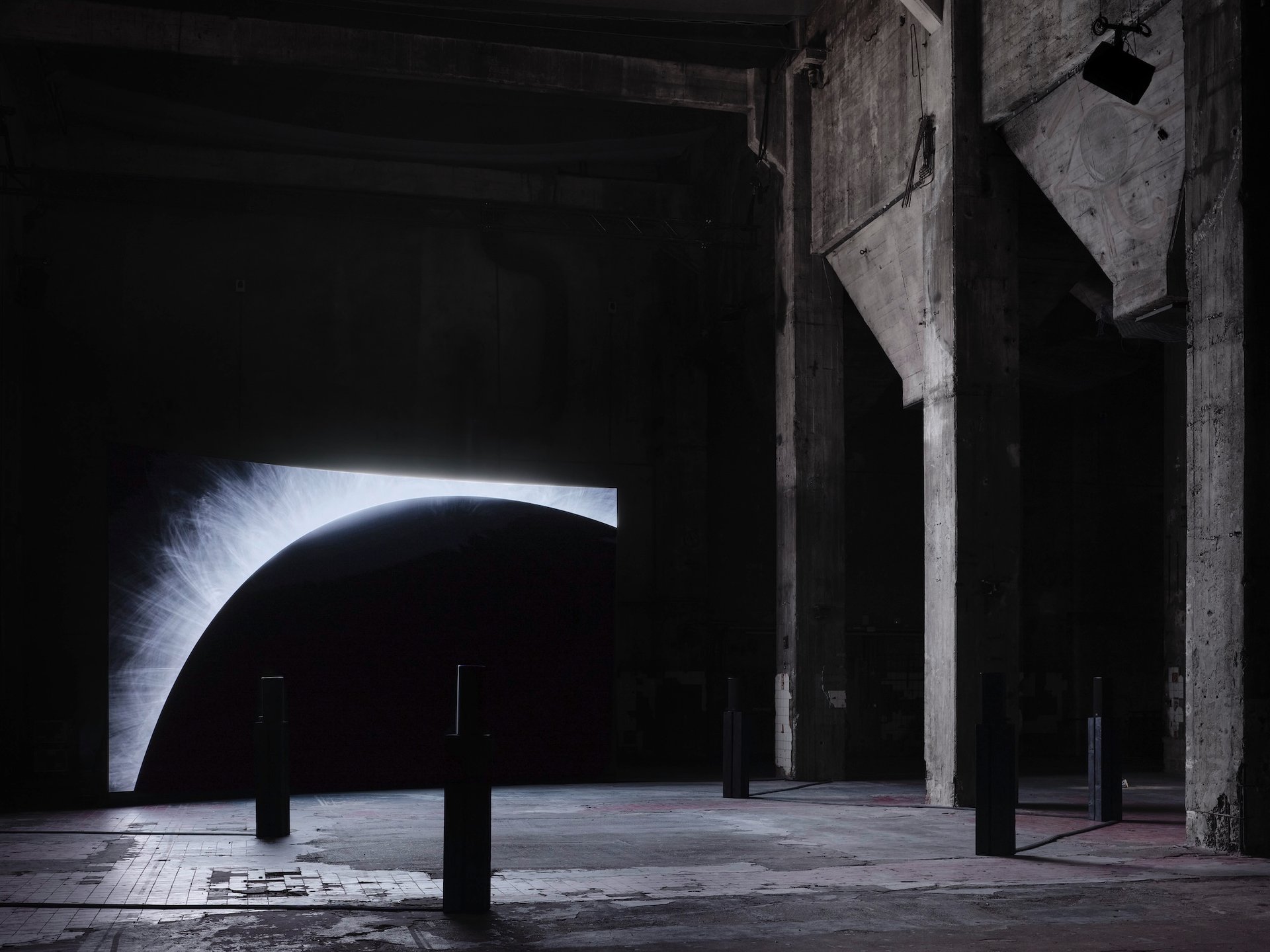
Ala Roushan and Charles Stankievech, A Shroud Woven of Solar Threads, 2026. Installation view, Halle am Berghain Courtesy of HOUSE in partnership with Autotelic Foundation. Photo: Noshe
To realise the vital sonic component of the installation, the artists worked with the University of Toronto, drawing on comparative linguistics to reconstruct plausible linguistic forms. AI then allowed them to bring the speculative language to life. One of the speakers, Roushan said, was based on her own mother’s voice, which had been used to train one of the AI chanters.
"Mithra…" the chant began, referring to the ancient solar deity, a kind of lesser-known Ra, and as the incense burning in the hall filled one’s nostrils it was difficult not to feel transported by the sheer scale and the acoustic prowess of the installation. Near the ceiling, graffiti of the Eye of Horus that pre-dated the exhibition oddly contributed to the compounding of ritualistic symbols that have accumulated in the hall.
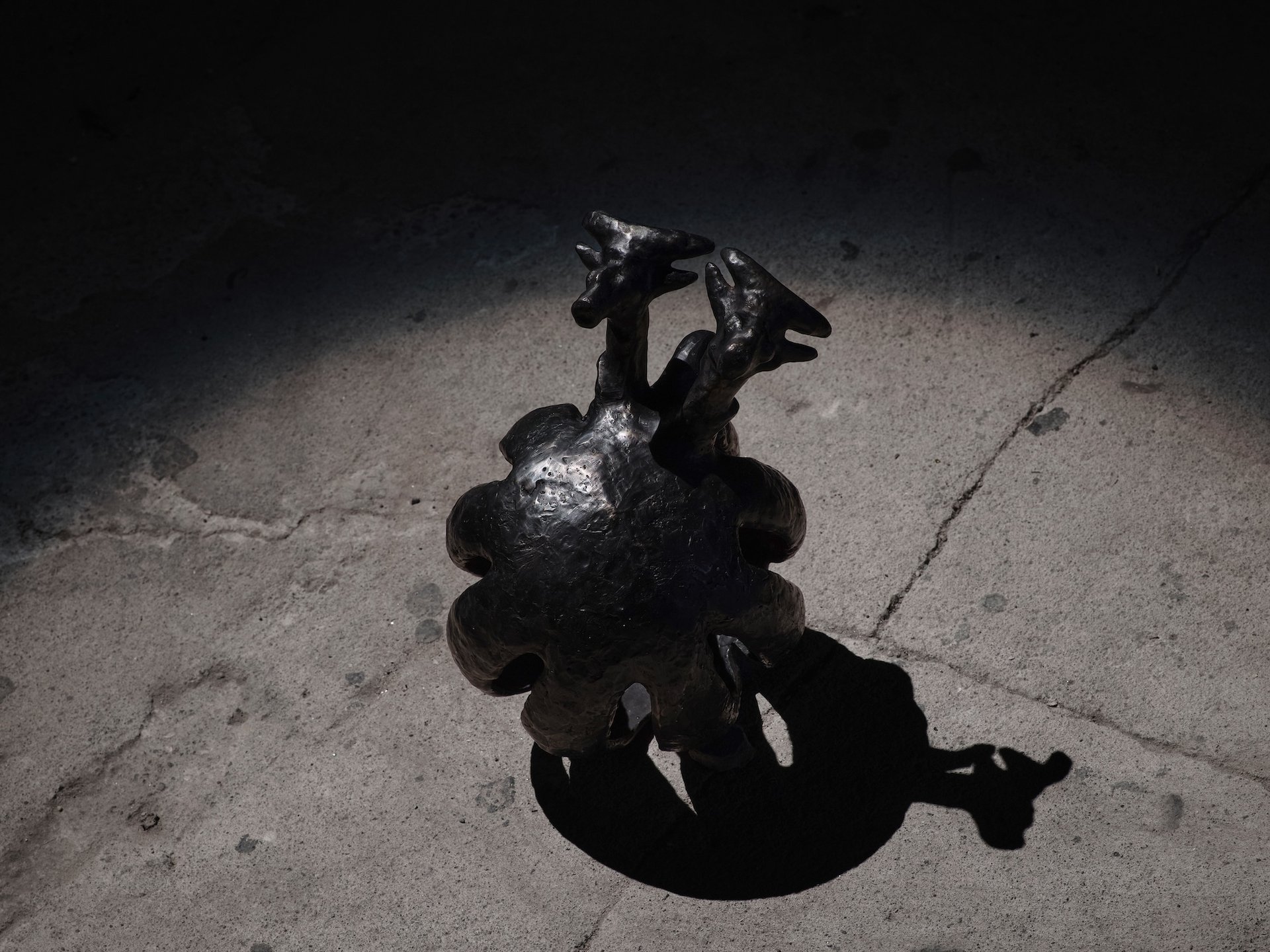
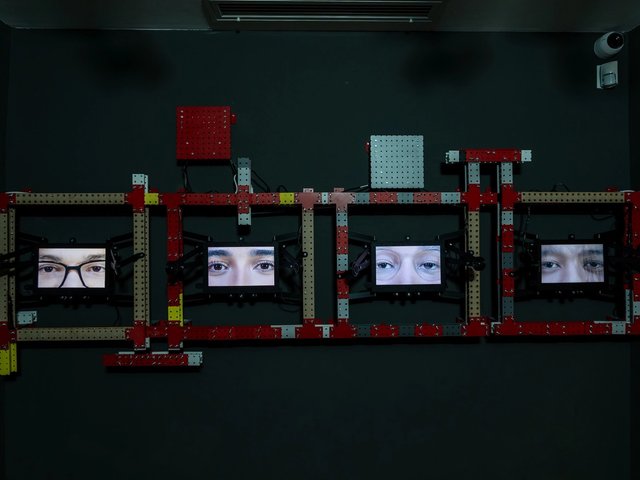
Ala Roushan and Charles Stankievech, To Have a Shell is to Surrender, 2026. Halle am Berghain Courtesy of HOUSE in partnership with Autotelic Foundation. Photo: Noshe
There is an inherent futility in worshipping an ancient sun god for any kind of wish-fulfillment. But ritualistic production and devotion have persisted through millennia and in our lives today, be it in our fascination with our illuminated, hand-held screens, or our commitment to attend public dance events that encourage abandon—such as the one that took place the weekend of Roushan and Stankievech’s opening, several metres and a few layers of concrete away. Objects scattered throughout the exhibition space included replicas of Bronze Age bells and reliefs, objects of ritual and religious significance that adorned the space and further contextualised the spiritual dimension of the installation, although none so potent as the ever-burning incense.
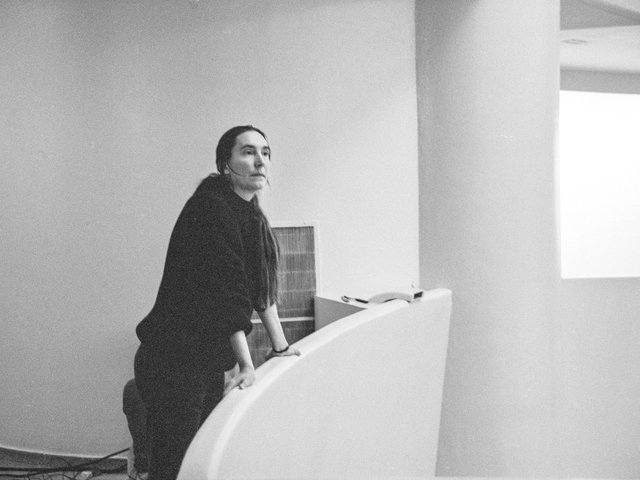
“We are all subject to digital change in society, economy, politics,” Nadim Samman, the Autotelic Foundation’s director, says. “These changes are massive, they are abrupt and they are intense. Making sense of it needs to come from below. Artists offer important ways to understand what this change means. Without artists, we are just stuck with the narratives and the images supplied by the companies that make the technology. Digital change impacts culture, and artists can help us understand what that impact actually feels like, and how we can think it through."
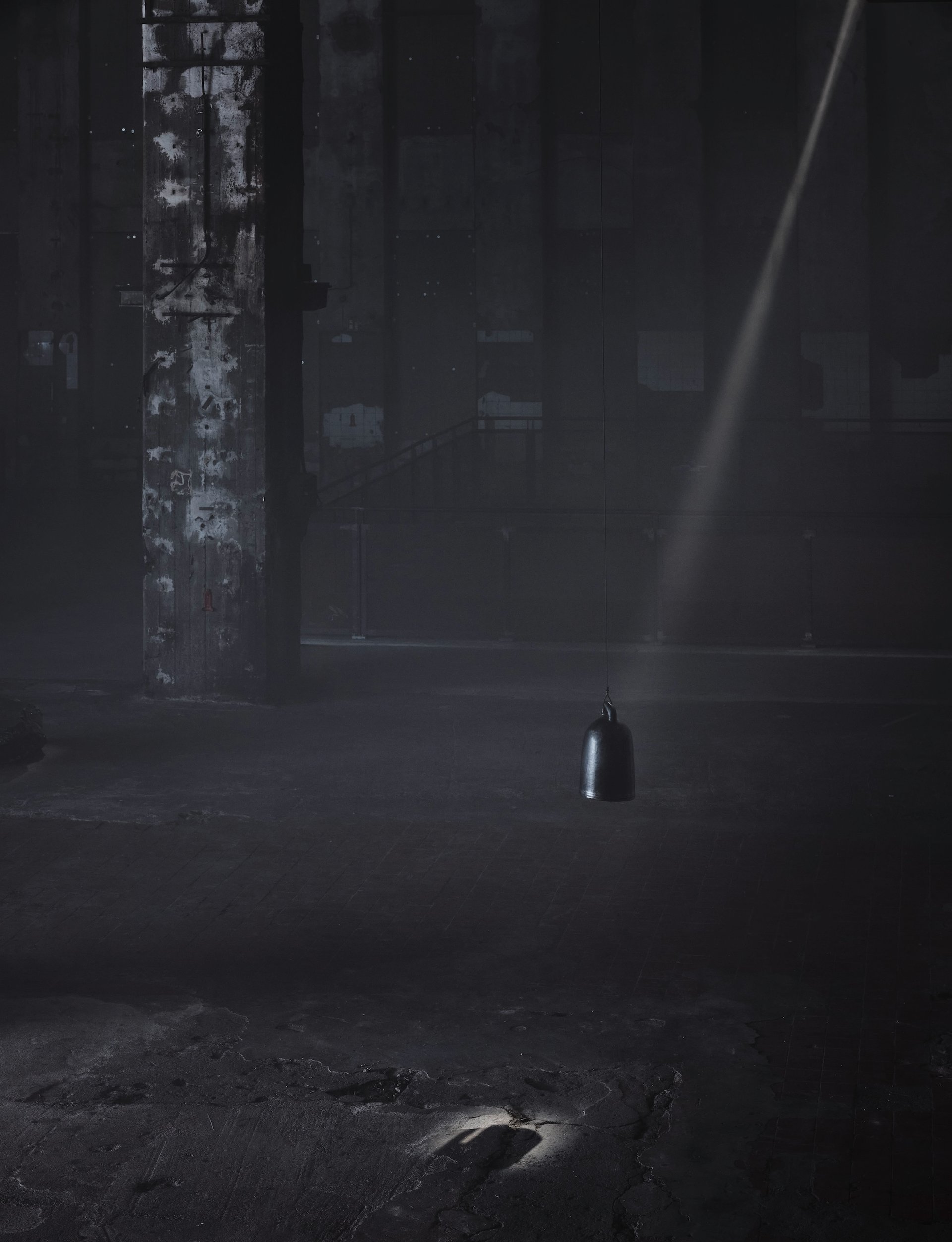
Ala Roushan and Charles Stankievech, The Most Naked Thing in Existence, 2026. Halle am Berghain Courtesy of HOUSE in partnership with Autotelic Foundation. Photo: Noshe
Since we have no recordings of PII, it is hard to refute that AI contributed a vital component of the installation. The exhibition’s thoughtful and archaeological approach to incorporating technologies that help us to speculate on the past was a welcome counterpoint to many digital art exhibitions in recent memory.
Roushan and Stankievech’s ambitious undertaking stands as one of the highlights of what has been a busy year for digital and AI-generated artistic presentations. The rather romantic gesture of leveraging AI to take us back several thousand years, to a time of fascination with nature and solar worship, and the decision to do so within the Brutalist context of a power-station-cum-nightclub, cleverly brought together many disparate threads.
- Ala Roushan and Charles Stankievech: A Shroud Woven of Solar Threads, 2-18 October, organised by the Autotelic Foundation and House, Halle am Berghain, Berlin