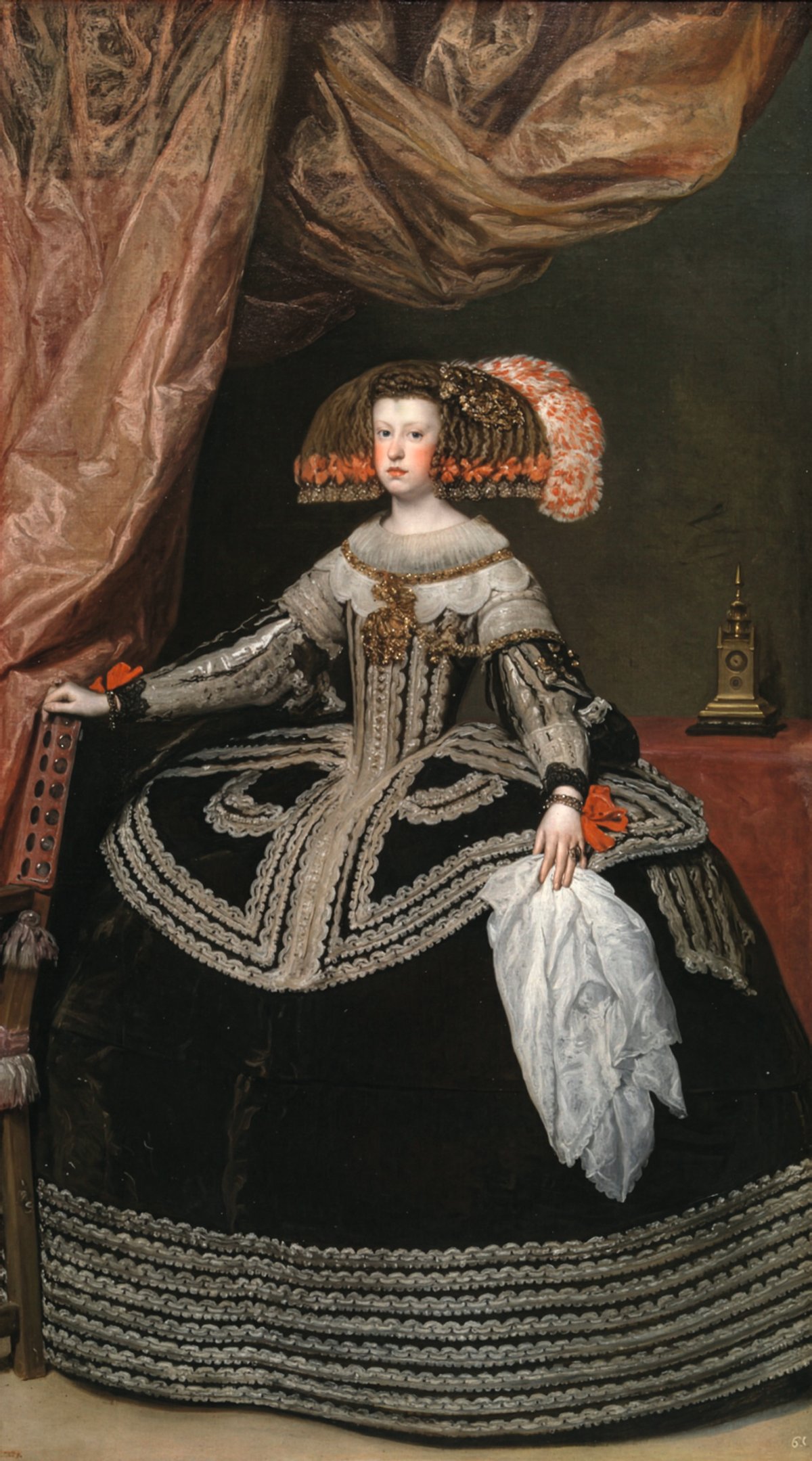
Mariana of Austria’s position in the 17th-century Spanish court was not an easy one. She became queen of Spain in 1649 after marrying Philip IV, and then when he died in 1665, she assumed the role of regent, governing for over a decade on behalf of their three-year-old son, Charles II. Her authority was challenged, repeatedly. She was also the last woman of the Habsburg dynasty to exercise governing authority within the Spanish court. Even after her regent years were over, Mariana of Austria remained a significant figurehead until her death in 1696.
The Museo Nacional del Prado in Madrid is taking a closer look at the Spanish monarch as it opens its first exhibition devoted to a female patron of the arts. Titled Mariana of Austria, the show reflects the museum’s efforts in recent years to re-examine historic women artists, benefactors and subjects. It includes around 100 objects, from paintings to prints and medals to manuscripts, building up a comprehensive picture of the iconography that Mariana used to curate her own public persona.
“The exhibition reveals a sovereign who was not simply the subject of some of the most celebrated portraits of the Spanish Golden Age, but who understood the political power of images and actively used them to assert and legitimise her authority,” says the exhibition curator Noelia García Pérez, a professor of art history at the Universidad de Murcia.
The Prado is poised to host such a presentation since it holds the most comprehensive collection of portraits of Mariana of Austria, representing every stage of her life from her youth as an Austrian archduchess up until her late years as queen mother. A full-length portrait of her by Diego Velázquez, within the Prado collection, was the model for her official image during the early years of her reign.
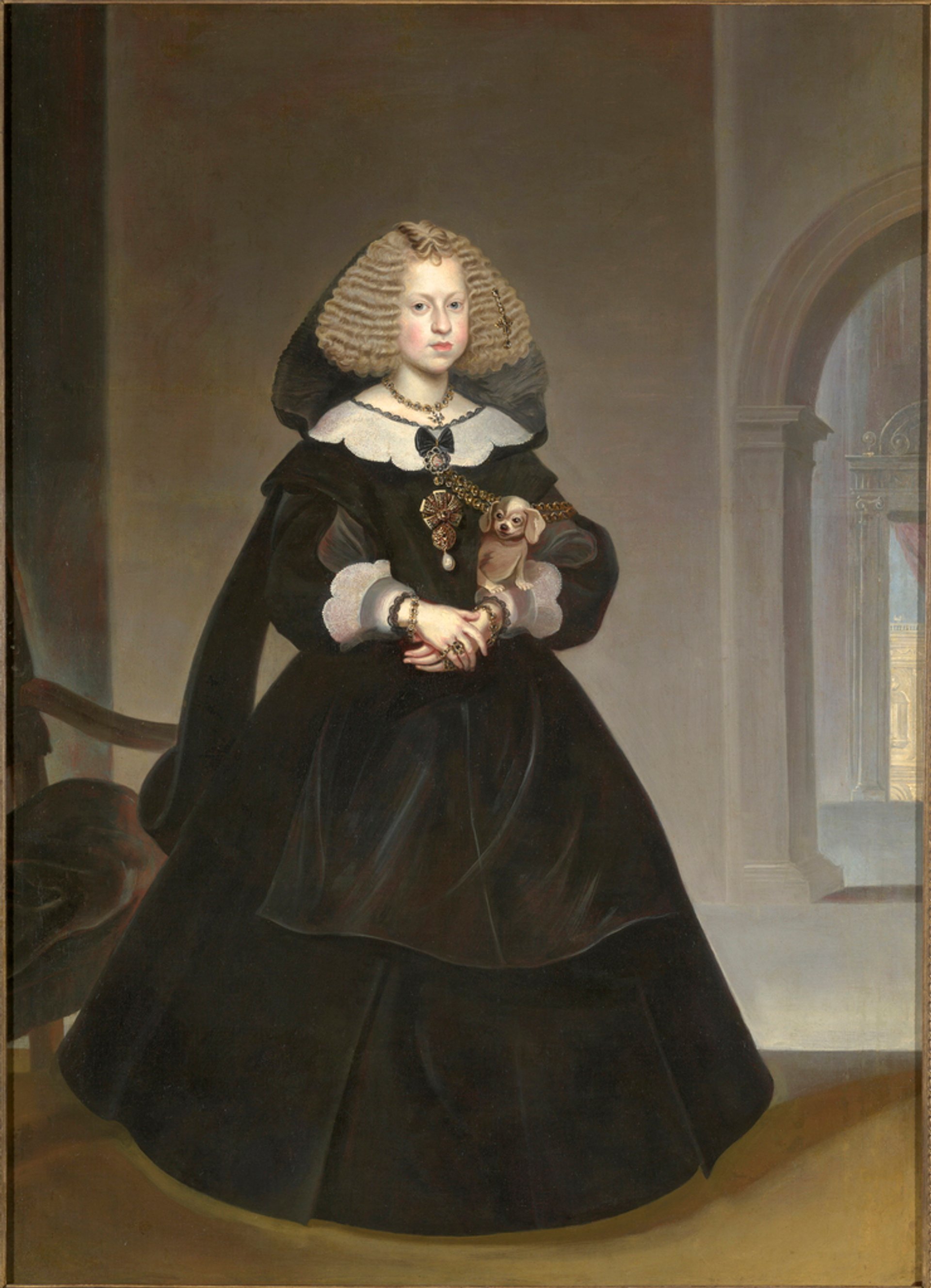
Frans Luycks, Infanta Mariana of Austria (around 1646)
Museo Nacional del Prado
Mariana of Austria was in good company among other European royals who understood that authority needed a visual translation, to be communicated both domestically and across Europe. Some of the iconographic devices used by her court painters had precedents elsewhere, including among other queens. Such strategies include the use of the seated portrait, which was traditionally associated with ruling princes, and portraits in which she held a document as a reference to her governing ability.
Preparation of the exhibition has led to both a different understanding of such iconography, and a deeper knowledge of the works themselves, thanks to restorations and a reassessment of dates, identifications and attributions of several works. The exhibition also reunites rarely seen and never before exhibited works, such as a double portrait of Mariana of Austria and Charles II, on loan from the Bečov nad Teplou Castle in the Czech Republic, and a bust attributed to Nicolás de Bussy, which was recently identified as a portrait of the queen.
Shifting meanings
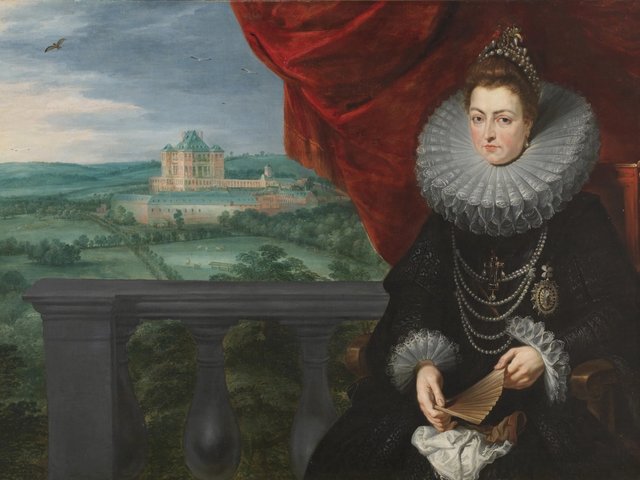
Another section of the exhibition is devoted to portraits of queens, regents and other female governors who held power within the Spanish monarchy over the course of roughly two centuries. “Seeing these works together reveals how attributes such as the book and the column were passed down and acquired new meanings from one generation to the next,” Garcia Pérez says, “gradually shaping a shared visual language in which piety, dynastic legitimacy and the exercise of power were closely intertwined.”
Mariana of Austria culminates a year of focusing on three queens at the Prado—Elisabeth Farnese, Christina of Sweden and now Mariana of Austria—exploring not only their tastes but also how they used the arts as a means of asserting their authority. This focus is part of the Prado’s commitment, over the past decade, to highlight the multifaceted roles of women in art history. These initiatives have evolved into the long-term programme called The Female Perspective, which will investigate the influence of Europe’s ruling women on the arts in collaboration with the Rijksmuseum in Amsterdam.
The next exhibition in the works will focus on female patrons of the 19th century, highlighting figures such as Spain’s Isabella II. “Ultimately, the ambition of The Female Perspective is not simply to add women’s names to an established narrative,” Garcia Pérez says. “But to enrich and, where necessary, rethink that narrative.”
• Mariana of Austria, Museo Nacional del Prado, Madrid, until 28 March 2027