Deep in the Amazon Rainforest, in the Brazilian state of Pará, lies the dilapidated settlement of Fordlândia. A once bustling—albeit highly exploitative—village, it was established by the US industrialist Henry Ford in the 1920s. Fordlândia’s sole purpose was to serve as a rubber-tapping enterprise that would provide materials for the Ford Motor Company. But less than a decade after its founding, the rubber crops failed. With the development of synthetic rubber following close behind, Ford abandoned the project in 1945, and the village along the Tapajós River fell into severe disrepair.
Earlier this year, almost a century after Fordlândia was built, a federal court ruled that it must be protected as a heritage site under the Brazilian constitution. Local and national authorities have until the end of this month to come up with a conservation plan.
Ford’s company originally acquired the land for what would become Fordlândia in 1927. He envisioned building a Midwestern-style village as a hub for latex extraction, supplying materials for his factories in Michigan. Ford hoped to upend the dominance of British-controlled rubber plantations in Southeast Asia, which had left US manufacturers dependent on foreign suppliers.
Fordlândia, beyond giving the Ford Motor Company control over its supply of raw materials, was imagined as a self-sufficient settlement for around 10,000 people in the Amazon. Ford himself viewed Fordlândia as a sociological experiment intended to “Americanise” the local population, although the tycoon never visited his dystopian village. Workers there, many of them Indigenous people and migrants from northeastern Brazil, endured cultural subjugation and often faced dangerous conditions—including having to work through the hottest part of the day. Hundreds of people died during the short-lived project.
Workers organised a mutiny in 1930 after unreasonable restrictions were imposed in Fordlândia, including the prohibition of alcohol and tobacco, as well as the requirement of US customs like square dancing and a diet of wholewheat bread, brown rice, oatmeal and canned peaches. Shortly afterwards there was a full-scale riot, in which workers chased their American managers and the village cook into the jungle. The Brazilian army was brought in to restore order. The company subsequently fired a number of workers and appointed a new manager to complete Fordlândia’s infrastructure. (An agreement on serving different food to the workers was also reached.)
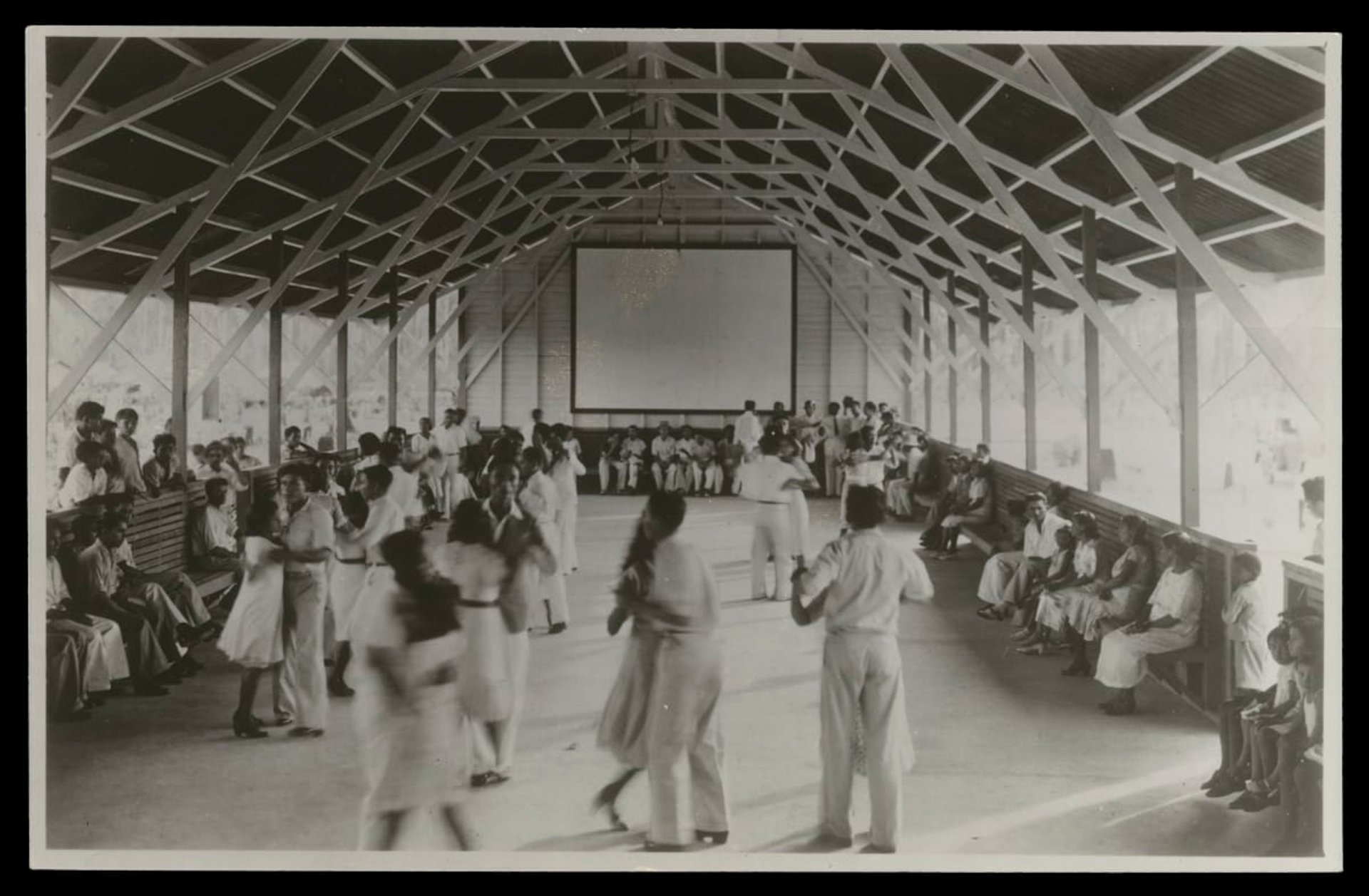
Fordlândia Dance Hall, around 1933 The Collections of the Henry Ford
Ford’s social experiment unfolded alongside agricultural problems. Without the consultation of local experts, the rubber trees had been planted too close together. This made them vulnerable to disease and pests, and the growing conditions along the river were unsuitable. In 1933, at the recommendation of the American plant pathologist James Robert Weir, a second plantation was established downstream at Belterra, where conditions were more appropriate. Although it fared better than Fordlândia, production remained costly and it never became commercially viable.
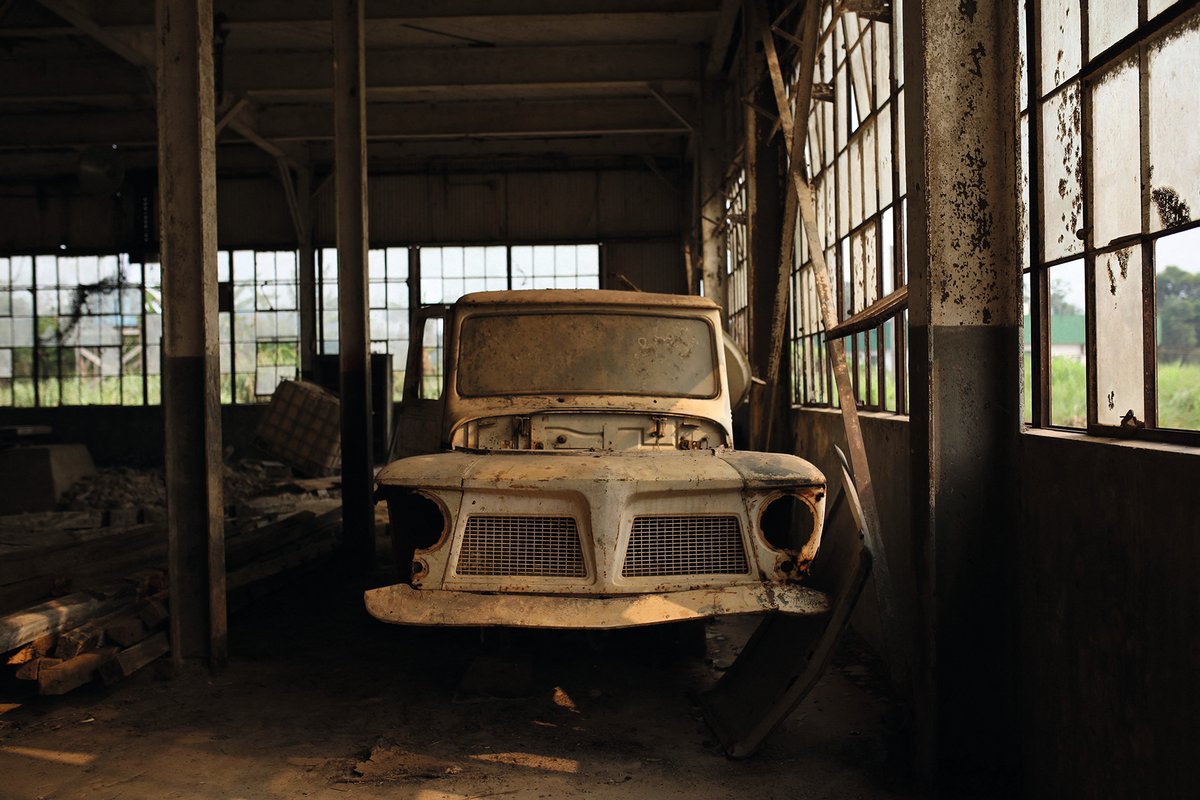
No usable latex was ever produced in Fordlândia. After investing millions of dollars with no return, Ford sold the land back to the Brazilian government. The population dropped by more than 90% in the following years, but squatters and families moved back into the decaying structures in the 2000s. Around 3,000 people live in Fordlândia today, even as the village remains unconnected to paved roads.
A unique historical moment
The federal process for the designation of Fordlândia as a heritage site has been unresolved since the 1990s, when the move was first suggested by local advocates. In 2015, Brazil’s federal public prosecutor’s office filed a lawsuit stating that the site had “unquestionable” cultural value. In 2024, the National Institute of Historic and Artistic Heritage (Iphan) countered that Fordlândia lacked the criteria required for federal heritage listing, pointing to the loss of its original characteristics and the site’s deteriorated condition.
But in May 2026 a federal court ruled that, even without formal heritage status, the site should be protected. This decision was based on a 1988 constitutional article that mandates the conservation of both material and immaterial assets connected to Brazilian communities. The court added that uncertainty over ownership of the site had been used repeatedly as justification for inaction, and that the state of Pará and the municipality of Aveiro (which administers Fordlândia) had previously signed an agreement to begin conservation measures that never materialised. It also alleged that some interventions had been carried out without authorisation.
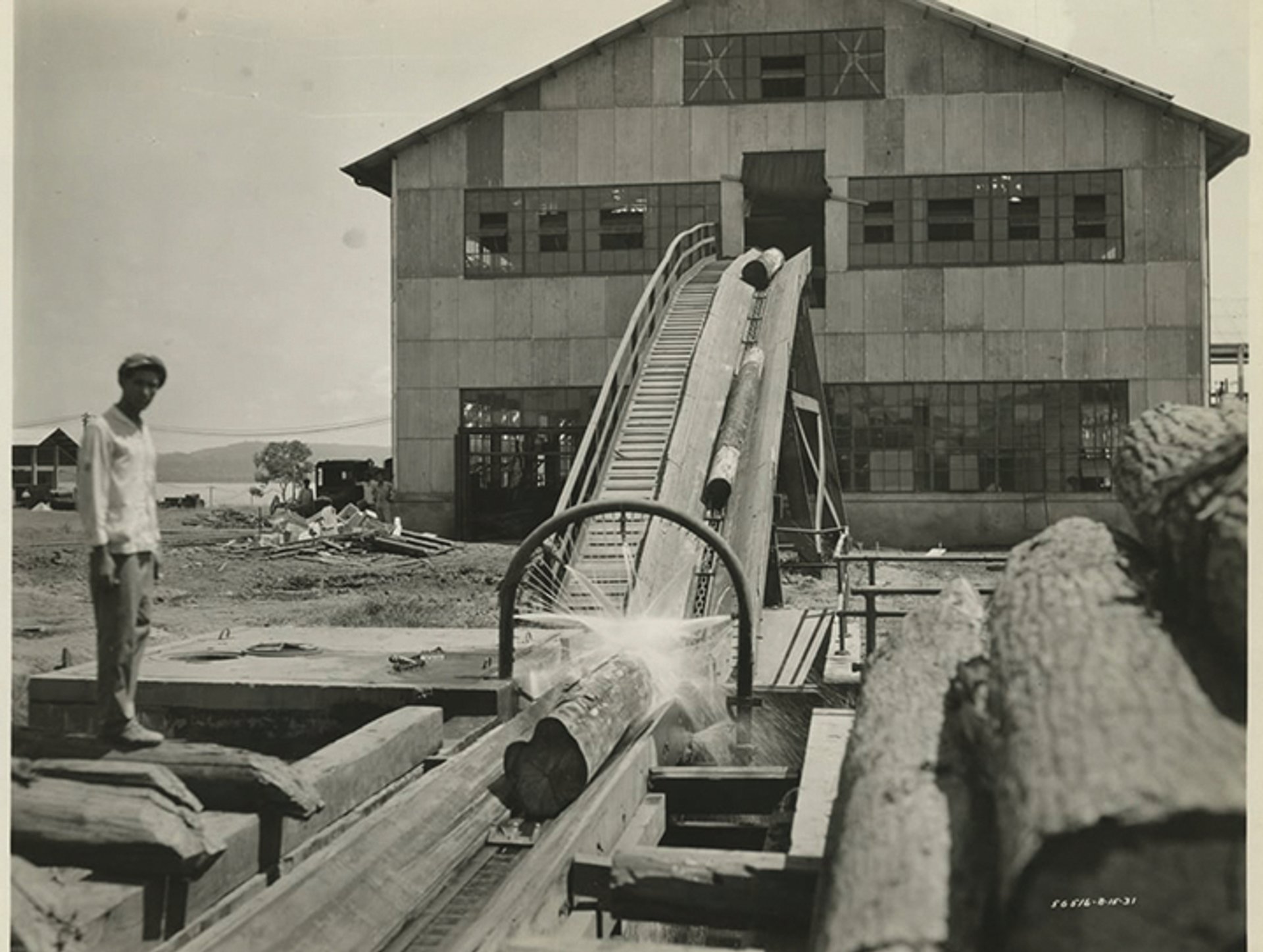
A Fordlândia sawmill in 1931, before the Ford Motor Company’s rubber-plantation project was halted The Collections of the Henry Ford
The court ruled that Iphan must now work with the state and municipality to deliver a plan by the end of November 2026, outlining the responsibilities of each government entity and the needs of each site in Fordlândia—including emergency measures for structures at imminent risk. Once approved, conservation work must begin within 30 days. If deadlines are not met, the court will impose a daily fine of $2,000 (10,000 reais) on the federal government and Iphan, and a $1,000 (5,000 reais) fine on the state and municipality. Iphan must also begin the administrative process to recognise Fordlândia as a heritage site.
In a statement to The Art Newspaper, a spokesperson for Iphan says the agency does not comment on ongoing legal proceedings. It remains unclear if Iphan plans to counter the court’s decision. “In May 2024, Iphan’s cultural-heritage advisory council denied Fordlândia’s designation as Brazilian cultural heritage,” the spokesperson says. “Iphan reiterates that it remains committed to the preservation of Brazilian cultural heritage, as mandated by the constitution.”
The sites to be reviewed include the former Fordlândia Hospital, designed by the Detroit architect Albert Kahn; the long-abandoned industrial and port warehouses; the houses of the American Village, where the company’s American managers lived; the workers’ village; the Henry Ford School; the Cine Patinha, a cinema whose roof has recently collapsed; and a convent on a cliff overlooking the Tapajós River, built in the post-Ford era and active until the early 2010s. All these structures have been exposed to the Amazon’s heat, humidity and heavy rainfall for years.
TripAdvisor-approved
Fordlândia remains highly remote, receiving few outside visitors and requiring a minimum six-hour trip to reach via high-speed boat. Still, there is evidence that intrepid travellers have made the journey. A company specialising in tours of the Amazon is currently offering a five-day visit to the region, including a stop in Fordlândia, for approximately $3,000 (16,000 reais) per person. Reviews for “Fordlândia Ghost Town” on TripAdvisor average 4.7 out of 5 stars, with one reviewer in 2016 calling the site “historical, magical and melancholic”, and another saying it tells a story of “hubris, determination, paternalism and ultimately failure”.
Although Fordlândia is unlikely to be commercialised as a tourist destination, the village’s surviving infrastructure has come to represent an unusual and failed attempt to Americanise and industrialise the Amazon. The remnants of the settlement also tell the story of the Brazilian workers who lived there, and those who have continued to inhabit it. The Brazilian government maintains that Fordlândia has “unquestionable historical, cultural and architectural value”, and that it represents “an American attempt to break the British monopoly on rubber and bring modern infrastructure to the middle of the Amazon”.